
























![Kingdom Hearts Collection [I-III] Review](https://gazettely.com/wp-content/uploads/2026/10/Kingdom-Hearts-Collection-I-III-1-360x180.webp "Kingdom Hearts Collection [I-III] Review: KHII Holds Steady as Newer Entries Fluctuate 37")



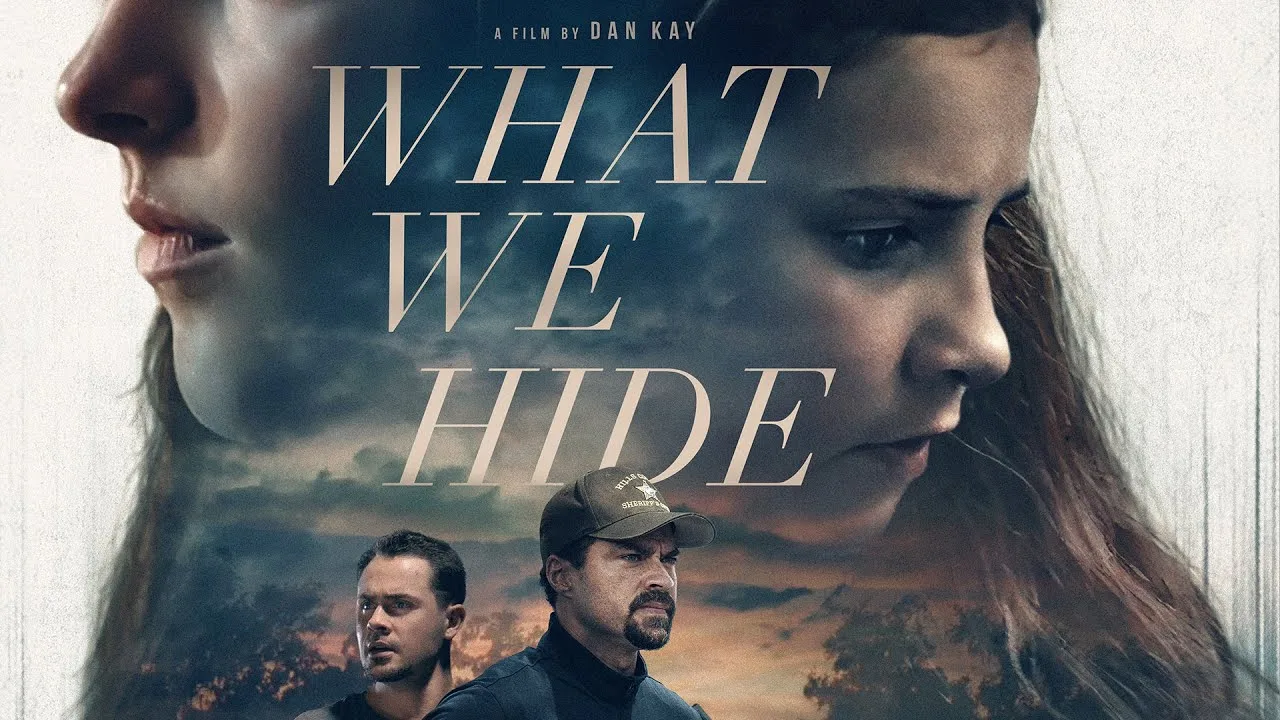

What We Hide, formerly titled Spider & Jessie, is a dark psychological drama that begins in the smallest of spaces and expands into something emotionally vast. Daniel Kay directs with an unflinching eye, grounding the narrative in the intimate world of two sisters who find themselves in a situation almost too bleak to imagine.
Spider, played by Mckenna Grace, and Jessie, played by Jojo Regina, lose their mother to a drug overdose in the opening moments. Faced with the certainty that the foster system will separate them, they make a decision that binds them in secrecy: hide the death and carry on as if nothing has happened.
The central tension grows from this act. A social worker begins asking questions, dangerous figures from their mother’s life close in, and the daily grind of survival becomes increasingly precarious. The film does not dwell on spectacle or contrived plot turns; it draws its power from the shifting emotional terrain between the sisters.
While the premise could have lent itself to relentless despair, Kay threads in moments of light — a shared laugh, a glance of reassurance, a fleeting scene of connection with a new friend. The intimacy of the storytelling, paired with carefully composed visuals, allows the film to move with quiet force, its weight carried by performance and atmosphere rather than by narrative excess.
Performances and Character Dynamics
The heart of What We Hide lies in the chemistry between Grace and Regina. Their portrayal of Spider and Jessie creates a believable portrait of sisterhood under extraordinary strain. Grace plays Spider with the guarded resolve of someone who has been forced to grow up too quickly. She moves through the story with a constant readiness, yet her vulnerability surfaces in flashes — often when she is least prepared for it. Her simmering anger toward their late mother complicates every moment of grief, revealing a layered interior life.
Regina’s Jessie is the emotional anchor. She clings to the idea of her mother’s goodness, even as evidence to the contrary mounts. Her loyalty and capacity for hope form a counterbalance to Spider’s hardened outlook. In moments where resources are scarce or the threat of discovery looms, Jessie’s innocence becomes both a comfort and a risk.
The film thrives in its quieter beats: whispered exchanges in the dark, the tense silence before a decision must be made, the hesitant warmth of shared laughter in the middle of chaos. These moments deepen the stakes beyond the obvious dangers.
The supporting cast sharpens the film’s edges. Dacre Montgomery brings a volatile energy to Reece, an addict connected to their mother’s past. Jesse Williams lends calm gravitas as a sheriff whose suspicions grow, while Forrest Goodluck’s portrayal of a friend with a passion for photography introduces a gentler subplot. Even the briefest roles feel lived-in, contributing to a world that feels as fragile as it is real.
Storytelling, Themes, and Emotional Tone
The film’s moral center rests on an impossible choice made by two children. Hiding their mother’s death is a desperate act born of love and fear, and the story refuses to simplify its implications. The ethics are murky; the emotional cost is immense.
Themes of forced adulthood run throughout. Spider assumes responsibilities no teenager should have to bear, while Jessie struggles to reconcile her memories with the truth unfolding around her. The sisters’ relationship embodies the dual pull of love and resentment that often shapes family bonds under strain.
Addiction is present as a shadow — never reduced to a single cause or effect, but depicted as a force whose reach lingers far beyond the individual. The film captures both the bleakness of this reality and the stubborn presence of hope.
Kay’s script resists easy categorization. Characters inhabit shades of gray, their actions shaped by circumstance rather than clear moral lines. Pacing remains deliberate, giving space for moments of tension to build without dragging the narrative. External threats from predatory outsiders run parallel to the quieter, more corrosive conflicts between the sisters themselves.
Small narrative threads enrich the main arc. Spider’s growing interest in photography offers a glimpse of a future beyond survival, while Jessie’s refusal to let go of her idealized view of their mother keeps the emotional stakes grounded. The final moments leave a resonance that lingers, shaped less by resolution than by the weight of what the sisters have endured.
Direction, Visual Style, and Atmosphere
Daniel Kay directs with restraint and empathy, shaping a film that feels intimate without being claustrophobic. His approach favors truth over dramatization, allowing the performances to carry the emotional load.
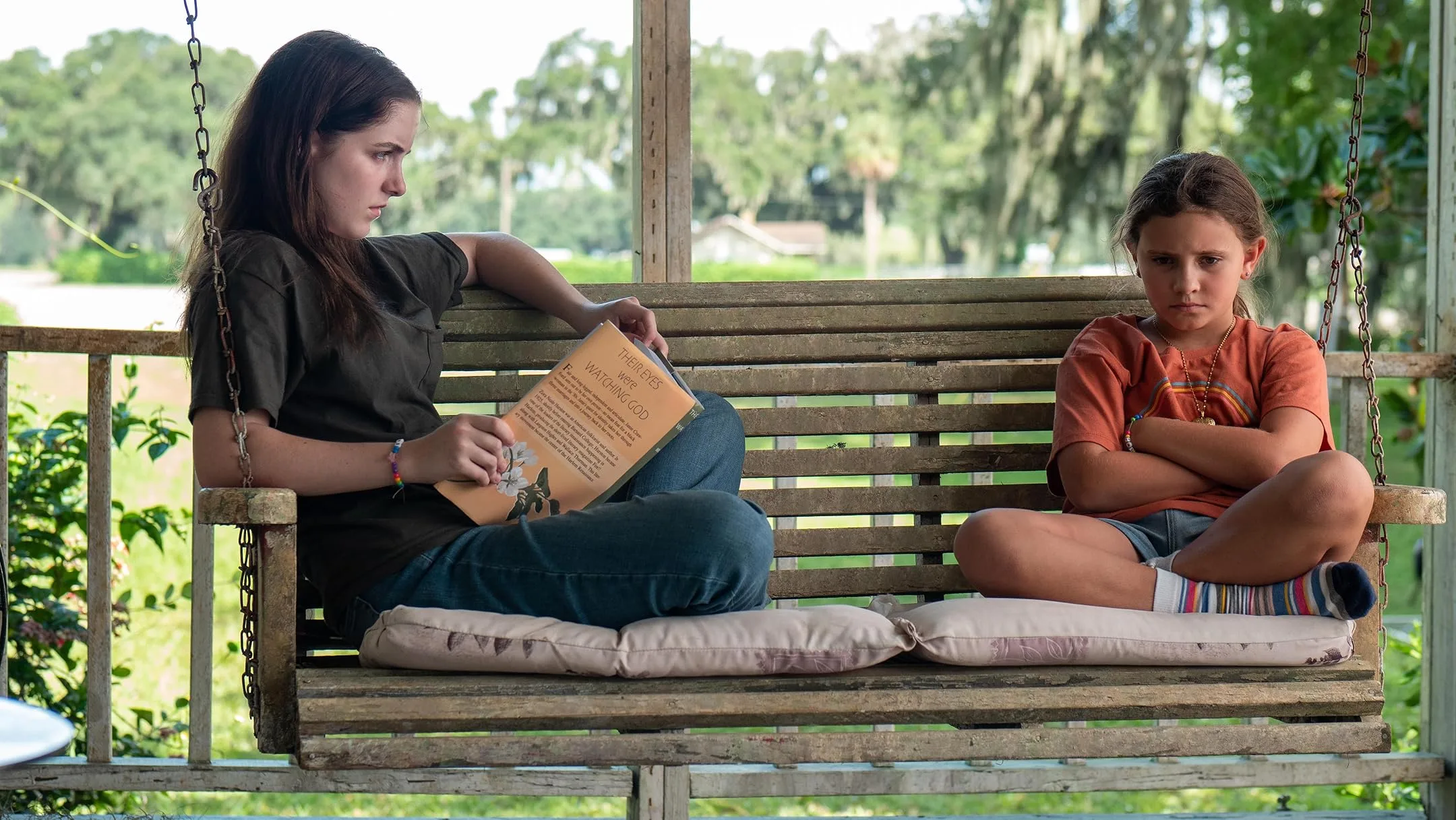
Pip White’s cinematography works in harmony with this vision. Natural light brings a warmth to the sisters’ rare moments of reprieve, while shadows deepen the sense of unease in moments of threat. The camera often holds close to the sisters, framing the world through their perspective. This choice keeps the story grounded in their lived reality, even as events around them grow more dangerous.
The visual palette shifts subtly, with cooler tones in scenes of risk or sadness and warmer hues when connection takes hold. Interiors are often shot in tight, dim spaces, amplifying the pressure closing in on the girls, while outdoor scenes feel more open, offering a visual suggestion of freedom that remains just out of reach.
The editing allows for silence to hold its place. Dialogue is not rushed; pauses become as meaningful as words. Sound design is deliberate, with quiet often used to sharpen tension. Together, these choices build an atmosphere that feels both harshly real and unexpectedly beautiful, carrying the story’s emotional weight in every frame.
Full Credits
Director: Dan Kay
Writers: Dan Kay
Producers: Jeff Hoffman, Dan Kay, Joseph Restaino, Dan Sima, Shaun Greenspan, Dominic Medina, Tony Stopperan
Executive Producers: Leal Naim, Russell Gray, Jesse Williams, Mckenna Grace, Yaniv Hoffman, Steven Demmler
Cast: Mckenna Grace, Jojo Regina, Dacre Montgomery, Forrest Goodluck, Jesse Williams, Malia Baker, Fernanda Andrade, Lily Jane, Layne Harper, Lennon Blue, Quinn Blue, Tamara Austin, Misty Autery, Avis-Marie Barnes, Brad Beyer, Shellita Boxie, Rita Buchan, Rocco Burke, Cronin Cullen, Abigail Dolan, Vivian Fleming-Alvarez, Alessandra G., Nora Hanson, Novius Hanson, Sabrina Jieafa, Preston Kameka, Aurora Karine, Cindy Karr, Matthew Keith, Mary Leonard, Kimberly Longley, Melissa McNerney, Josh Noftz, Emma N Otis, Davina Reid, Johnny Shirley, James Stewart Welch Jr., Destiny Greer, Michael Hayward
Director of Photography: Pip White
Editors: JC Bond
Composer: Alexis Grapsas
The Review
What We Hide
What We Hide is a stark yet tender portrait of survival, anchored by extraordinary performances from Mckenna Grace and Jojo Regina. Daniel Kay’s restrained direction and Pip White’s textured cinematography shape a film that lingers long after its final frame. It is unflinching without losing sight of humanity, finding light in even the most shadowed corners.
PROS
- Exceptional lead performances with genuine chemistry
- Authentic emotional depth
- Strong supporting cast
- Atmospheric cinematography
- Balanced pacing and tone
CONS
- Some secondary accents feel inconsistent
- Low sound mix in certain scenes







