























A trip to procure a birth certificate sounds like the dullest possible premise for a film. It is a task of pure administration, a confirmation of a life through paperwork. In Tamara Stepanyan’s In the Land of Arto, this mundane errand becomes the entry point into a profound mystery.
Celine, a French woman played by Camille Cottin with a brittle sort of composure, arrives in Armenia following the suicide of her husband, Arto. Her goal is simple, administrative, and therefore doomed. She needs his birth certificate for their children.
Bureaucracy is the first monster she must face. A clerk informs her, with the flat finality of state machinery, that the man she knew as Arto Saryan does not appear in any official record. He is a bureaucratic nullity. This negation turns Celine’s practical mission into an existential one.
She must now search for the real identity of the man she loved, a journey that pulls her away from the sterile environment of government offices and into the wounded heart of a country. The film immediately establishes a somber, contemplative air, suggesting that Celine’s private sorrow is about to collide with a much larger, collective grief etched into the very soil of Armenia.
A Cartography of Sorrow
Celine’s initial confusion hardens into a quiet determination. The film becomes a work of narrative archaeology as she excavates the life Arto left behind, forcing her to deconstruct the very memories that constitute her marriage. The first discovery is his real name, Arto Santrosian. More unsettling truths follow.
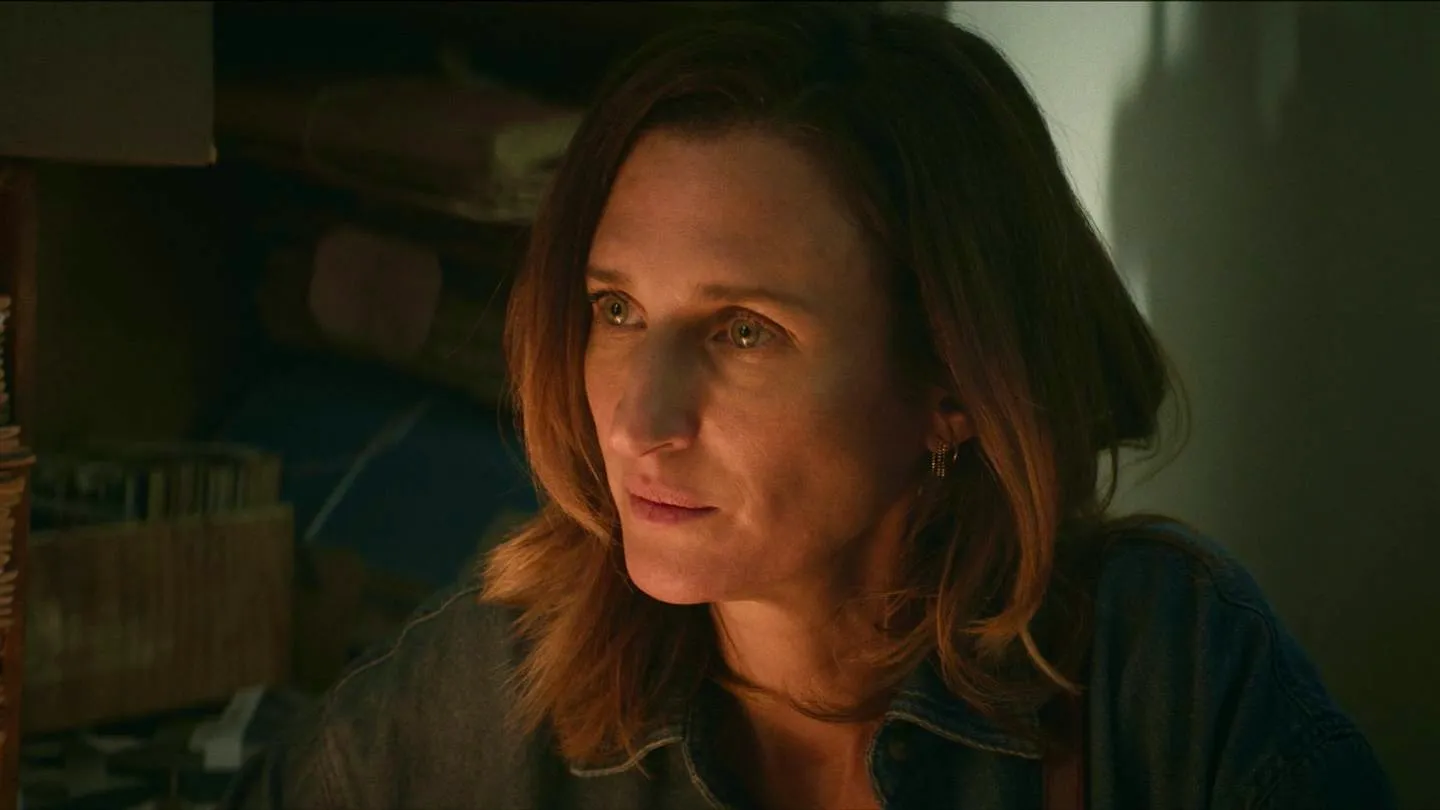
The peaceful engineer she married was once a soldier in the First Nagorno-Karabakh War, and some whisper that he was a deserter. This accusation carries a crushing symbolic weight; he deserted his post, his name, his past, and ultimately his own life. Each revelation peels back a layer of the man she thought she knew, leaving her with the ghost of a stranger and the disquieting realization that a person can be a fiction to those who love them most.
Cottin’s performance is a masterclass in containment. She portrays a woman whose entire reality has been fractured, expressing it not through loud hysterics but through weighted silence and the rigid set of her shoulders. Her grief is a physical state of being, a heavy cloak she cannot remove.
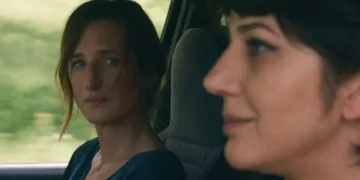
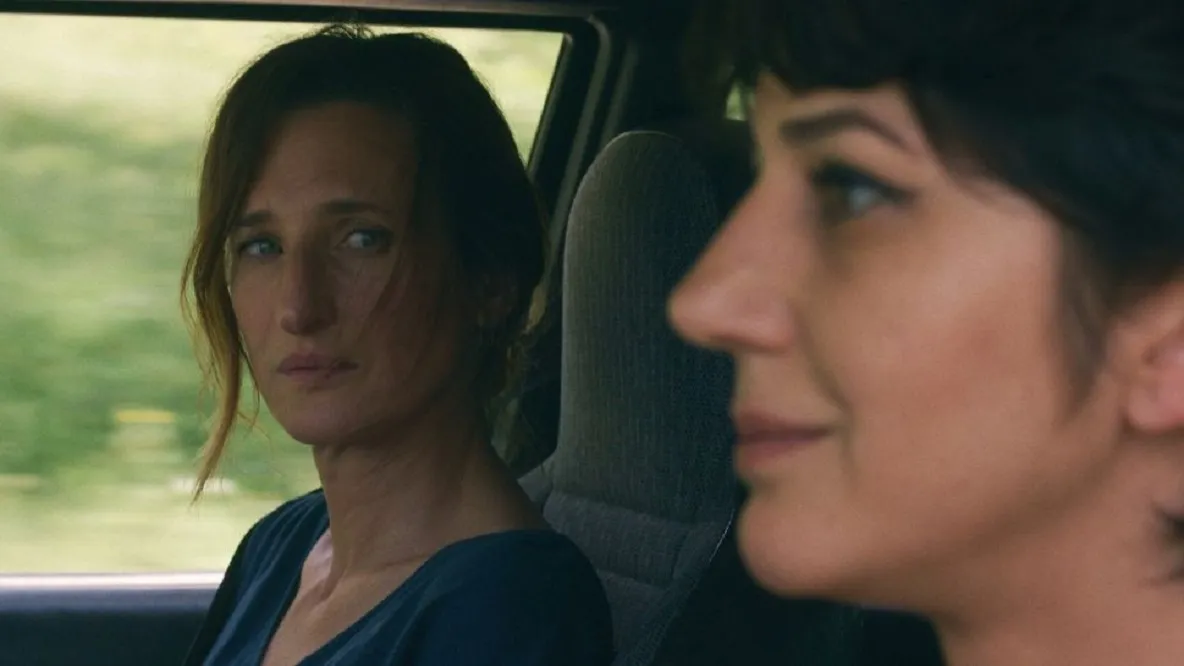
Her guide in this descent is Arsine (Zar Amir Ebrahimi), a French-speaking Armenian who provides a crucial link to this unfamiliar world. Arsine is not simply a plot device to facilitate translation; she is Celine’s philosophical foil. Where Celine is lost in the past, a tourist in her own history, Arsine is rooted in the precarious present, focused on the future of her nation.
She is pragmatic and empathetic, grounding Celine’s ethereal search in the solid, complicated reality of modern Armenia. Their developing relationship provides the structure for the film’s atypical road movie, a pilgrimage through a psychic and physical terrain of loss that moves forward geographically while spiraling deeper into the past.
The Terrain of Trauma
Director Tamara Stepanyan’s background in documentary is visible in every frame, giving the film an texture of lived reality. She avoids dramatic contrivances, instead adopting an observational patience that feels less like storytelling and more like bearing witness. Her fiction functions with a documentarian’s ethics. Armenia itself is the film’s most significant character, a place where history is a geological feature.
The cinematography from Claire Mathon is exceptional in this regard. The camera doesn’t just capture landscapes; it studies them, finding meaning in their scars. The choice of Gyumri as a primary setting is significant; it is a city that still bears the visible wounds of the 1988 earthquake, adding another layer of remembered catastrophe to the frame.
This approach creates a powerful emotional cartography, where the external world mirrors the characters’ internal states. The wounded land, dotted with ancient ruins and modern scars, reflects the collective trauma of its people and the specific, acute pain of its protagonist. Stepanyan enhances this connection with precise sensory details.
In one memorable sequence on a minibus, a local passenger sings along to a rap song on the radio. The song, Lyoka’s ‘Hascen Im Nuynn A’, is about displacement and the fierce desire to return to one’s roots. The moment silently unites the passengers in a shared history of loss, a temporary community forged in a melody. This scene, combined with Marc Ribot’s sparse, ambient blues score, gives the film a texture that is both raw and profoundly melancholic, a soundscape for a haunted place.
A Politics of Grief
The film’s central thesis is the indivisibility of personal pain and historical trauma. Celine’s very private quest to understand one man’s death becomes a confrontation with a nation’s unresolved grief, demonstrating how geopolitics can manifest as intimate sorrow.
Arto’s suicide is slowly reframed from a personal tragedy into a political act, the final surrender of a man crushed by the psychological weight of historical loss and the erasure of his homeland. His private despair is a symptom of a public catastrophe. This transforms the film from a domestic drama into a quiet political statement about how history lives inside people, shaping their choices and sealing their fates.
In the Land of Arto meditates on the function of memory and the nature of truth. It asks if it is better to bury a past too painful to bear or if confrontation, however agonizing, is the only path to a kind of peace. Celine’s search provides the answer: understanding is a prerequisite for healing, for the living to move forward. The film’s poetic, patient style is immensely effective, though some narrative choices feel less assured.
A late, jarring cameo by Denis Lavant, for instance, introduces a theatricality that feels discordant with the film’s carefully maintained naturalism. These are minor imperfections in a work that powerfully depicts a quiet, inextinguishable resilience. It is a film about the necessary, painful act of gathering the fragments of a life, and a nation, to find a truth that can be lived with, even if it can never be made whole.
In the Land of Arto is a 2025 French-Armenian drama film and Tamara Stepanyan’s fiction feature debut. It premiered as the opening film of the 78th Locarno Film Festival on August 6, 2025. The film will be released in French cinemas on January 7, 2026, by Pan Distribution.
Full Credits
Director: Tamara Stepanyan
Writers: Tamara Stepanyan, Jean-Christophe Ferrari, Jean Breschand, Jihane Chouaib, Romy Coccia di Ferro
Producers: Stéphane Jourdain, Camille Gentet
Cast: Camille Cottin, Zar Amir Ebrahimi, Shant Hovhannisyan, Hovnatan Avédikian, Alexander Khachatryan, Babken Chobanyan, Denis Lavant
Director of Photography: Claire Mathon
Editor: Olivier Ferrari
Composer: Marc Ribot
The Review
In the Land of Arto
A powerful and meditative film, In the Land of Arto transforms a personal search for truth into a profound exploration of collective trauma. Anchored by a restrained performance from Camille Cottin and stunning cinematography that makes the Armenian landscape a character in itself, the film is a somber, poetic, and deeply affecting piece of cinema. It masterfully connects an intimate story of grief to the enduring scars of history.
PROS
- A deeply layered script that connects personal grief with national history.
- Exceptional, restrained lead performances from Camille Cottin and Zar Amir Ebrahimi.
- Stunning cinematography that beautifully captures the wounded landscape.
- Patient, documentary-style direction that builds a powerful atmosphere.
CONS
- The deliberately slow, contemplative pace may not engage all audiences.
- A few scenes, like a late-film cameo, feel tonally inconsistent with the rest of the film.