




























In a television landscape increasingly crowded with high-concept experiments, Demascus arrives with a premise that feels both timely and deeply personal. The series introduces its title character, played by a wonderfully grounded Okieriete Onaodowan, as a 33-year-old Black man adrift in a sea of his own making.
He wryly calls his entry into therapy a “martyrdom” for his “Jesus year,” a sharp piece of dialogue that immediately establishes his wit and his weariness. His central problem is a distinctly modern one: he has spent so long cultivating an “unknowable” persona as a shield against the world that he has become a stranger to himself.
An anecdote about overhearing coworkers laugh at a story about him, of which he only catches the punchline, perfectly captures his alienation. He is perceived, yet never truly seen. The series sets this personal crisis in a “version of 2023” where self-driving cars and omnipresent AI assistants are the norm, subtly weaving a science fiction texture into its examination of a man trying to answer a simple, profound question: how do you find yourself when you have spent your life hiding?
Corrupting the Primary Narrative
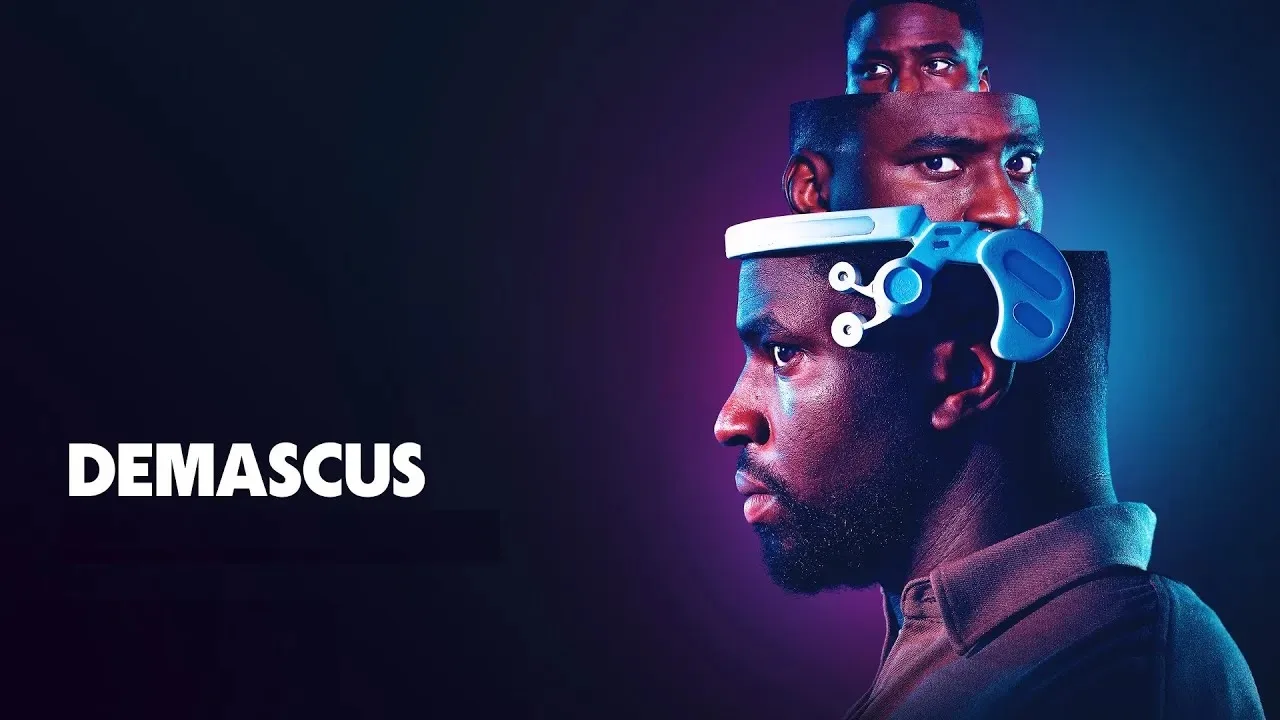
The show’s answer to Demascus’s existential plea is a piece of experimental technology called DIRT, for Digital Immersive Reality Therapy. Presented by his therapist, Dr. Bonnetville (Janet Hubert), DIRT is not a time machine or a simple simulator; it is a technology that allows a patient to become a “voyeur” in the alternate timelines of their own subconscious.
This positions the series within a familiar tradition of speculative fiction that questions the nature of reality, echoing the works of Philip K. Dick and shows like Black Mirror. Yet, Demascus refines this trope for a specific purpose. Where other stories use such technology to warn of a dystopian future, this series directs its focus inward, using science fiction as a scalpel for psychological surgery. The core conflict is not man versus machine, but man versus the many versions of himself.
The therapist’s critical warning that attempting to control these narratives could “permanently corrupt” his primary reality hangs over the proceedings, adding a layer of genuine stakes. This warning is not just plot dressing; it is a metaphor for the dangers of refusing to accept one’s life as it is, constantly wishing for an alternate path.
The series masterfully refuses to clarify which reality is the “primary” one, a structural choice that generates a productive state of disorientation. Through clever editing and abrupt transitions, the viewer is placed directly into Demascus’s confused headspace, unable to find firm footing. This formal technique mirrors the psychological state of navigating multiple social codes and expectations, a fragmentation of self that feels acutely relevant.
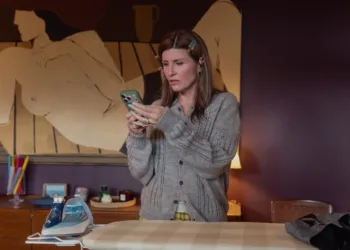
This fluid structure allows Demascus to shift genres at will. In one episode, Demascus finds himself a contestant on a bizarre instant-marriage reality show, a sharp satire of modern love and manufactured connection. In another, he inhabits the life of a Catholic priest, grappling with faith and celibacy.
A particularly effective storyline places him in a timeline where his best friend Redd is his romantic partner, allowing the show to explore intimacy and friendship from an entirely new angle. In another, he must gather a crew, including his ailing uncle, to confront his sister’s abusive boyfriend, a scenario that veers from tense thriller to dark comedy.
This narrative elasticity, enabled by a streaming format that encourages formal experimentation, prevents the show from ever feeling predictable. It uses its premise not as a gimmick, but as a robust engine for exploring the anxieties and possibilities of a life unlived.
A Multiverse of Black Masculinity
Demascus uses its reality-bending framework to support its cast in a manner resembling a repertory theater company, where familiar faces reappear in new roles. This inspired choice allows the show to examine its themes through the constant of character, even as circumstances radically change.

The supporting cast becomes a reflection of Demascus’s internal state, representing the different paths, people, and personas he could adopt. His best friend Redd, brought to life with incredible versatility by Caleb Eberhardt, is the most significant anchor. In one reality, he is a public defender who chafes at the code-switching his job requires; in another, he is a confident artist. In every form, he is a vital sounding board, their friendship a central pillar that holds across dimensions.
The casting of Martin Lawrence as Uncle Forty is a stroke of genius, a move that is both culturally resonant and textually rich. Lawrence, a titan of 90s comedy, plays a man who is a shadow of his former self, an aging “goon” on dialysis. This role plays with Lawrence’s established comedic persona, infusing it with a pathos and vulnerability that is profoundly affecting.
He is a source of both chaos and wisdom, his presence a commentary on legacy, aging, and the performance of masculinity. This meta-textual layer adds depth, especially when considering the show’s journey from AMC, a legacy network, to its eventual home on Tubi, a streaming platform. The dynamic speaks to a shift in the industry, where established figures and challenging stories find new life outside traditional systems.
The women in Demascus’s life represent a central conflict between safety and possibility. His girlfriend Budhi (Sasha Hutchings) is described as “algorithmically compatible,” the embodiment of a stable, sensible life that he finds himself drifting away from. In contrast, Naomi (Shakira Ja’nai Paye) is a mysterious, recurring figure who appears as an artist, a nun, and a nurse.
Their “pan-dimensional” connection is tentative and gentle, representing a pull towards the unknown. Through these shifting relationships and the constant presence of his family and friends, the series explores what one review called the “gulf between Black male perspectives” without resorting to stereotype. It presents a spectrum of identities, showcasing quiet introverts, assertive advocates, and aging patriarchs, moving far beyond a monolithic representation of Blackness.
No Such Thing as a Life That’s Better
Ultimately, Demascus resolves its complex narrative not with a climactic plot twist but with a quiet and deeply earned emotional truth. The series reveals itself to be not a puzzle to be solved, but an inward exploration of a man learning to integrate the disparate parts of himself into a coherent whole.

It subverts the expectations of the science fiction genre, where the stakes are often world-ending. Here, the stakes are intensely personal: the saving of a single, fractured soul. This focus on internal healing over external conflict marks a significant trend in modern speculative storytelling, one that values psychological depth above grand spectacle.
The journey is made accessible through consistently sharp writing, which finds humor in pain and profundity in the absurd. The uniformly excellent performances ensure that the story remains emotionally resonant, even at its most formally ambitious.
The final episode delivers what can only be described as a “devastatingly hopeful” resolution. The conclusion feels devastating because it requires Demascus to confront painful truths and let go of the fantasy of a different, “better” life. It is hopeful because, in doing so, he finds a path toward genuine self-acceptance. It is not a fairy-tale ending where all problems are solved, but a mature recognition that a meaningful life is built from imperfect pieces.
This message is perfectly encapsulated by the masterful use of J. Cole’s song “Love Yourz” over the final scenes. The lyrics, particularly the refrains “No such thing as a life that’s better than yours” and “It’s beauty in the struggle,” function as the show’s ultimate thesis.
The series argues that the messy, difficult, and contradictory parts of Demascus’s life are not bugs to be fixed but essential features of his identity. The choice of this specific song is a deliberate and powerful cultural signifier, grounding the show’s abstract concepts in a tangible artistic statement. Demascus successfully uses its complex structure to tell a profoundly human story, offering a necessary and beautifully rendered argument for finding peace not in an alternate reality, but within the one you have.
Demascus is a six-episode sci-fi comedy series that premiered on Tubi on August 7, 2025. It was initially developed for AMC but was canceled before its release in 2023.
Full Credits
Directors: Destiny Ekaragha, Solvan Naim, Theodore Witcher
Writers: Tearrance Arvelle Chisholm, Theodore Witcher, Aalia Brown, Lauren Glover, Kirk A. Moore
Producers: Tearrance Arvelle Chisholm, Mark Johnson
Executive Producers: Mark Johnson, Myki Bajaj, Kirk A. Moore, Tearrance Arvelle Chisholm
Cast: Okieriete Onaodowan, Janet Hubert, Caleb Eberhardt, Shakira Ja’nai Paye, Martin Lawrence, Sasha Hutchings, Brittany Adebumola, Tyrel Jackson Williams
Composer: Raphael Saadiq
The Review
Demascus
Demascus is a brilliant and formally inventive series that uses its science fiction premise not for spectacle, but for a profound and intimate exploration of one man’s identity. Anchored by a superb cast and sharp writing, it is a deeply felt story about the struggle for self-acceptance in a fragmented world. Its journey from a legacy network to a streaming service is a testament to the power of singular, challenging storytelling finding its audience. It is essential viewing for anyone interested in the future of television.
PROS
- An innovative narrative structure that thoughtfully explores its themes.
- Exceptional and versatile performances from the entire cast.
- A specific and nuanced examination of Black masculinity and mental health.
- Intelligent writing that skillfully balances humor, drama, and satire.
- An emotionally resonant and ultimately hopeful message about self-acceptance.
CONS
- Its intentionally disorienting and non-linear structure may not appeal to all viewers.
- The pacing across the different reality scenarios can feel slightly uneven.
- Some of the meta-textual elements, like the episode titles, can feel disconnected from the core emotional story.