




















![Kingdom Hearts Collection [I-III] Review](https://gazettely.com/wp-content/uploads/2026/10/Kingdom-Hearts-Collection-I-III-1-360x180.webp "Kingdom Hearts Collection [I-III] Review: KHII Holds Steady as Newer Entries Fluctuate 40")
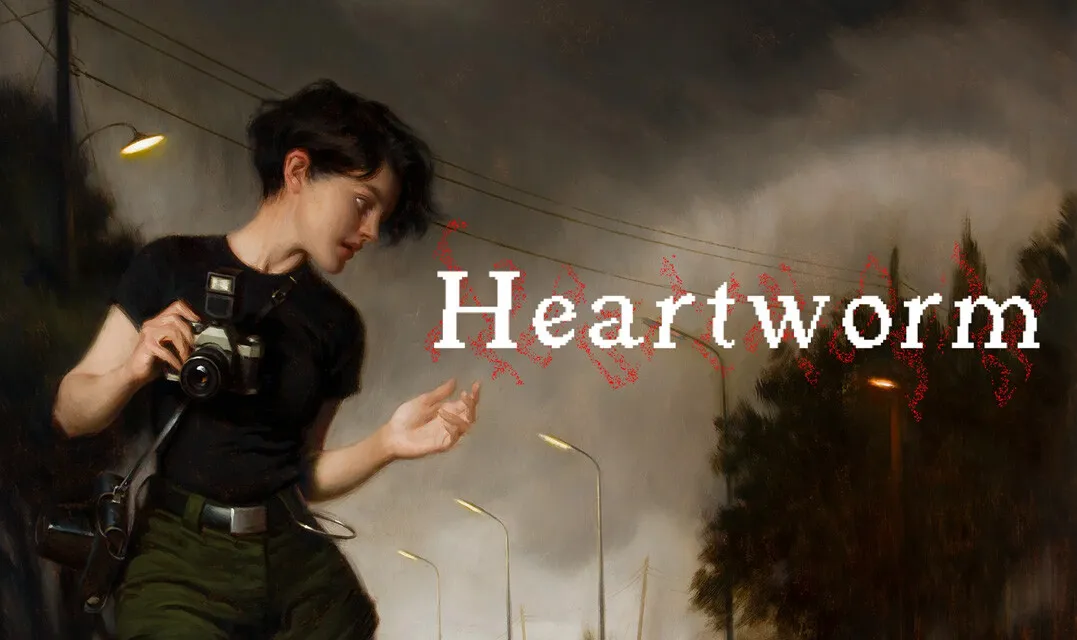

Heartworm presents itself as a creation from a lost era of gaming, faithfully resurrecting the style of 90s survival horror. This is a psychological thriller built on a foundation of fixed camera angles and methodical exploration.
You play as Sam, a young woman struggling with the recent death of her grandfather. Her grief leads her down an internet rabbit hole to whispers of a secluded house, a place that supposedly bridges the gap between the living and the dead. Driven by a desperate hope for connection, she enters the strange home, only to find herself pulled into a surreal world warped by memory and sorrow.
The game immediately establishes a heavy, melancholic tone, focusing on a creeping sense of dread rather than startling scares. It invites the player into a personal story of loss, set against a backdrop of decaying reality and otherworldly threats.
Mapping the Mind
The game’s structure is a loving and meticulously crafted homage to the classics that defined survival horror. At a surface level, this means progress is a deliberate process of navigating interconnected spaces, managing a tight inventory via a storage chest, and seeking the right key for the right door.
This formula, which will feel immediately familiar to anyone who spent time in the Spencer Mansion of Resident Evil, does more than just mimic a classic; it forces a specific, methodical pace upon the player. The limited inventory is a crucial part of this design. It is not merely an inconvenience but a source of constant, low-level anxiety and strategic decision making.
Standing before the storage chest, deciding whether to carry an extra healing item or the strange object you just found, becomes a meaningful choice. You are constantly weighing potential needs against the finite space you have, creating tension long before any monster appears on screen.
This foundational loop is elevated by a clever world design that ties directly into the game’s psychological themes. A central hub, a liminal space called “the archives,” gives Sam access to several “memory zones.” Each zone is a self-contained level representing a fragment of her psyche and past experiences.
This structure allows the environment itself to become an active storytelling device, a technique used to great effect in games like Silent Hill 2, where the decaying town physically manifests the protagonist’s internal trauma.
In Heartworm, a walk through a sun-drenched forest feels subtly wrong, its peace undermined by the game’s oppressive atmosphere and the knowledge that it is a memory, not a reality. The transition from the safety of the archives to these haunted recollections paces the narrative effectively, giving the player moments of respite before plunging them back into Sam’s fractured mind.
The puzzles are unquestionably the strongest part of this design. They are fair, logical challenges that reward attention to detail and environmental observation, respecting the player’s intelligence. They avoid the obtuse, trial-and-error design that can sometimes plague the genre.
Instead, the solutions feel earned. You might notice a sequence of symbols etched into a wall in one room and recall it later to open a locked box, or combine two seemingly useless items into the key for a new path. This active participation is how the narrative is best consumed.
While cutscenes exist, the real story is discovered through player action: reading scattered notes, examining objects, and solving the riddles that stand in your way. Even the game’s map system, which helpfully marks explored areas to reduce aimless wandering, contributes to this feeling of slowly conquering a hostile and confusing space. Backtracking is present, but it feels purposeful, as you return to old areas with new knowledge or a newly acquired item, making the world feel cohesive and interconnected.
An Undeveloped Negative
For its primary weapon, Heartworm hands Sam a camera, a mechanic that will immediately draw comparisons to the venerable Fatal Frame series. The concept is a perfect thematic fit for a game about capturing memories and confronting the ghosts of the past.
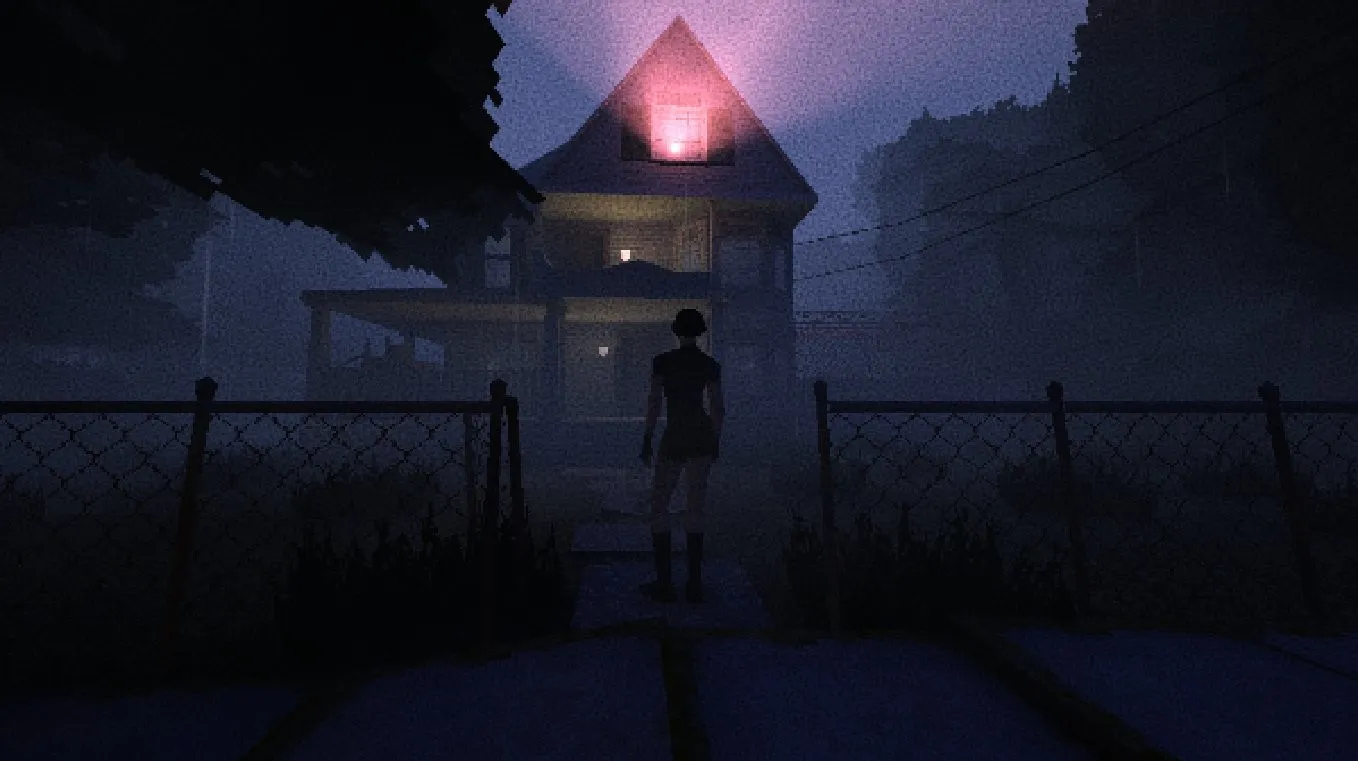
A quick button press switches the view from the fixed third-person camera to a first-person perspective through the lens, allowing you to aim and snap a picture to damage or stun enemies. It is an elegant idea that initially feels fresh and clever. However, where Fatal Frame built an entire system of deep mechanics around its Camera Obscura, with different film types, lens upgrades, and special abilities, Heartworm’s implementation remains disappointingly simple throughout the experience.
The combat loop, once discovered, rarely deviates. An enemy appears, you raise the camera, you take a few shots until the apparition dissipates, and you move on. The lack of mechanical evolution means there is no growing sense of mastery or strategic choice.
Encounters in the final hour are handled in almost the exact same way as those in the first, transforming combat from a tense engagement into a predictable and sometimes tedious roadblock between the more interesting puzzle and exploration segments. The enemy designs, while visually striking at first, suffer from this same lack of depth.
The spectral figures composed of television static are genuinely unsettling on their first appearance, their glitchy movements and distorted sounds creating a wonderful sense of technological horror. Yet the variety of threats is quite small, and their power to intimidate wanes significantly with repeated exposure.
Their AI is simple, their attack patterns are basic, and they soon become less a source of terror and more a simple resource drain on your limited camera ammunition. The game also employs unkillable stalker enemies, but they lack the persistent, unpredictable dread of a true pursuer like Resident Evil 3’s Nemesis, often feeling more like scripted obstacles in specific sections.
This mechanical simplicity is most damaging during boss fights. These encounters are often visually imaginative, representing significant aspects of Sam’s trauma. Yet their mechanics are almost universally uninspired. They typically devolve into a simple, repeating cycle of stunning the boss, waiting for a vulnerable phase, and repeating the process.
There is a profound disconnect when a creature that is meant to be a terrifying manifestation of a deep-seated fear can be defeated by a monotonous and tensionless pattern. The fight fails to provide the catharsis it should.
Furthermore, the camera’s secondary function, using its flash to briefly illuminate dark areas, feels like a significant missed opportunity. This could have been the foundation for tense stealth sequences or intricate puzzles requiring timed flashes, but instead, it remains a minor utility that is easily forgotten.
Symphony of Static
The game’s presentation is where its artistic vision is most powerfully and cohesively realized. It commits fully and unapologetically to a PlayStation-era aesthetic, and the result is magnificent. This is not a superficial coat of retro paint; it is the game’s soul, a foundational choice that informs every other aspect of the experience.
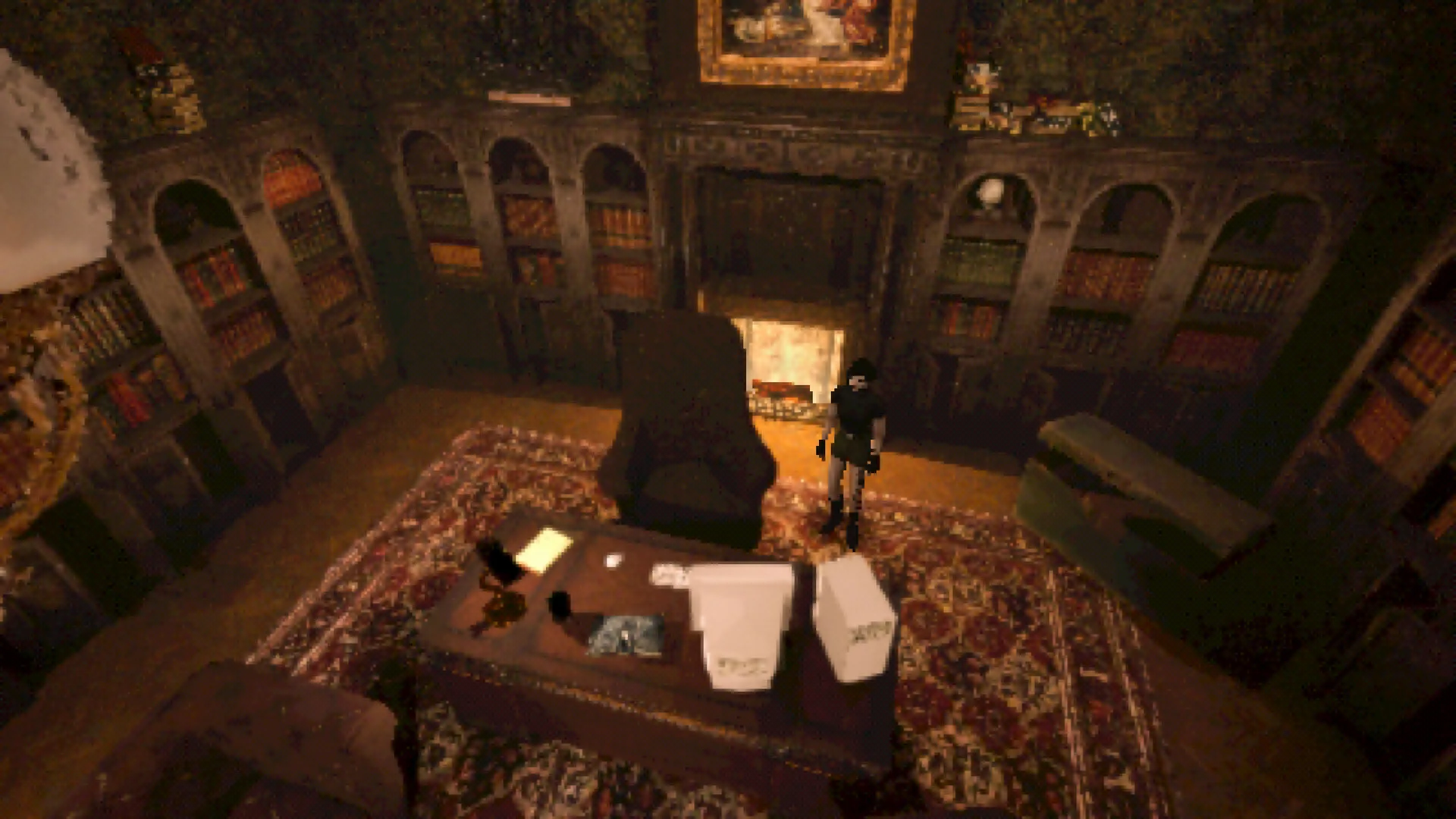
The low-polygon models, intentionally grainy texture filters, and swimming texture warping are not technical limitations but deliberate artistic tools. This specific style of graphical abstraction can be far more unsettling than photorealism, as it forces the player’s imagination to fill in the horrifying details. The fixed camera angles are another critical component, used not just as a nostalgic callback but as a powerful directorial tool.
Each camera placement is a conscious decision, framing the scene to control what the player sees and, more importantly, what they do not. This allows for the creation of masterful tension, with threats often lurking just out of sight, their presence hinted at only by a faint sound.
The environmental design is stunning, leveraging this aesthetic to create a world that is both beautiful and deeply disturbing. The art lies in the juxtaposition of the mundane and the surreal. A walk through a normal-looking suburban street feels subtly wrong, the peaceful facade undermined by the oppressive atmosphere and the distorted, dreamlike logic of the world.
The game excels at creating these liminal spaces—areas of transition that perfectly mirror Sam’s own psychological state, caught between memory and reality, grief and acceptance. The environment is not a passive backdrop; it is an active character in the story.
This powerful visual identity is supported by an equally impressive soundscape. The score is a masterful work of ambient horror, largely eschewing memorable melodies in favor of a mood-setting blend of melancholic piano and low, persistent drones that keep you permanently on edge. The sound design is layered with precision.
The hum of a fluorescent light, the sound of Sam’s footsteps changing from concrete to carpet, the sharp, distorted whisper of a nearby enemy—these elements work in concert to build a palpable sense of unease. The game also understands the power of silence, often pulling back the audio to make a sudden creak or footstep feel deafeningly loud.
Finally, the game’s controls contribute to its atmospheric success. While a modern control scheme is offered, the classic “tank” controls are the superior choice. Their deliberate, methodical nature complements the fixed cameras perfectly, forcing the player to commit to their movements and enhancing the feeling of vulnerability that is so central to the survival horror experience.
The Review
Heartworm
Heartworm is a stunning artistic achievement, a haunting journey into grief powered by masterful atmosphere and intelligent puzzle design. It successfully resurrects the soul of classic survival horror. However, its brilliant presentation is held back by a shallow and repetitive combat system that turns potential tension into tedium. It's a game to be admired for its world and puzzles, but not for its action. A worthwhile trip for fans of psychological dread who can look past its mechanical shortcomings.
PROS
- Masterful atmosphere and a perfectly realized PS1-era art style.
- Intelligent and satisfying puzzle design that respects the player.
- Excellent use of environmental storytelling and sound design to build dread.
CONS
- A shallow and repetitive combat system that lacks depth.
- Mechanically uninspired and tensionless boss encounters.
- The central camera mechanic feels underdeveloped.