

























![Kingdom Hearts Collection [I-III] Review](https://gazettely.com/wp-content/uploads/2026/10/Kingdom-Hearts-Collection-I-III-1-360x180.webp "Kingdom Hearts Collection [I-III] Review: KHII Holds Steady as Newer Entries Fluctuate 37")



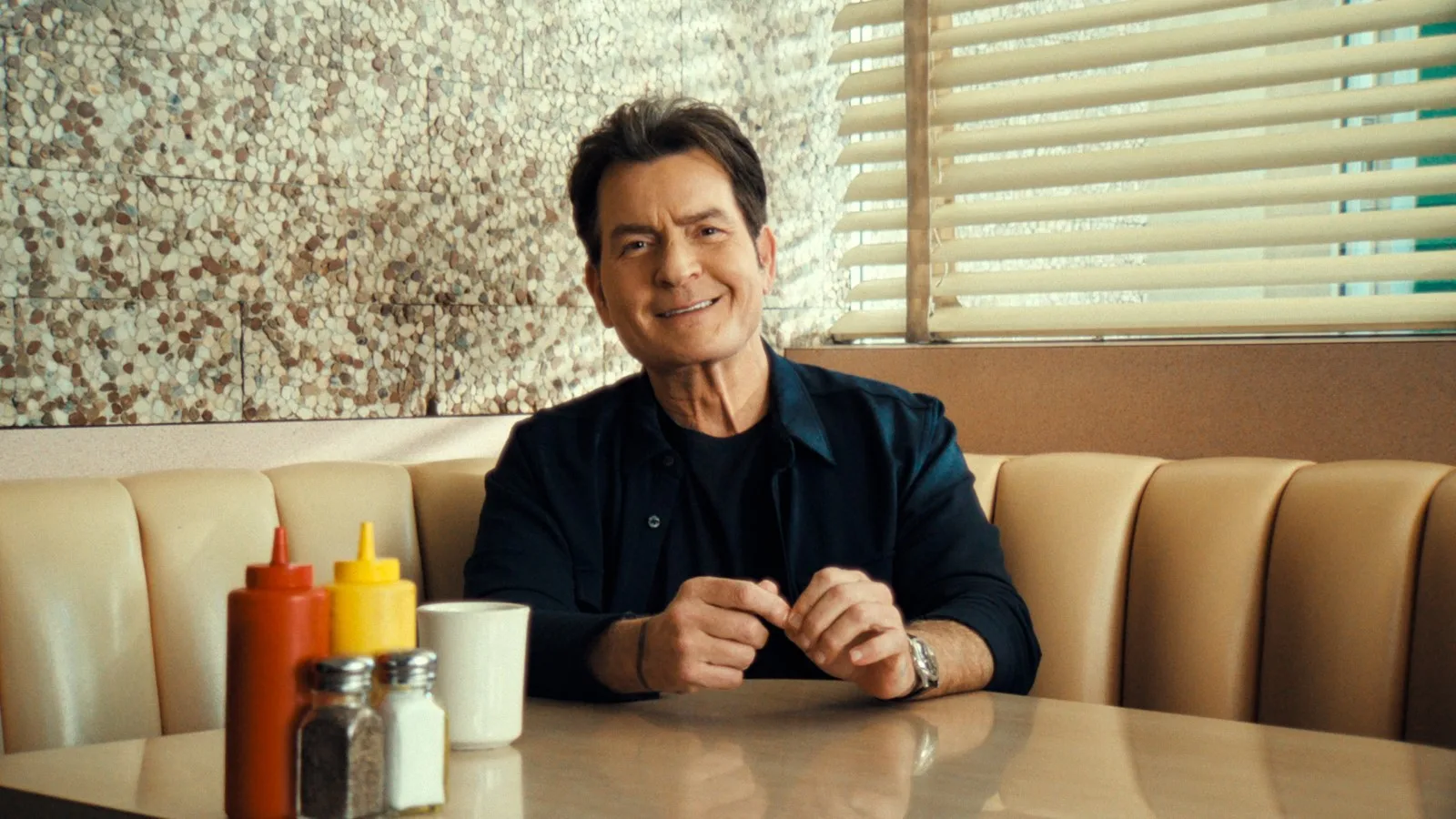

The two-part documentary AKA Charlie Sheen invites its subject to sit in a diner booth, a stage lit by the flat glare of an eternal afternoon. Here, a man years into a hard-won sobriety attempts to piece together the fragments of a life detonated by fame. Charlie Sheen, the cultural specter, the human headline, recounts his history for the camera. We are presented with a figure whose existence has been a public performance, a long fall documented in real time.
The project immediately surfaces a deep uncertainty. Are we witnessing the quiet confession of Carlos Estévez, the man behind the name? Or is this just the final, most subtle performance of “Charlie Sheen,” an actor playing the part of a man redeemed? The distinction becomes the ghost that haunts every frame.
An Architecture of the Self
The choice of the diner is a deliberate stroke of stagecraft. It is a liminal space, a non-place of transient encounters where stories are exchanged over coffee before journeys continue. Yet this diner is empty, silent, its archetypal American comfort rendered sterile and artificial. It is less a place of rest and more a purgatorial chamber, a brightly lit room where a life will be judged by the one who lived it. Here, Sheen begins the impossible work of imposing order on a life lived in defiance of it. He presents his own history as a neat, three-act play: the era of “Partying,” followed by “Partying with Problems,” and the grim finale of “Just Problems.”
This self-authored structure is a profound existential act. It is an attempt to become the poet of one’s own biography, to transform a chaotic sequence of events into a narrative with a beginning, middle, and end. One has to wonder if this framing serves genuine understanding or functions as a kind of elegant self-deception. By packaging the chaos into a literary form, he may be avoiding a confrontation with the true, formless horror of his actions.
His performance in this confessional is remarkable. As a raconteur, Sheen is magnetic, wielding his charisma like a surgical tool. He is articulate, wry, and projects an aura of radical candor. He speaks of his deepest failings with a kind of bewildered detachment, as if observing the actions of another man. This is the central paradox of his testimony. Moments of what seems to be genuine, piercing self-awareness are interwoven with a chilling inability to articulate remorse for the suffering of others.
The harm he caused exists in his story as a plot point, a consequence that happened to him, not a wound he inflicted. This suggests a profound spiritual emptiness beneath the polished surface of his storytelling. It raises the question of whether the persona of “Charlie Sheen,” an identity constructed around pure id, has permanently eroded the capacity of Carlos Estévez for true empathy. This new role, the sober survivor, is his most complex. He plays it with masterful precision, but the performance is so complete it leaves one wondering if an authentic self still exists to be found.
A Kaleidoscope of Memory
Director Andrew Renzi situates himself as a disembodied voice, a gentle interrogator ferrying his subject across the river of memory. His presence is both guiding and curiously passive, a choice that feels most significant in a calculated piece of theater where he asks the camera crew to leave the room. The act is meant to signal a shift into deeper intimacy, a promise of unvarnished truth. Instead, it serves only to highlight the inherent artifice of the entire project. It is a performance of authenticity, not the thing itself.
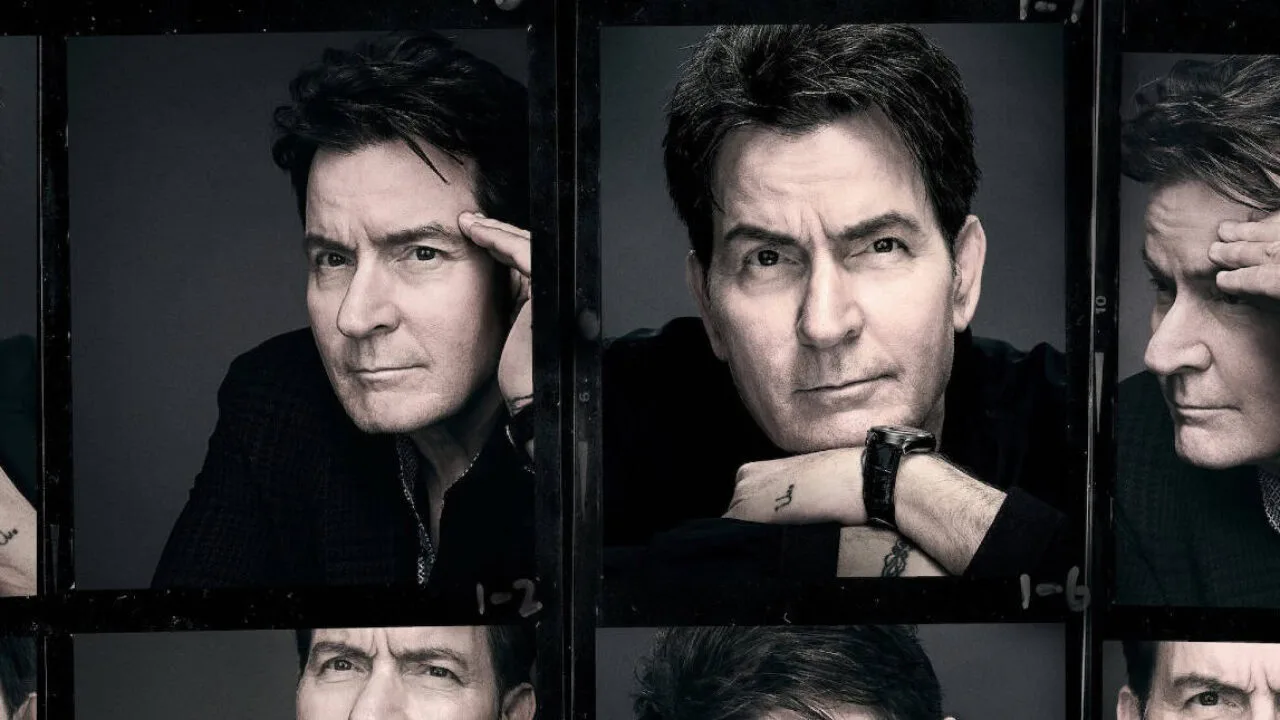
The documentary’s primary visual language reinforces this sense of a life lived through a lens. It is a relentless collage of image and reality, a hall of mirrors reflecting infinitely. Scenes from Sheen’s filmography are not just used as illustration; they are woven into the fabric of his life until the two are indistinguishable. The arrogance of a character in Wall Street becomes a commentary on his own hubris. The terror of a soldier in Platoon mirrors his own internal wars. Life becomes a copy of art, which was itself a copy of an imagined human experience.
This dizzying montage is grounded by two distinct archival sources. The first is the trove of Super 8 films the Estévez brothers made as children. These grainy, flickering images are like transmissions from another world, an origin point before the myth took hold. In them, one sees a boy already fascinated with crafting narratives of violence, fame, and identity, a chilling foreshadowing of the man he would become.
The second source is the endless stream of news reports and paparazzi footage that documented his public decay. This material creates a suffocating sense of surveillance, the constant cultural noise through which Sheen lived his life. It demonstrates how the media apparatus that built his celebrity became the very same machine that chronicled, and perhaps encouraged, his destruction. The film shows that for Sheen, there was never a private self; every memory seems to be a pre-recorded image, every moment a scene.
Orbits of a Dying Star
To prevent the film from becoming a pure exercise in solipsism, a chorus of outside voices provides crucial context. These are the people who existed in the gravitational pull of his fame, and their testimonies map the human cost of his trajectory. Jon Cryer emerges as a kind of stoic philosopher, observing his co-star with a sad, clear-eyed wisdom.
He analyzes Sheen’s cycle of self-immolation and frantic rebirth not with judgment, but with the weary insight of someone who watched the pattern repeat itself for years. The accounts from ex-wives Denise Richards and Brooke Mueller provide the story its necessary tragic weight. Their pain is palpable, their recollections forming a powerful counter-narrative to Sheen’s more detached telling. They are not merely characters in his story; they are the survivors of it. In a brief, potent appearance, Heidi Fleiss injects a jolt of raw, unvarnished rage. Her fury feels righteous, a refusal to be a reconciled footnote in a tidy redemption arc.
Even more resonant than these voices are the silences. The explicit refusal of Martin Sheen and Emilio Estévez to participate in the film is not a simple absence. It is an active, shaping force in the narrative, a black hole whose presence is defined by the void it leaves behind. Their silence suggests a boundary of pain, a story of the family that is too sacred or too terrible to be offered up for public consumption.
It hints at a truth deeper than the one being performed in the diner. Surrounding these central figures are other satellites: loyal friends who remember the boy, and his former drug dealer, “Marco,” who speaks of Sheen’s consumption with the chilling pragmatism of a business partner. Together, these voices and silences create a complex portrait of the ecosystem that sustained and suffered from the phenomenon of Charlie Sheen.
The Price of the Ticket
The documentary treats the 2011 “Tiger Blood” media tour as a singular cultural rupture. It was more than a celebrity meltdown; it was a public spectacle in which a man’s profound suffering was transformed into a commodity, repackaged as memes and catchphrases. The film implicitly critiques the audience’s role in this frenzy. We were not passive observers; we were consumers of his disintegration, and the documentary forces an uncomfortable reckoning with that complicity.

It was a journey into the abyss, and the world paid for a ticket. Where the project falters is in its own confrontation with that abyss. When addressing the gravest allegations against Sheen, from domestic violence to the lawsuits surrounding his HIV diagnosis, the film adopts a cautious posture. It allows Sheen to present his side, to be the final word on his own controversies. The format provides testimony without cross-examination, confession without true accountability.
This ethical ambiguity is the documentary’s lasting impression. It takes us to the very edge of darkness but seems afraid to look directly into it, preferring the more manageable narrative of addiction and recovery to the far messier truths of interpersonal harm. The film offers no easy catharsis or clear resolution.
It simply ends, leaving the viewer in the quiet hum of the empty diner, unsettled and uncertain. We are left to question what remains when a man survives his own myth. Is the person we see a soul restored, or is he merely a collection of finely polished stories, the last performance of a lifetime? The film does not answer. It only holds up the mirror and lets the ghost stare back.
aka Charlie Sheen is a two-part documentary film series exploring the life and career of actor Charlie Sheen. The film, which premiered on September 10, 2025, is available to stream on Netflix. It features interviews with Sheen, his ex-wives, and friends as he reflects on his career, public scandals, and path to sobriety.
Full Credits
Director: Andrew Renzi
Writers: Information not available
Producers and Executive Producers: Vivian Johnson Rogowski (Executive Producer), Atlas Independent (Production Company), Boardwalk Pictures (Production Company), North of Now Group (Production Company), Skydance Media (Production Company)
Cast: Charlie Sheen, Sean Penn, Denise Richards, Brooke Mueller, Jon Cryer, Ramon Estevez, Chris Tucker, Heidi Fleiss
The Review
aka Charlie Sheen
AKA Charlie Sheen is a mesmerizing and unsettling hall of mirrors. It succeeds as a portrait of a man attempting to author his own legend, a performance of contrition that is both masterful and hollow. The series offers a compelling look at the machinery of celebrity and self-destruction. However, it pulls back from a true moral reckoning, content to explore the performance of recovery rather than its difficult reality. The film is less a confession and more a final, haunting monologue delivered from a carefully constructed stage.
PROS
- Sheen is a captivating and articulate narrator of his own story.
- Artful direction, with effective use of film clips and archival footage to create a dense visual narrative.
- Insightful supporting interviews from figures like Jon Cryer provide essential external perspectives.
- Raises profound questions about identity, performance, and the nature of celebrity.
CONS
- Lacks critical distance, allowing Sheen too much control over the narrative.
- Avoids a true examination of the harm caused to others, especially in regard to serious allegations.
- The three-hour runtime can feel excessive and repetitive in its focus on addiction cycles.
- Key moments of intended intimacy feel staged and performative.