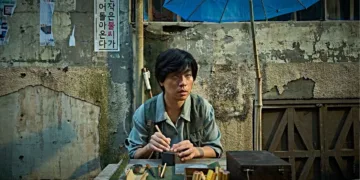


















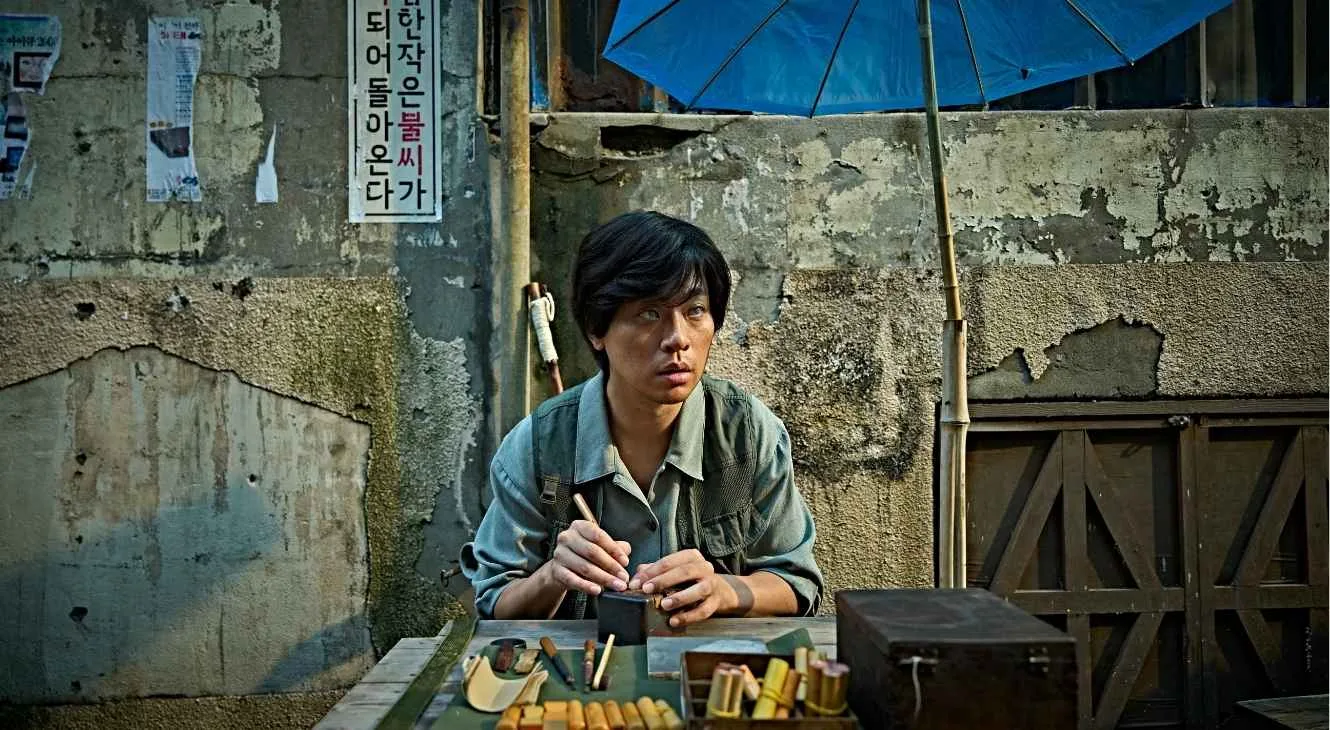

Yeon Sang-ho’s film The Ugly begins with a quiet sense of reverence that is quickly dismantled. We are introduced to Im Yeong-gyu, a renowned blind artisan celebrated for his mastery of stamp engraving, a craft requiring immense precision.
At his side is his son, Dong-hwan, who seems weary of the constant admiration his father receives. The latest admirer is Su-jin, a television producer creating a documentary on Yeong-gyu’s life. This familiar routine is shattered by a single phone call. Police have found skeletal remains on a mountainside, identified as Dong-hwan’s mother, Young-hee, who vanished forty years ago.
This news sends Dong-hwan, with the story-seeking Su-jin in tow, on a search for a woman he never knew. His investigation uncovers a past defined not by love or accomplishment, but by a single, brutally repeated observation about her appearance.
A Story Told Through Echoes
The film’s structure is as fragmented as the memories it pieces together, a choice that boldly departs from conventional thriller pacing. The narrative unfolds through a series of five interviews, each serving as a chapter in the slow unearthing of Young-hee’s life. These conversations trigger flashbacks, but they are not objective windows to the past; they are colored by the biases and faded recollections of the people speaking.
This method of storytelling creates a deliberate, almost lethargic pace. We don’t experience the story directly; we receive it secondhand, which builds a distinct sense of detachment. The film demands patience, mirroring the arduous, frustrating process of excavating a history that no one wants to properly remember.
This approach feels more aligned with the sensibilities of independent cinema, which often prioritizes atmosphere and thematic weight over propulsive plot mechanics. The film’s most striking technical choice is its refusal to show Young-hee’s face. In every flashback, the cinematography uses shadow, obstructed angles, and her own hair to conceal her features.
This visual discipline forces us to form an image of her based only on the cruel words of others. It’s an effective device that puts us in the same position as her son, trying to build an identity from painful, incomplete fragments.
The Masks We Wear
The characters in the present day often feel like vessels for the story, a conscious choice that funnels our focus toward the past. Dong-hwan and Su-jin are our guides, but their primary function is to listen. Their own personalities are secondary to the larger mystery, making them effective stand-ins for the audience.
The film’s acting showcase belongs to Park Jeong-min, who handles a difficult dual role with incredible skill. As the son Dong-hwan, his posture is heavy, weighed down by an inherited sadness. In the flashbacks, he portrays the younger version of his father, Yeong-gyu, a man whose smile is just a little too wide, a performance of happiness designed to deflect the world’s mockery.
His physicality in each role is completely distinct. His performance stands in stark contrast to Kwon Hae-hyo’s older Yeong-gyu, a man who has retreated into a quiet, reserved existence. Special recognition must go to Shin Hyun-been as Young-hee. Tasked with performing without her face ever being shown, she conveys a lifetime of suffering and resilience through her posture and voice alone; a slump of the shoulders or the slight tremor in her speech says more than a dramatic monologue ever could.
The cast of interviewees completes this picture of cruelty, each presenting a self-serving version of the past that subtly shifts blame and paints Young-hee as the architect of her own misfortune, making the truth a constantly moving target.
The True Definition of Ugly
The Ugly uses its central mystery to ask a profound question about the nature of ugliness itself, functioning as a sharp piece of cultural commentary. The film argues that true grotesqueness is found not in a person’s physical features but in the cruelty of others, in the ease with which a community can ostracize someone for being different.
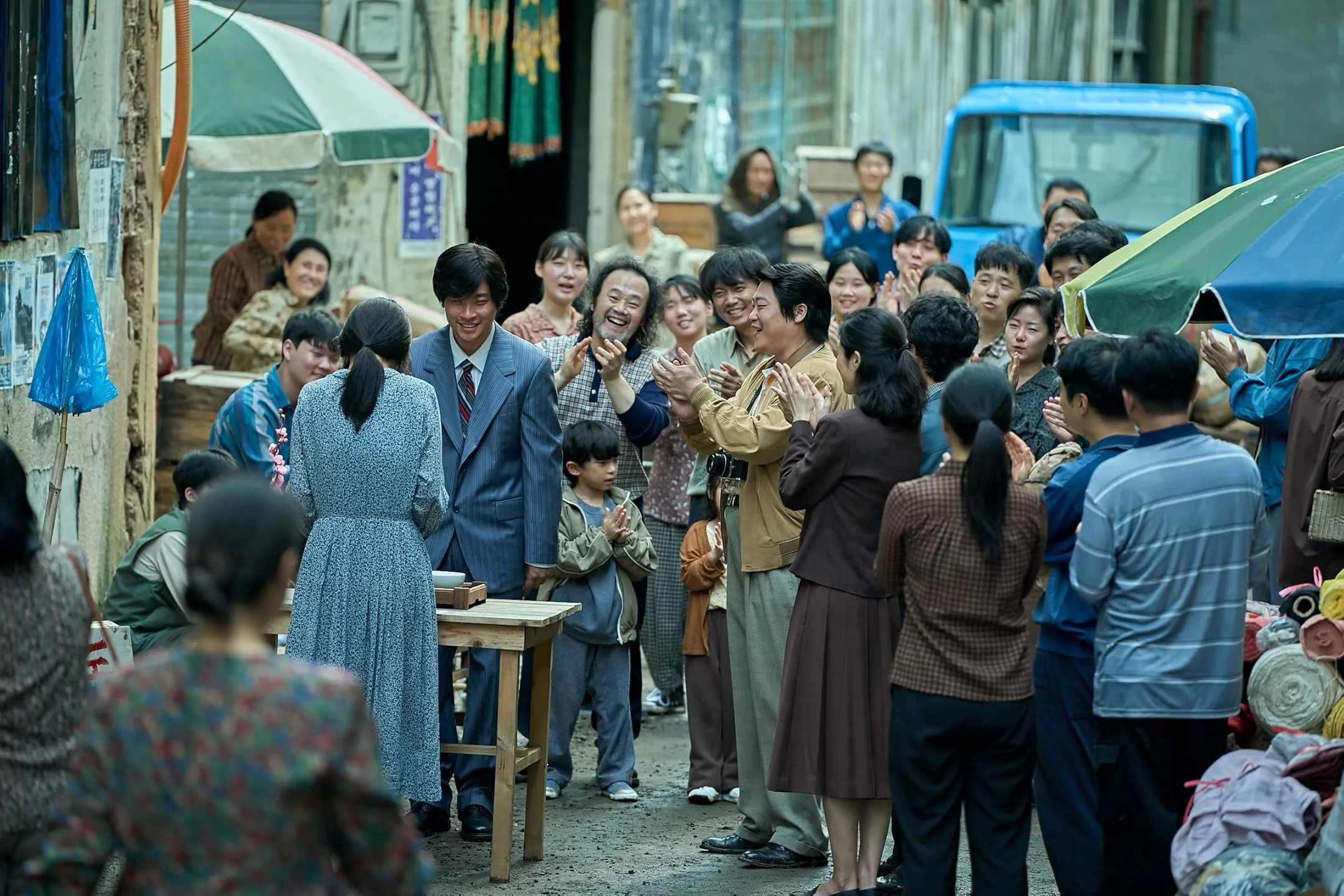
This feels particularly relevant today, in an age where online mobs can define a person’s entire existence based on a single mistake or perceived flaw. Young-hee was given the nickname “Dung Ogre” after one moment of profound humiliation, a label that stuck to her and defined her in the eyes of everyone she knew.
While the whodunnit aspect of the plot may feel predictable, its resolution is less about shock and more about thematic confirmation. The film offers a deeply pessimistic view of society, suggesting that people will readily invent reasons to justify their prejudices. The final scenes refuse to provide easy answers or a comforting sense of justice, a bold subversion of mainstream expectations that leaves a lingering chill.
Young-hee becomes a symbol of a painful history that others would prefer to keep buried. Her story is a bleak, unflinching statement on how easily empathy can be discarded in the name of social conformity.
The Ugly is a 2025 South Korean mystery thriller film based on director Yeon Sang-ho’s 2018 graphic novel of the same name. It had its world premiere at the Toronto International Film Festival on September 9, 2025. The film is set to be released in South Korean theaters on September 11, 2025, by Plus M Entertainment, with a limited theatrical release in the United States on September 26, 2025. It tells the story of a man who unearths long-buried truths about the mysterious death of his mother, who was thought to have been missing for 40 years.
Full Credits
Director: Yeon Sang-ho
Writers: Yeon Sang-ho
Producers and Executive Producers: Yang Yoomin Hailey, Wow Point
Cast: Park Jeong-min, Kwon Hae-hyo, Shin Hyun-been, Im Seong-jae, Han Ji-hyun
Director of Photography (Cinematographer): Pyo Sang-woo
Editors: Park Ju-ae
Composer: Chai Min-joo
The Review
The Ugly
The Ugly is a demanding and somber film that succeeds more as a chilling statement on human cruelty than as a conventional mystery. Its deliberate pacing and detached narrative style will not be for everyone, but its thematic depth and the strength of its central performances are undeniable. A powerful, unsettling examination of how society chooses its monsters.
PROS
- A profound exploration of prejudice and the nature of cruelty.
- An outstanding dual performance by Park Jeong-min.
- A unique and effective visual style that hides the victim's face.
- A challenging, pessimistic tone that avoids simple resolutions.
CONS
- The methodical, slow pace can feel lethargic.
- The mystery's conclusion is somewhat predictable.
- Present-day characters lack significant development.
- The interview-based structure creates emotional distance.