






















Ann Marie Fleming’s film Can I Get a Witness? opens not with the expected ruin of a dystopia, but with the gentle sounds of birdsong amid lush greenery. The sensorial calm envelops the viewer as The Ink Spots’ “I Don’t Want to Set the World on Fire” plays softly. This song reappears throughout the film, each time carrying a more menacing weight.
This beautiful, tranquil world has been meticulously engineered. In the wake of global environmental and social collapse, humanity has unplugged from technology and embraced a simpler existence. This peace, however, is built upon a staggering sacrifice: a government mandate requires every citizen to accept voluntary euthanasia upon their fiftieth birthday.
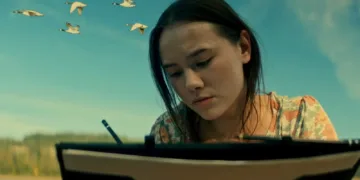
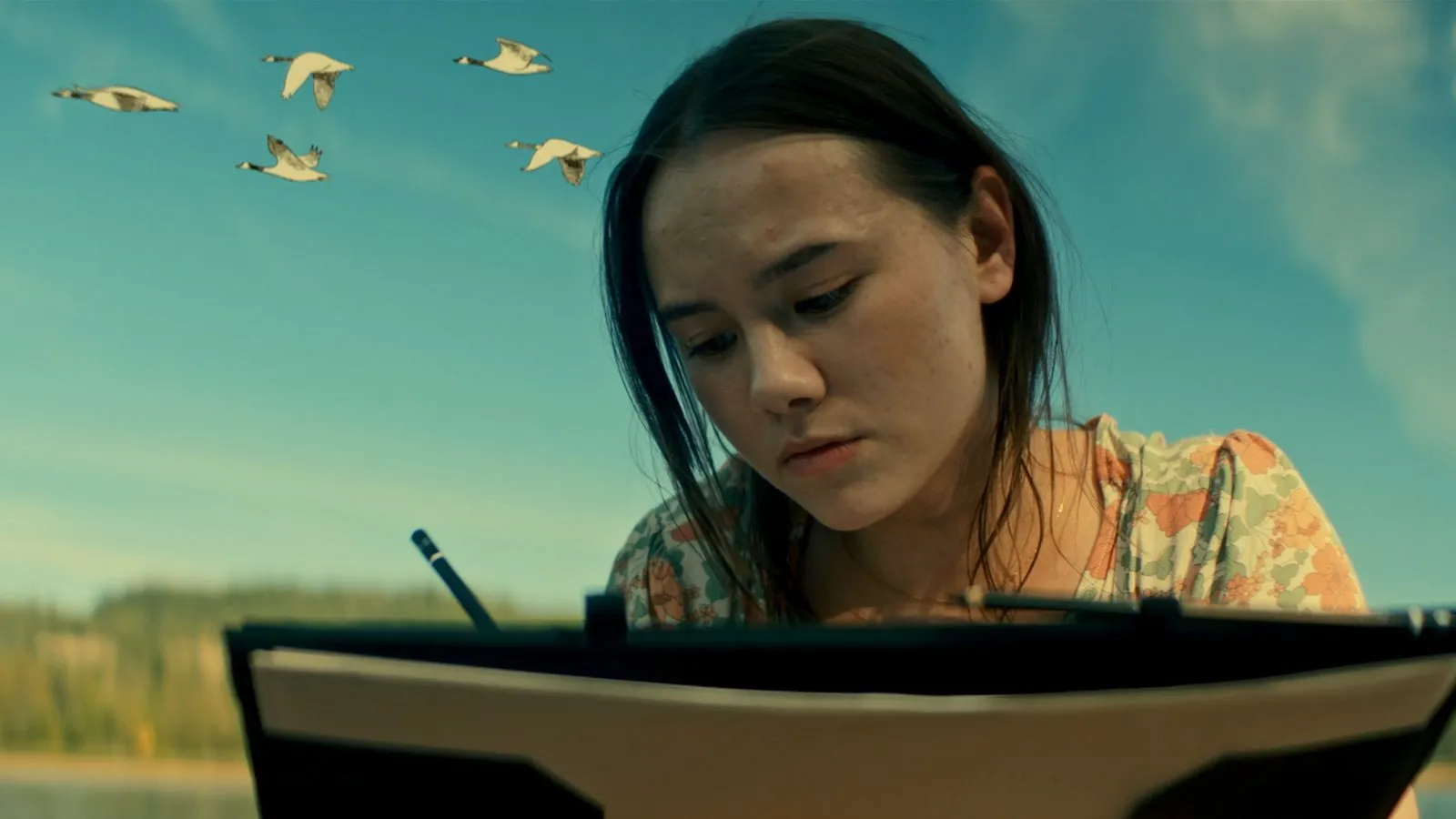
We enter this society through the eyes of Kiah, a teenager beginning her first day of work. Her job is to be a “Witness,” an artist who officially documents these end-of-life ceremonies in a sketchbook, creating a permanent, analogue record of each citizen’s final compliance.
An Eden with Barbed Wire
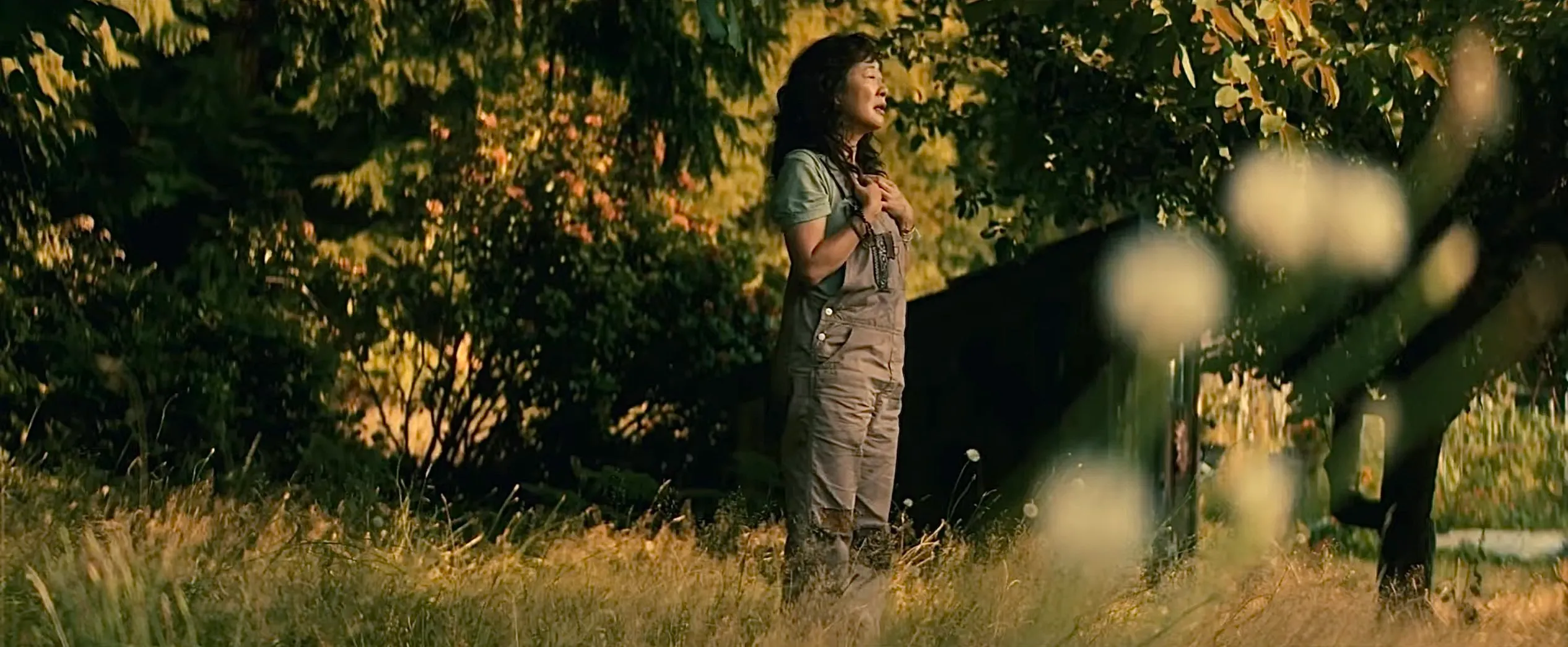
The world Fleming constructs is a “gentle dystopia,” a society that has traded technological freedom for ecological stability. The absence of cars, computers, and smartphones has allowed nature to heal, and the film’s cinematography lingers on this verdant, recovered landscape, using long takes and natural light to create a meditative, immersive pace.
This quiet, minimalist style recalls the grounded social realism of Indian parallel cinema. Much like the works of Satyajit Ray, which used a neorealist aesthetic to critique social norms from a humanistic perspective, Fleming uses her serene atmosphere to build a constant, underlying tension between the world’s placid surface and the violent conformity it demands. Information is offered sparingly, a narrative technique that places the audience in the same uncertain position as Kiah, learning the rules and their grim implications in real time.
This tension is further complicated by the director’s signature use of simple, hand-drawn animations. These flourishes appear as extensions of Kiah’s artistic vision, a visual representation of her internal processing of death. It is her way of imposing a child-like order and aesthetic beauty onto a fundamentally horrifying process.
The question lingers whether this artistic interpretation is a coping mechanism, a form of silent rebellion, or a way for her to become complicit in the system by beautifying its function. The child-like drawings symbolize her attempt to process her duties, yet their simplicity can feel at odds with the gravity of the events, creating a dissonance that highlights Kiah’s own emotional conflict.
Bearing the Weight of Witness
The film’s high-concept premise is grounded by its central performances. Keira Jang portrays Kiah with an effective simplicity; she is an observant and naive entry point for the viewer. Jang’s performance is a study in gradual awareness, conveyed through subtle shifts in her posture and the way her drawings seem to evolve from hesitant observations to deeply troubled recordings.
Opposite her, Joel Oulette’s Daniel is the experienced guide whose casual, almost bureaucratic approach to his work is deeply unsettling. He represents the normalization of the unthinkable, a generation born into the system and accepting of its logic. Oulette carefully maintains an ambiguous charm, leaving the audience to question if he is a true believer or someone hiding his own doubts.
Sandra Oh, as Kiah’s mother Ellie, provides the story’s emotional anchor. With limited screen time, Oh conveys a lifetime of memory and quiet sorrow, her performance embodying the central theme of what is lost when difficult history is paved over for a manufactured peace.
She is a symbolic link to a lost world of complex emotion, and her quiet grief represents the collective memory this new society has tried to erase. The chemistry between Oh and Jang makes the impending conflict deeply personal and affecting. The film falters when it shifts focus to a budding romance between Kiah and Daniel, a narrative choice that consumes valuable time and dilutes the more potent mother-daughter dynamic, detracting from the central moral examination.
A Radical Idea’s Timid Voice
Can I Get a Witness? poses a profound philosophical question about the limits of individual sacrifice for the collective good. The film shares thematic DNA with other dystopian stories; the age-based termination is a direct echo of Logan’s Run, while its quiet, melancholic tone brings to mind Never Let Me Go.
Yet where a film like Children of Men uses frenetic action and documentary-style realism to show a world desperately fighting for survival, this film uses stillness to depict a society that has already surrendered. The horror is in the placidity, not the chaos.
The script, however, feels timid. It introduces a radical concept but hesitates to examine its complexities. The narrative avoids engaging with the political logistics of how this system is enforced or if it is truly equitable. The mechanism of “Compliance” is mentioned but never shown, and dissent is treated as a minor inconvenience rather than a serious threat.
This refusal to show the machinery behind the curtain weakens the stakes, turning a potential political thriller into a more sentimental, personal drama. The film’s conclusion makes a pointed statement about individual responsibility but sidesteps the larger systemic critique its premise seems to promise.
It ultimately succeeds as a thought-provoking piece built on a powerful concept, yet its reluctance to investigate its own dark implications leaves it feeling like an introduction to a much larger, more difficult conversation.
“Can I Get a Witness?” is a science fiction drama that premiered at the Toronto International Film Festival in September 2024. The film is set in a near-future where, to combat environmental collapse, humans are not allowed to live past the age of 50. The story follows a teenage girl who works as a “Documenter,” sketching the end-of-life ceremonies of those who have reached the age limit. The film had a limited theatrical release in Canada on March 14, 2025, and is scheduled for release in the UK and Ireland on September 19, 2025.
Full Credits
The Review
Can I Get a Witness?
Can I Get a Witness? is a visually beautiful and conceptually daring film, anchored by a quietly powerful performance from Sandra Oh. Its serene, pastoral dystopia presents a chilling vision of peace achieved at an impossible price. However, the film’s narrative is too hesitant to explore the profound ethical questions it raises, opting for a sentimental focus over a rigorous examination of its own dark world. It is a thought-provoking piece that raises important questions but ultimately shies away from providing difficult answers, leaving its incredible potential feeling underdeveloped.
PROS
- The core idea of sacrificing longevity for planetary health is powerful and memorable.
- The film effectively creates a "serene dystopia" with its lush visuals and quiet, contemplative tone.
- Sandra Oh delivers a weighty performance, and the main cast grounds the story in believable emotion.
- The "unplugged" and nature-focused society is well-realized aesthetically.
CONS
- The story fails to deeply explore the complex ethical and political implications of its premise.
- The narrative shies away from difficult questions, resulting in a lack of satisfying impact.
- A distracting romantic subplot detracts from the more potent central drama.
- The story and its conclusion feel underdeveloped and simplistic.