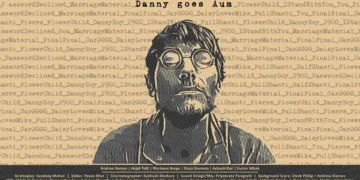



























Creative paralysis is a distinctly modern affliction, a quiet panic that sets in when the external world’s demands drown out the internal voice. It is the state of being professionally busy yet artistically empty. Danny Goes Aum opens within this precise state of discord, introducing its title character not just as a person but as a symptom of a hyper-productive, creatively stifling culture. Danny, a video editor in London, pieces together the stories of others while his own narrative has fallen apart.
His ambition to be a filmmaker is a fading dream, soured by rejection and the sheer exhaustion of city life. The film proposes a radical cure: a complete cessation of noise. Danny flees to Goa, a place that exists in the film’s imagination as London’s direct antithesis. It is not merely a holiday destination but a space of personal history and potential healing. The story that unfolds is a patient, deeply observant study of a man learning to listen again, both to the world around him and to the voice he thought he had lost.
The Landscape Within
In this film, Goa is less a setting and more a state of consciousness. Director Sandeep Mohan utilizes cinematic geography to map Danny’s internal shifts, a technique with deep roots in India’s Parallel Cinema movement, which often favored authentic locations over constructed sets to explore psychological realism.
The camera work by Subhash Maskara consciously avoids generic tourist vistas. Instead, it lingers on secluded coves, the quiet rustle of palm trees, and the worn textures of local cafes. Each frame builds an atmosphere of tranquility that stands in stark opposition to the quick cuts and frantic energy of Danny’s life as an editor. The physical environment becomes his therapeutic space.
The film’s pacing is its most significant stylistic choice. It is deliberately unhurried, mirroring the natural rhythms of the coastal town. This patient, observational style invites the audience to slow down with Danny, to inhabit his moments of stillness and reflection.
The long takes and quiet scenes are not empty; they are filled with the ambient sounds of nature and the gradual process of a mind unburdening itself. The film argues through its very structure that true clarity cannot be rushed; it must be allowed to arrive at its own pace.
Mirrors on the Shore
Danny’s path to self-awareness is paved by his interactions with two women who serve as profound catalysts for his growth. Andrew Sloman portrays Danny with an understated realism, making his creative anxiety and social awkwardness immediately relatable.
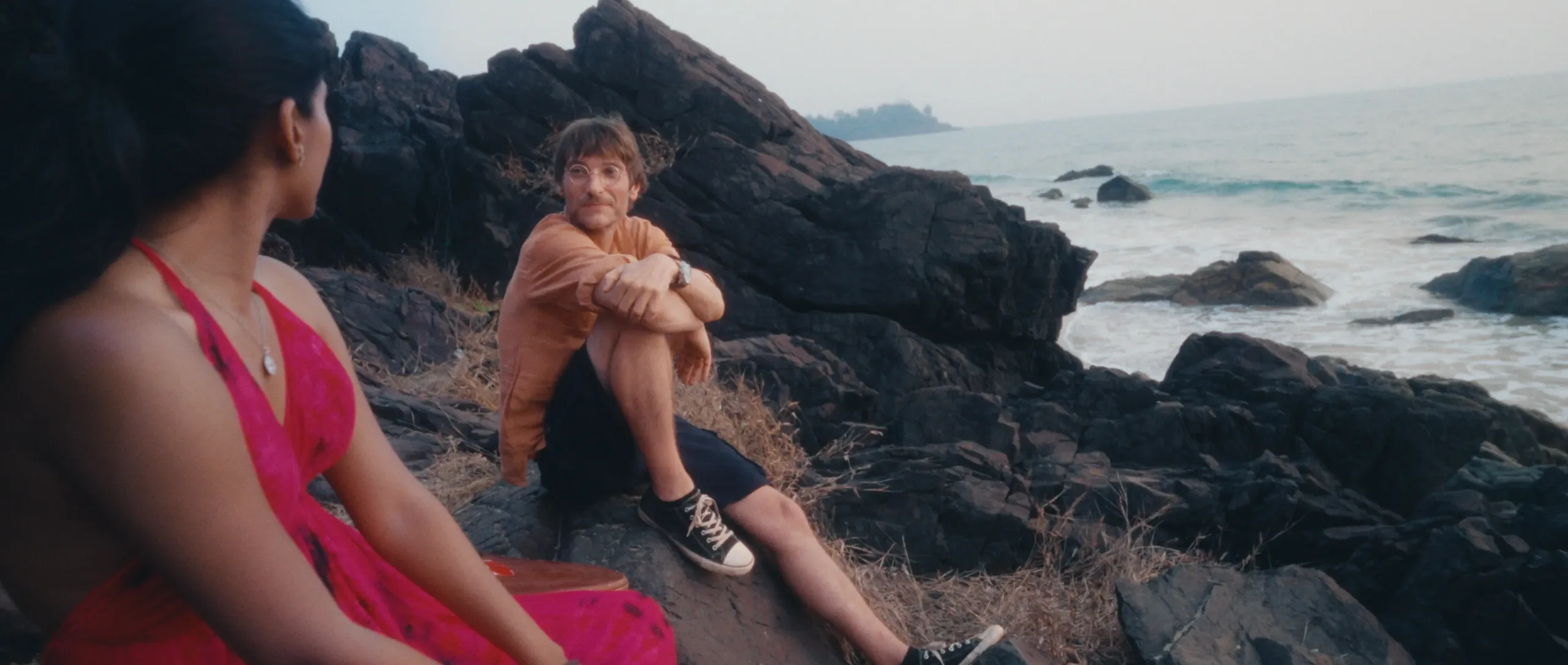
He is a passive protagonist for much of the film, a man to whom things happen. This initial inertia makes his gradual awakening all the more authentic. He doesn’t solve his problems through decisive action but through listening and absorbing the wisdom of others.
The first catalyst is Lucie, a spirited French widow played with infectious vitality by Marianne Borgo. She embodies a life lived with passion and without regret. In Goa to scatter her late husband’s ashes, her story is one of celebrating memory rather than mourning loss.
She is a classic mentor figure, yet her bohemian flair and forthright flirtatiousness feel fresh and unpredictable. She coaxes Danny out of his shell not with advice, but with the sheer force of her personality and the richness of her own history, reminding him that life’s best stories are lived, not just written.
A quieter, more contemplative influence arrives in the form of an unnamed young woman, portrayed with serene grace by Anjali Patil. Her anonymity is key; she represents a different way of being, one rooted in acceptance and duty as she awaits an arranged marriage. Her conversations with Danny are the film’s philosophical heart, a gentle meeting of Eastern and Western perspectives on freedom, love, and purpose. Her calm dignity presents a powerful alternative to Danny’s restless search for individualistic fulfillment.
The Melody of Self-Discovery
The film’s soul is perhaps best found in its soundtrack. The use of simple, acoustic songs written and performed by Andrew Sloman himself is a masterstroke of authenticity. This is not a conventional score imposed upon the film; it is diegetic music that grows organically from the character’s experience.

When Danny picks up a guitar, the songs that emerge feel like intimate diary entries, a direct line to the emotions his reserved demeanor often conceals. The lyrics articulate his confusion, his longing, and his slow journey toward hope. This technique transforms the music into a form of narration, a confessional layer that deepens our understanding of his internal world. This musical honesty ties directly into the film’s larger thematic concerns with storytelling itself.
Danny arrives in Goa hoping to find a script but discovers that he must first find his own voice. The film suggests that creativity is not an abstract pursuit but a byproduct of genuine connection, both with others and with oneself. It is a quiet, unassuming work that makes a powerful case for a different kind of cinema, one that values stillness over spectacle and emotional truth over narrative complexity. It is a film that reminds us that sometimes the most meaningful journey is the one back to ourselves.
The movie Danny Goes Aum is an independent film that follows Danny, a burned-out British video editor, who travels to Goa, India—the place where his hippie parents met—in search of inspiration, meaning, and a new sense of belonging after a health scare. The film premiered at Cinequest 2023. It is a story about the journeys we take across the world and the journeys we take within. The movie was made available in the US and Canada on Amazon starting September 2, 2025.
Full Credits
The Review
Danny Goes Aum
Danny Goes Aum is a deeply felt, meditative film that succeeds through its quiet authenticity. Rather than relying on dramatic plot points, it finds its power in patient observation, genuine performances, and a setting that breathes with the protagonist. The integrated music and soulful cinematography create a gentle, immersive experience. It's a rewarding watch for anyone seeking a thoughtful story about creative renewal and the peace found in slowing down. A quiet triumph of independent filmmaking that resonates with heartfelt sincerity.
PROS
- The cast delivers grounded and believable performances that create a strong emotional center.
- Goa is captured beautifully, functioning as a vital character that reflects the protagonist's inner state.
- The deliberate, unhurried pace allows for deep immersion into the character's journey of self-discovery.
- The music, written and performed by the lead actor, adds a layer of genuine intimacy and emotional depth.
CONS
- The film's greatest strength for some may be a drawback for viewers accustomed to faster-moving narratives.
- Danny's character is largely reactive for much of the film, which may test the patience of some.
- At times, the conversations can feel more like thematic statements than naturalistic speech.