


























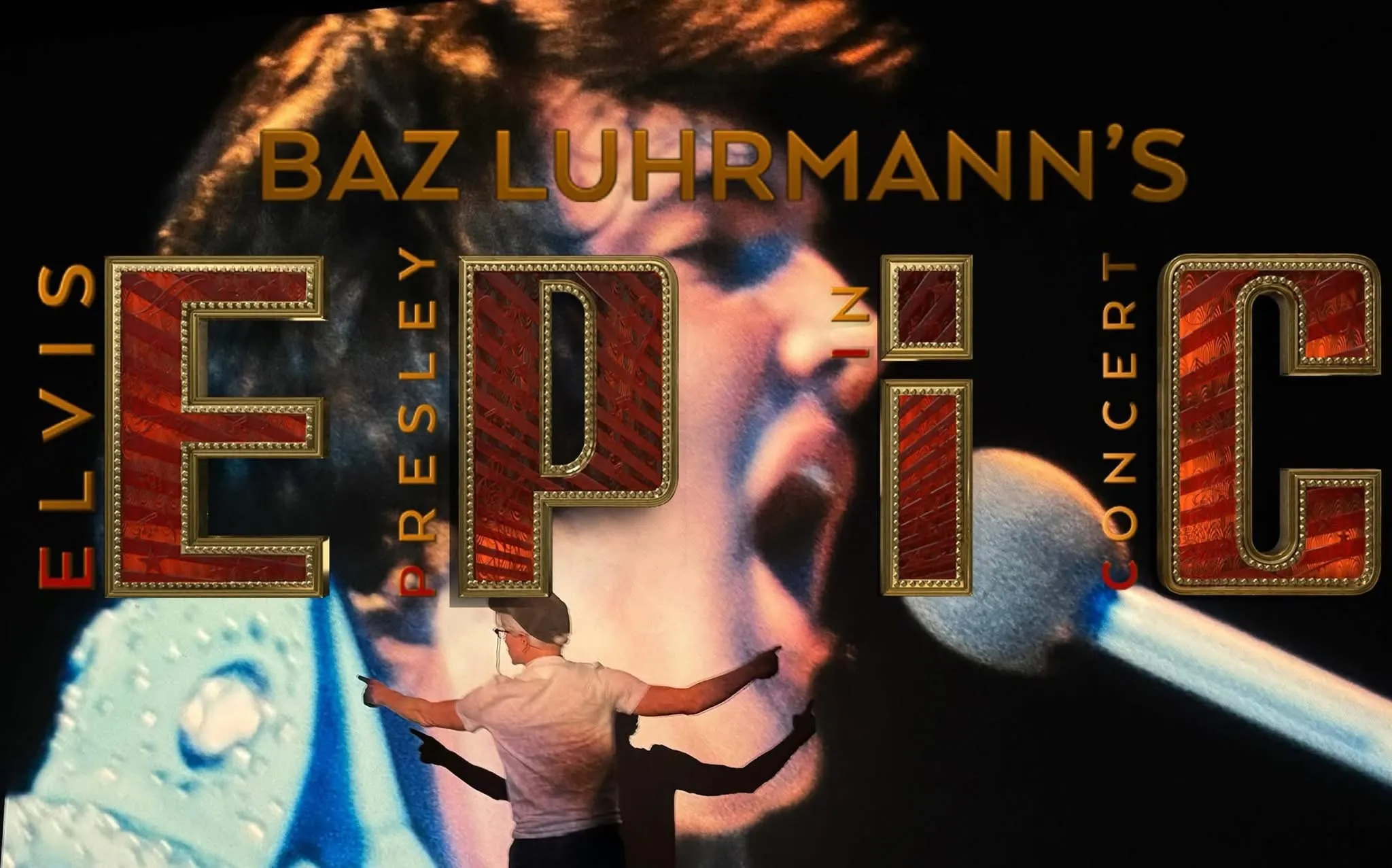

Baz Luhrmann’s EPiC: Elvis Presley in Concert is less a documentary and more a cinematic resurrection. The film constructs a vibrant collage from restored archival footage of Elvis Presley’s Las Vegas residency in the early 1970s, a period that marked the spectacular second act of his career.
This is not a straightforward concert film; it is a re-imagining of a cultural icon, presented through a distinctly modern filter. Luhrmann bypasses talking heads and conventional exposition, instead allowing the narrative to be driven by Elvis’s own voice, culled from rare and unguarded interview tapes. What emerges is a high-energy, impressionistic portrait.
The film presents the American phenomenon of Elvis for a contemporary global audience, using the language of the remix to explore the myth and the man. It is a kinetic tone poem that seeks to capture the lightning-in-a-bottle magnetism of its subject, offering a fresh perspective on a story many believe they already know.
The Visceral Spectacle of the King
The film’s core is the electrifying performance footage, which argues for Elvis’s sustained power in an era of changing musical tastes. While many of his rock contemporaries were shifting toward the writer-performer model, Elvis perfected the art of interpretation, taking songs from various American traditions and making them entirely his own.
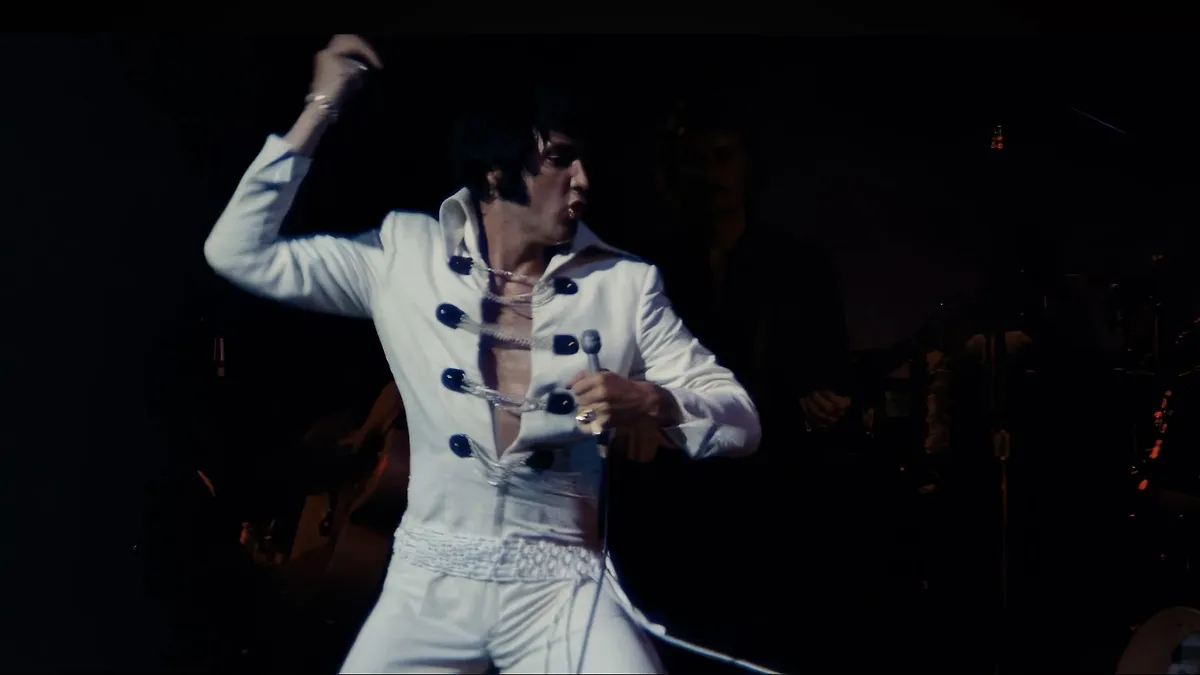
The restoration of the 35mm prints is so immaculate that it collapses the decades, making the past feel startlingly immediate. On stage, Elvis is a hypnotic force, his charisma radiating from the screen with an almost feline grace. His command is total, whether he is executing his famous karate-chop moves or simply holding the audience with a smile.
His vocal power is undiminished, a versatile instrument of incredible dexterity. He can transform “Hound Dog” into a blisteringly fast, almost punk rock anthem, then shift to the soulful vulnerability of a Beatles cover like “Something.” A clever mashup of “Little Sister” with “Get Back” shows him in direct dialogue with his peers. The powerful rendition of “Suspicious Minds” showcases his manic energy and commitment to his audience.
The sharp visuals, with close-ups on his glistening face, and the painstakingly synchronized audio create a palpable experience of being in the room. Backed by the formidable and tight TCB Band, these performances are revealed not as kitsch nostalgia, but as the blueprint for the modern pop spectacle, a form of live entertainment designed for maximum sensory impact.
The Man Behind the Jumpsuit
Away from the stage lights, the film attempts to build a more personal study of its subject. By weaving Elvis’s own recorded words throughout the concert and rehearsal footage, Luhrmann creates a confessional atmosphere that gives the viewer a sense of direct access. We hear Elvis reflect on his music, his life, and his craft with a surprising frankness.
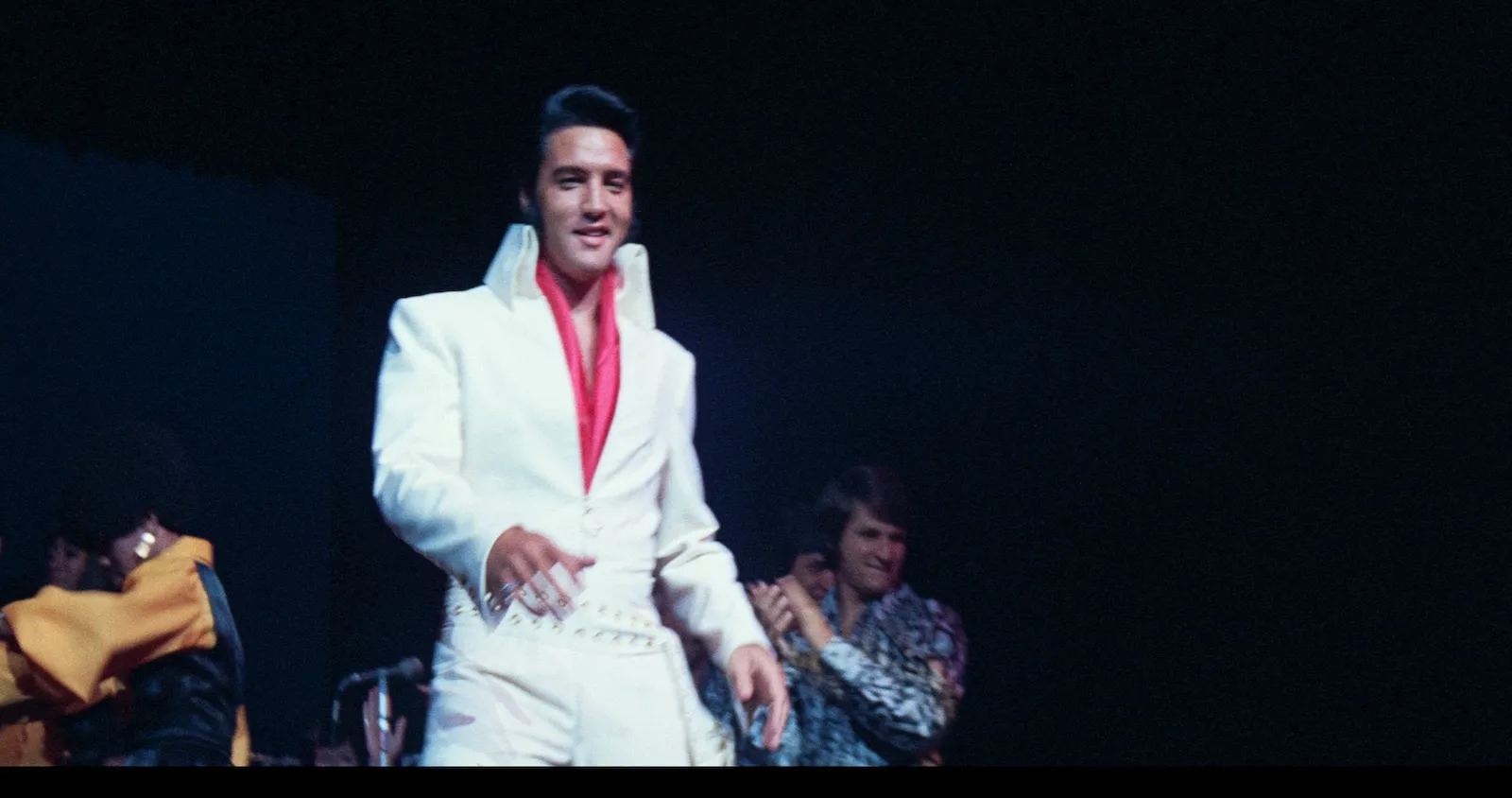
This narrative choice presents a carefully constructed version of authenticity, positioning Elvis as the author of his own story. The behind-the-scenes footage from rehearsals is particularly revealing, working to deconstruct the myth of the spontaneous genius.
These scenes show his dedication to perfection, his easygoing humor with his musicians, and his confident role as the orchestrator of his own show. He is shown as a thoughtful artist, deeply engaged in the arrangement of his music and quick with a joke, a perfectionist who could also be a charmingly modest friend.
This glimpse of the man at work humanizes the legend, showing the discipline and personality that fueled the larger-than-life performances. This curated intimacy affects the viewing of the concert footage, adding depth to the on-stage spectacle by suggesting a complex individual beneath the rhinestones and swagger.
The Auteur and the Archive
The film is unmistakably a Baz Luhrmann creation, and his authorship is as present as that of his subject. As an Australian director reinterpreting a quintessentially American icon, Luhrmann approaches the archive not as a sacred text but as raw material for a new artistic statement. His signature style shapes every frame, turning historical documents into a dynamic, modern experience.
The opening is a kaleidoscopic montage that breathlessly recaps Elvis’s career, establishing the frenetic pace that defines the film. The editing, by Jonathan Redmond, cuts propulsively between the stage, the studio, and intimate moments, creating a rhythm that mirrors the energy of the music itself. This formal approach is an argument in itself, suggesting that Elvis’s vitality can only be captured through a similarly restless visual language.
The choice to structure the film as a “tone poem” instead of a linear biography is effective in revitalizing the material for an audience accustomed to the rapid pace of contemporary media. Luhrmann’s film functions as a powerful celebration of Elvis’s enduring artistic force. It offers an experience that feels alive and immediate, presenting a potent argument for the King’s continued relevance through a dazzling and immersive cinematic treatment.
The film premiered on September 6, 2025, at the Toronto International Film Festival. It does not yet have a widespread theatrical release date or streaming platform announced, but some sources suggest a possible release in January 2026.
Full Credits
Director: Baz Luhrmann
Writers: There is no writer credited for this film.
Producers and Executive Producers: Baz Luhrmann
Cast: Elvis Presley
Director of Photography (Cinematographer): No cinematographer is credited.
Editors: Jonathan Redmond
Composer: Elvis Presley
The Review
EPiC: Elvis Presley in Concert
Baz Luhrmann’s film is a dazzling sonic and visual remix, successfully resurrecting the raw energy of Elvis Presley's 1970s stage act for a new era. Using the King's own voice to narrate his story, the movie provides a personal, if carefully framed, portrait of the artist at work. The frenetic editing and pristine restoration of the concert footage create an immersive experience that highlights Elvis’s undiminished talent and charisma. It is a powerful and kinetic celebration, a work that burnishes the legend by presenting the man and his music with electrifying immediacy.
PROS
- Electrifying and pristinely restored concert footage.
- An intimate perspective using Elvis's own voice for narration.
- Dynamic, high-energy direction that makes archival material feel modern.
- Revealing behind-the-scenes moments that humanize the icon.
CONS
- The narrative is highly selective and celebratory, avoiding difficult topics.
- Luhrmann’s fast-paced editing style may be overwhelming for some.
- A lack of external context or critical perspective.