
























![Kingdom Hearts Collection [I-III] Review](https://gazettely.com/wp-content/uploads/2026/10/Kingdom-Hearts-Collection-I-III-1-360x180.webp "Kingdom Hearts Collection [I-III] Review: KHII Holds Steady as Newer Entries Fluctuate 37")



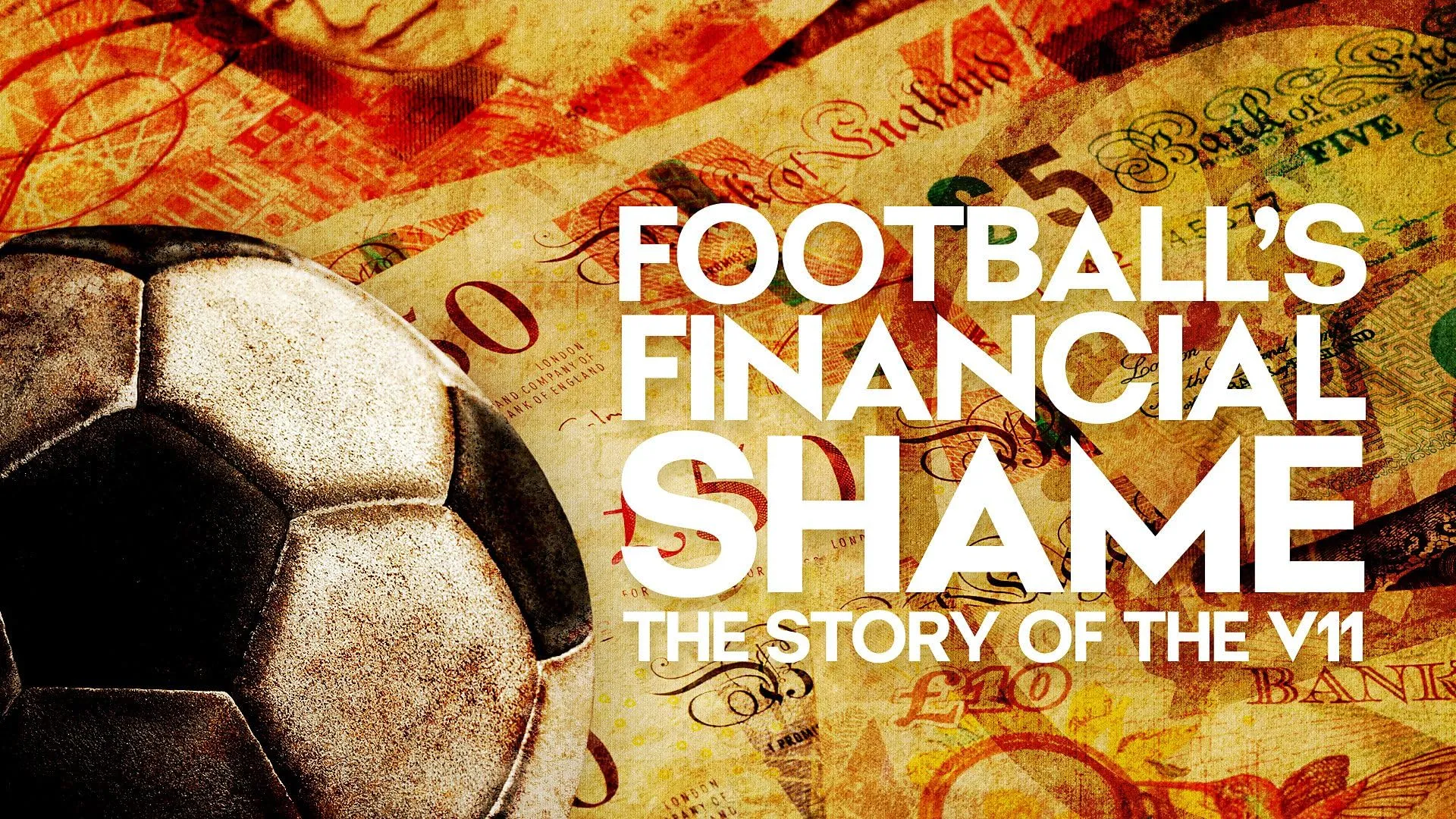

Every era is eventually haunted by the things it chose to ignore. The first flush of the Premier League in the 1990s was a cultural explosion, a spectacle of new money and masculine gods in baggy shirts. Football’s Financial Shame: The Story of the V11 acts as a form of cinematic exorcism for that period. It suggests that the real ghost at the feast was not the glamour, but the profound vulnerability of its protagonists.
The film introduces us to the ‘V11’, former players like the articulate Danny Murphy and the stoic Brian Deane. They were men from a temporal crossroads, earning life-altering money but existing just before the age of the hyper-professionalized athlete-as-corporation. Their story is not a simple tragedy of riches lost. It is a more unsettling tale about the precariousness of identity when the twin pillars of youth and wealth are kicked away at once.
The Engine of Ruin
The mechanism of the players’ ruin, a firm called Kingsbridge Asset Management, was less a company and more a cultural phenomenon inside the bubble of professional football. Its principals, David McKee and Kevin McMenamin, achieved a level of trust that blurred all professional boundaries; their appearance in a player’s wedding photos is a chilling document of this infiltration.

They were selling a story as much as a service. The financial instruments themselves were a curious mix of government policy and pure speculation. A key component involved film partnership schemes, a New Labour tax incentive designed to foster British arts, ironically twisted into a vehicle for tax deferral. This was frequently combined with high-risk, off-plan property ventures in sun-drenched locales that must have seemed a world away from a wet Tuesday night in Blackburn.
The players, men conditioned from boyhood to trust the authority of a manager, transferred that deference to these new figures. They existed in a state of profound financial illiteracy, a condition the system around them did little to correct. Danny Murphy’s admission of signing dense stacks of documents unread is not an outlier; it is the core of the story.
The documentary powerfully suggests this trust was actively manipulated. With an expert attesting to the high probability of forged signatures, the narrative curdles from a tale of naivety into something far more sinister. The final collapse was inevitable. When HMRC re-classified the film schemes as aggressive tax avoidance, the edifice of paper profits and deferred tax crumbled, leaving the players exposed to debts on money that had only ever been a phantom on a balance sheet.
The Vertigo of Loss
To measure this story in pounds sterling is to miss the point entirely. The documentary’s devastating power comes from its focus on the psychic toll, the quiet unravelling of men who were once invincible. This is where the film becomes a profound study of masculine identity in crisis. When a footballer’s career ends, he loses more than a job; he loses the primary structure of his life.
The wealth they accumulated was meant to be the salve for that loss, the foundation for a new, quieter existence. When that too was obliterated, it created a vacuum, a condition one might term ‘post-career vertigo’.
The individual accounts are harrowing. Danny Murphy’s descent into a fog of drink, gambling, and drugs was a desperate attempt to medicate the gnawing shame. It is the testimony of Brian Deane, however, that fractures the heart. A man of immense physical presence, he weeps openly, not for the money, but for the fact that the stress of the scandal consumed the final years he had with his dying mother. Sean Davis speaks of being pushed to the edge of suicide.
Their shame is a complex, layered thing. It is the shame of being fooled, the shame of being broke, and the paradoxical shame of believing you have no right to complain because you were once rich. Out of this shared ruin, a new team has formed, built not on athletic prowess but on mutual fragility. A simple touch on the back from Michael Thomas to a faltering Deane in a parliamentary hearing is perhaps the most powerful scene, a quiet acknowledgment of their shared fall from grace.
Justice in the Abstract
The players’ current predicament is a masterpiece of bureaucratic absurdity. After a lengthy investigation, the City of London police officially classified them as victims of crime. In the same breath, the authorities announced there was insufficient evidence to press criminal charges.
The players are therefore ghosts in the legal machine: officially wronged, but with no one to hold accountable. This legal void allows the story’s final antagonist to take center stage: HMRC. The tax authority is portrayed not as a villain but as something more terrifying, an impersonal system devoid of context or compassion. For HMRC, the story behind the debt is irrelevant. There is only a ledger, and the ledger says millions are owed.
One arm of the state labels them victims; another pursues them as debtors. They are caught in the gears of a system that cannot compute their situation. Their fight, as the film frames it, is for a kind of legal and moral recognition. The documentary leaves the viewer to ponder its unsettling implications. It is a cautionary tale that feels acutely contemporary.
In an age where young athletes are becoming targets for unregulated crypto schemes and NFT speculation, the V11’s story is not history. It is a prologue. The methods of extracting wealth from the athletically gifted may evolve, but the fundamental vulnerability of the young, rich, and unschooled remains a brutal constant.
The documentary premiered in 2025 and focuses on a group of former Premier League footballers who lost their fortunes due to bad financial advice. It was released by Noah Media and aired on BBC Two, with availability on BBC iPlayer and Apple TV.
Full Credits
Director: Richard Milway
Cast: Danny Murphy, Rod Wallace, Brian Deane, Tommy Johnson, Michael Thomas, Craig Short
The Review
Football’s Financial Shame: The Story of the V11
This documentary is a potent and deeply humanizing account of a modern tragedy. It succeeds by refusing to be a simple story about money, instead presenting a harrowing study of shame, identity, and the particular agony of a fall from grace. It is a vital cautionary tale, not just for the world of sport, but for any arena where immense wealth and profound naivety collide. The film is a quiet, devastating examination of the ghosts that haunt an entire generation of athletes, long after the stadium lights have gone dark.
PROS
- Handles a complex financial scandal with clarity and emotional depth.
- Features incredibly raw and powerful testimony from the affected players.
- Effectively explores themes of masculinity, vulnerability, and the fragility of identity after fame.
- Serves as a sharp critique of the systems that fail to protect athletes.
CONS
- The legal and financial specifics, while simplified, may still feel dense for some viewers.
- The narrative is necessarily one-sided, offering little perspective from the financial advisors beyond written statements.
- Its inconclusive ending, while true to life, may leave some viewers wanting a clearer resolution.







