
























![Kingdom Hearts Collection [I-III] Review](https://gazettely.com/wp-content/uploads/2026/10/Kingdom-Hearts-Collection-I-III-1-360x180.webp "Kingdom Hearts Collection [I-III] Review: KHII Holds Steady as Newer Entries Fluctuate 37")



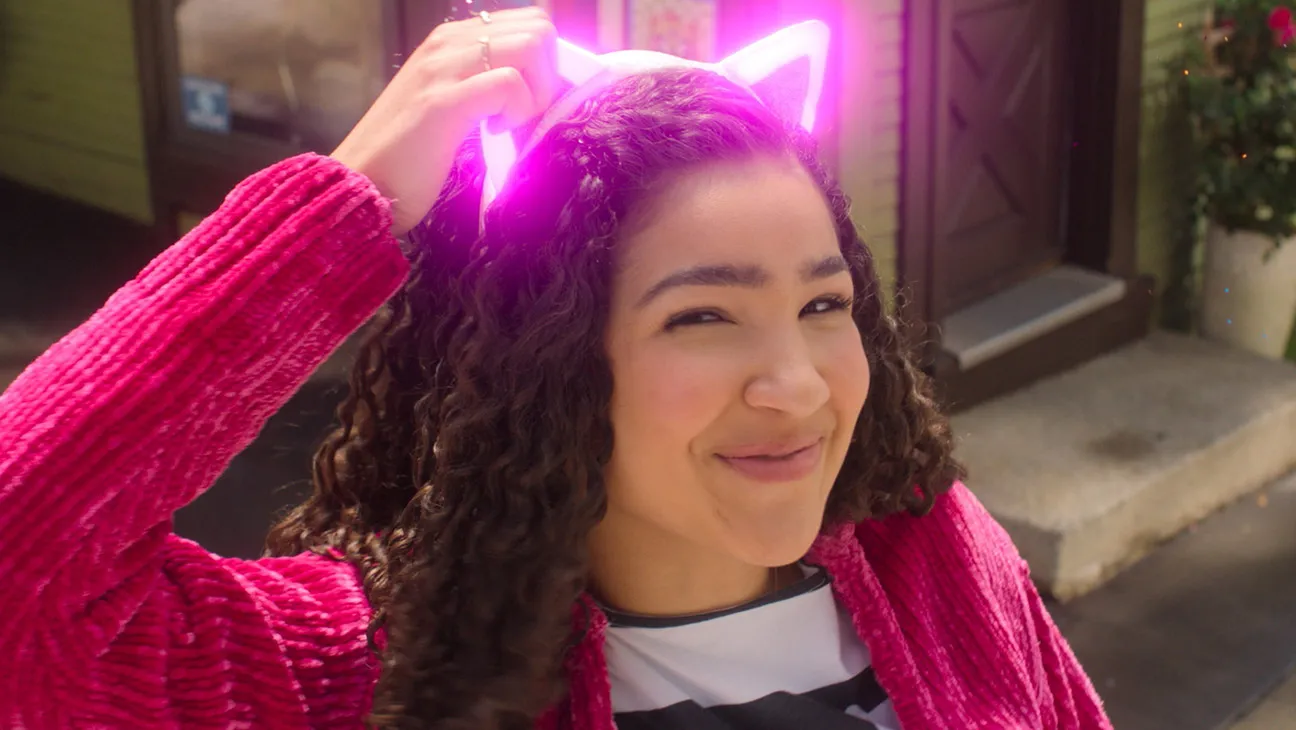

The Golden Gate Bridge glows a serene lavender against the sky. This is not San Francisco, but “Cat Francisco,” a city remade through a child’s imagination, and it is the destination in Gabby’s Dollhouse: The Movie. The film takes the established world of a girl and her magical dollhouse, where tiny feline friends come to life, and places it on a wider map.
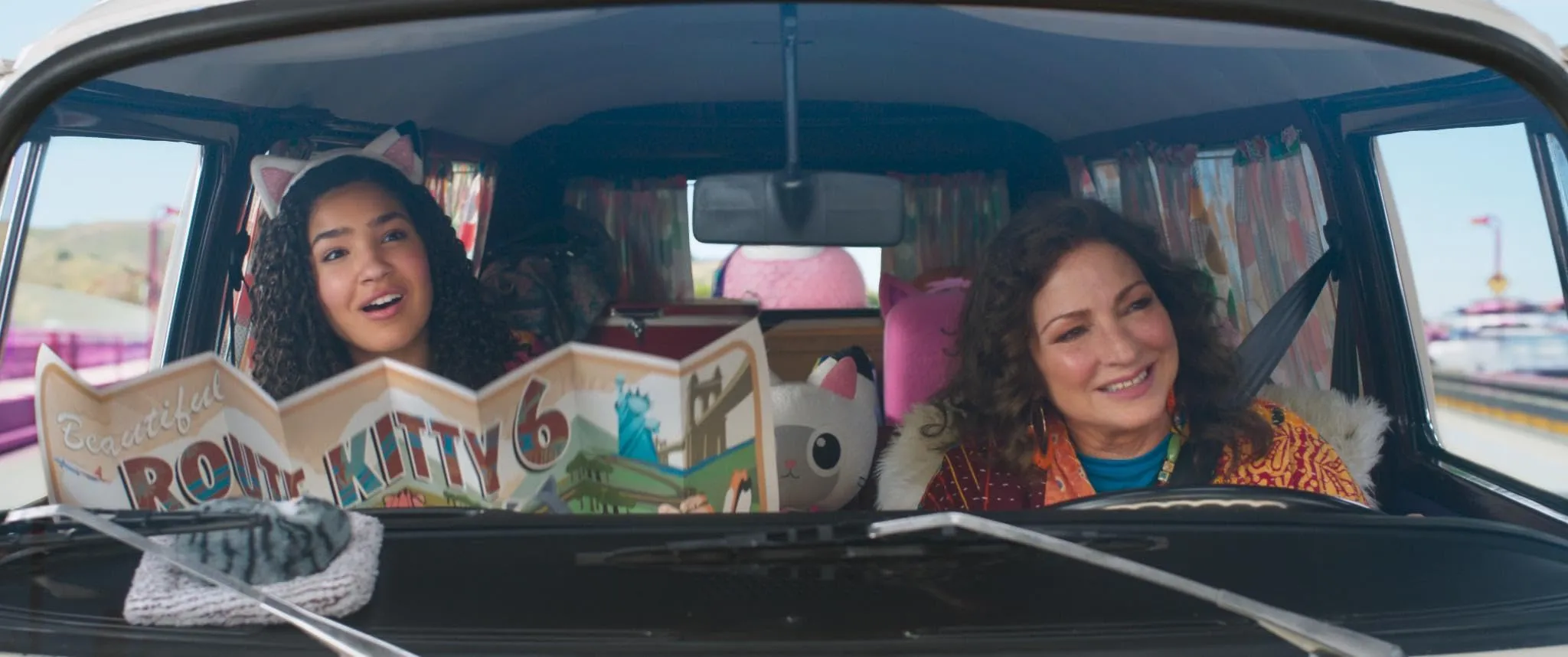
The story is a simple one: a cross-country trip with Grandma Gigi goes awry when Gabby’s cherished dollhouse is lost and falls into the hands of an unusual collector. What follows is a rescue mission, with Gabby shrinking herself down to join her animated friends. This journey into a fantasticated cityscape becomes an examination of friendship, creativity, and the poignant process of growing older.
The World Outside the Walls
The film’s primary structural task is to translate the compact, episodic nature of the television series into a sustainable cinematic narrative. It achieves this by moving the action beyond the familiar rooms of the dollhouse and onto the American highway. This expansion of physical space allows for a larger story, one with higher stakes and a more developed emotional arc.
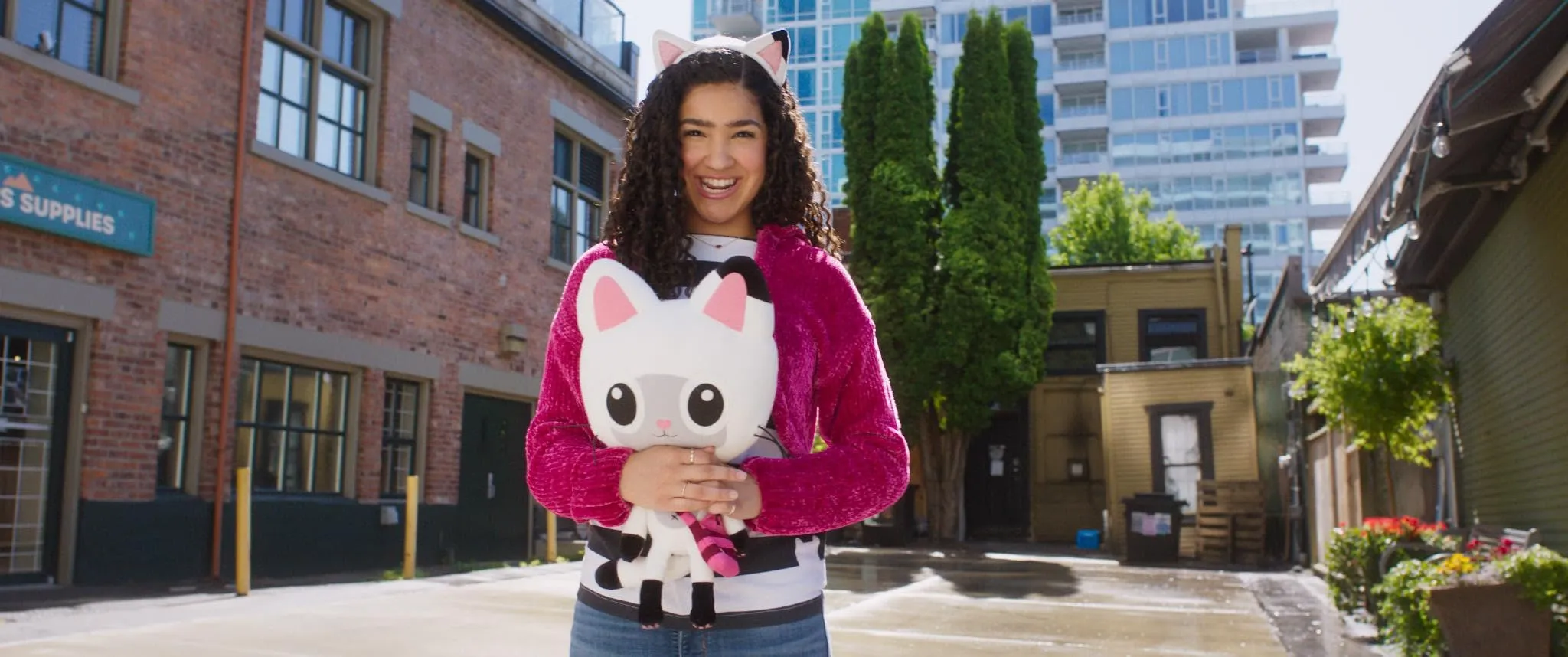
The movie’s visual language operates on two distinct planes: the live-action world of Gabby and her grandmother, played by Laila Lockhart Kraner and Gloria Estefan, and the vibrant, animated dimension of the Gabby Cats. The shift between these realities is seamless, grounding the fantasy in a tangible human story before immersing the viewer in pure imagination. The plot’s engine is the accidental acquisition of the dollhouse by Vera, a peculiar inventor whose life is a monument to cats.
This event forces Gabby’s transformation; her signature phrase, “It’s time to get tiny!” acts as a portal into the animated realm where the rescue begins. The pacing is appropriately swift, moving through challenges with a lightness suited for its young audience, yet the simple recovery mission gradually reveals a more layered conflict about the meaning of possession and the purpose of play.
An Architecture of Imagination
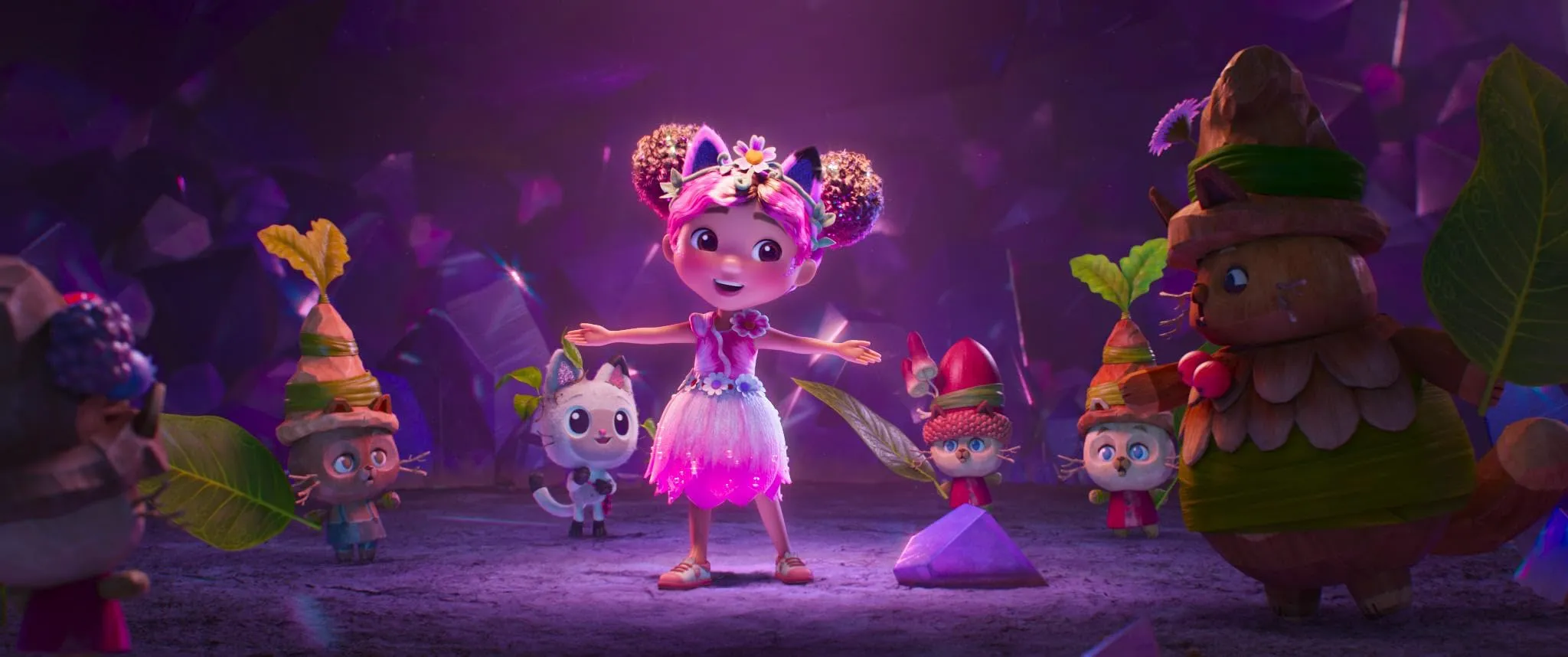
The film’s distinct aesthetic seems less drawn and more assembled, as if from a well-stocked craft store or a fantastical bakery. The world is a confectionary creation, a tangible landscape of treats and textures. Its most inventive moments are architectural: a winter wonderland is sculpted from pink frosting and donut rafts, while giant Gummy worms appear with the gravity of desert sandworms.
This visual philosophy is consistent, using a Day-Glo color palette and rich, tactile animation to make every surface seem inviting. The city of “Cat Francisco” is a logical extension of this world-building, applying the show’s cat-centric logic to an urban scale. This environment is sharply contrasted with the world of Vera. Her home is also stylish and filled with cat-themed objects, but it is a sterile museum.
Her toys are collectibles, preserved under glass and untouched. The visuals constantly reinforce the movie’s core ideas by setting the static, lifeless quality of Vera’s collection against the dynamic, breathing community of the dollhouse, framing the conflict as one of preservation versus active creation.
The Anxieties of Adulthood
Beneath the colorful surface, the story is rooted in Gabby’s quiet fear of outgrowing her toys, a relatable anxiety that gives the film its emotional weight. The narrative presents a clear argument that imagination is not bound by age and that adulthood need not signal the end of creativity. This theme is explored through the adult characters.
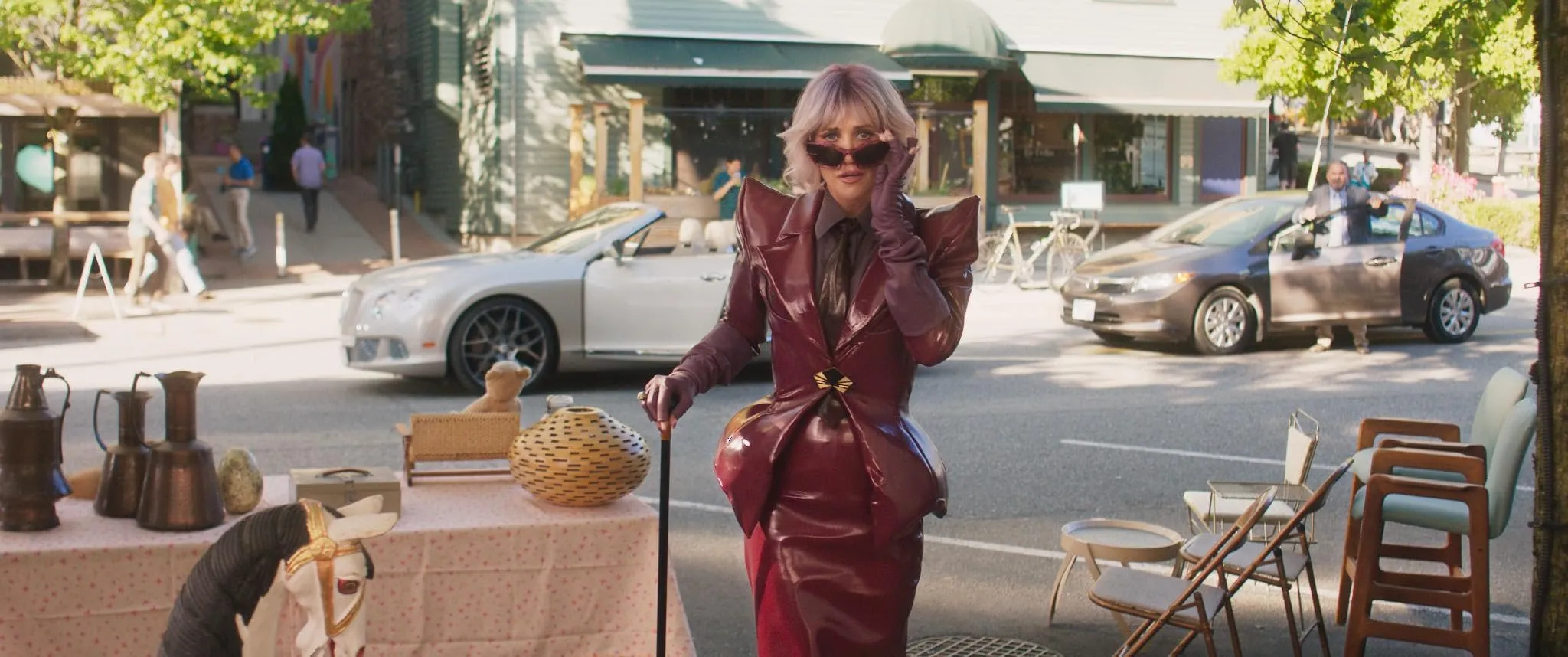
Vera is a woman who has lost her connection to play. She appreciates the form and design of toys but has forgotten their function; her own creativity has been redirected into her successful, if absurd, kitty-litter enterprise. The film’s other antagonist, a forgotten stuffed animal named Chumsley, serves as a direct manifestation of a toy’s deepest fear: being left behind. His bitterness and desire for control echo the themes of abandonment and loyalty found in films like Toy Story 2, providing a surprisingly potent emotional counterpoint to the film’s general cheerfulness.
The story also champions play as an essential link between generations. The bond between Gabby and her Grandma Gigi, who actively encourages Gabby’s world-building in her workshop, presents the older generation as crucial keepers of the imaginative flame, suggesting that their engagement is what allows a child’s creativity to flourish.
The Faces of Play
Laila Lockhart Kraner, as Gabby, is the film’s effervescent center. Her performance carries the earnest spirit of the story, balancing unwavering optimism with subtle hints of the character’s internal conflict about growing up. Her experience talking to the camera in the series translates well, creating an immediate and welcoming connection with the audience.
The antagonists provide different forms of complexity. Kristen Wiig’s Vera is a piece of high-camp comedy. Her performance, built on sharp line deliveries and a stylishly awkward physicality, makes Vera more of a misanthropic figure to be pitied than a villain to be feared. The role offers a specific humor intended for the adults watching. Jason Mantzoukas’s voice work as Chumsley delivers the film’s most direct emotional conflict.
He infuses the character with a palpable sense of resentment and pathos, making his motivation understandable even as his actions become menacing. Gloria Estefan provides a grounding warmth as Grandma Gigi, while the familiar voice cast of the Gabby Cats, from the cynical CatRat to the gentle Cakey, successfully brings the charm of the original series to the larger screen.
Breaking the Fourth Wall
The film’s narrative strategy relies heavily on breaking the fourth wall, with Gabby frequently addressing the audience directly. These moments are explicit invitations to join the story, prompting viewers to sing along, clap, or participate in small ways.
The technique proves remarkably effective for its intended demographic, fostering a sense of shared experience that transforms passive viewing into active engagement. It creates a temporary community within the theater, united in helping Gabby on her quest. The musical landscape is essential to this interactive goal.
The soundtrack is a collection of peppy, synth-driven pop songs that are tightly integrated into the plot. The sing-along numbers are not just interludes; they are key moments of audience participation that reinforce the film’s themes of joy and collaboration. The music works in concert with the direct addresses to build a cheerful, immersive experience, making the film a celebration for the ears as well as a feast for the eyes.
Gabby’s Dollhouse: The Movie is a musical fantasy comedy film that premiered in Melbourne on September 13, 2025, and is scheduled to be released by Universal Pictures in the United States on September 26, 2025. It is based on the Netflix series Gabby’s Dollhouse. The film combines live-action and animation and follows Gabby on a road trip with her grandmother.
Full Credits
Director: Ryan Crego
Writers: Mike Lew, Rehana Lew Mirza, Adam Wilson, Melanie Wilson LaBracio, Ryan Crego, Traci Paige Johnson, Jennifer Twomey
Producers and Executive Producers: Steven Schweickart, Traci Paige Johnson, Jennifer Twomey, Marcei A. Brown, Jason Clark, Jessica Malanaphy
Cast: Laila Lockhart Kraner, Gloria Estefan, Kristen Wiig, Logan Bailey, Thomas Lennon, Jason Mantzoukas, Fortune Feimster, Melissa Villaseñor, Ego Nwodim, Kyle Mooney, Carla Tassara, Tara Strong, Sainty Nelsen, Maggie Lowe, Eduardo Franco, Juliet Donenfeld, Donovan Patton, Secunda Wood
Editors: Marcus Taylor
Composer: Stephanie Economou
The Review
Gabby's Dollhouse: The Movie
Gabby’s Dollhouse: The Movie successfully translates the small-screen charm of its source material into a visually inventive and thematically thoughtful feature. While its interactive nature is aimed squarely at the youngest viewers, the film’s clever world-building and earnest exploration of the anxieties of growing up offer a sweet, surprisingly resonant experience for the entire family. It is a colorful celebration of creativity that never loses sight of its heart.
PROS
- The film features a unique and tactile "confectionary" aesthetic that is consistently creative.
- It handles complex themes about the importance of play and the fear of growing up with genuine substance.
- Interactive, fourth-wall-breaking elements effectively capture and hold the attention of its young audience.
- The voice cast is excellent, with Kristen Wiig and Jason Mantzoukas adding notable layers of comedy and pathos.
- The story effectively expands the scope of the television series into a cinematic adventure.
CONS
- The film’s tone and interactive style are tailored for very young children and may not appeal to a broader audience.
- The plot is a straightforward rescue mission that may feel slight to some viewers.
- The story’s emotional core, involving abandoned toys, draws noticeable parallels to other animated films.







