























The death game genre functions as a dark mirror for society, reflecting our deepest anxieties about social Darwinism and the arbitrary nature of success and failure. These stories provide a strange comfort, suggesting that the systems governing our lives are not merely difficult but are actively, malevolently rigged. The enduring popularity of this format reveals a collective need to see our struggles externalized into a tangible, high-stakes conflict.
Alice in Borderland has always excelled at this allegorical work. Its return for a third season, years after its story seemingly concluded, is less a simple business decision by Netflix and more a response to this cultural appetite. The season pulls its protagonists, Arisu and Usagi, from a life of quiet domesticity and thrusts them back into the carnage.
They are once again players in a game ruled by a new, unpredictable variable: the Joker. The question this revival poses is not simply whether the story needed to continue, but what its continuation says about our desire to keep watching these brutal, unfair games. It tests how long such allegories can sustain themselves before they collapse under their own narrative weight.
The Joker’s Gambit: Reimagining the Death Games
This season’s challenges are marvels of cruel architecture, designed with an intricate understanding of human psychology. Their rules test not only intellect and physical endurance but the very foundation of players’ morality, forcing choices between self-preservation and communal good in cleverly constructed ethical traps.
A welcome refinement from the prior season is the improved clarity of the game mechanics. The sometimes-chaotic brawls of the face card battles are replaced with challenges whose rules are clean, allowing the strategic horror of the situation to be fully appreciated. A standout sequence involving a volley of flaming arrows is a perfect example: a visually spectacular set piece that is both thrillingly cinematic and grounded in a terrifyingly simple, understandable set of life-or-death stakes.
Thematically, the games governed by the Joker represent a significant evolution. The face cards of season two were powerful individuals, citizens of the Borderland who embodied specific, twisted philosophies of survival. The King of Spades was a force of pure, indiscriminate violence; the Queen of Hearts was a master of psychological manipulation.
They were bosses to be defeated, antagonists with knowable, if extreme, motivations. The Joker is an entirely different entity. It is an unseen, impersonal system, a chaotic force of nature that imposes challenges without reason or personality. This profound shift recasts the conflict. The struggle is no longer a dark hero’s quest against identifiable villains but something closer to a Kafkaesque nightmare, where the rules are arbitrary and the gamemaster is utterly indifferent.
This reflects a broader societal shift in how we assign blame, moving from the critique of powerful individuals to the critique of opaque, unfeeling systems. The games become less about outsmarting a person and more about enduring a lottery of cosmic cruelty.
This structural change affects the show’s suspense. While individual games are masterful exercises in tension, the overarching narrative pressure feels less consistent. The relentless, forward-moving dread of the earlier seasons is sometimes broken by lulls that damage the immersive spell, giving the viewer too much time to question the logic of a world that works best when it is felt instead of examined.
Old Survivors, New Faces
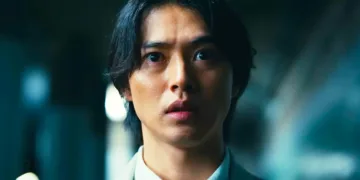
Arisu and Usagi re-enter the Borderland not as frightened novices but as seasoned veterans. Their relationship has evolved into a quiet, efficient partnership built on a foundation of shared trauma, a poignant commentary on how survivors must build new identities.

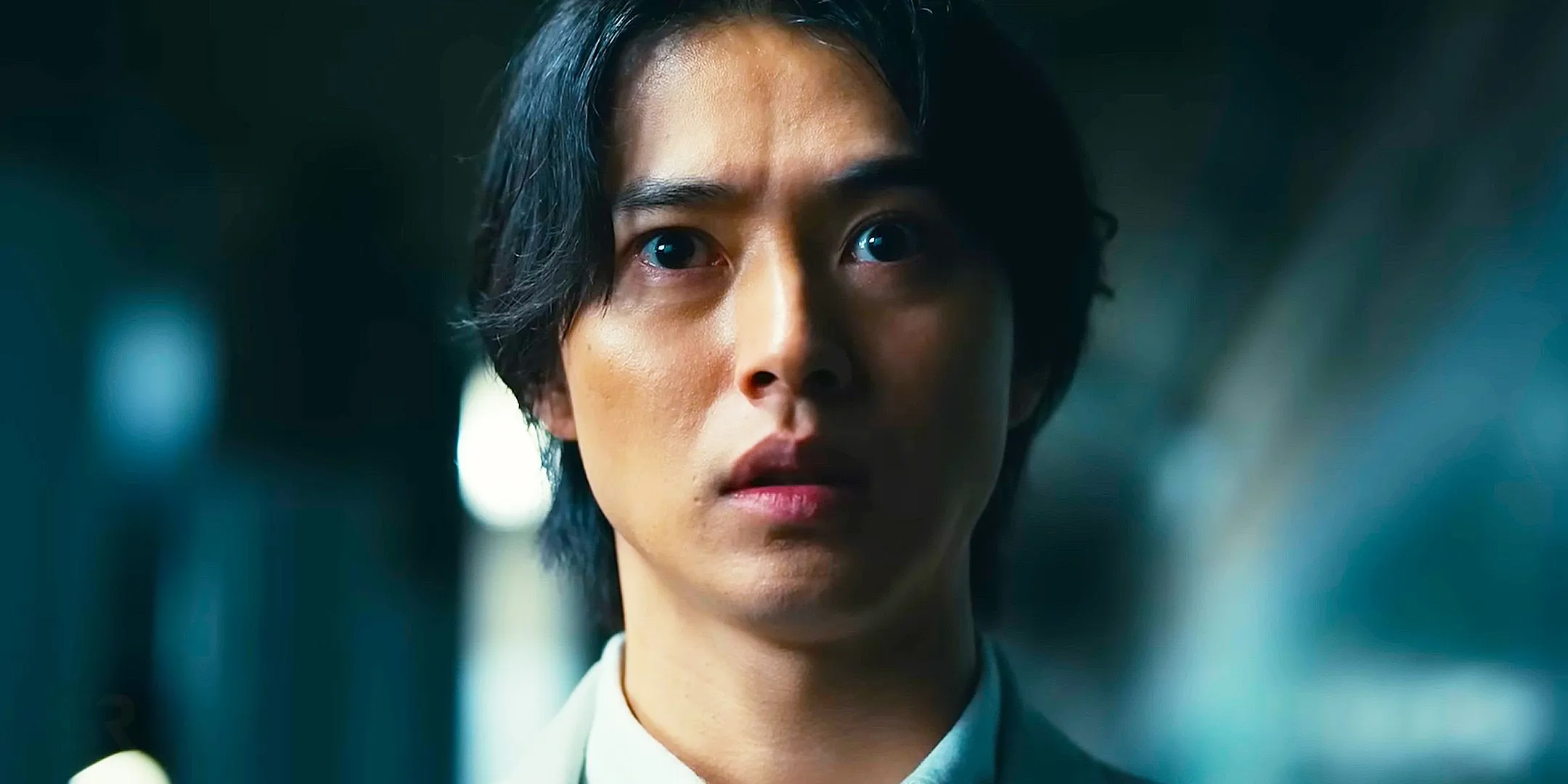
Their prior experience informs every decision, their strategic shorthand giving them a distinct advantage over the new players caught in the Joker’s net. The strong, centered performances of Kento Yamazaki and Tao Tsuchiya provide the essential human anchor for the show’s fantastical premise, their understated connection feeling authentic and earned.
They are surrounded by a fresh cast of characters who function as archetypes of societal collapse. The most prominent is Ryuji, a vengeful seeker of meaning whose intelligence and tragic past make him a compelling foil for Arisu. Others represent cynical despair, naive hope, or pure opportunism, creating a microcosm of a society under extreme pressure.
This new cast is unfortunately serviced by one of the most cynical trends in modern streaming television: the “just-in-time” backstory. The season repeatedly halts its own momentum to deliver these emotional packages. In the middle of a tense sequence, the narrative will cut away for a lengthy, melodramatic flashback, revealing a character’s deepest sorrows just moments before their potential death.
This is data-driven storytelling, a technique designed to reverse-engineer an emotional spike at a key engagement point. It prioritizes immediate, fleeting impact over the patient, sustained work of true character development.
This practice suggests a deep cynicism about the audience’s attention span, transforming human stories into a series of optimized content beats. The characters are treated not as people, but as disposable narrative assets whose entire history can be compressed into a convenient, pre-mortem highlight reel. The result is a manufactured sentimentality that feels both manipulative and emotionally hollow.
A Narrative Beyond the Source
The season’s boldest creative choice is to move beyond the completed story of Haro Aso’s source manga. This positions Alice in Borderland on the new frontier of intellectual property management, where a successful adaptation becomes a proof of concept for a potentially endless global franchise.

This third season serves as a critical test case for Japanese properties on Netflix, potentially setting a precedent for how beloved stories are extended and globalized for a streaming audience. While the writers find a credible and compelling reason to revive the conflict, this new narrative is plagued by structural flaws and an uneven rhythm.
The pacing issues are severe and betray a lack of confidence in the story’s core appeal. The premiere is notably sluggish, spending far too much time re-establishing a domestic reality that everyone knows will soon be obliterated. This creates a tonal clash that dulls the impact of the return to the Borderland.
An even greater act of narrative sabotage occurs in the fifth episode. At the absolute peak of a critical game, with multiple lives at stake, the story slams on the brakes to indulge in long character flashbacks. These interruptions do not add depth; they drain the carefully constructed tension for the sake of information that could have been integrated more elegantly elsewhere. In a short, six-episode season, every wasted minute feels significant.
This all culminates in a finale that represents a failure of nerve. After hours of visceral survival horror, the show pivots to a clumsy philosophical exploration of the Borderland’s metaphysics. This last-minute search for a “deeper meaning” feels tacked on and disconnected from the show’s established strengths. It reflects an industry-wide anxiety about leaving audiences with ambiguity. The attempt to explain the unexplainable demystifies the world, stripping the Borderland of the allegorical power it held when it was simply a terrifying, inexplicable force of nature.
Technical Excellence in a Brutal World
Despite its narrative missteps, the season is a triumph of craft and execution. Its visual language is consistently striking, with meticulous cinematography that communicates both scale and intimacy. Sweeping wide shots emphasize the profound isolation of the characters within the vast, empty cityscape of Tokyo.

These are masterfully contrasted with claustrophobic, handheld close-ups during the games, which trap the viewer in the immediate panic of the players. The lighting design is equally effective, painting scenes with either the harsh, clinical glare of a deadly arena or the soft, mournful light of a temporary refuge. The world-building is made tangible through exceptional production design and visual effects. The CGI is seamless, rendering explosions and fantastical hazards with terrifying realism.
Yet it is the attention to smaller details that truly sells the world’s reality. The grime on abandoned cars, the weeds cracking through pavement, the dust motes dancing in the light of a derelict building—this textural quality makes the Borderland feel less like a set and more like a real place left to decay. This grounding in a recognizable, decaying reality makes the sudden bursts of high-tech, systematic violence all the more jarring and effective.
Alice in Borderland season 3 premiered on September 25, 2025. It is available to watch exclusively on Netflix, along with the first two seasons. The show follows a passionate gamer, Arisu, who finds himself in a deserted version of Tokyo where he and his friends are forced to compete in deadly games. The new season picks up with Arisu and his ally Usagi, who have returned to the real world but are once again pulled back into the perilous world of Borderland after their memories begin to resurface. The series is based on the manga by Haro Aso, but the third season is said to have an original plot.
Full Credits
Director: Shinsuke Sato
Writers: Yoshiki Watabe, Yasuko Kuramitsu, Shinsuke Sato
Producers and Executive Producers: Akira Morii, Kaata Sakamoto
Cast: Kento Yamazaki, Tao Tsuchiya, Ayaka Miyoshi, Hayato Isomura, Katsuya Maiguma, Koji Ohkura, Risa Sudou, Hiroyuki Ikeuchi
Director of Photography (Cinematographer): Taro Kawazu
Editors: Tsuyoshi Imai, Shoukichi Kaneda
Composer: Yutaka Yamada, Benson Taylor
The Review
Alice in Borderland Season 3
Alice in Borderland returns with spectacular production values and cleverly designed death games that are a thrill to watch. Its visual excellence and the strong performances of its leads are undeniable. Yet, this third season is a frustratingly uneven experience, crippled by severe pacing issues and a cynical approach to new character development. Its clumsy attempts at profundity in the finale undercut the show’s visceral strengths. This is a visually stunning continuation that justifies its existence in moments of brilliance but ultimately feels like a hollow, unnecessary epilogue to a story that had already found its perfect end.
PROS
- Visually spectacular game design and thrilling set pieces.
- Exceptional production quality, cinematography, and visual effects.
- Strong, grounded performances from the returning lead actors.
- A compelling premise for extending the story beyond the source material.
CONS
- Severe and recurring pacing problems that disrupt the narrative flow.
- Manipulative use of flashbacks that cheapen the emotional stakes for new characters.
- An awkward and unearned philosophical shift in the season finale.
- Inconsistent suspense compared to previous, more focused seasons.