













![Kingdom Hearts Collection [I-III] Review](https://gazettely.com/wp-content/uploads/2026/10/Kingdom-Hearts-Collection-I-III-1-360x180.webp "Kingdom Hearts Collection [I-III] Review: KHII Holds Steady as Newer Entries Fluctuate 37")



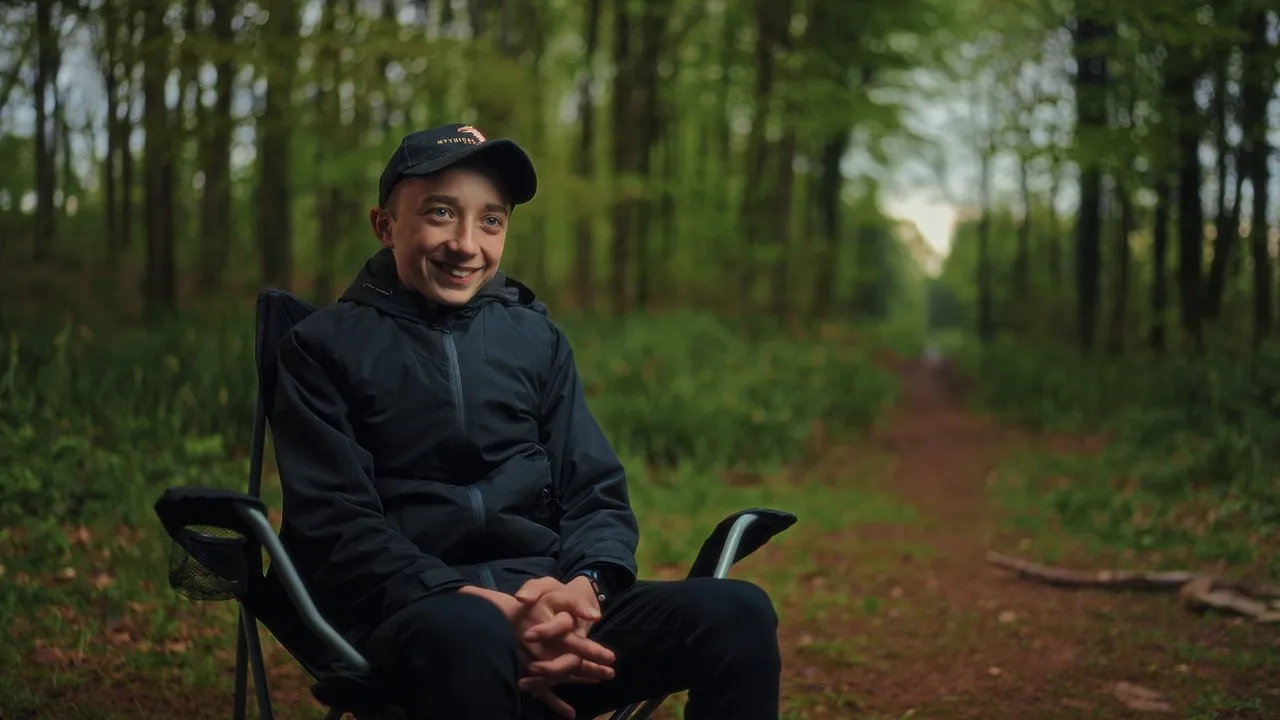

It seems a basic condition of modern life that we have driven our monsters into hiding. The wild spaces on the map have been filled in, and with them, the habitats for our chimeras, our leviathans, our wild men of the woods. Yet the impulse to believe in them persists, a kind of phantom limb of the collective imagination. What, then, is a would-be monster hunter to do in the age of the satellite image and the neatly managed English countryside? Daniel Lee Barnett, a fifteen-year-old cryptozoologist from Somerset, provides an answer. He looks for Bigfoot.
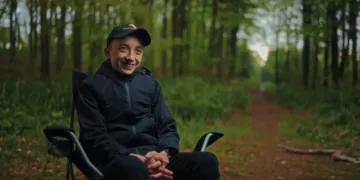
This documentary, which he co-directs, is his testament. Daniel is autistic and approached the world from an early state of selective mutism; his fascination is not a triviality. It is the language he has forged to interpret the world. The film’s narrative is propelled by a classic piece of ambiguous evidence, a footprint near his home whose DNA analysis hints at an “ancient ape”. This artifact is all that is needed to build a world. The film is not about proving a myth, but about the deeply human process of living within one.
Ecologies of Support
The true subject of this film is the delicate ecosystem of belief. Daniel’s quest would be impossible, or at least pathologized into oblivion, without the astonishing support structure of his family. His parents and grandparents practice a radical form of acceptance, a type of intellectual and emotional nurturing that refuses to frame his interest as an eccentric obsession.
Instead, they treat it as a valid educational framework, a set of problems to be solved and a body of lore to be mastered. His nan, Jill, accompanies him on his early forays, becoming a co-conspirator in his search for wonder. This is not mere indulgence; it is a profound philosophical statement on parenting a neurodivergent child. They have built a world around his world. This inner circle is expanded by the global community of Bigfoot researchers, a subculture that functions as a refuge for heterodox thinkers.
Through his online presence, Daniel finds peers who speak his language and validate his quest. This network provides the affirmation that conventional social structures might deny him. It is a community built not on shared geography but on a shared deviation from consensus reality, proving that a tribe can be formed around the simple act of looking for the same thing in the dark.
Crossing the Tarmac Rubicon
The narrative pivot is a pilgrimage. Daniel is invited to the Bigfoot heartland of America’s Pacific Northwest, a landscape whose scale and untamed nature make the Somerset woods look like a municipal park. The journey represents a metaphysical escalation.

He is leaving the realm of local legend and entering the primordial source of the myth itself. Before he can face the wilderness, however, he must confront the far more terrifying environment of an airport. His acute anxiety about flying, shown in a sequence of genuine distress, is the film’s most potent obstacle. It is a battle against the sterile, impersonal machinery of modernity, a system of containment far more hostile to his senses than any theoretical forest creature. The airplane is a non-place, a void he must cross to reach the place of meaning.
Once there, his American counterparts, seasoned hunters with a frontier gravitas, accept him into their fold. They are men who have organized their lives around this single possibility. A nocturnal encounter, a fleeting shape and a pair of shining eyes, provides the expedition with its climactic event. The shaky footage captures not an animal but a moment of pure, unadulterated belief. It is a shared ecstatic experience, the kind of personal revelation that makes empirical evidence feel entirely beside the point.
Portrait of the Artist as a Young Cryptid
To watch this film is to slowly understand that the title is a misnomer. The search is not for Bigfoot; the search is for Daniel. The creature serves as a vast, hairy projection screen for his own inner life. He is hunting a metaphor for himself: a shy, misunderstood being that evades easy categorization. The documentary’s quiet power lies in its argument for the utility of such a quest.

A shared belief in something extraordinary, even something unverifiable, can produce immense and tangible good. It becomes a context for courage, a reason to board a terrifying airplane, a catalyst for friendship. The film’s true story is one of authorship. Daniel begins as a boy defined by his silence, a passive object of concern. By the end, he is a speaker, a traveler, and a co-director of the film we are watching.
He has seized control of his own narrative, refusing to be a case study and instead becoming an artist. He uses the language of myth and the tools of cinema to explain himself to the world on his own terms. My Bigfoot Life is a gentle, humane, and surprisingly profound work about the necessity of our monsters. They give us a reason to go into the woods and a way to find ourselves.
My Bigfoot Life is a family documentary that follows the curious adventure of 14-year-old Daniel, an autistic teen with a passion for cryptozoology. He explores the outdoors to interview Bigfoot researchers and scientists. The film was released in UK cinemas on September 15, 2025. It is a 90-minute film.
Full Credits
Director: Monika Gergelova, Daniel Barnett
Writers: Daniel Lee Barnett
Producers: Monika Gergelova, Malcolm Winter
Executive Producers: Craig Barnett, Daniel Barnett
Cast: Daniel Lee Barnett, Ryan Golembeske, Ronny LeBlanc, Ranae Holland, James “Bobo” Fay, Dr Jeff Meldrum, Chris Allsford, Tony Banham, Jill Roberts, Craig Barnett
The Review
My Bigfoot Life
This is a surprisingly profound film. It uses the search for a mythical beast as a pretext to explore a young man's emergence into the world. The documentary is a gentle, humane, and deeply affecting portrait of family, community, and the power of a singular passion to build a life. It is less about finding a monster and more about becoming a person.
PROS
- An authentic and inspiring story of personal growth and self-authorship.
- A powerful depiction of a loving and radically supportive family network.
- Provides a valuable, firsthand perspective on living with autism.
- The subject's role as co-director lends the film a unique honesty.
CONS
- Those expecting a serious cryptozoological investigation will find it lacking.
- The gentle, character-focused pacing may feel slow to some viewers.
- Maintains a singular perspective, offering no skeptical viewpoints on the central hunt.