









![Kingdom Hearts Collection [I-III] Review](https://gazettely.com/wp-content/uploads/2026/10/Kingdom-Hearts-Collection-I-III-1-360x180.webp "Kingdom Hearts Collection [I-III] Review: KHII Holds Steady as Newer Entries Fluctuate 37")





In the vast, churning library of streaming content, new animated shows often arrive feeling like echoes of something that came before. Netflix’s Haunted Hotel checks in with a premise that seems designed for algorithmic success: a supernatural family sitcom. The Undervale Hotel is less a business and more a chaotic, unpredictable nexus of paranormal activity.
It’s a failing establishment in a poor location, infested with countless spectral squatters. This is the inheritance of Katherine Freeling, a recent divorcée seeking a fresh start with her children, the awkward teen Ben and the devious preteen Esther.
The situation is complicated by the fact that the brother she inherited the hotel from, Nathan, is still on the premises. He is a cheerfully inept ghost attempting to co-manage the afterlife of his failed business. Katherine’s central conflict is a distinctly modern one: trying to maintain a semblance of normalcy and raise a family while literally surrounded by the ghosts of the past.
The Living, The Dead, and The Demonic
The show’s architecture rests on a foundation of familiar character archetypes, brought to life by a capable voice cast. Eliza Coupe’s Katherine is the series’ anchor, the weary straight man reacting to the absurdity around her. She projects a tired resilience that feels authentic to the plight of the modern single mother, though her circumstances are far from typical.
Coupe’s performance gives Katherine a necessary wit and a grounding vulnerability. In contrast, Will Forte plays her brother Nathan with a delightful cluelessness. His matter-of-fact acceptance of his ghostly state is a reliable source of humor, and Forte’s signature vocal rhythm turns mundane lines into comedic highlights. He makes Nathan feel flawed and human, a difficult feat for a character who is neither.
The Freeling children represent two sides of adolescent coping. Skyler Gisondo voices Ben with a palpable nervous energy, turning his navigation of teenage milestones, like dating a flapper’s ghost, into a series of awkward stumbles. Natalie Palamides, however, steals many scenes as Esther, a young girl whose interest in black magic makes her a manipulator of the hotel’s spirits. Palamides gives Esther a perfect blend of childish menace and charm.
Rounding out the main cast is Jimmi Simpson as Abaddon, a powerful demon confined to a Victorian boy’s body. The character’s humor relies on the well-worn trope of a small being with an outsized ego, a formula that feels borrowed from other animated series. Abaddon’s wavering between demonic posturing and a budding affection for the family provides a character arc, but one that treads a very familiar path.
A Comedy of Terrors
Haunted Hotel positions itself as a horror-comedy, a genre that requires a delicate tonal balance the show never quite masters. Its comedic efforts are scattershot. For every clever visual gag or sharp line, there are several that feel uninspired, possessing a “will-this-do?” quality.

The humor ranges from Abaddon’s demonic proclamations followed by childish requests (“I’d like PB&J for lunch”) to Ben’s frantic plea during a monster attack (“Don’t let Mom open my laptop! Just throw it away!”). Other jokes, like Nathan’s weak punchline about deep-dish pizza, land with a thud. This inconsistency prevents the show from developing a distinct comedic voice.
The series uses the horror genre as a playground for parody, referencing a catalog of tropes. Viewers will recognize spoofs of teen slasher films like Halloween, an homage to creature features in the vein of Invasion of the Body Snatchers, and a send-up of paranormal investigation shows. These horror elements are rarely used to create genuine frights.
Instead, they serve as chaotic plot devices for the family to react to. A few sequences, such as a storyline involving a jealous and possessive honeymoon suite that stalks Katherine, are genuinely unsettling. These moments suggest a more daring and creative show, one that Haunted Hotel only occasionally becomes.
This tonal wavering between safe, family-friendly hijinks and scarce, out-of-place adult jokes is its greatest weakness. The show feels caught between demographics, a common issue for streaming productions trying to appeal to everyone at once. This lack of a clear identity leaves it feeling disappointingly bland.
The Specter of Modern Animation
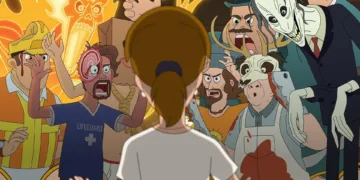
Visually, the series is a product of its time. The animation from Titmouse is proficient, slick, and colorful, fitting neatly into the aesthetic that has become standard for mainstream American adult cartoons. The monster and ghost designs are a clear strength, offering an array of kooky and grotesque figures that populate the hotel.
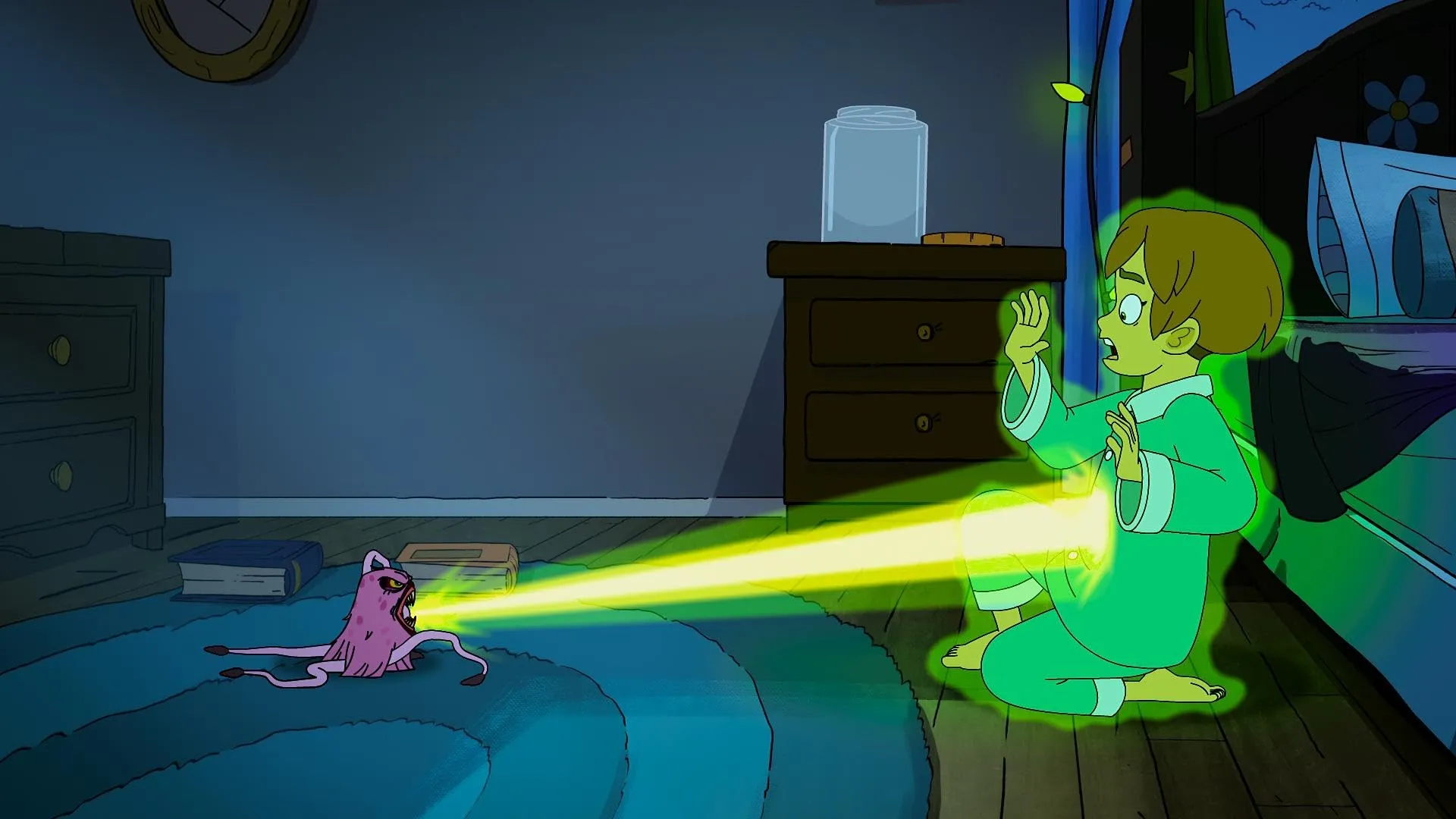
The Undervale itself is rendered with enough detail to feel like a character, its decaying grandeur a fitting backdrop for the narrative. The world is populated by a wide cast of specters, from a cowboy to the perpetually aflame “Stabby Pete,” who give the setting a lived-in feeling.
These characters are often used as simple plot catalysts. The show’s world-building feels similarly superficial. Interesting pieces of lore are introduced, like the concept of “death day loopers,” but are quickly abandoned.
This reluctance to build a deeper mythology is symptomatic of a certain kind of streaming show, one that prioritizes self-contained episodic stories for casual viewing over a serialized narrative that rewards close attention. The impressive roster of guest voices, including Kumail Nanjiani and Randall Park, adds flair to the ensemble but cannot fix the underlying structural timidity.
The Ghost of Emotional Connection
At its core, Haunted Hotel attempts to be a story about family and grief. The premise is built around a family coping with loss and dramatic upheaval. The dynamic between Katherine and her deceased brother Nathan offers a rich field for emotional exploration, yet the show rarely digs deep enough to find it. Some subplots, like Esther’s attempt to create a zombie father figure, touch on authentic feelings of abandonment and give the series flashes of emotional weight.
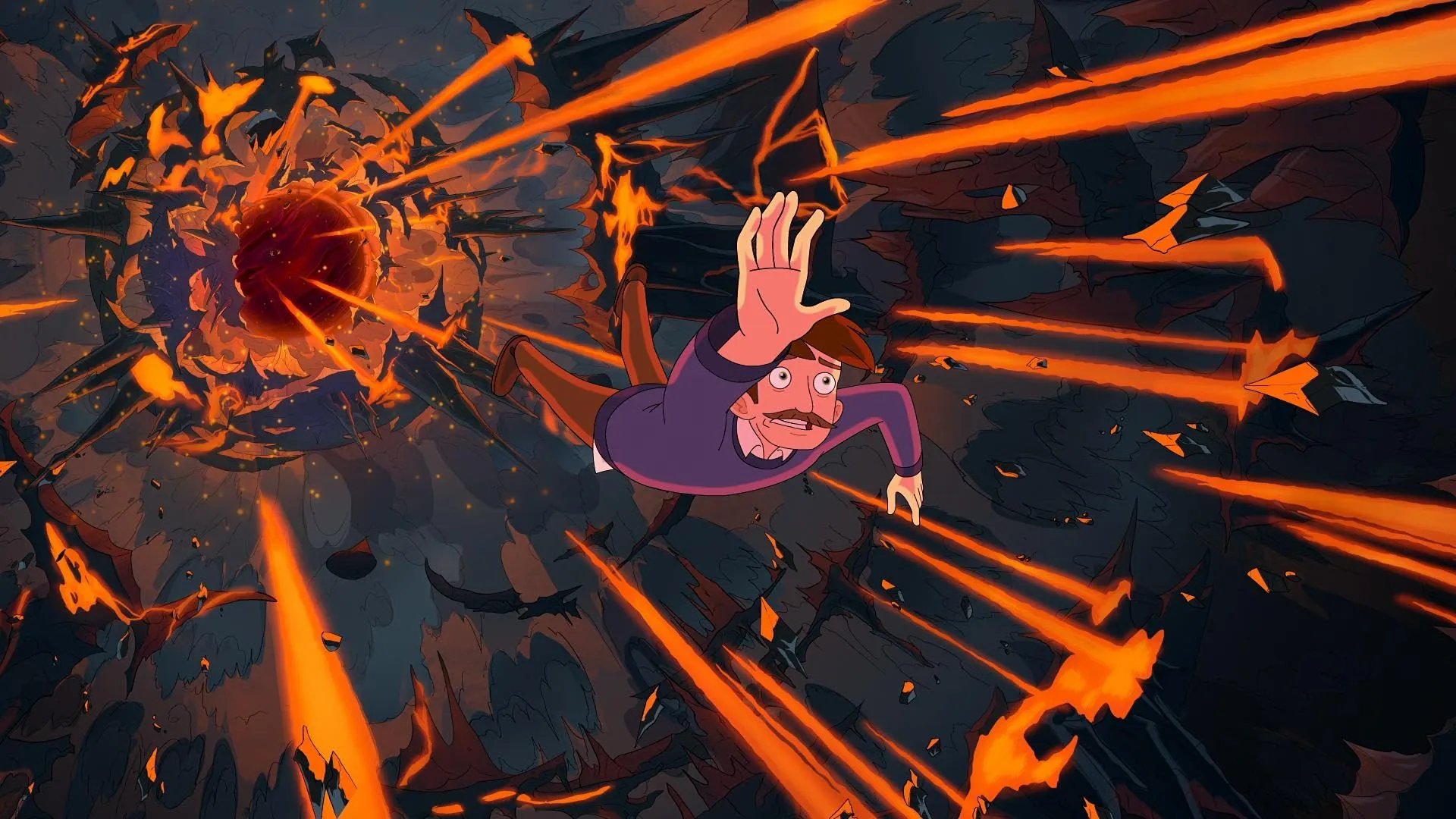
These moments are the exception. For much of its run, the series defaults to telling the audience about the family’s affection for one another instead of showing it through meaningful interaction. The characters often feel like archetypes moving through a story, which makes it difficult for a viewer to become invested in their relationships.
Ben and Esther’s sibling dynamic, for instance, lacks any significant tension or texture. There are, however, glimmers of what could have been. The season finale places Abaddon in a position where he must make a significant choice about his relationship with the Freelings. Another late-season sequence involving time travel provides a powerful, affecting demonstration of sacrifice. These instances feel like they belong to a different, more confident series, one that fully commits to the emotional ideas it raises.
“Haunted Hotel” is an American adult animated comedy horror series. Created by Matt Roller, the show premiered on Netflix on September 19, 2025. It follows a single mother who tries to run a haunted hotel with her two children and the help of her estranged brother, who is one of the hotel’s ghosts.
Full Credits
Director: Erica Hayes, Christopher Nance, Bob Suarez, Meg Waldow
Writers: Matt Roller, Avital Ash, Sam Nulman, Carrie Rosen, Greg Gallant, Siena East, Kevin Arrieta, Dan Guterman, Alix Bloom, Joshua Corey, Brian Kratz
Producers and Executive Producers: Matt Roller, Chris McKenna, Dan Harmon, Steve Levy, Chris Prynoski, Shannon Prynoski, Antonio Canobbio, Ben Kalina, Nate Funaro, Angela Belyea
Cast: Will Forte, Eliza Coupe, Skyler Gisondo, Natalie Palamides, Jimmi Simpson
Editors: Benjamin Morse
Composer: Ryan Elder, Joshua Moshier
The Review
Haunted Hotel
Haunted Hotel is a serviceable but generic addition to the adult animation landscape. A talented voice cast and some charming visual gags cannot overcome the show's derivative premise and tonal inconsistency. It flirts with genuine emotion and clever horror parody but rarely commits, resulting in a series that is pleasant enough for background viewing but too superficial to leave a lasting impression. It occupies its runtime without ever truly earning its place.
PROS
- A strong, talented voice cast, with Will Forte as a particular standout.
- Creative and visually interesting ghost and monster designs.
- Occasional flashes of genuinely unsettling horror and sincere emotion.
- The animation is slick, colorful, and professionally executed.
CONS
- The premise and many character archetypes feel derivative of other popular shows.
- Humor is inconsistent, often relying on lazy or uninspired jokes.
- A persistent tonal imbalance makes it difficult to establish a distinct identity.
- Character relationships and emotional themes are underdeveloped and lack depth.