






















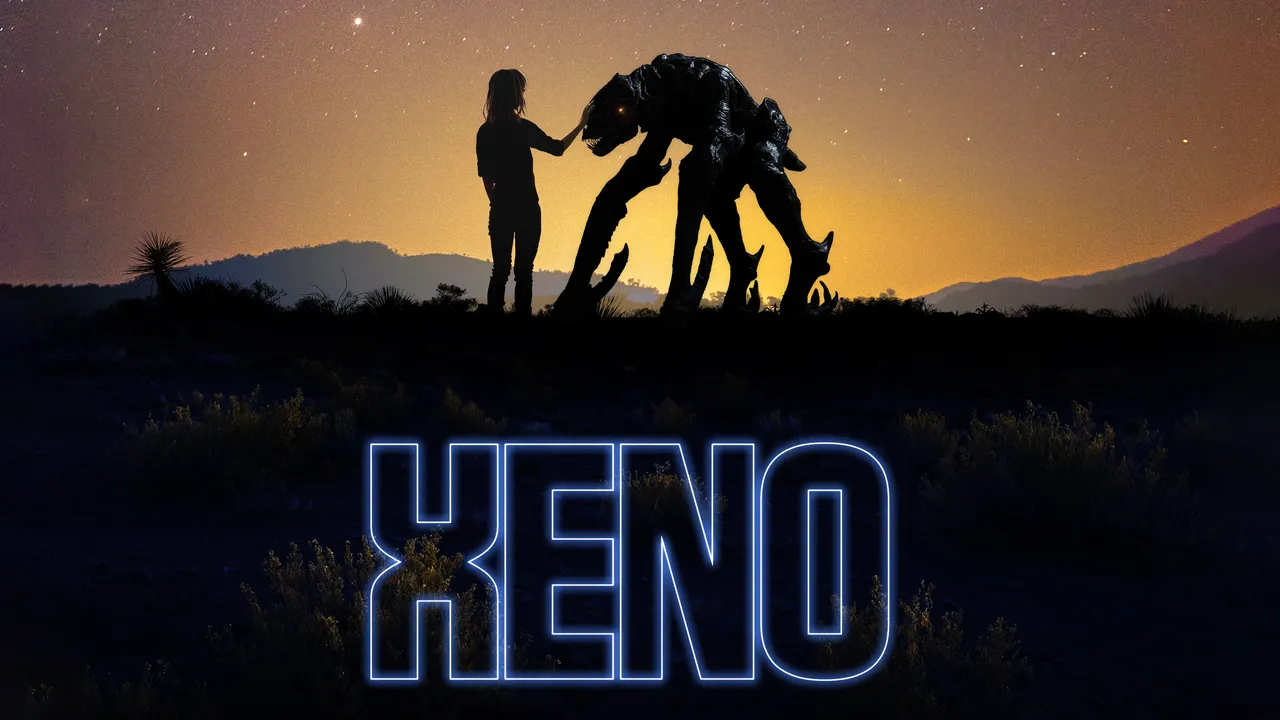

Stories have given us monsters for as long as we have told them, and they often serve a vital purpose for young characters. A creature from the dark can be a mirror, reflecting the turmoil a child cannot otherwise articulate. The most effective of these tales understand that the beast in the woods or the alien in the basement is an externalization of an internal chaos.
Xeno plants its flag firmly in this tradition. It introduces us to Renee, a teenager who has already surrounded herself with a menagerie of small, misunderstood monsters: the snakes, lizards, and spiders that occupy her bedroom. When a literal monster crashes into her life, it feels less like an invasion and more like a fateful meeting. The film uses its extraterrestrial premise not for cosmic spectacle, but to tell a painful, intimate story about finding connection in a world that has offered only isolation.
The Geography of Adolescent Isolation
The film’s emotional landscape is defined by Renee, a 15-year-old girl portrayed by Lulu Wilson with a quiet, observant intensity. She is the story’s anchor, a character adrift in the aftermath of her father’s death. Her bedroom, filled with meticulously kept terrariums, is more than a hobbyist’s collection; it is a curated ecosystem of beings that thrive under her care, a stark contrast to the neglect she experiences outside its walls.
Her affinity for these creatures is a powerful character detail, showing a person who has learned to find beauty and value where others see only strangeness or threat. This choice informs every decision she makes. The film thoughtfully sidesteps the usual high school movie tropes. There are no jocks or mean girls, no cliques to rebel against. Renee’s isolation is more profound, a condition of her spirit shaped by her environment.
The setting, a featureless desert town that could be anywhere in America, heightens this feeling of being stranded. The wide-open spaces of the New Mexico landscape offer no escape; they only emphasize how small and trapped she is. Her house is a site of immense tension, a quiet battlefield. Her mother, Linda (Wrenn Schmidt), is a phantom, hollowed out by grief and sedated by medication.
The camera often finds her passed out at the kitchen table, a heartbreaking visual of her emotional absence. This void is filled by Chase (Paul Schneider), the mother’s boyfriend, whose menace is terrifyingly authentic.
Before he ever lays a hand on Renee, his presence infects the home with a psychological dread built from sarcastic remarks, violations of personal space, and the constant, unnerving smell of alcohol. This is not a caricature of a villain but a painfully realistic portrait of a household crumbling under the weight of sorrow and abuse.
A Creature of Tangible Terror and Trust
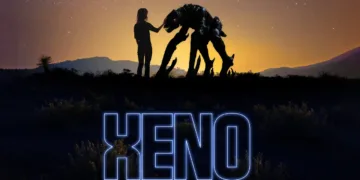
When Renee discovers Croak, the film makes a bold and brilliant choice in its design. This is an alien built to provoke fear. Brought to life by the legendary Jim Henson Creature Shop, Croak is a masterwork of practical effects, a welcome artifact in an age of digital homogeneity. The Henson name might evoke images of Muppets or the fantastical beings of The Dark Crystal, but here the workshop’s talent is turned toward pure horror.
The creature’s form is skeletal and insectoid, with a glistening black carapace and limbs that move with a jerky, predatory grace. Its head is dominated by a jaw filled with translucent, needle-like teeth. The suit performer’s movements give it a convincing sense of weight and biology. You feel its presence in the room with Renee, a tangible being of latex, mechanics, and artistry.
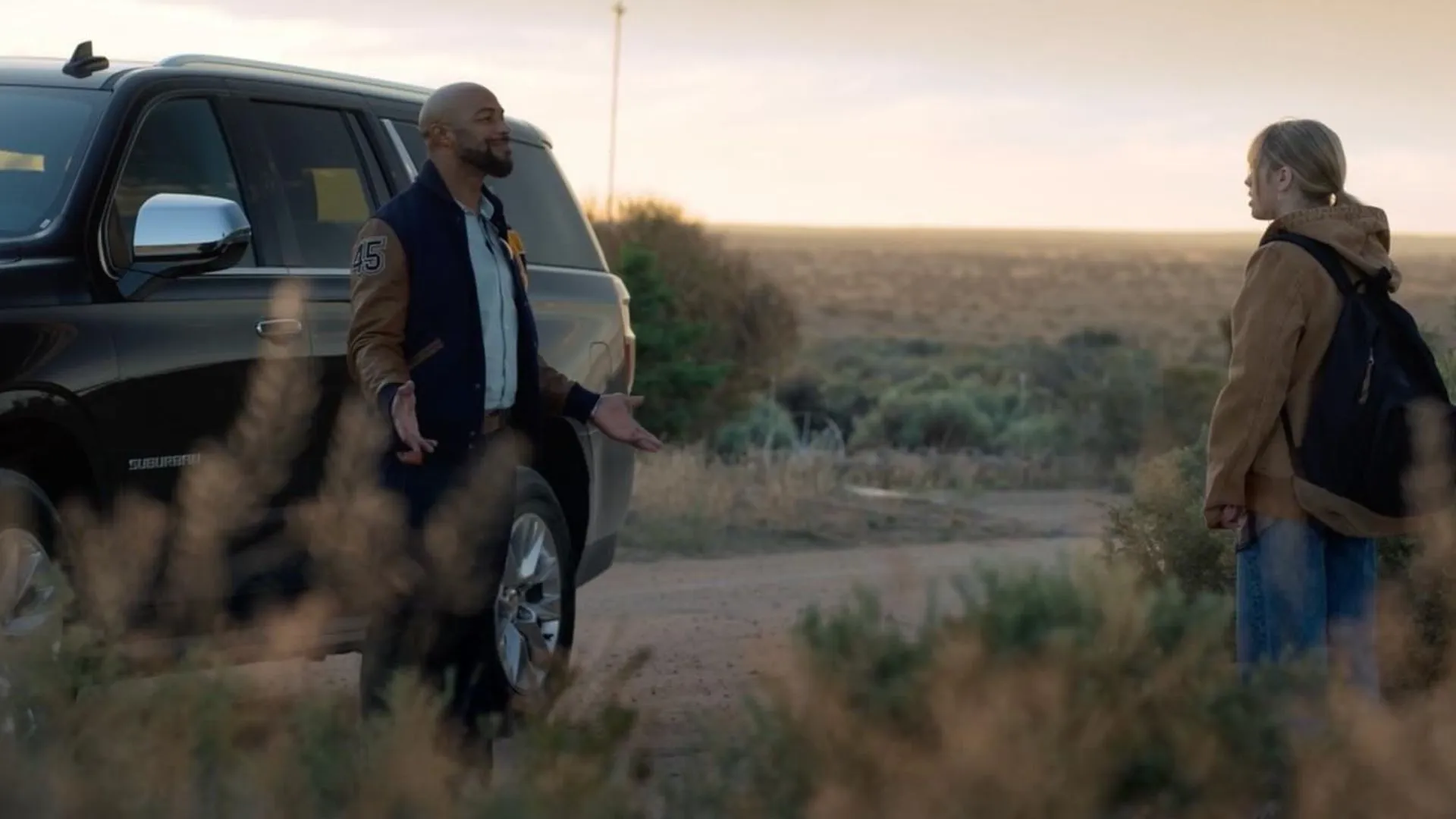
Their bond is not forged in a moment of tender understanding but in a blast of psychic energy, a strange and startling event that visually binds them. It is a connection that bypasses language, rooted in a shared status as hunted, vulnerable beings. Renee’s decision to hide Croak in her basement is less an act of childish fantasy and more one of desperate empathy. The threat they face is embodied by Agent Keyes, played with a cold resolve by Omari Hardwick.
He is a chilling subversion of the gentle government man from films like E.T. His motivations are hinted at through a small toy car he constantly handles, a token suggesting his hunt is driven by a past trauma. This detail adds a touch of complexity, but it does not soften his methods. His willingness to physically harm Renee in his pursuit of the alien solidifies the film’s worldview: in this story, the real monsters are the ones with badges and authority.
Facing Trauma Through a Sci-Fi Lens
Xeno uses its genre trappings as a vehicle to explore profoundly serious and difficult human experiences. The story’s science-fiction elements are secondary to its raw depiction of a family collapsing. This places it within a potent subgenre of films that use the fantastic to process childhood trauma.

Stories like A Monster Calls and Pan’s Labyrinth feature young protagonists who conjure creatures to cope with the impending loss of a parent. Xeno operates in a similar space but with a key difference. Its monster is not a metaphor manifested from imagination; Croak is a real, physical entity that crashes into an already dire domestic situation.
This grounds the film in a gritty reality, making it less of a dark fairy tale and more of a social drama complicated by an alien presence. The film presents a deeply cynical perspective on the adult world. Renee’s choice to place her trust in a creature that looks like a predator over the humans in her life is a damning indictment of those who were supposed to protect her.
The story becomes a powerful exploration of what it means to be monstrous. Chase’s cruelty is calculated and human, while Croak’s violence is instinctual and protective. The film asks us to consider which is the more terrifying. It refuses to offer its characters or its audience an easy escape, ending not with a triumphant victory but with a quiet, wounded understanding that survival is an ongoing process.
A Grounded Vision, A Fierce Performance
The film is anchored by Lulu Wilson’s exceptional work as Renee. She carries the movie’s emotional weight, delivering a performance of remarkable subtlety. In a scene where Chase verbally tears her down at the dinner table, Wilson’s face remains a stoic mask, but her eyes convey a universe of hurt and fury.

Her interactions with the non-verbal Croak are especially strong, as she builds a believable relationship with a complex puppet. The supporting cast provides excellent grounding. Paul Schneider’s portrayal of Chase is unforgettable, finding the pathetic insecurity that fuels the man’s rage. Wrenn Schmidt is heartbreaking as Linda, a mother so lost in her own pain she cannot see the damage it is causing her daughter. Writer-director Matthew Loren Oates demonstrates a clear and confident vision.
His direction favors a naturalistic style, with the sun-bleached cinematography of the desert creating a potent atmosphere of both immense possibility and desolate emptiness. He skillfully balances the quiet, character-driven moments with the more intense sequences of suspense, allowing the film’s dramatic core to remain at the forefront. His commitment to practical effects shows an artistic integrity that gives the film a classic, handcrafted feel.
An Unsteady Balance of Tones
For all its considerable strengths, Xeno is a film that sometimes strains against its own ambitions. Its most significant flaw is an issue of tonal consistency. The movie courageously depicts the grim reality of domestic abuse with a seriousness that is deeply unsettling.
Yet, it occasionally injects moments of broad, almost slapstick comedy, primarily through Renee’s well-meaning friend, Gil. A scene where he panics upon meeting Croak, for instance, aims for a lighthearted release of tension. When such a scene is placed near a sequence of genuine physical threat from Chase, the shift is jarring. This friction can pull a viewer out of the experience, making it feel like two different movies are competing for screen time.
While perhaps intended to reflect the chaotic nature of a teenager’s life, it sometimes reads as a film uncertain of its own identity. The narrative also occasionally relies on familiar genre mechanics. The antagonists, while performed well, are written with a certain one-dimensionality that can make their actions feel predictable.
The film’s emotional power comes from the central relationship between Renee and Croak. Xeno is a heartfelt, serious, and memorable piece of work. Its raw emotional core and stunning creature design are undeniable triumphs. It is a film defined by its sincerity, a quality that allows it to overcome its imperfections and leave a lasting impression.
The movie Xeno, directed and written by Matthew Loren Oates, was released in the United States and Canada on September 19, 2025. It is a science fiction adventure film produced by HartBeat Productions and distributed by Blue Fox Entertainment. It is not currently available on any streaming services, but was released in theaters.
Full Credits
Director: Matthew Loren Oates
Writers: Matthew Loren Oates
Producers and Executive Producers: Kevin Hart, Jesse Jensen, Luke Kelly-Clyne, Shana Marie, Matthew Loren Oates, Bryan Smiley, Rameez Khan, Thai Randolph, Andrew Carlberg, Kevin Healey, Ty Walker
Cast: Lulu Wilson, Omari Hardwick, Paul Schneider, Wrenn Schmidt, Trae Romano, Josh Cooke, Michael-John Wolfe, Ron Roggé, Garrett van der Leun, Cassandra Ballard
Director of Photography: Paul Marschall
Editors: Matthew Loren Oates, Brian Scott Steele
Composer: Ryan Taubert
The Review
Xeno
Xeno is a heartfelt and serious science-fiction drama. Its stunning practical creature effects and a powerful lead performance from Lulu Wilson anchor the film. It bravely explores the real-life monsters of grief and abuse. This emotional resonance largely overcomes some jarring tonal shifts and one-dimensional antagonists, making it a dark, memorable take on a familiar story.
PROS
- Impressive practical creature design from the Jim Henson Creature Shop that feels tangible and real.
- A powerful and emotionally grounded lead performance by Lulu Wilson.
- A courageous and mature exploration of difficult themes like grief and domestic abuse.
- Strong, grounded direction with a clear artistic vision.
CONS
- Jarring tonal shifts between serious drama and moments of comedy create an uneven experience.
- Antagonistic characters can feel underdeveloped and one-dimensional.
- The plot sometimes relies on predictable genre formulas.