

























![Kingdom Hearts Collection [I-III] Review](https://gazettely.com/wp-content/uploads/2026/10/Kingdom-Hearts-Collection-I-III-1-360x180.webp "Kingdom Hearts Collection [I-III] Review: KHII Holds Steady as Newer Entries Fluctuate 37")



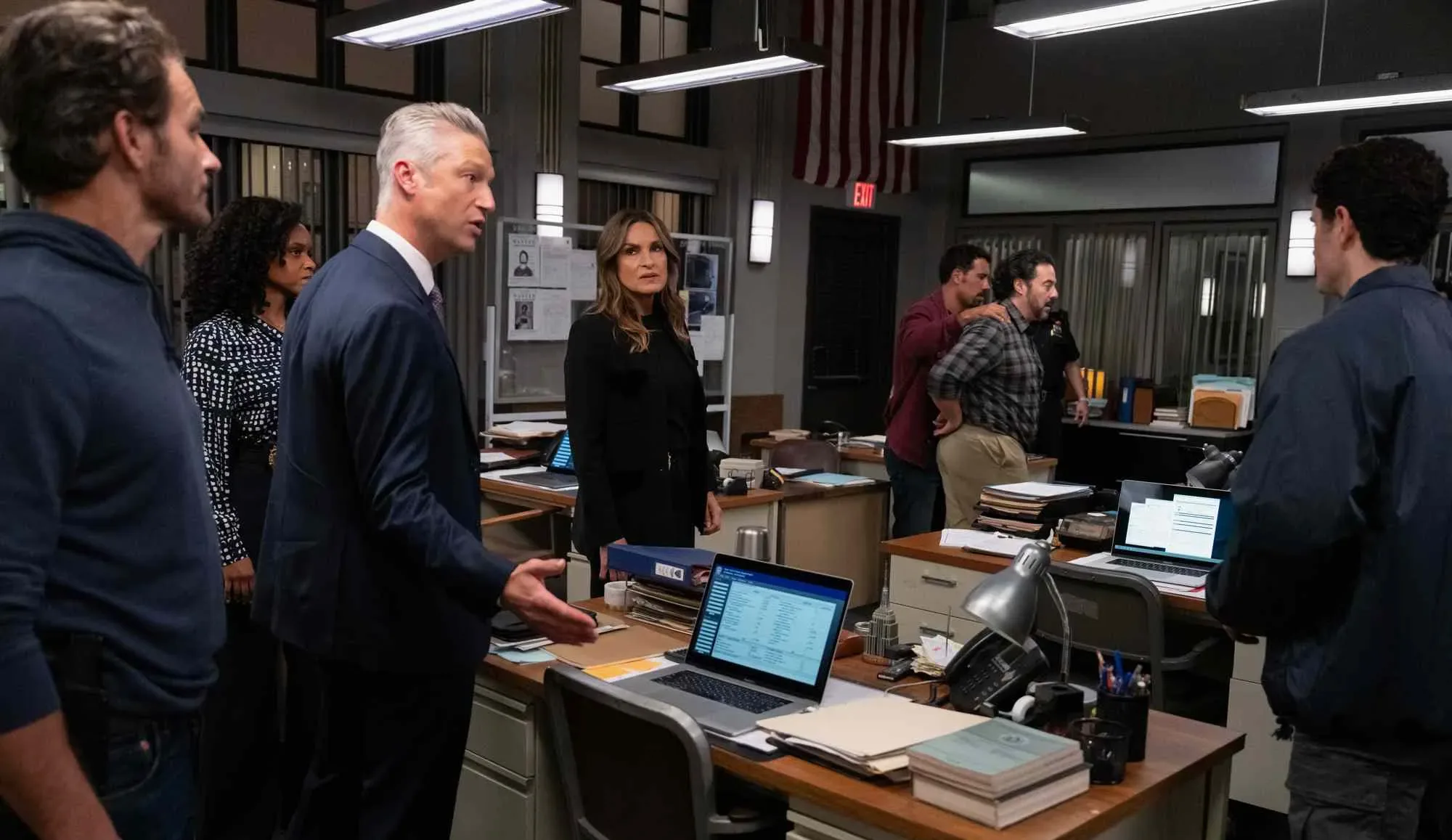

In an age where television shows are designed for the binge—consumed in a weekend and forgotten by Monday—Law & Order: Special Victims Unit persists. It is a broadcast relic, a weekly appointment from a bygone era, standing like a stone monument in a field of ephemeral digital content. For years, its indestructibility was its defining feature. The 27th season, however, begins with a startling act of self-awareness. It acknowledges the stone is weathered, that the monument is old.
The premiere does not just present another heinous felony; it interrogates the very premise of its own endurance. By forcing its characters to confront their professional mortality, the series poses a much larger question to the television landscape: What is the function of a weekly procedural when the world it depicts, and the world that watches, has changed completely? This season appears ready to supply an answer, turning its own history into the central subject of its investigation.
The Weight of a Badge
The catalyst for this introspection is a ghost. The death of former Captain Donald Cragen, a figure who has haunted the squad room in spirit long after his departure, finally makes his absence permanent. His memorial is a somber, atmospheric affair that serves as the season’s thematic overture. Here, a visibly shaken Olivia Benson watches a recording of her old boss and sees her own reflection.

Her admission that Cragen’s work gave his life meaning is a quiet confession of her own deepest fear: a life without the job is a life without meaning. This is more than a tribute; it is an examination of the patriarchal lineage of command she inherited and the immense burden that comes with it. The loss of this foundational character creates a vacuum, forcing everyone to look down and see how high they have climbed, and how far they have to fall.
This sense of vertigo permeates the episode. The quiet conversation between Benson and Fin Tutuola, two detectives who now embody the institutional memory of the entire unit, is heavy with unspoken anxieties. Their line about being “closer to the end than the beginning” is a deliberate rupture of the show’s procedural comfort.
It acknowledges the physical and emotional toll of three decades spent in the darkest corners of human behavior. Even the brief, melancholic appearance of Elliot Stabler feels purposeful. His presence is a poignant reminder of a different path, a life of partnership that diverged. The interaction is less about their shared history and more about Benson’s solitary present, amplifying the weight of the choices she has made and the career she has built in his absence.
Procedural as Political Barometer
Even as it turns inward, SVU maintains its role as a weekly referendum on societal ills. The premiere’s case, involving a rape survivor and a key witness threatened by immigration enforcement, is a classic example of the show’s “ripped from the headlines” mandate. Yet the execution feels more pointed than usual.
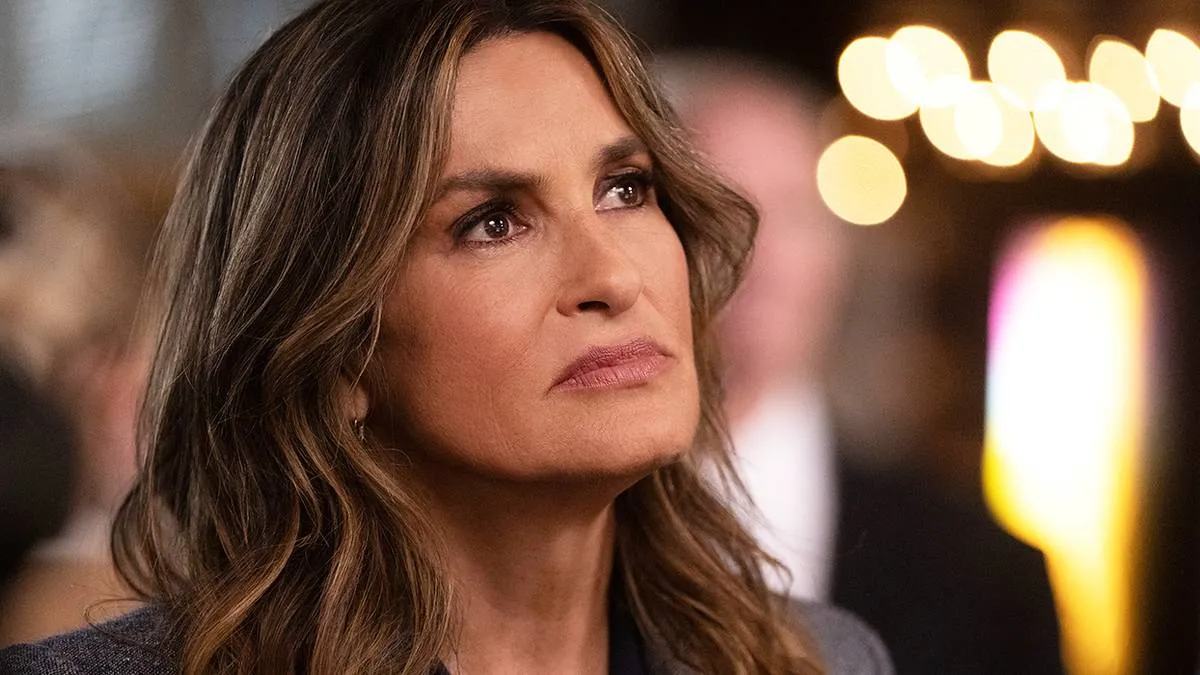
Jorge Ruiz, the building super who can identify the attacker, is caught between his conscience and his undocumented status. This places two arms of the American justice system in direct, irreconcilable conflict. The narrative boldly frames ICE not as a partner in justice but as an obstacle to it. This is a fascinating, if somewhat precarious, position for a police procedural to take, a show whose very existence relies on faith in law enforcement institutions.
Benson’s decision to obstruct federal agents, leading to her own brief arrest, is a powerful symbolic act. It marks a significant point in her character’s long arc, a transformation from a detective who upheld the system to a leader who now openly defies parts of it to serve a higher moral principle. Her actions dramatize the episode’s central question about whose safety is prioritized by the state.
The case’s eventual resolution, which sees the witness testifying and his immigration status secured through a back-channel deal, is almost comically clean. It is a television solution to an intractable real-world problem. This tidiness undercuts the story’s initial grit, reminding the audience that this is, after all, network television, where even the most searing social critiques must be palatable enough to not disrupt the commercial break.
The Serialized Cracks in a Familiar Formula
This season’s most significant evolution is its deep investment in serialized storytelling, a clear adoption of a technique perfected by streaming platforms. The cracks in the episodic formula are most apparent in Fin’s personal crisis. After being assaulted and having his gun stolen, his decision to conceal the truth from Benson is a complex character moment.
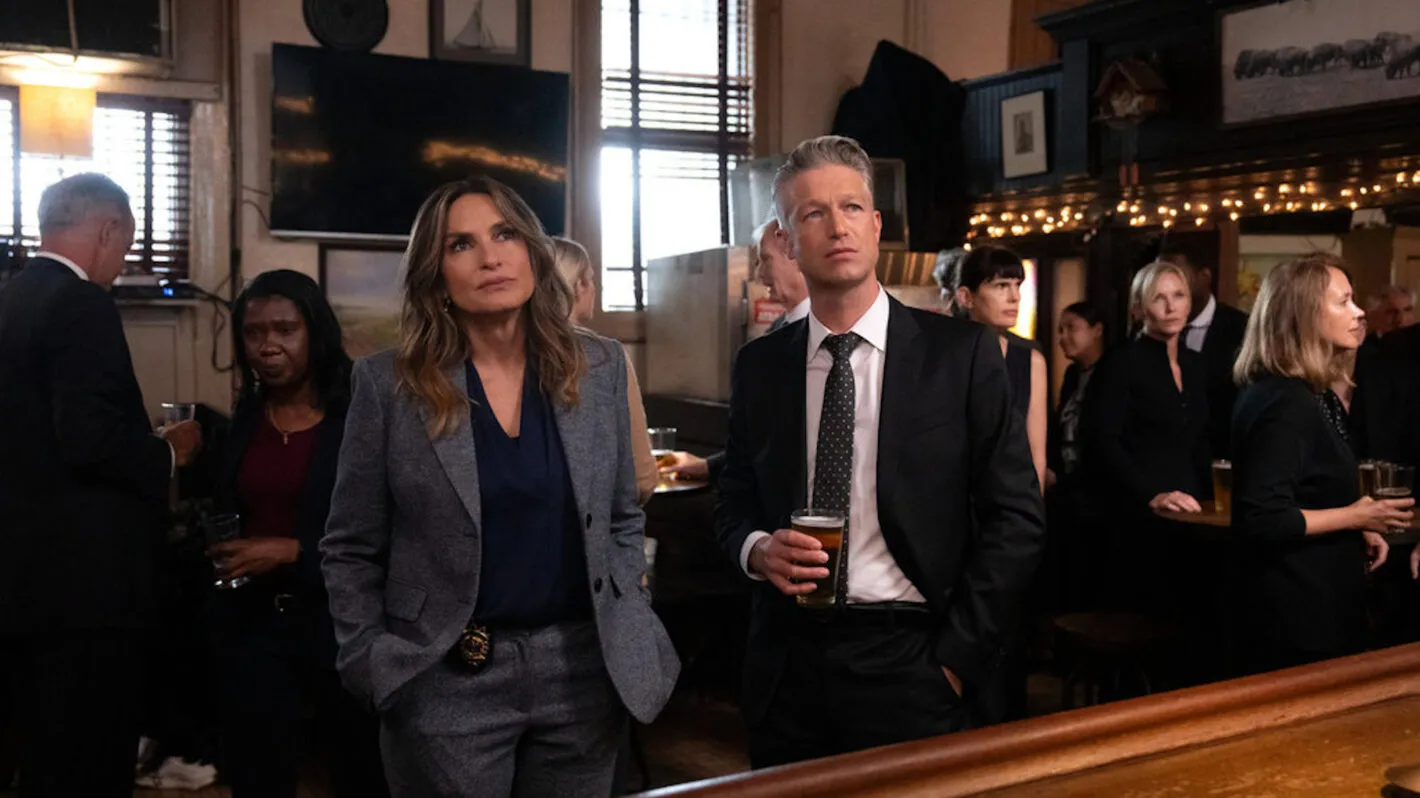
It speaks to a veteran officer’s pride, a fear of appearing vulnerable or diminished by age, and a deep-seated masculine reluctance to admit weakness. The resulting confrontation with Benson is charged with the unspoken history of their partnership. Her hurt stems from a breach of trust, while his defensiveness comes from a place of profound personal humiliation. The fact that the culprits remain at large leaves a thread of suspense that will surely unravel across the season, a serialized hook designed to ensure weekly viewership.
The power structure of the unit is also set for a seismic shift with the introduction of Chief Kathryn Tynan. The casting of Noma Dumezweni, an actress known for her commanding stage presence, is a deliberate choice. She brings an immediate gravitas to the role, presenting Tynan as a politically sharp and unreadable operator. Her proposal to promote Benson to a desk job, overseeing all of New York City’s Special Victims Units, is a brilliant strategic maneuver.
It is presented as an honor, a recognition of Benson’s legacy, but it functions as a potential trap that would remove the city’s most famous detective from the field. This conflict between hands-on work and administrative power will likely form the spine of Benson’s seasonal arc. Adding to the instability, the ominous final shot of Detective Velasco getting into an unknown car is a modern television trope, a cliffhanger engineered to fuel online speculation and manage a real-world cast departure.
The Old Guard Learns New Tricks
The season premiere stands as a clear statement of purpose from new showrunner Michele Fazekas. It is a carefully engineered renovation of a landmark property, preserving the original architecture while updating the interior for modern sensibilities.
The episode’s success lies in its sophisticated blending of the show’s reliable case-of-the-week engine with the character-driven depth that defines contemporary prestige television. This hybrid model may represent the only viable path forward for legacy procedurals hoping to survive in the fractured streaming landscape. They must provide the comfort of the familiar format while offering the sustained emotional investment of a serialized drama.
The new season positions SVU to ask daring questions about its own future. The themes of aging, trust, and legacy are not just for the characters; they apply to the series itself. Will the show truly allow Olivia Benson to contemplate a life after the badge, or is this just another dramatic arc before an inevitable return to the squad room status quo? By turning the camera on itself and examining its own place in television history, SVU has found a compelling way to stay relevant. It is confronting its own mortality, and in doing so, it has never felt more alive.
Law & Order: Special Victims Unit is a dramatic crime series that originally premiered in 1999. The show follows the Manhattan Special Victims Unit of the New York City Police Department as they investigate sexually-related offenses, child abuse, and domestic violence crimes. The series is currently in its 27th season, with new episodes airing on NBC on Thursday nights at 9/8c. Viewers can stream new episodes the following day on Peacock. All 26 previous seasons are also available for streaming on both Peacock and Hulu.
Full Credits
Director: Jean de Segonzac, Norberto Barba, Peter Leto, David Platt, Rick Wallace, Holly Dale
Writers: Dick Wolf, Julie Martin, Warren Leight, Brianna Yellen, Dawn DeNoon, Nicholas Evangelista
Producers and Executive Producers: Dick Wolf, Peter Jankowski, Arthur W. Forney, Julie Martin, Ted Kotcheff, Mariska Hargitay
Cast: Mariska Hargitay, Christopher Meloni, Ice-T, Richard Belzer, Dann Florek, Kelli Giddish, Peter Scanavino, BD Wong, Tamara Tunie, Stephanie March, Danny Pino, Octavio Pisano, Kevin Kane, Raúl Esparza
Director of Photography (Cinematographer): Michael Green, Geoffrey Erb, George Pattison, Tom Weston, Tony C. Jannelli, Jonathan Herron
Editors: Karen I. Stern, Leon Ortiz-Gil, Jim Stewart, Nancy Forner, Douglas Ibold, Oscar Rene Lozoya II
Composer: Mike Post
The Review
Law & Order: Special Victims Unit Season 27
By turning its focus inward, Law & Order: SVU’s 27th season finds a renewed sense of purpose. The premiere is a masterclass in evolving a legacy format, successfully blending its procedural core with the serialized character depth of modern television. It uses its own history as a narrative engine, forcing its veteran characters to confront their mortality in a way that feels both earned and essential. While the resolutions to its weekly cases can still feel too tidy, the show’s willingness to grapple with its own age makes it more relevant than it has been in years.
PROS
- A mature, self-aware exploration of legacy and aging.
- Effectively integrates serialized character arcs into the procedural format.
- Strong performances that reveal new depths in long-established characters.
- Engages directly with contemporary social and political issues.
- Introduction of compelling new power dynamics promises season-long conflict.
CONS
- The resolution of the weekly case can feel overly simplified, softening its real-world impact.
- Some dramatic moments prioritize symbolism over strict realism.







