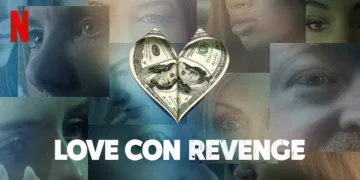






























In the endless scroll of streaming content, a new genre is solidifying: the true-crime spin-off. Netflix’s Love Con Revenge is a direct descendant of this trend, emerging from the shadow of The Tinder Swindler to address the pervasive threat of romance fraud. The series follows Cecilie Fjellhøy, a prominent victim from the original documentary, who now channels her experience into activism.
She partners with private investigator Brianne Joseph to pursue justice for others ensnared in similar digital deceptions. Their mission is to arm victims with the evidence needed to be taken seriously by a legal system often indifferent to their plight.
The show positions itself as a necessary response to the perils of modern dating, where emotional connection is a currency easily exploited. It arrives at a moment when the line between a bad date and a life-altering crime has become dangerously thin, reflecting a deep-seated anxiety about trust and technology in contemporary relationships.
A Partnership Forged in Systemic Failure
The series builds its entire emotional and narrative weight on the partnership between Cecilie Fjellhøy and Brianne Joseph. This pairing represents a significant evolution in the true-crime genre, moving away from the detached, expert-led investigations of the past toward a model founded on lived experience. Fjellhøy’s presence is the show’s defining feature.
She embodies the “victim-to-avenger” archetype, a powerful and increasingly prevalent figure in contemporary storytelling. Her transformation is not presented as a simple recovery but as a conscious redirection of her trauma into a tool for social change. This subverts the traditional true-crime format, which often positions victims as passive subjects of a story told by others.
Here, the survivor controls the narrative, offering a profound sense of validation to the individuals whose stories are featured. The emotional labor she performs is immense; she absorbs the pain and frustration of each new case while serving as a beacon of hope. Her involvement is a powerful statement against the shame that allows these crimes to fester in silence.
Brianne Joseph, in contrast, functions as the crucial bridge to the very systems that have failed these individuals. As a seasoned private investigator, she brings a methodical and dispassionate expertise that is essential for navigating the labyrinthine corridors of the justice system. She translates raw emotional injury into the cold, hard evidence that law enforcement demands.
Her role highlights a troubling trend: the growing privatization of justice. When state institutions lack the resources, time, or will to pursue these complex crimes, the burden shifts to those who can afford to hire help. Joseph represents what the system could be, yet her presence outside of it speaks to its inherent limitations.
She is the professional force required to make the machine of justice turn, a sober acknowledgment that empathy alone is not enough to hold criminals accountable. Her calm professionalism provides a necessary anchor, preventing the show from sinking into pure sentimentality.
Their dynamic creates a compelling model for collaborative problem-solving. It dismantles the myth of the lone-wolf detective, suggesting instead that healing and justice require a blend of emotional intelligence and practical skill.
The visual language of their interactions reinforces this idea. They operate as a cohesive unit, with Fjellhøy leading the delicate work of building trust with victims while Joseph outlines the strategic path forward.
Their partnership is a microcosm of a larger societal need, reflecting a world where complex problems can no longer be solved by a single approach. They have formed a bespoke justice system for the digital age, one born from the failings of the old world and tailored to the specific wounds of the new one.
An Education in Digital Deception
Love Con Revenge structures itself as both a gripping procedural and a crucial public service announcement. Each episode meticulously deconstructs a romance scam, offering viewers an education in the mechanics of modern manipulation. The series moves beyond the simple shock of betrayal to analyze why these cons are so devastatingly effective in the current cultural moment.

The tactics on display are not random; they are precision tools designed to exploit the anxieties of a hyper-connected yet lonely society. Scammers leverage the performative nature of social media and the decline of traditional communities to locate and isolate their targets. The show demonstrates this through a variety of cases.
The story of Todd Dean, who created the fictional wellness foundation “Sanjara,” is a chilling example of how scammers co-opt the popular language of self-help and spiritual healing to prey on individuals seeking purpose. His scheme worked because it offered a sense of belonging to women already feeling adrift. Similarly, the case of Ricky, an army veteran who scammed his girlfriend Bridget, reveals how concepts like patriotism and honor can be weaponized to extract funds.
The series functions as a practical guide for digital literacy, thinly veiled as entertainment. It methodically lays out the process of gathering evidence, from preserving text messages to tracking digital payments, essentially creating a “how-to” manual for potential victims. This dual purpose is a hallmark of contemporary content creation, where media must offer tangible value to capture an audience’s attention. The show’s greatest strength is its ability to reframe the narrative around these crimes.
It actively dismantles the pernicious question of “How could they fall for that?” by showing the sophisticated psychological operations at play. It details the initial stages of “love bombing” to build overwhelming dependency, the use of gaslighting to sow doubt and confusion, and the eventual creation of a crisis that only money can solve. By focusing on the scammers’ methods, the show shifts the focus from the victim’s perceived gullibility to the predator’s calculated cruelty.
The show’s narrative pacing is also a deliberate reflection of its streaming platform home. Many cases are not resolved within a single episode, a structural choice that forces viewers to binge-watch. This is a common retention strategy, but it also serves a thematic purpose.
The unresolved storylines mirror the agonizingly slow and uncertain nature of seeking justice in real life. There are no neat, 42-minute resolutions here. Instead, the audience is made to feel the prolonged anxiety that victims experience as they wait for a breakthrough. This serialized approach allows for a deeper exploration of each case, preventing the complex emotional and financial fallout from being condensed into a simplistic cautionary tale.
The Blurring Lines of True-Crime Entertainment
The aesthetic of Love Con Revenge is a case study in the ongoing evolution of the true-crime genre. It occupies a space between gritty documentary and polished reality television, a hybrid that raises important questions about the presentation of trauma as entertainment.

The production is undeniably slick. Conversations between the hosts can feel carefully constructed, and the emotional beats sometimes land with a manufactured precision. This stylistic choice is a double-edged sword. On one hand, it makes the difficult subject matter more accessible to a broad audience. On the other, it risks sanitizing the raw, messy reality of the victims’ experiences.
The show’s polished look may be a concession to the demands of the streaming marketplace, where even the most serious content must compete for attention with glossy dramas and reality competitions. It is a paradox of modern television: the quest for authenticity is often filtered through the lens of what makes for “good TV.”
This tension, however, does not entirely undermine the show’s powerful societal message. Love Con Revenge is a direct cultural intervention into the discourse surrounding romance fraud. It functions as a powerful critique of a justice system that is ill-equipped to handle crimes that cross state lines and exist in the murky jurisdiction of cyberspace.
The show also takes aim at the pervasive culture of victim-blaming, which has long silenced survivors of financial and emotional abuse. By centering the narratives of those who have been wronged, the show insists on their credibility and humanity. Its existence feels connected to wider social movements that demand we believe victims and hold powerful manipulators accountable.
The series may also signal a new direction for the future of true-crime programming. The model of a survivor from one documentary becoming the host of a subsequent series creates a self-perpetuating content ecosystem, a fascinating and effective strategy for a platform like Netflix. This could lead to a new wave of advocacy-oriented shows that empower subjects to become active participants in the storytelling process.
Love Con Revenge moves beyond passive consumption, inviting its audience to become more critical consumers of digital intimacy and more compassionate witnesses to its potential fallout. It is a show born of a specific technological and cultural moment, reflecting our collective fears about deception while offering a small, determined glimmer of hope that justice, even when delayed or denied by the system, can still be found.
Love Con Revenge is a documentary series that premiered on September 5, 2025. You can watch it on Netflix.
Full Credits
Director: Max Shapira
Producers and Executive Producers: Ruth Kelly, Chris McLaughlin
Cast: Cecilie Fjellhøy, Brianne Joseph
The Review
Love Con Revenge
Love Con Revenge is an essential, if sometimes stylistically conflicted, evolution of the true-crime genre. It transforms the survivor narrative into a powerful tool for advocacy and education, offering a crucial look at the failures of the justice system in the digital age. While its reality TV gloss can feel jarring, its mission to empower victims and expose modern fraud is both timely and vital.
PROS
- Presents an empowering "victim-to-advocate" format that centers survivor stories.
- Functions as an important educational guide to the tactics of modern romance scams.
- The dynamic between the empathetic Cecilie Fjellhøy and the professional Brianne Joseph is a core strength.
- Highlights systemic gaps in how the legal system addresses digital-age crime.
CONS
- The polished, reality TV production can feel staged and at odds with the raw subject matter.
- A structural reliance on splitting cases across episodes may frustrate some viewers.
- The procedural nature of the cases can become somewhat repetitive.