
























When Kate Beckinsale’s name appears on a movie poster, a certain set of expectations follows. We anticipate a sleek, stylized action film with intricate fight choreography and a confident, capable hero. Stolen Girl presents this promise and then promptly pulls the rug out from under you. The film begins not with a bang, but with the quiet hum of a difficult life.
We meet Mara, a single mother in rural Ohio, whose world consists of managing a job, caring for her ailing father, and cherishing the time she has with her young daughter, Amina. Her life is shattered when her ex-husband abducts Amina and flees the country.
The film then makes a patient choice, letting years of fruitless searching pass on screen. This establishes a foundation of authentic grief and maternal resolve, suggesting a thoughtful character study disguised as a thriller.
An Identity Crisis on Screen
Just as you settle into the rhythm of this somber drama, the film abruptly changes its entire composition. It’s a structural decision that feels less like a plot twist and more like a complete personality transplant for the movie itself. The catalyst is Mitchell Robeson, an ex-Marine played by Scott Eastwood, who materializes to recruit Mara into his private child-recovery organization.
Suddenly, the deeply personal story of one mother’s search is shelved in favor of a globe-trotting procedural. Mara is whisked away to Mexico and Albania, learning the spy trade on missions that feel disconnected from her own emotional journey. This narrative shift fundamentally breaks the film. The pacing grinds to a halt as the intimate story of loss is interrupted by generic action set pieces.
It reflects a certain anxiety in modern filmmaking, an impulse to inject conventional action into a story that thrived on its quiet intensity. The two halves of the film exist in opposition, creating a disjointed experience where the dramatic weight of the first act is squandered by the formulaic demands of the second.
Performance in a Vacuum
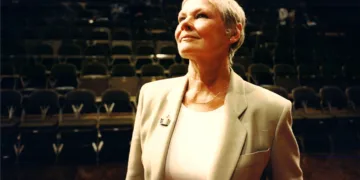
Kate Beckinsale is the film’s steadfast emotional anchor, delivering a performance that feels richer than the script supporting it. In a welcome departure from her roles as a seasoned warrior, she portrays Mara with a raw, grounded desperation. She uses her physicality to convey years of weariness, her movements lacking the crisp precision of an action hero and instead showing the heavy toll of sustained trauma.
She makes Mara’s pain feel real. This strong central performance operates almost entirely on its own. The supporting characters are thinly drawn, from her ailing father who serves mainly as a motivational prop, to Scott Eastwood’s Robeson, who is more of an archetype than a person. Eastwood struggles to give the stoic character any depth, and his line delivery often feels flat.
A romantic subplot is forced between them, but the scenes feel perfunctory, hitting plot points without generating any genuine connection. Their interactions have all the warmth of a business transaction, serving as a distraction that highlights the script’s reliance on convention over character.
A Vision Lost in the Shaking Frame
Any momentum the movie builds is quickly dissipated by its chaotic technical execution. The action sequences, which should be the payoff for the film’s genre shift, are rendered nearly incomprehensible by a jittery, handheld camera style. This approach obscures choreography and spatial awareness, creating confusion instead of tension. It’s a frustrating choice that undermines the film’s attempts at excitement.

This lack of thoughtful craft extends to its cultural depictions. I felt a familiar sense of disappointment seeing the film rely on a dated visual language, painting its international settings with a lazy, stereotypical brush. The Middle East is bathed in a perpetual reddish haze, a visual trope that reduces a complex region to an exotic backdrop.
This artistic choice feels uninspired in 2025. This weak execution leads to an ending that, while subverting expectations, feels muted and hollow. The emotional through-line was severed midway through the film, so the final resolution lacks the power it should have. The serious topic of child abduction is lost in a muddle of poor filmmaking choices.
Stolen Girl is a pulse-pounding thriller directed by James Kent, based on the true story of Maureen Dabbagh. The story follows a desperate mother (Kate Beckinsale) who joins forces with an ex-Marine (Scott Eastwood) to track down her daughter, who was abducted by her father and taken to the Middle East. The film is distributed by Vertical Entertainment and was scheduled for a US release on September 26, 2025.
Full Credits
Director: James Kent
Writers: Kas Graham, Rebecca Pollock
Producers and Executive Producers: Monika Bacardi, Andrea Iervolino, Scott Lambert, Luca Matrundola, Frida Torresblanco, Kas Graham, Rebecca Pollock, Nicolas Chartier
Cast: Kate Beckinsale, Scott Eastwood, Matt Craven, Ana Golja, Arvin Kananian, Jordan Duvigneau, Robert Farrior, James Cromwell, Paten Hughes
Director of Photography (Cinematographer): Teo Delgado
Editors: Tommy Aagaard
The Review
Stolen Girl
Stolen Girl is a frustrating film, built on the foundation of a powerful true story and featuring a committed performance from Kate Beckinsale. However, its potential is squandered by a script that suffers from a severe identity crisis, awkwardly grafting a generic action movie onto a somber drama. Poorly executed action and a reliance on tired stereotypes ultimately sink a film that could have been a moving and important story.
PROS
- A strong, emotionally grounded lead performance from Kate Beckinsale.
- The first act effectively establishes a potent and compelling dramatic premise.
- The ending attempts to subvert the expectations of a typical action thriller.
CONS
- A disjointed script with a jarring tonal shift from drama to action.
- Incoherent and poorly filmed action sequences.
- Underdeveloped supporting characters and a forced, chemistry-free romance.
- Dated and stereotypical visual depiction of its international settings.
- A serious subject is undermined by generic B-movie execution.