

























![Kingdom Hearts Collection [I-III] Review](https://gazettely.com/wp-content/uploads/2026/10/Kingdom-Hearts-Collection-I-III-1-360x180.webp "Kingdom Hearts Collection [I-III] Review: KHII Holds Steady as Newer Entries Fluctuate 37")



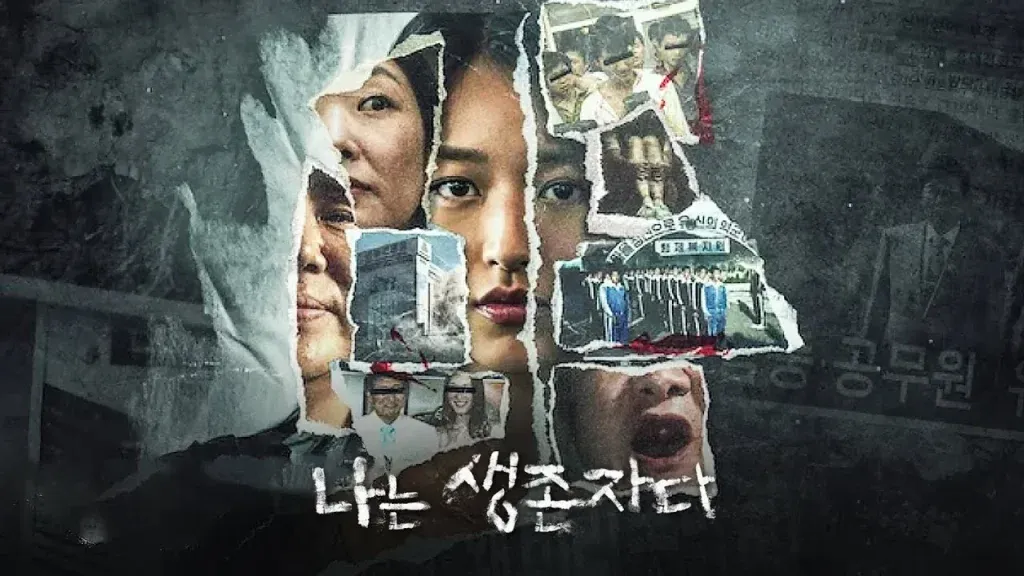

Netflix’s true-crime division, never one to shy away from the abyss, returns to South Korea with The Echoes of Survivors: Inside Korea’s Tragedies. From the makers of the unsettling In the Name of God: A Holy Betrayal, this eight-part series tackles four national traumas, giving each a two-episode deep dive.
The mission statement is noble: to center the stories of those who lived through unspeakable events. We revisit the notorious JMS cult and witness the fallout from the Sampoong Department Store collapse. The series also unearths the Chijon family murders and exposes the horrific, state-sanctioned abuse at the Brothers’ Home. This is heavyweight television, designed to leave a mark. It certainly does. The question is what kind of mark it leaves, and on whom.
The Unbreakable Voice
When the production machinery quiets down, the series finds its power. The raw testimony of the survivors is its undeniable, unshakable core, a signal that cuts through the noise of the show’s own making. In these moments, the filmmaking simply bears witness, and the result is devastatingly effective.
The episodes dedicated to the Brothers’ Home are built on the recollections of men who were stolen as children. One survivor recounts the details of his prolonged sexual abuse with a disarming, matter-of-fact delivery that is more chilling than any scream. His performance, not as an actor but as a person forcing himself to articulate the unspeakable, is a masterclass in human endurance. The quiet dignity with which these men face the camera, their controlled expressions occasionally cracking to reveal the deep fissures of trauma beneath, provides the series its most authentic and powerful scenes.
The narrative of the Chijon family murders is structured around the voice of the lone survivor, Lee Jeong-su. Her narration is not just a recounting of events; it is the atmospheric heart of her two episodes. The sound design wisely places her voice front and center, often against a backdrop of near silence, creating a sense of claustrophobic intimacy.
We are not just hearing her story; we are in the room with her, leaning in to catch every word. This focused, minimalist approach allows the sheer horror of her experience to land without interference. Similarly, the segment on the Sampoong Department Store collapse shifts from this individual focus to a communal one. The editing skillfully weaves a mosaic of grief and resilience, cutting between the perspectives of a parent waiting for any news, a rescue worker describing the dust and the silence, and a survivor recalling the building’s final groan.
It is here the series understands that a national tragedy is a collection of a thousand individual stories. The follow-up on the JMS cult, while hampered by its need for prior context, still offers a potent look at an ongoing fight, a trauma that has not yet settled into memory. These testimonies are the reason to watch. They are fragments of history demanding to be heard, carrying an emotional weight that transcends the screen.
For Your Tears
A documentary about survival should not feel like a second ordeal for its subjects. Yet, The Echoes of Survivors repeatedly makes choices that feel ethically bankrupt, transforming a journalistic endeavor into something that verges on a spectacle of pain. The production’s desire for a visceral reaction becomes its own kind of villain, a directorial hand that is not just visible but intrusive and cruel.

This is a primary tension in the true-crime genre, the line between bearing witness and exploiting for effect, and this series crosses that line with abandon. The most glaring offense is the practice of interviewing survivors on reconstructed sets of their personal hells.
We watch a man who escaped the Brothers’ Home recount his abuse while sitting on a bunk bed inside a meticulous recreation of his former prison. The visual is certainly striking. It is also a grotesque manipulation. The set exists for one reason: to provoke a visible reaction, to manufacture a breakdown for the camera.
This approach is not just manipulative; it is a fundamental misunderstanding of documentary ethics. The filmmaker’s role is to create a safe space for testimony, not to build a psychological trap to ensure tears. This is compounded by the costuming. Forcing survivors of the Brothers’ Home to wear replicas of the tracksuits they wore as captives is a step beyond reconstruction.
It is a form of psychological costuming, an act of humiliation designed to strip away the present and plunge them back into the past for our consumption. It is trauma tourism of the highest order. The director’s presence is also a problem. At times, he becomes an active participant, confronting individuals connected to the perpetrators. While this can be a valid technique, here it often feels less like investigative journalism and more like harassment, a performance of confrontation that centers the filmmaker, not the story.
Add to this the show’s reliance on stylized, dramatic reenactments of the most horrific events, especially sexual violence. These scenes, with their moody lighting and suggestive angles, do not clarify the testimony. They aestheticize it, turning raw human suffering into a consumable, cinematic product. The stated mission of honoring victims feels like a hollow alibi for a production that is, in practice, re-traumatizing them.
A Polished Surface on Troubled Waters
There is no denying the technical craft on display. The series is assembled with the precision of a luxury watch, boasting crisp cinematography and editing so sharp it could cut glass. The color grading is somber and cinematic, the sound mix is impeccable. It is a masterclass in the visual language of the modern, high-budget Netflix true-crime documentary.

This technical polish, however, makes the narrative choices all the more baffling, creating a profound disconnect between the style and the substance. The series’ most significant structural flaw is its pacing, a problem from which it never recovers. It commits a cardinal sin of storytelling: it blows its emotional load in the first two episodes.
By starting with the Brothers’ Home, its most harrowing, complex, and emotionally draining subject, the series creates a narrative nosedive. It begins at a shrieking crescendo and then has nowhere to go. The remaining stories, each devastating in their own right, are forced to compete with the ghost of that initial horror, and they inevitably feel diminished by comparison.
A simple reordering of the cases would have solved this. A more skilled storyteller might have begun with the Sampoong collapse, a large-scale public disaster, before moving to the intimate survival story of the Chijon murders. Then, the ongoing fight of the JMS cult could have raised the stakes, culminating in the deep, dark secret of the Brothers’ Home as the horrifying climax. That would have been a journey. This is a jumble. The structure also fails its audience with the JMS episodes.
Dropping viewers who have not seen the preceding series, In the Name of God, into a complex saga without adequate context is a baffling misstep for a global platform. It assumes a level of prior knowledge that most of the audience will not possess.
This points to a production that is not only careless with its subjects but also with its viewers. The series is a frustrating, deeply conflicted work. It preserves vital history with one hand while framing it with a stunning lack of care with the other. It leaves one to wonder if the streaming model itself, with its endless appetite for content and its algorithmic preference for shock, is what produces this kind of slick, beautiful, and morally empty television.
This docuseries premiered on August 15, 2025, and is available for streaming on Netflix. It is the second season of the 2023 docuseries In the Name of God: A Holy Betrayal and continues to explore tragic events in Korean history through survivor testimonies and archival footage.
Full Credits
The Review
The Echoes of Survivors: Inside Korea’s Tragedies
The series contains essential, powerful testimonies that demand to be heard. Its noble mission, however, is fatally undermined by manipulative and ethically dubious production choices that exploit its subjects' trauma for a visceral reaction. The slick presentation cannot hide the ugliness of its methods, making it a frustrating and deeply unsettling watch. It preserves vital stories but at a questionable cost to the survivors themselves.
PROS
- Features powerful and invaluable firsthand survivor testimonies.
- High-quality cinematography, editing, and sound design.
- Brings significant Korean tragedies to a global audience.
CONS
- Employs ethically questionable methods that exploit survivor trauma.
- Production choices appear designed to provoke subjects for the camera.
- Poor narrative structure and unbalanced pacing diminish the stories' impact.
- Uses sensationalized and cheap-feeling dramatic reenactments.







