

























![Kingdom Hearts Collection [I-III] Review](https://gazettely.com/wp-content/uploads/2026/10/Kingdom-Hearts-Collection-I-III-1-360x180.webp "Kingdom Hearts Collection [I-III] Review: KHII Holds Steady as Newer Entries Fluctuate 37")




The television sketch show is a dead format. We should begin by acknowledging this. Like the epic poem or the privately printed pamphlet, its cultural moment has passed, its ecosystem destroyed by the twin meteor strikes of streaming atomization and algorithmic immediacy. To see a new one appear on a major broadcaster in 2025 feels less like a revival and more like an act of televisual archeology.
So here are David Mitchell and Robert Webb, returning after a fifteen-year absence from the form, brushing the dirt off a comedic fossil. The show’s title, Mitchell and Webb Are Not Helping, is a masterpiece of preemptive self-deprecation. It is an admission that they are not here to save the format, to resuscitate the corpse, or to offer a solution.
They are simply here to remind us what the bones looked like. They arrive accompanied by a younger cohort of talent (Kiell Smith-Bynoe and Stevie Martin among them) who feel less like collaborators and more like the bright-eyed museum interns brought along on the dig. This is a ghost of a show, haunting the schedules.
The Comfort of a Known Equation
The central comedic engine of Mitchell and Webb has always been a beautiful, closed system. It is a binary star. David Mitchell operates as pure, hysterical Logos, a man whose sanity is a thin dam holding back a flood of pedantic rage at a universe that refuses to adhere to his internal rulebook.
Robert Webb is his chaotic counterpoint, a creature of pure Pathos, forever chasing a misguided notion of cool with the unearned confidence of a man who has never once experienced self-doubt. Their entire comedic output can be reduced to this formula: a logical man screaming into the void, and a fool confidently striding into that same void.
This dynamic was, of course, perfected in Peep Show, where Mark Corrigan’s internal monologues were the definitive expression of the Mitchell-Logos, and Jeremy Usborne’s every action was a monument to the Webb-Pathos. The sketch show format simply distills these archetypes, stripping away the psychological realism of the sitcom and presenting them in their purest, most concentrated forms.
Mitchell and Webb Are Not Helping does not recalibrate this equation. It simply runs the program again, and the results are deeply, sometimes unnervingly, familiar. The animated title sequence, the rhythm of the observational setups, the very cadence of Mitchell’s exasperation, all feel exhumed from 2006.
The pacing itself is an artifact. Sketches are allowed to breathe, to build, to sometimes meander toward a punchline, a stark contrast to the desperate, front-loaded demand for attention that governs online comedy. There is a strange comfort in this familiarity, like finding an old mixtape. The visual language reinforces this.
Mitchell’s performances are often physically contained, his rage expressed through tense hand gestures and facial tics, while Webb deploys a kind of loose-limbed, performative ease that constantly betrays his character’s inner desperation. The wigs and costumes serve to amplify these poles, either heightening Mitchell’s palpable discomfort or providing Webb with another layer of absurd delusion.
Yet the presence of the new cast members complicates the nostalgia. Kiell Smith-Bynoe brings a grounded, straight-man sensibility honed on Ghosts, often serving as an anchor of normality against which the central duo’s mania can play out. Stevie Martin and others bring their own distinct energies, but their function seems to be to insulate the central duo from accusations of being out of touch. They are a human shield against irrelevance.
One senses not a full collaboration in the writers’ room but a carefully managed integration, a process of grafting new limbs onto an old body. The result is a show that feels suspended in time, a redux of a past success that is acutely aware of its own anachronism. The two men seem perfectly suited to middle-age, their comedic personas having always been those of a premature curmudgeon and a man-child refusing to grow up. Now, life has simply caught up with the act.
The Inevitable Ballistics of Sketch
Every sketch show is an exercise in applied chaos. You fire a dozen ideas at the wall in thirty minutes and hope three or four leave a mark. It is a genre defined by its failure rate, a form of high-risk creative portfolio management. This show is no different, and its misfires are as instructive as its successes. Some sketches are duds from conception.
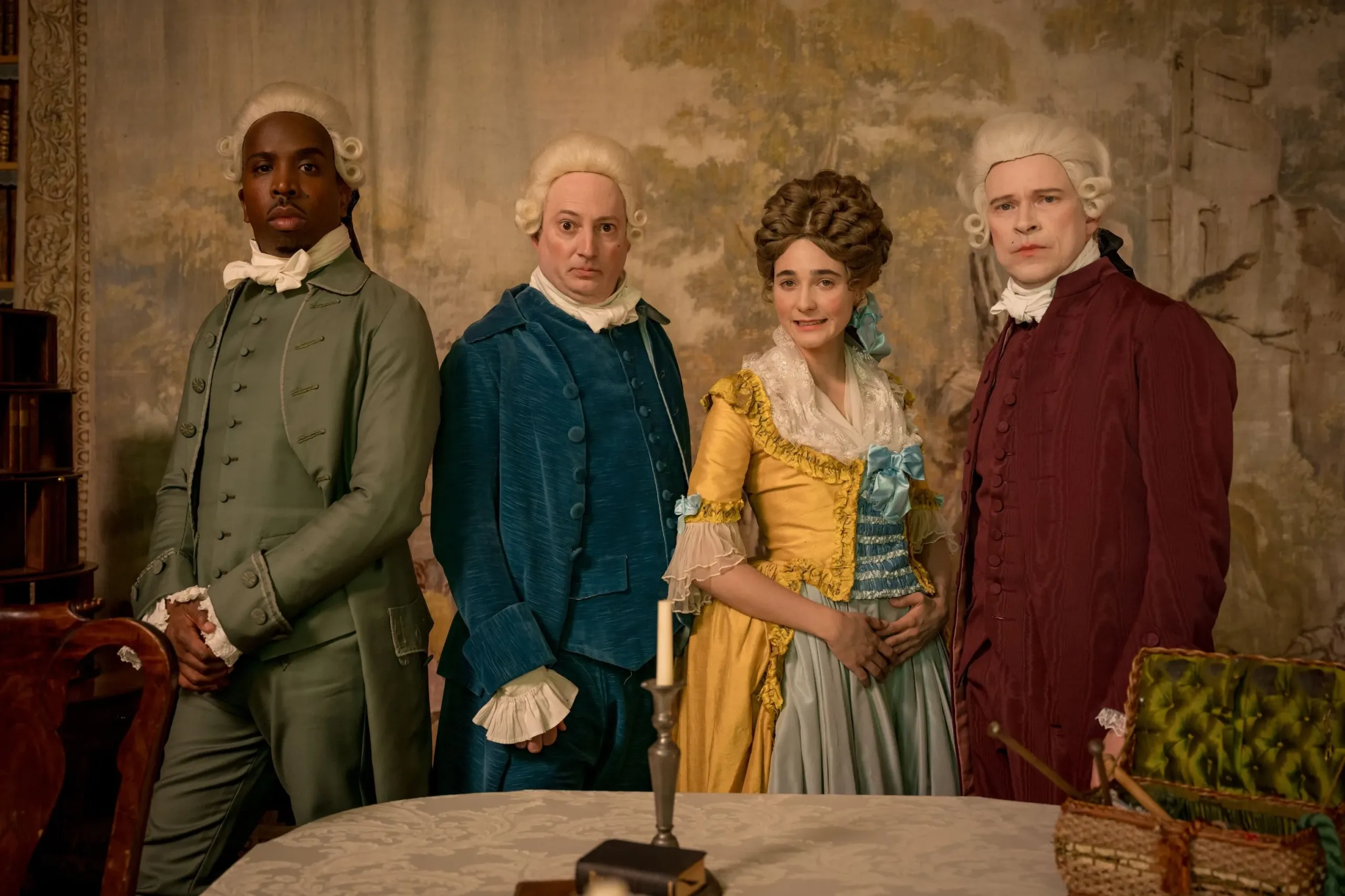
An opening piece about the 18th-century adoption of the flushing toilet feels like a parody of a Mitchell and Webb idea, a labored historical setup that mistakes a factual observation for a comedic one. It builds to no satisfying twist, leaving Mitchell to simply rant at the premise. It is a joke that never transcends its own Wikipedia-entry-level inspiration. Another recurring sketch, “Sweary Aussie Drama,” is a perfect example of comedic entropy.
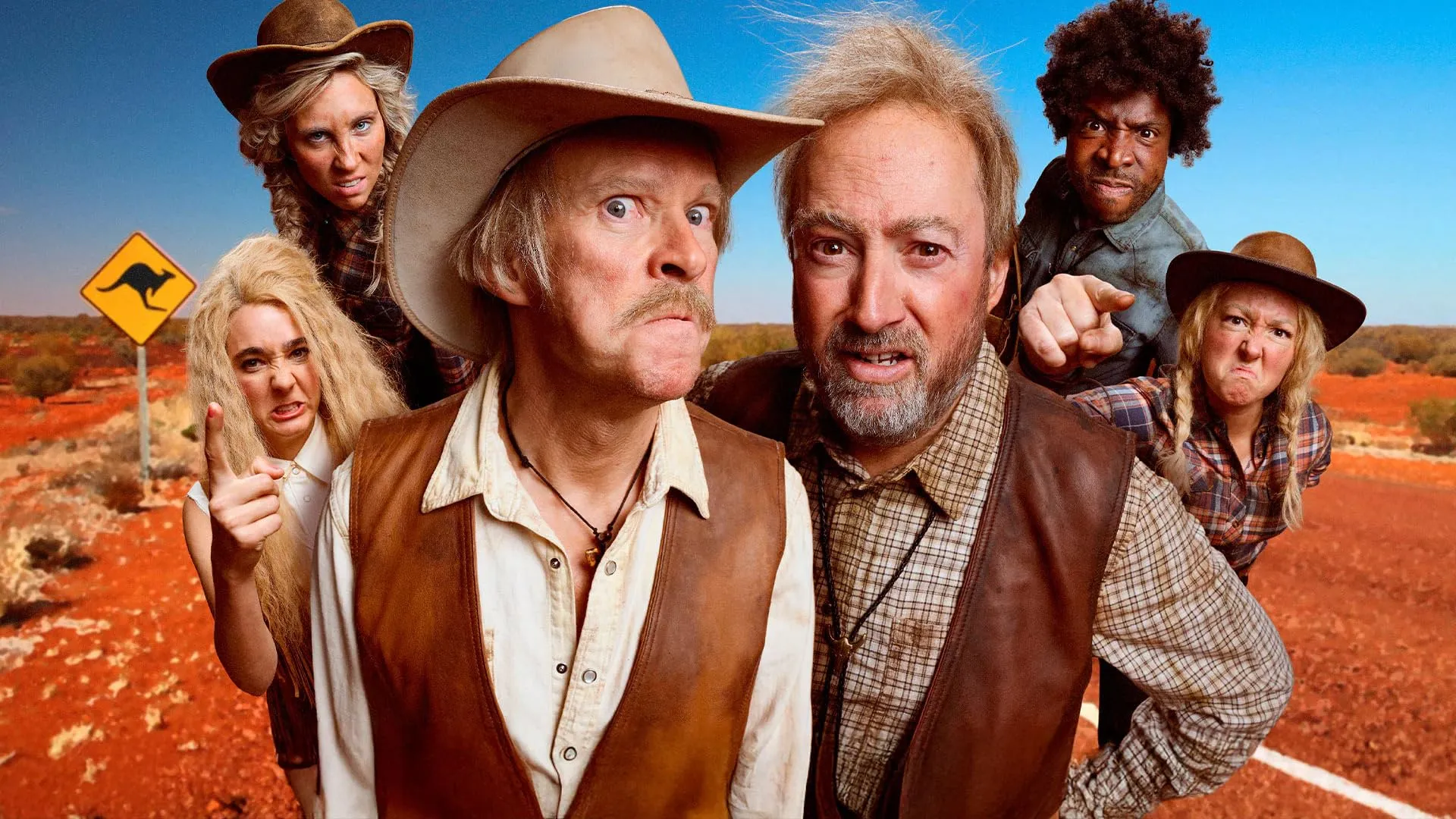
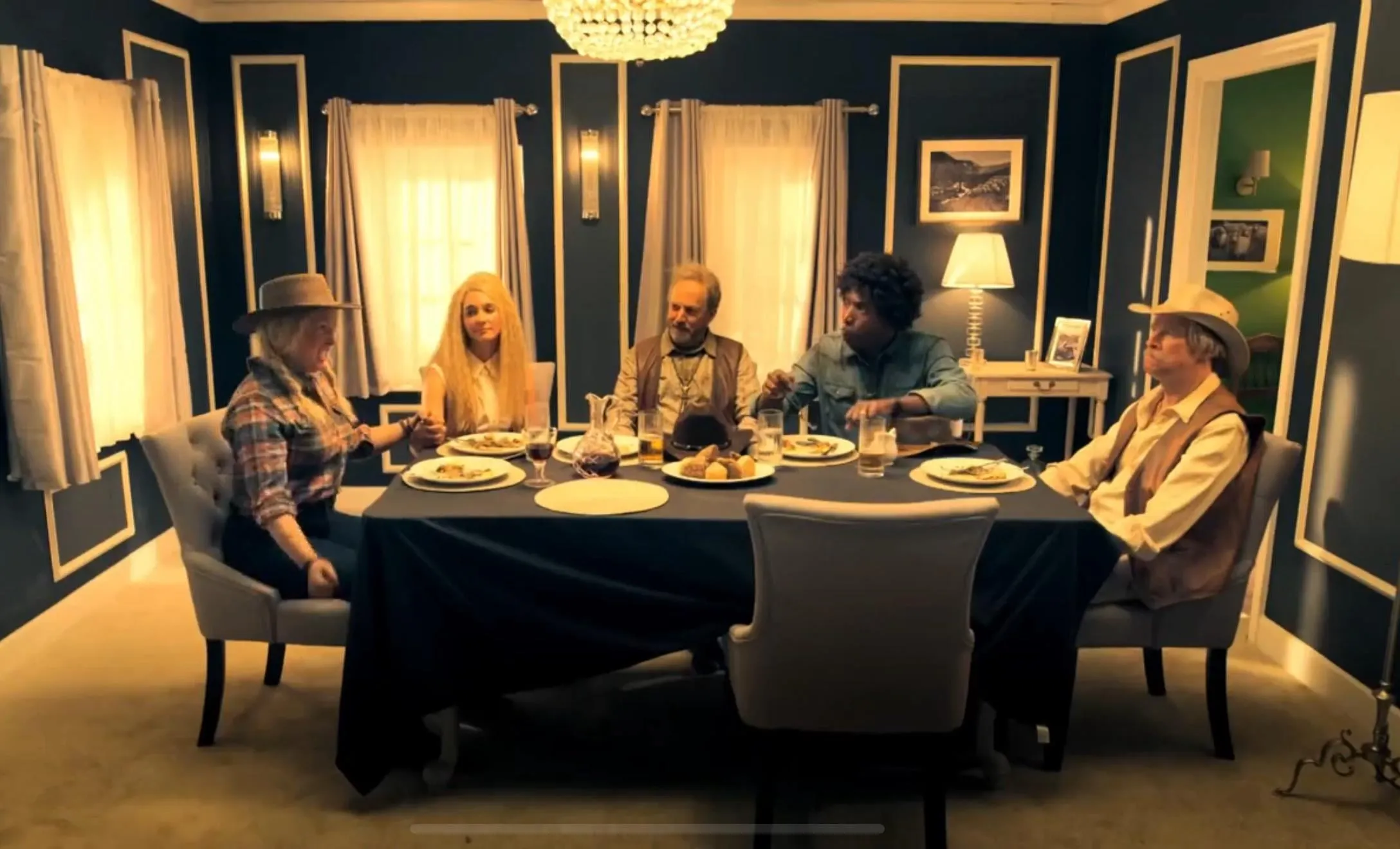
It feels like a throwback to the cruder shock-value humor of the early 2000s, a single, thin joke (Australians swearing) whose humorous energy dissipates entirely upon its first telling. Its repetition speaks to a misjudgment of where its strength lies, leaning on the diminishing returns of profanity instead of on a genuinely sharp satirical point. The show is weaker when it aims for easy targets, like a predictable plumber-and-porn-star misdirection sketch, which feels like a relic from a different, less imaginative era of comedy.
Then, some sketches land with surgical precision. They demonstrate that the format, however archaic, can still dissect modern life with unique efficacy. A bit set during airport security is a minor masterpiece of escalating absurdity, taking a universally understood form of mundane misery and stretching it to its breaking point.
Its power comes from its relatability; it is the silent, internal scream of every modern traveler given voice. Similarly effective are moments of pure, delightful surrealism, like a sketch about a suitcase so desirable it causes onlookers’ heads to explode. This is a flight of fancy, a non-sequitur that works precisely because it refuses to be grounded in any discernible logic.
The show is at its intellectual best when it turns its gaze upon the media landscape. The undisputed highlight is a sketch that is not about the infamous Prince Andrew Newsnight interview, but about the absurdity of two separate television networks making competing prestige dramas about the making of the interview. This is a brilliant piece of media criticism disguised as a joke.
It satirizes the ouroboros of modern entertainment, the way culture now feeds upon its own recent past in a frantic cycle of what can only be called content-cannibalism. It is an evolution of their classic “Football! Football! Football!” sketch, moving beyond a parody of presentation to a critique of the entire reproductive cycle of media narratives. The finest moments, however, are the meta-narratives set within a fictional writers’ room. Here, the cast deconstructs their own show, analyzing word clouds that distill their public personas into single, unflattering terms.
This is a startlingly bold maneuver, a comedy show performing its own autopsy, live on air. It pushes past breaking the fourth wall into something more profound: a deconstruction of the first wall, the fragile barrier between the performer and their public perception. They are not just in on the joke. They are telling us the joke is on them.
Ghosts in the Algorithm
Can a show like this survive? Can it create a cultural footprint in a world that no longer watches television in unison? A signature sketch from their old show, “Are we the baddies?”, became a foundational political meme of the last decade.
It achieved this because it was injected into a shared cultural space, a monoculture that, while fragmenting, still existed. That space is now gone, shattered into a million personalized feeds. Today, comedy is not broadcast; it is discovered, served up by an algorithm that rewards brevity and immediate impact above all else.
The ecosystem is dominated by TikTok and YouTube, platforms where a joke has three seconds to justify its existence before the viewer’s thumb renders a final, merciless judgment. The patient, sometimes wordy, structure of a Mitchell and Webb sketch, with its fondness for setup and logical progression, feels antithetical to this brutal new world. The show is an act of curation in an age that has mistaken the firehose of raw feed for culture itself.
The show seems to understand its own predicament with an almost painful clarity. The writers’ room segments are an open acknowledgment of the anxieties that haunt the project: that they are too old, that the format is dead, that the audience they once knew has migrated to other screens. By confronting the elephant in the room, they seize control of the narrative, making their potential irrelevance the show’s most relevant theme. So what is its cultural purpose?
Perhaps it is not to create a new legacy, which seems impossible in the current landscape, but to serve as a cultural artifact. It stands as a document of a pre-algorithmic mode of comedy, one rooted in a specific type of British intellectualism that values language, logic, and the deconstruction of social norms.
At first, this makes the show feel like a noble failure, a well-crafted irrelevance. And yet, I find my opinion shifting. Perhaps its refusal to engage with the modern comedic economy is not a weakness but a quiet strength. In a world that relentlessly demands everything be optimized, shared, and monetized, this show’s commitment to an old-fashioned, flawed, hit-and-miss structure becomes a radical statement.
Its title promises that it is “not helping,” and it delivers on that promise. It is not helping to create viral moments. It is not helping to feed the algorithm. It is not helping to advance the form. This refusal is a form of passive resistance. Mitchell and Webb Are Not Helping to shape the future of comedy, and they know it. They are standing on the shore, pointing back at a world we have already left behind.
“Mitchell and Webb Are Not Helping” premiered on September 5, 2025, and is available to watch on Channel 4. The sketch comedy show marks the return of the comedy duo David Mitchell and Robert Webb.
Full Credits
The Review
Mitchell and Webb Are Not Helping
A self-aware return to a defunct format. Mitchell and Webb deliver their familiar style of intellectual satire and surreal absurdity, with sharp critiques of modern media as the highlights. The show is deliberately anachronistic, a defiant stand against the fast-paced, algorithmic demands of contemporary comedy. While its inconsistent quality is inherent to the sketch genre, its smartest moments are a potent reminder of what was lost when this style of television vanished. It is a thoughtful, if uneven, comedic fossil, preserved for fans and historians of the form.
PROS
- Intelligent, satirical sketches that critique modern media.
- Clever self-aware and meta-humor.
- The effective and familiar comedic dynamic between Mitchell and Webb.
- Moments of brilliant surrealism and sharp observational comedy.
CONS
- Highly inconsistent quality, with a significant number of unsuccessful sketches.
- The format and pacing feel dated in the modern entertainment landscape.
- Some recurring jokes grow repetitive quickly.
- Offers little novelty, relying heavily on a formula established over 15 years ago.







