
























![Kingdom Hearts Collection [I-III] Review](https://gazettely.com/wp-content/uploads/2026/10/Kingdom-Hearts-Collection-I-III-1-360x180.webp "Kingdom Hearts Collection [I-III] Review: KHII Holds Steady as Newer Entries Fluctuate 37")



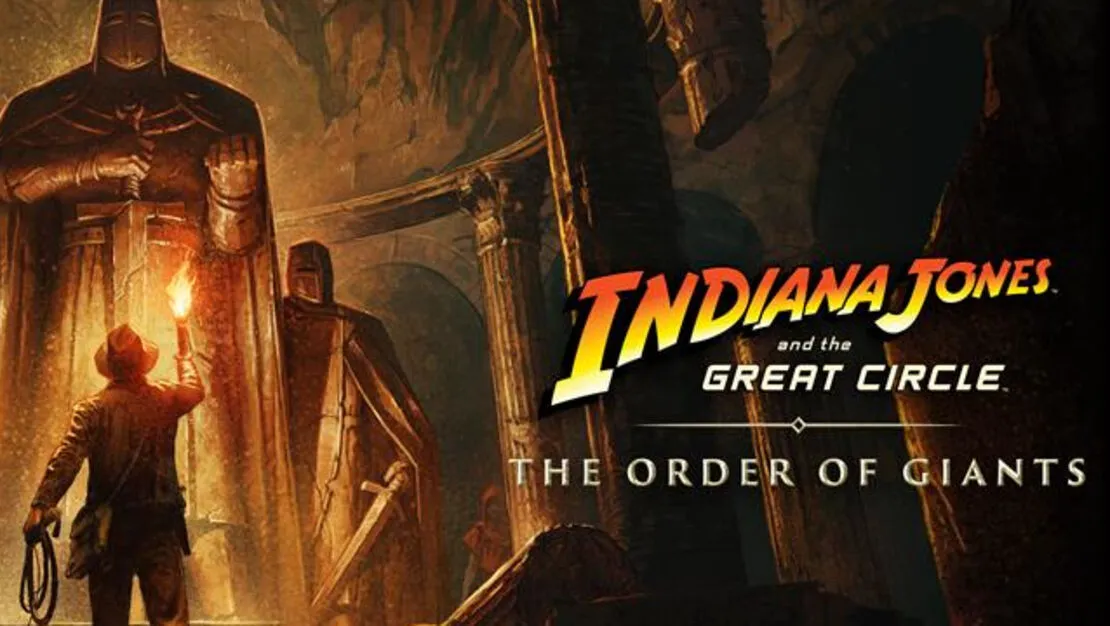

Indiana Jones and the Great Circle returns with The Order of Giants, a new chapter that exchanges the main campaign’s worldwide scope for an intimate mystery. The adventure begins in Vatican City, where Indy meets Father Ricci, a priest who has found a lead on a forgotten myth. The legend speaks of a “nameless crusader,” a giant warrior whose final resting place is supposedly a secret chamber deep beneath Rome.
This premise immediately establishes a more focused, archaeological tone. The game pulls Indy away from grand conspiracies and into a contained search for a single, powerful artifact. This side-story sets the stage for a dense exploration of one location, digging into the layers of history buried directly under the city streets.
Puzzles, Passages, and Peril
The design of this expansion is a study in purposeful constraint. It strips away the sprawling landscapes of the main game to focus on the claustrophobic, winding passages beneath Rome. This shift is more than cosmetic; it fundamentally alters the rhythm of play. Exploration becomes a methodical, cautious process. The level design channels the player through tight corridors that open into larger hub chambers, recalling the structure of classic dungeon crawlers. Each new area feels earned.
The whip is a constant companion, functioning as a reliable tool for crossing gaps. Its use is intuitive, though it serves primarily as a traversal mechanic instead of being deeply integrated into environmental puzzles. Boat sections offer a change of pace, allowing navigation of subterranean rivers. These moments are atmospheric, with the boat’s lamp cutting through the oppressive darkness, but they are mechanically simple, guiding the player along a set path from one puzzle area to the next.
The real substance of exploration comes from discovering collectibles. Hidden notes and journals provide fragments of lore about the crusader and the mysterious Nephilim Order. This method of storytelling encourages thorough investigation, rewarding the attentive player with a richer understanding of the central mystery.
Puzzles are the mechanical and thematic core of The Order of Giants. The experience is built around them, demanding logical thinking and careful observation from the player. The design philosophy varies between challenges. The best puzzles, like a complex water-flow system built around a serpent motif, are multi-layered logical problems.
They require you to understand how several moving parts interact, creating a genuine “eureka” moment upon completion. These moments are when the game successfully makes you feel like the sharp-witted archaeologist himself. This quality is not universal. A different puzzle involving guiding a marble through a maze is a source of frustration.
Its difficulty comes not from a clever concept but from a flawed execution. The very pieces you manipulate obstruct your view of the goal, a critical design oversight that turns a test of intellect into a clumsy struggle with the interface. This stands in contrast to games like Portal, where the clarity of the mechanics is paramount.
The expansion also features an adaptive difficulty system. For players who have completed the main game, puzzles are meant to be more complex. This system mostly works in the background, subtly altering solutions or removing hints to provide a stiffer challenge for veterans.
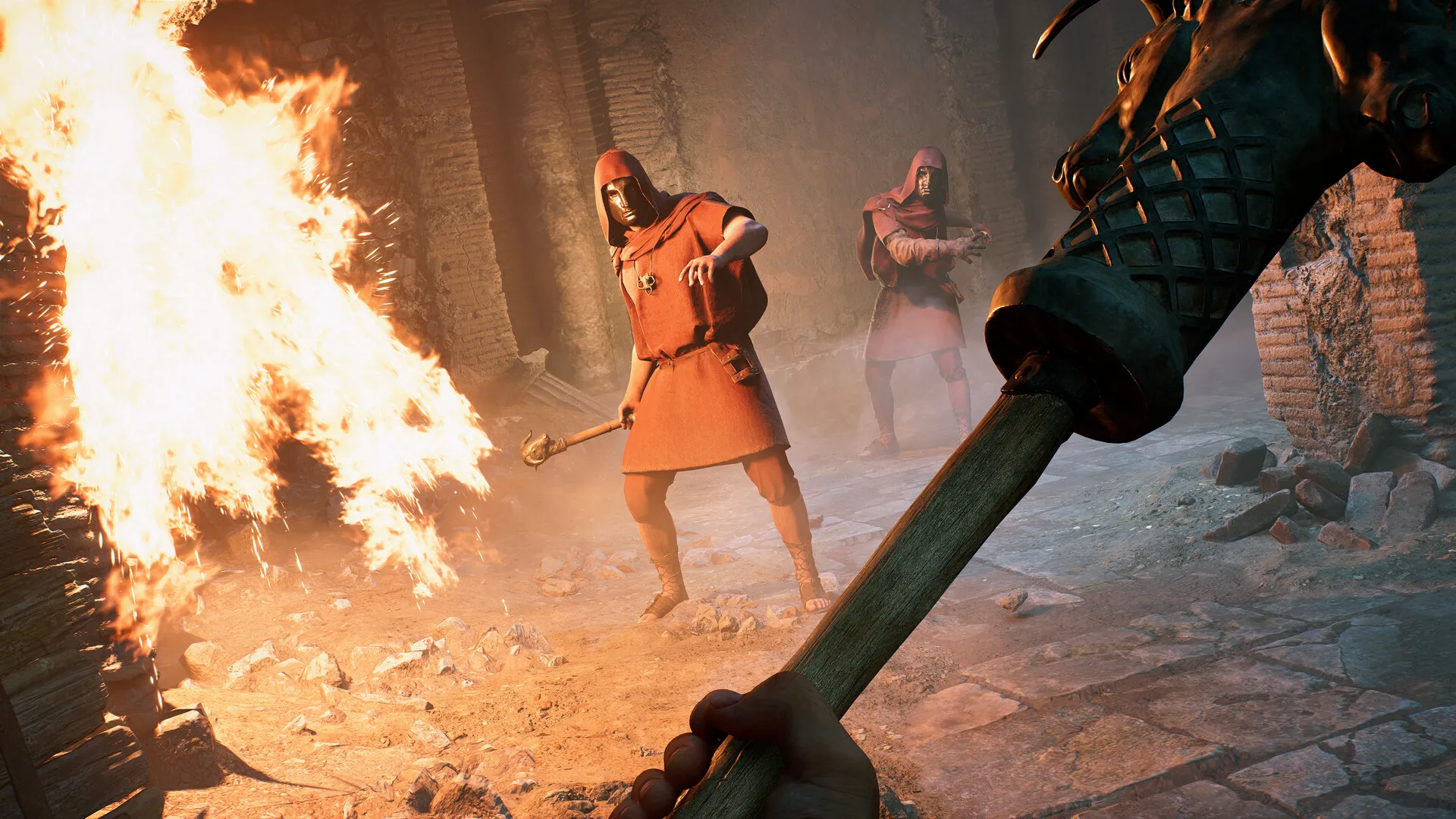
Combat and stealth serve as punctuation to the long stretches of exploration and puzzle-solving. The game allows for player choice in how to approach the cultists who guard the ruins. The stealth system is functional, based on line of sight and sound. It allows a patient player to bypass many encounters, reinforcing the idea of Indy as a resourceful intruder, not a one-man army.
When combat is unavoidable, it is visceral and weighty. The first-person melee system feels grounded, with a focus on timing dodges and landing heavy strikes with pipes or other makeshift weapons. The whip can be used to disarm opponents or pull them off balance, adding a strategic layer to fights. A significant design choice is the scarcity of firearms.
Guns are available early on but become almost nonexistent later. This decision dramatically shapes the player’s experience. It maintains a high level of tension and forces a more intimate, improvisational style of combat. It ensures the power dynamic remains skewed, making you feel like an archaeologist who is in over his head, which is entirely appropriate for the character.
A Tomb Faithfully Rendered
The presentation of The Order of Giants is consistently impressive and serves to heighten the game’s powerful atmosphere. The visual design of the underground world is remarkable. The artistic team created a believable sense of history and decay. Crumbling frescoes, strange artifacts, and the sheer scale of some hidden chambers tell a silent story of the people who built them.
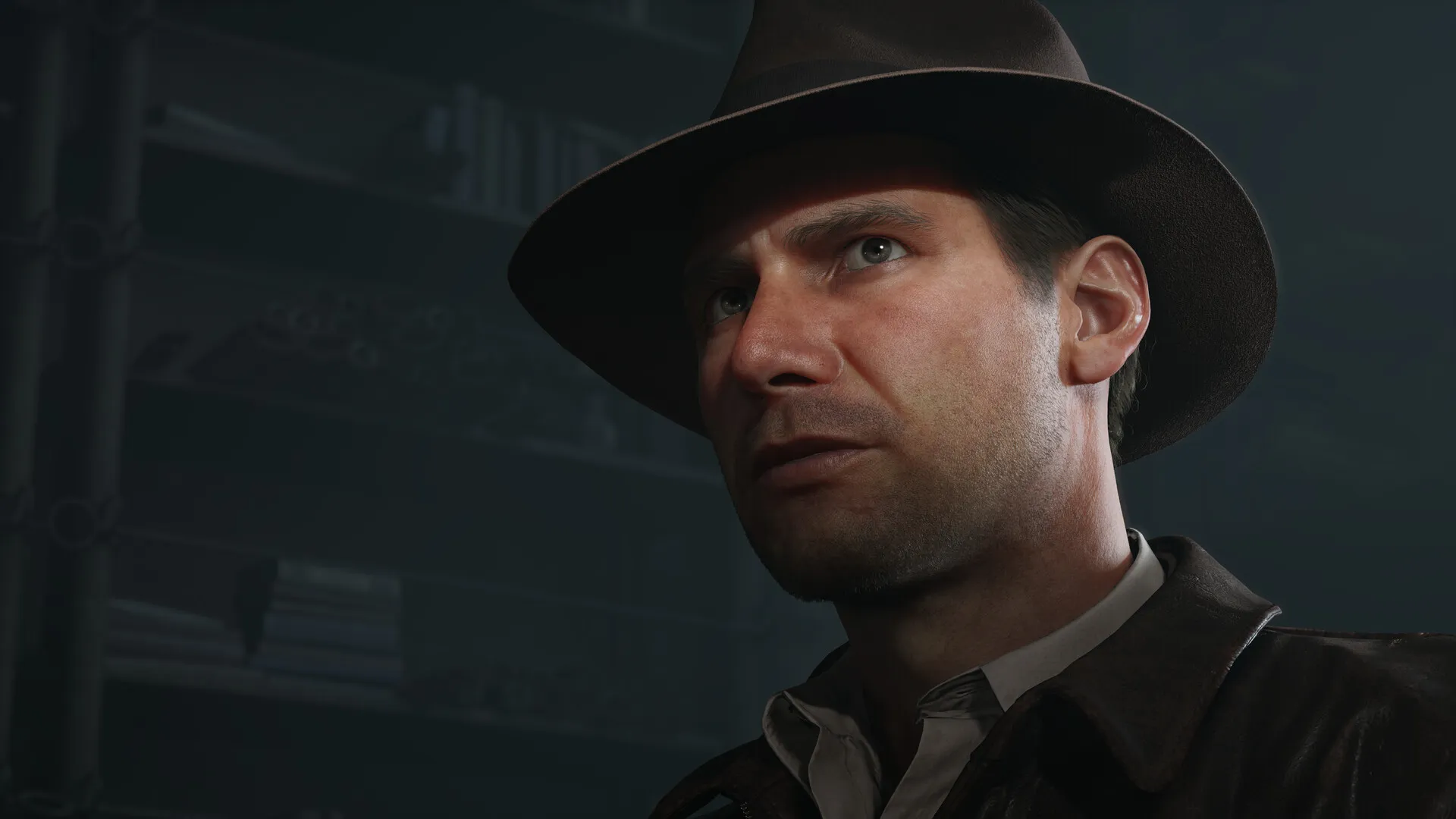
Material detail is a key strength. The textures of wet stone, ancient metal, and dusty relics are rendered with a high degree of realism, making the environment feel tangible. Lighting is the star of the technical presentation. In the deep darkness of the catacombs, Indy’s flashlight cuts through the gloom, creating long, dancing shadows that add to the suspense.
The use of advanced lighting techniques on PC makes these moments particularly effective, giving the light a volumetric quality that enhances immersion. Performance is solid across platforms. The game maintains a stable, high frame rate during gameplay, which is essential for the fluid first-person controls. This technical stability ensures that nothing distracts from the experience of being lost in a forgotten world.
The audio work is just as critical to building the game’s atmosphere. The soundscape of the tombs is carefully crafted. The constant drip of water, the distant echo of crumbling rock, and the skittering of unseen things in the dark all contribute to a feeling of isolation and tension. The musical score is used effectively, introducing familiar Indiana Jones motifs during moments of discovery while using subtle, ambient tracks to maintain a sense of mystery during exploration.
Troy Baker’s voice work as Indiana Jones is a standout performance. He captures the essence of the character, balancing the academic curiosity with the weary sarcasm of an adventurer who has seen too much. His performance adds significant personality and grounds the fantastical events. The supporting cast is also strong, with Father Ricci’s earnestness providing a good foil to Indy’s cynicism. The animated cutscenes are directed well, effectively moving the story forward and showcasing the quality of the character models and performances.
A Relic Worth Unearthing?
The Order of Giants is a confident and focused piece of downloadable content. It makes a deliberate choice to offer an experience different from its parent game. It is slower, more thoughtful, and entirely dedicated to the fantasy of being an archaeologist. The grand set-pieces and explosive action are gone, replaced by quiet contemplation and the satisfaction of solving a difficult puzzle.
This design approach makes it a specialized adventure. It will not appeal to everyone who enjoyed The Great Circle. Its target audience is the player who finds joy in the methodical process of discovery, the player who sees Indiana Jones as a scholar first and an action hero second. It provides a dense, 5-10 hour experience that feels substantial for its price, especially given the high quality of its world-building and puzzle design.
This expansion should be evaluated based on its specific goals. As an exercise in distilling one core component of the Indiana Jones fantasy, it is very successful. It resembles the DLC philosophy of expansions like BioShock 2: Minerva’s Den, which used an existing mechanical framework to tell a smaller, more personal story. Its strengths are its incredible atmosphere and its best-in-class puzzles.
Its weaknesses are a lack of replay value and an ending sequence that suffers from poor signposting, a frustrating design flaw that can sour the final moments of an otherwise excellent journey. The absence of a memorable antagonist also means the narrative is driven by mystery alone, not by conflict. It is a worthwhile expansion for those who want another taste of this world, offering a unique adventure that understands what makes the quiet moments of archaeology so compelling.
The Review
Indiana Jones and the Great Circle: The Order of Giants
The Order of Giants is a worthwhile, focused expansion that confidently trades blockbuster action for quiet, atmospheric tomb raiding. Its best puzzles are brilliantly designed, and its claustrophobic environments are expertly realized. While it lacks the grand set-pieces of the main game and is hampered by a few frustrating moments, it succeeds as a deep, methodical adventure. It is a compelling experience for players who value clever challenges and pure archaeological discovery over constant combat. It successfully distills a core part of the Indiana Jones fantasy into a short, memorable journey.
PROS
- Incredibly atmospheric and immersive environments.
- Clever and satisfying puzzle design.
- Excellent visual and audio presentation.
- A focused experience dedicated to archaeological discovery.
CONS
- Lacks the large action set-pieces of the main game.
- Some puzzle mechanics are frustratingly implemented.
- The final sequence is poorly signposted.
- Less environmental variety than the main campaign.







