






























Claire Denis’s The Fence unfolds within the confines of a remote construction site in an unnamed West African nation. The air is thick with dust and a palpable hostility, establishing a space of profound isolation. The narrative is a pressure cooker, set to boil over in the course of a single night. Into this tense environment comes two catalysts.
The first is Leonie, the new, young British wife of the site’s American foreman, Horn. Her arrival is meant to be a new beginning. The second is Alboury, a dignified local man who appears outside the barbed wire. He makes a simple, grave request: the return of his brother’s body, a worker who has died on the job. Horn is trapped between corporate protocol, personal loyalty, and a looming moral crisis.
The film presents a claustrophobic scenario where historical grievances and raw new desires are forced into a dangerous collision. This tight focus on exploitation and confrontation echoes postcolonial narratives from world cinema, including the sharp social critiques found in Indian parallel cinema.
Theatrical Confinement and Character Dynamics
The film’s structure is deeply informed by its origin as a stage play, a choice that dictates its aesthetic and rhythm. This theatricality is felt in its single-location setting and its notable dependence on long, charged conversations to propel the action forward. The style places immense weight on the actors, making their performances the primary conduits for the story’s building tension.
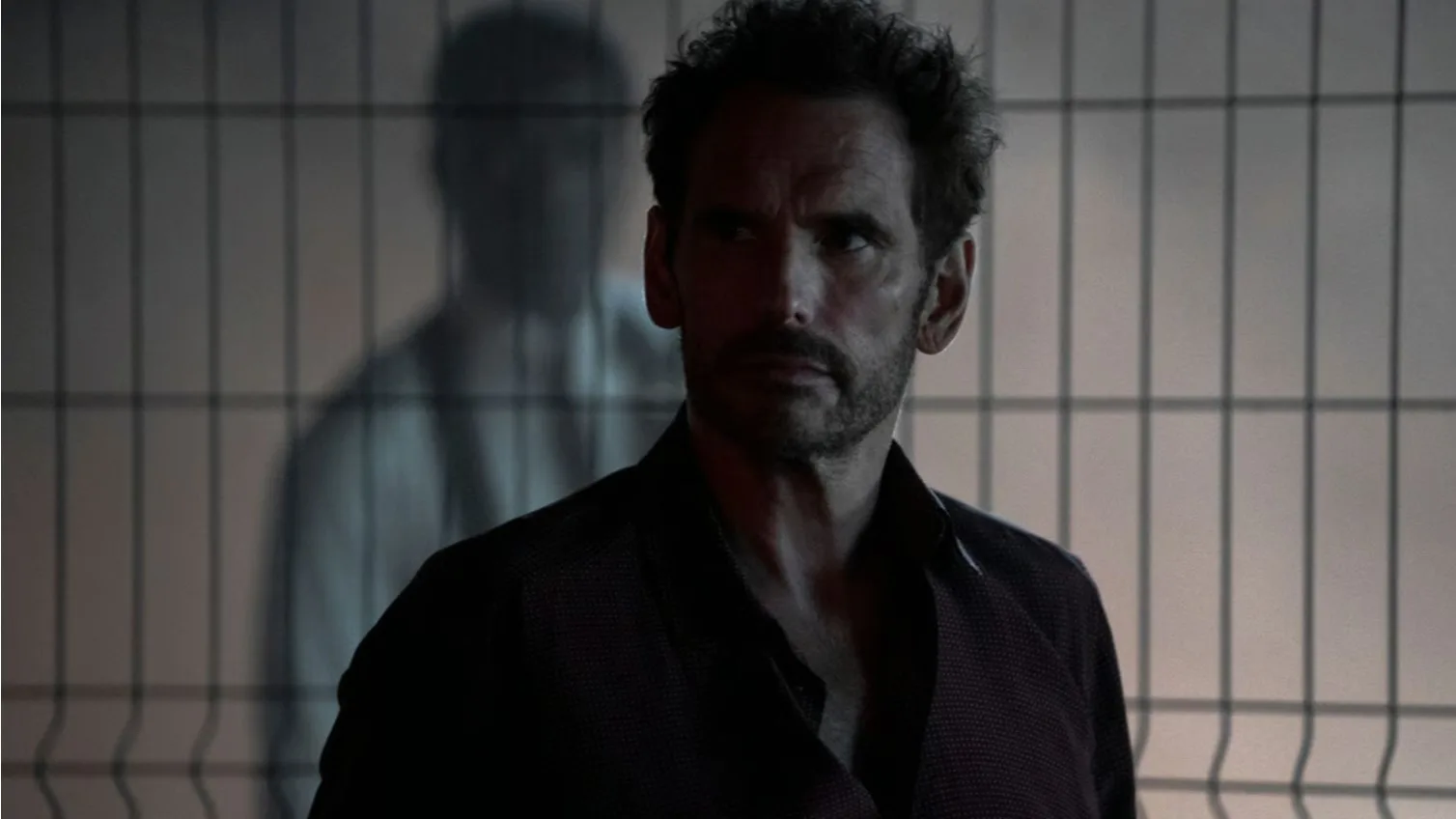
The results are deliberately varied. Matt Dillon portrays Horn as a man whose authority is visibly eroding under pressure. His line delivery often has the deliberate, stiff quality of recited text, reflecting a character who is performing a role of command he no longer fully controls. His physical discomfort in his own space speaks volumes about his precarious position. In sharp contrast, Tom Blyth gives Cal, the morally bankrupt subordinate, a volatile and deeply unsettling nervous energy.
Blyth effectively communicates the character’s internal panic through fidgety movements and a sneering arrogance that barely conceals his fear. His cathartic singing of Midnight Oil’s “Beds are Burning” in his truck is a moment of pure, desperate release. Mia McKenna-Bruce’s Leonie is the essential outsider, her inappropriate heels on the dusty terrain symbolizing her complete unpreparedness for the situation. Her presence, a mix of naivete and dawning awareness, fractures the site’s masculine ecosystem.
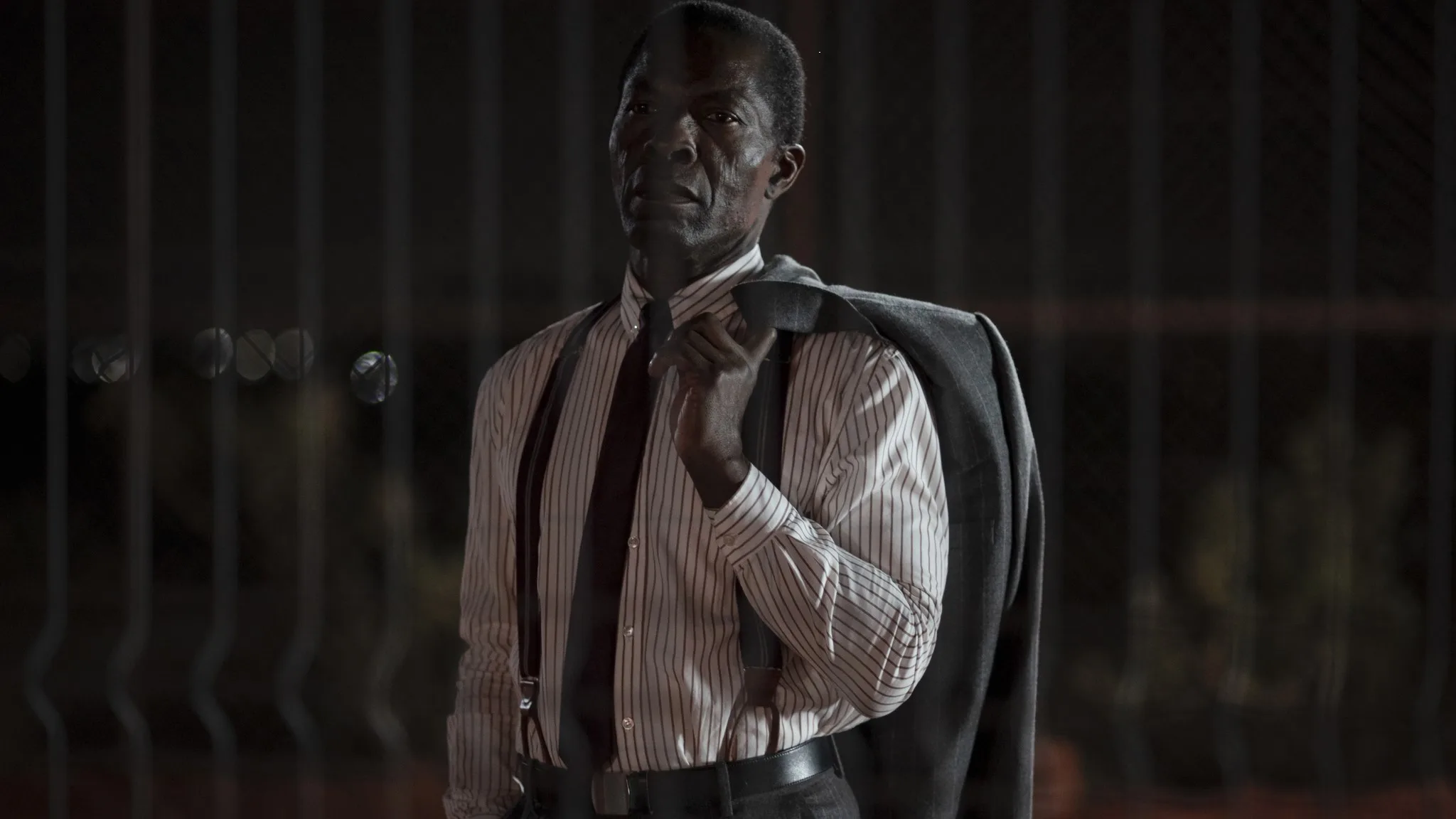
Yet the film’s anchor is Isaach de Bankolé as Alboury. He creates a monumental presence through sheer stillness and a steady, unwavering gaze. Dressed in a fine suit, he is a figure of immense dignity against the industrial grime. His quiet resolve generates more menace than any overt threat could, recalling the stoic, principled figures in Indian films who stand against systemic injustice, where dignity itself becomes the ultimate form of resistance.
A Landscape of Power and Desire
The Fence directly confronts the mechanics of neocolonialism. The construction site is not just a workplace; it is a modern colonial outpost, a temporary fortress of shipping containers and armed guards for foreign interests on exploited land. The titular barrier is a potent symbol, a literal line drawn in the dirt. It physically separates the European managers from the African landscape and its people, yet it also traps them inside with their paranoia and guilt.
The film brilliantly explores how this environment corrupts human relationships. It examines these power dynamics on a smaller, more personal scale too. The relationship between the older Horn and the younger Cal is a complex mix of paternalism, shared secrets from their past, and a jealousy that borders on the homoerotic.
Their loyalty is a toxic bond forged in isolation. This delicate balance is immediately upset by Leonie’s arrival. Her presence introduces a raw current of sexual tension, particularly from Cal, who views her as both a prize to be won and a threat to his bond with Horn. His behavior toward her is a disturbing blend of menace and attraction.
This use of a contained, interpersonal conflict to explore broad political themes is reminiscent of works by Indian directors like Shyam Benegal. His films, such as Ankur, often depicted the oppressive power structures of a single village to critique the failures of the state. In a similar way, this film uses the drama within its walls to mount a sharp critique of global corporate exploitation and the human damage it leaves behind.
A Director’s Stripped-Down Vision
Claire Denis has built a celebrated career on a cinema of sensation. In masterpieces like Beau Travail and White Material, she tells stories through atmosphere, the physical movement of bodies, and fractured, poetic editing. The Fence represents a significant stylistic shift toward something more direct and verbal.
The film largely trades her signature elliptical approach for a narrative propelled by dialogue and direct confrontation. One might question if this change fully succeeds, as it sidelines some of her greatest strengths. The film’s power is instead located in specific, potent aesthetic choices. Éric Gautier’s cinematography consistently frames the characters in wide shots that emphasize their smallness against the vast, impenetrable darkness just outside the fence, reinforcing their psychological and physical isolation.
The near-total absence of a musical score is another key decision. This denies the audience emotional guidance or catharsis, forcing them to sit in the uncomfortable, cricket-filled quiet and contend with the weight of every word and silence. The film’s grim, downbeat ending offers no easy answers or sense of closure.
It serves as a stark political statement. It is the work of a director stripping her methods down to their bare essence to present an unflinching, challenging look at the enduring, cyclical nature of colonial violence and its modern corporate forms.
The Fence is a 2025 English-language French drama film directed by Claire Denis. The film is based on the 1979 play “Black Battles with Dogs” by Bernard-Marie Koltès. It had its world premiere on September 10, 2025, at the Toronto International Film Festival. The plot follows three expatriates living in an African compound as a local man arrives to claim his brother’s body following a mysterious death. The film is currently seeking distribution, so there is no information on where to watch it yet.
Full Credits
Director: Claire Denis
Writers: Claire Denis, Andrew Litvack, Suzanne Lindon
Producers: Anthony Vaccarello, Olivier Delbosc, Gary Farkas
Cast: Tom Blyth, Mia McKenna-Bruce, Matt Dillon, Isaach de Bankolé
Director of Photography (Cinematographer): Éric Gautier
The Review
The Fence
The Fence is a stark and politically charged chamber piece from a master filmmaker. Claire Denis strips her style down to deliver an unflinching look at neocolonialism, anchored by a commanding performance from Isaach de Bankolé and tense cinematography. Its stage-play origins, however, result in a film that can feel stiff and overly verbal, sacrificing its director’s usual strengths in physical storytelling. It is a challenging, admirable, yet somewhat constrained work.
PROS
- Commanding and intense performances from Isaach de Bankolé and Tom Blyth.
- A sharp, intelligent critique of neocolonialism and corporate exploitation.
- Atmospheric cinematography that creates a potent sense of isolation and dread.
- A tense, claustrophobic narrative structure.
CONS
- Theatrical roots lead to stilted dialogue and a confined, stagey feeling.
- Some performances feel stiff, particularly in key dramatic moments.
- The direct, dialogue-heavy approach is a less effective style for a director known for visual poetry.
- Its grim tone and deliberate pacing may prove inaccessible for some viewers.