














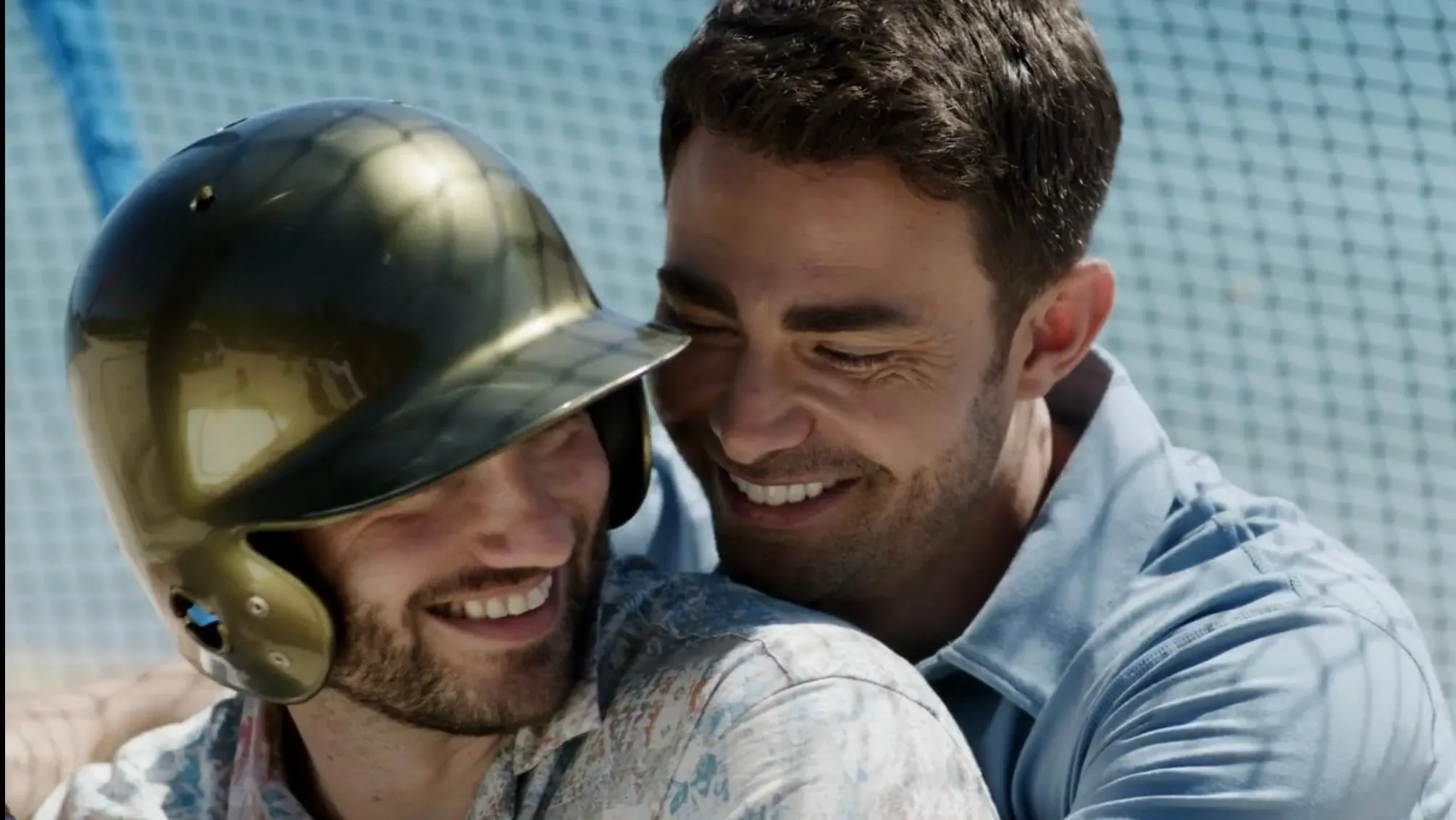

The Groomsmen: Second Chances arrives at a peculiar moment in American cultural history. Hallmark, once the bastion of heteronormative holiday romance (where career women inevitably abandon city life for small-town bakers), now positions itself as an unlikely progressive force. This second installment in the trilogy places Jonathan Bennett’s Danny front and center, transforming what could have been tokenistic representation into something approaching genuine cultural archaeology.
Bennett’s Danny harbors feelings for his business manager Zack (Alexander Lincoln), a revelation that unfolds against the sun-drenched backdrop of Greek wedding preparations. The setup feels familiar yet subversive. Where traditional romantic comedies might relegate the gay character to wise-cracking sidekick status, here we witness the full emotional spectrum of queer longing. The film operates within Hallmark’s established comfort zone while quietly dismantling its foundational assumptions.
This represents what we might call “stealth progressivism” (a term I’m coining for cultural products that advance social change through familiar packaging). The network’s audience expects certain narrative beats, certain emotional temperatures. The genius lies in delivering those expectations while fundamentally altering who gets to experience them. Danny’s journey from friend to lover follows well-worn paths, yet the terrain itself has shifted beneath our feet.
The Architecture of Desire
Danny’s predicament reads like a study in emotional archaeology. His feelings for Zack exist in geological layers, accumulated over years of shared business ventures and personal intimacies. When Zack announces his engagement to the conspicuously absent Nolan, we witness the seismic shift of hidden emotion suddenly exposed to daylight.
The film’s central irony hinges on visibility versus recognition. Danny and Zack’s compatibility blazes across every shared scene, yet Zack remains myopic to what everyone (including the audience) can plainly observe. This creates what I’ll term “romantic dramatic irony,” where the viewer’s superior knowledge generates both tension and frustration. We become complicit in Danny’s suffering, silently urging confession while understanding his paralysis.
Nolan functions as absence made manifest. His work-obsessed character represents the modern malaise of prioritizing productivity over presence. While Danny orchestrates elaborate Greek venue hunts and navigates floral arrangements, Nolan remains tethered to his law practice, physically and emotionally unavailable. The contrast feels almost too neat, yet it serves the film’s broader meditation on attention as the fundamental currency of love.
The wedding planning sequences take on ritualistic significance. Danny doesn’t merely organize an event; he curates the symbolic architecture of his own heartbreak. Each venue selection, every floral arrangement, becomes a prayer offered to an altar of impossible love. The irony cuts deep: Danny possesses intimate knowledge of Zack’s preferences, dreams, and aesthetic sensibilities, while the actual groom remains a stranger to his own wedding.
Greece provides the perfect backdrop for this emotional excavation. The ancient landscape suggests permanence, the ruins whisper of civilizations that believed themselves eternal. Against this backdrop, modern romantic complications feel both urgent and temporary. The cliff-jumping sequence operates as obvious metaphor, yet Bennett and Lincoln invest it with genuine vulnerability. Sometimes the most effective symbols are the most transparent ones.
Performance as Cultural Labor
Bennett carries considerable cultural weight in this role, having previously shared Hallmark’s first same-sex kiss in 2020. His performance here feels simultaneously natural and historically conscious. He understands that his Danny represents something larger than individual character development; he’s performing cultural normalization in real time.
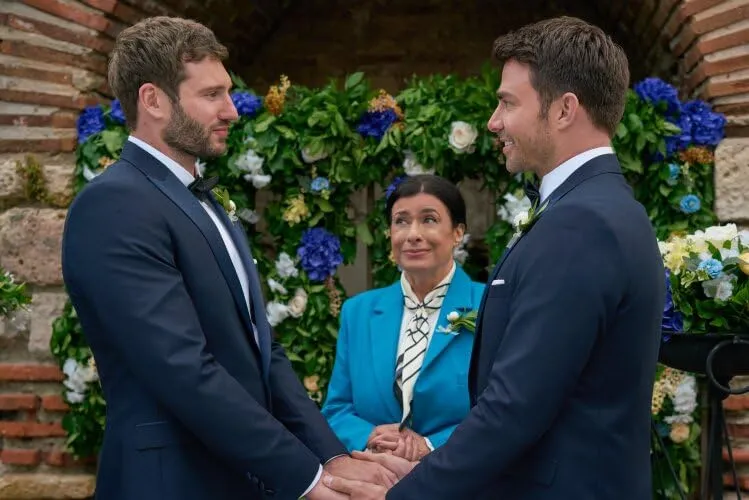
The actor navigates Danny’s emotional complexity with impressive range. His comedic instincts remain sharp (the tuxedo fitting sequence crackles with both humor and pathos), but he doesn’t shy away from raw vulnerability. When Danny finally confesses his feelings, Bennett strips away every defense mechanism, every protective layer of humor. The moment feels genuinely costly.
Alexander Lincoln faces the more challenging task of playing obtuse without appearing stupid. Zack’s blindness to Danny’s feelings must read as psychological protection rather than intellectual failure. Lincoln achieves this through micro-expressions of confusion and conflict. He suggests a man fighting recognition of something that would fundamentally alter his life’s trajectory. The performance requires subtlety; Lincoln delivers it consistently.
The supporting performances from Tyler Hynes and B.J. Britt as the loyal friends provide necessary emotional scaffolding. They represent the chosen family structure that often sustains queer individuals, offering both encouragement and reality checks. Their chemistry as a trio feels lived-in, authentic. These aren’t actors playing friendship; they embody it.
Lincoln’s portrayal of internal conflict deserves particular attention. Watch his face during the near-kiss sequence. He processes desire, fear, recognition, and denial in rapid succession. The acting feels almost molecular, each micro-expression contributing to a larger emotional architecture. This kind of precise emotional labor often goes unrecognized in genre filmmaking, yet it provides the foundation upon which the entire romantic structure depends.
Cultural Cartography and Final Verdicts
The film’s Greek setting operates as more than scenic backdrop; it functions as cultural palimpsest. Ancient Greek society celebrated various forms of same-sex relationships, lending historical weight to Danny and Zack’s eventual union. The filmmakers may not explicitly invoke this connection, but it hovers in the Mediterranean air, adding resonance to their romance.
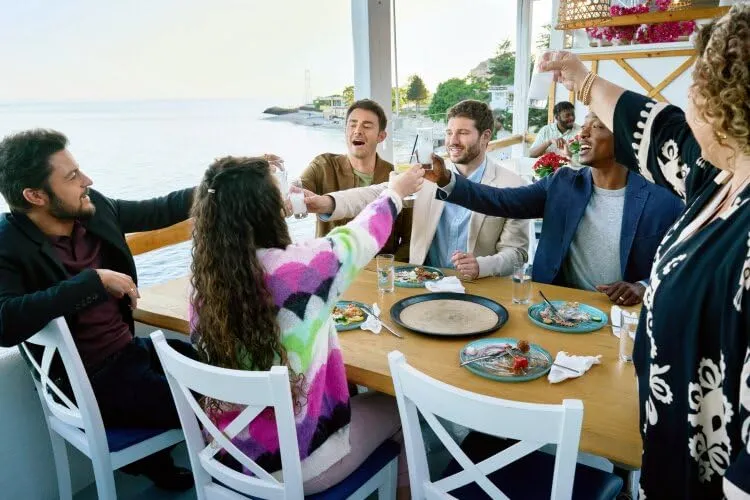
Hallmark’s approach to LGBTQ+ representation follows what we might call the “naturalization model.” Rather than making Danny’s sexuality the source of external conflict (disapproving families, societal prejudice), the film treats it as simply another variety of romantic complexity. This choice feels both progressive and strategically sound. The network’s core audience gets their familiar emotional beats; queer viewers get authentic representation; everyone wins.
The pacing occasionally falters during the middle act. The venue crisis feels somewhat manufactured, a plot device rather than organic development. Yet these structural weaknesses pale beside the film’s cultural significance. We’re witnessing a seismic shift in mainstream entertainment, one wedding venue at a time.
The film’s predictability works in its favor rather than against it. Genre expectations provide safe harbor for potentially challenging content. Audiences know Danny and Zack will end up together; the question becomes how that destination feels earned rather than inevitable. The year-long time jump suggests wisdom, patience, the recognition that some love requires seasons to fully mature.
This represents essential viewing for anyone interested in contemporary cultural evolution. The film succeeds as both entertainment and social document, capturing a moment when American popular culture cautiously expands its definition of romantic possibility. Bennett and Lincoln’s chemistry feels genuine enough to support the weight of cultural significance placed upon it.
The Groomsmen: Second Chances proves that revolution sometimes arrives wearing familiar clothes, speaking comfortable languages, delivering change through the very systems it seeks to transform. In an era of cultural polarization, such stealth progressivism may represent our most effective tool for expanding hearts and minds. Sometimes the most radical act is simply showing up, taking space, insisting on recognition. For viewers seeking both romantic satisfaction and cultural significance, this film delivers both commodities with impressive grace.
The film premiered on Hallmark+ on October 24, 2024. It is available to stream on platforms like Hallmark+ and Prime Video.
Full Credits
Director: Ron Oliver
Writers: Rick Garman
Producers and Executive Producers: Kristina Kambitova, Jonathan Bennett, Tyler Hynes
Cast: Jonathan Bennett, Alexander Lincoln, Tyler Hynes, B.J. Britt, Lily Dodsworth-Evans, Annie Bird, Sue Kelvin, Andreas Karras, Adam Rhys-Charles
Director of Photography (Cinematographer): Alexander Krumov
Editors: Cindy Au Yeung
Composer: Amanda Cawley
The Review
The Groomsmen: Second Chances
The Groomsmen: Second Chances succeeds as both romantic entertainment and cultural milestone. Despite occasional pacing issues and predictable plotting, Bennett and Lincoln's authentic chemistry elevates familiar material into something genuinely affecting. The film's greatest achievement lies in normalizing queer romance within mainstream television frameworks, proving that representation can flourish through evolution rather than revolution. A quietly radical work disguised as comfort viewing.
PROS
- Authentic performances from Bennett and Lincoln
- Genuine emotional depth in romantic development
- Stunning Greek cinematography and locations
- Meaningful LGBTQ+ representation in mainstream media
- Strong ensemble chemistry among the three leads
- Successful normalization of same-sex romance tropes
CONS
- Predictable plot structure typical of genre conventions
- Some manufactured conflict (venue crisis feels forced)
- Nolan character lacks dimensional development
- Occasional pacing lags during middle sequences
- Limited exploration of deeper societal themes
- Resolution feels slightly rushed despite year-long time jump