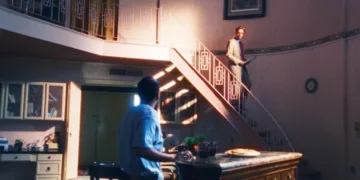













After more than a decade of absence, Hal Hartley returns with “Where to Land,” a film that arrives like a long-awaited letter from a contemplative friend. The director’s comeback centers on Joe Fulton (Bill Sage), a semi-retired filmmaker of romantic comedies who has decided to trade his creative pursuits for the physical labor of cemetery groundskeeping. This career pivot sets in motion a gentle comedy of errors when Joe’s preparation of his will triggers assumptions about his mortality among his inner circle.
Hartley constructs his narrative around a misunderstanding that functions less as dramatic device and more as philosophical catalyst. When Joe’s actress girlfriend Muriel (Kim Taff) and his niece Veronica (Katelyn Sparks) conclude he must be dying, their reactions illuminate how proximity to death reshapes our priorities and relationships. The film becomes a meditation on life’s transitions, the weight of accumulated possessions, and the search for meaning in work that connects us to something tangible.
This reunion of Hartley’s regular collaborators carries the warmth of familiar voices in conversation. The director’s signature deadpan delivery remains intact, though tempered by a new gentleness that suggests an artist in reflective mode. Where his earlier works crackled with nervous energy, this effort moves with deliberate grace, allowing space for the kinds of philosophical exchanges that reveal character through intellectual discourse rather than action.
The Art of Measured Performance
Bill Sage anchors the film with a performance that represents both continuity and evolution within Hartley’s universe. Gone is the manic intensity of his earlier collaborations with the director; in its place emerges a man of quiet contemplation, someone whose measured movements suggest thoughts churning beneath a calm surface.
Sage’s Joe possesses the stillness of someone genuinely listening to the world around him, whether he’s discussing thermodynamics with the cemetery’s head groundskeeper Leonard (Robert John Burke) or fielding questions from an eager film scholar.
The supporting ensemble operates with the comfortable rhythm of a repertory company. Burke brings his characteristic gravitas to Leonard, transforming what could have been a minor role into a meditation on stewardship and care. Kim Taff’s Muriel registers both the frustration of an artist trapped by commercial success and the genuine concern of a partner facing perceived loss. Edie Falco appears as Joe’s ex-wife Clara, delivering Hartley’s characteristically intellectual dialogue with naturalistic ease that makes philosophical discussions feel like ordinary conversation.
Each actor serves a different facet of the film’s exploration of aging and purpose. Their interactions with Joe reveal how the prospect of mortality affects not just the individual but the entire network of relationships surrounding them. The performances avoid sentimentality, instead finding truth in the way people actually speak when confronting life’s larger questions. A film scholar’s earnest questions about artistic legacy land differently when asked of someone believed to be facing his final chapter.
Visual Philosophy and Temporal Rhythm
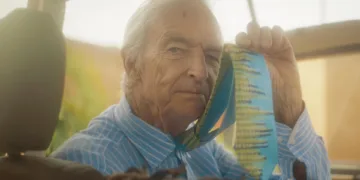
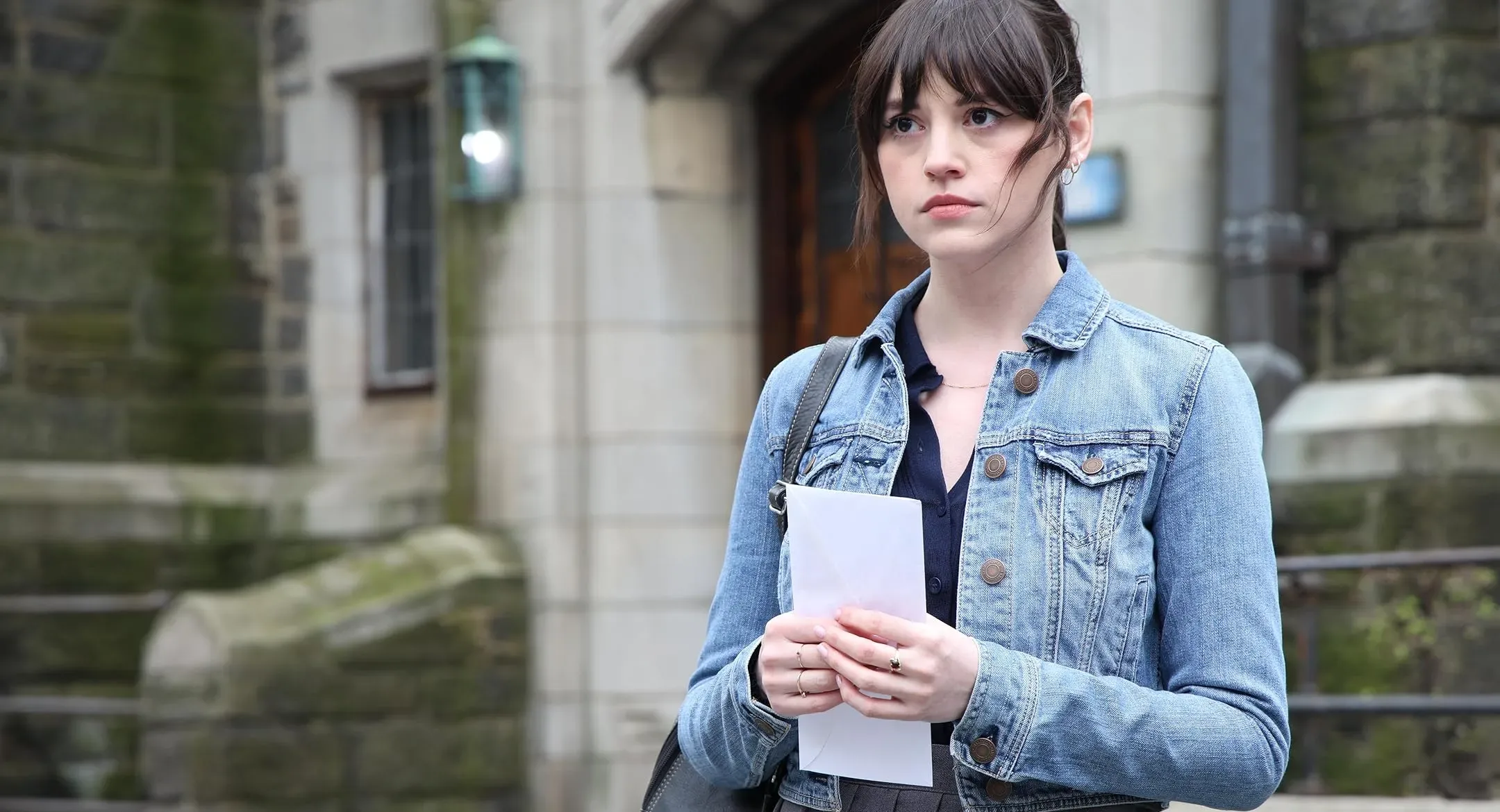
Hartley’s directorial approach has matured into something both familiar and refreshingly evolved. His signature jump cuts now feel less like stylistic flourishes and more like natural breathing patterns, ellipses that compress time while maintaining emotional continuity. When Joe opens the mysterious hospital letter, Hartley cuts directly from the moment of decision to Joe reading its contents aloud, eliminating unnecessary dramatic build-up in favor of simple revelation.
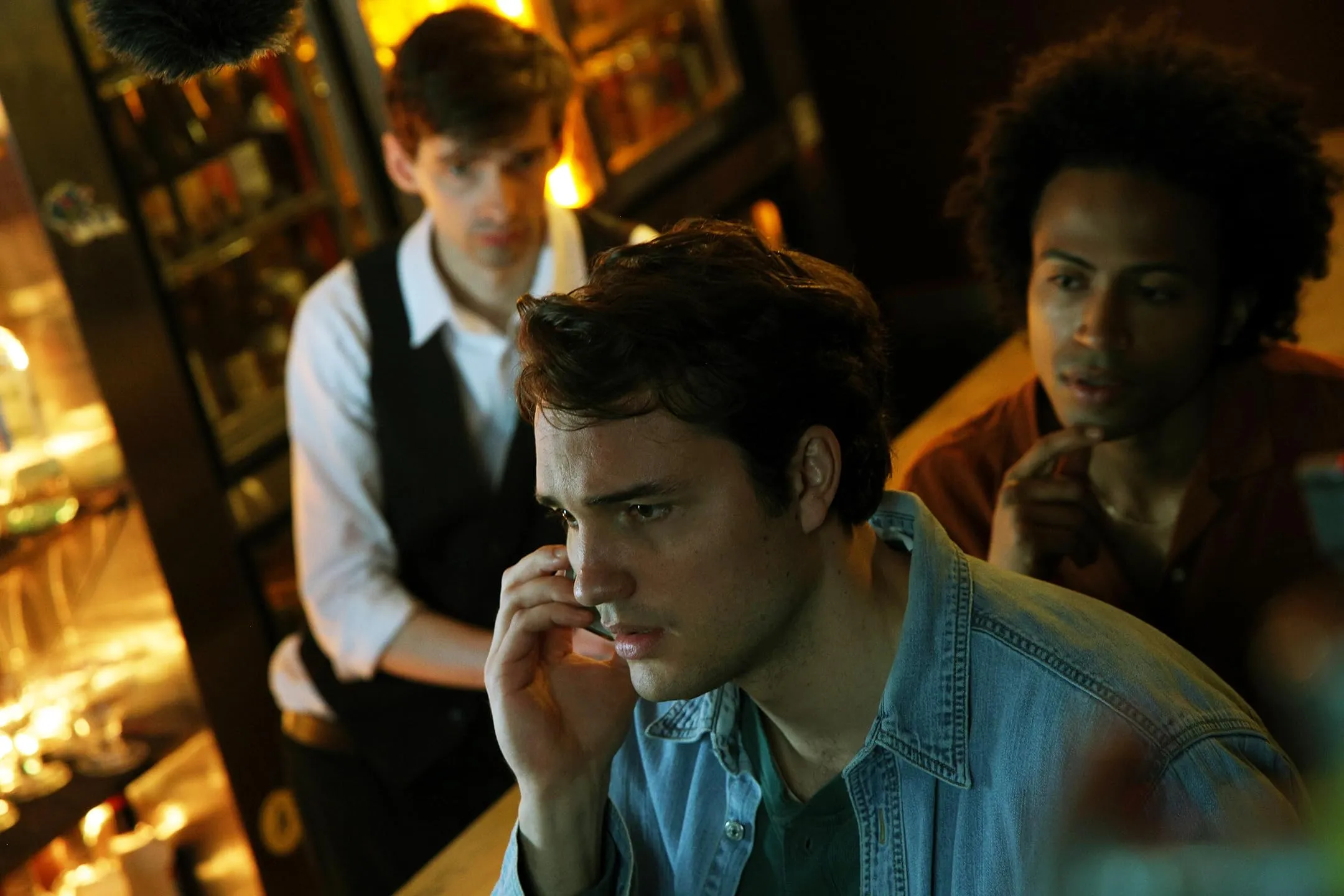
The film’s Manhattan locations serve as more than mere backdrop; they become part of its philosophical framework. Hartley contrasts the windswept exteriors of the Upper West Side with the warm interiors where his characters engage in their most meaningful exchanges. The cemetery itself, with its ordered rows and careful maintenance, offers visual metaphor for the kind of purposeful work Joe seeks. These spaces are lit with natural light that suggests both the everyday and the eternal, avoiding the noir shadows that might emphasize death over life.
Hartley’s self-composed score punctuates scenes with discordant piano stabs and layered MIDI loops that feel both contemporary and timeless. The music doesn’t announce emotional beats so much as create sonic spaces for contemplation. His arrangement of actors within frames recalls choreography, with positioning that suggests relationship dynamics without requiring explicit dialogue. Characters move with deliberate purpose even in casual moments, creating visual rhythms that mirror the film’s measured pacing.
The production design reflects Joe’s relationship with material accumulation. His apartment contains the detritus of a creative life: books, records, modest furnishings that raise questions about legacy and what we leave behind. Hartley’s camera observes these objects with the same attention given to human faces, suggesting that our possessions tell stories about our values and choices.
Mortality, Legacy, and the Weight of Things
“Where to Land” operates as both personal meditation and cultural commentary, using Joe’s midlife transition to examine larger questions about purpose and permanence. The film’s central tension emerges from the gap between Joe’s practical desire for meaningful work and others’ interpretation of his actions as preparation for death. This misunderstanding becomes a lens through which Hartley explores how we project our own anxieties about mortality onto those around us.

The director weaves environmental concerns into conversations about the future, with characters discussing climate change and resource scarcity as backdrop to more immediate personal dilemmas. An elderly writer’s curiosity about witnessing future catastrophes contrasts with Joe’s more pessimistic outlook, suggesting different ways of engaging with uncertainty. These exchanges avoid didactic messaging in favor of the kind of philosophical wandering that characterizes real conversation.
Hartley presents manual labor as both escape from and engagement with intellectual life. Joe’s desire to work with his hands doesn’t represent rejection of his creative past but rather an expansion of how he defines productive activity. The film questions hierarchies that privilege mental over physical work, suggesting that both contribute to human flourishing in different ways.
The treatment of artistic legacy runs throughout the film, with Joe’s past work reduced to a “grenade movie” in the minds of younger audiences who miss the nuance of his romantic comedies. This compression of complex work into simplified memory speaks to how cultural artifacts survive in collective consciousness. Yet the film avoids bitterness, instead finding humor in the inevitable distortion that accompanies the passage of time.
The movie is a farce about a famous romantic comedy director who takes a job as an assistant groundskeeper at a cemetery. While he is meeting with his lawyer to draw up his will, his family, friends, and neighbors think he is dying and gather at his apartment to say goodbye. The film is set to be released on September 12, 2025.
Full Credits
Director: Hal Hartley
Writers: Hal Hartley
Producers and Executive Producers: Hal Hartley, Aaron Kaufman, Anthony Gudas, Chad A. Verdi
Cast: Bill Sage, Robert John Burke, Edie Falco, Gia Crovatin, Joe Perrino, Katelyn Sparks, Kim Taff, Kathleen Chalfant
Director of Photography (Cinematographer): Sarah Cawley
The Review
Where to Land
"Where to Land" succeeds as both artistic statement and gentle entertainment. Hartley crafts a mature work that trades youthful energy for wisdom, creating space for reflection without sacrificing his distinctive voice. The film rewards patience with genuine insight about aging, purpose, and the stories we tell ourselves about mortality. A worthy return from a filmmaker whose philosophical curiosity remains undiminished.
PROS
- Bill Sage's nuanced, contemplative performance
- Evolved directorial style balancing familiarity with growth
- Thoughtful exploration of mortality and purpose
- Natural dialogue delivery despite intellectual content
- Effective use of Manhattan locations and mise-en-scène
CONS
- Limited appeal beyond Hartley devotees
- Minimal plot momentum may frustrate some viewers
- Supporting characters occasionally underserved
- Philosophical discussions sometimes feel academic