
















![Kingdom Hearts Collection [I-III] Review](https://gazettely.com/wp-content/uploads/2026/10/Kingdom-Hearts-Collection-I-III-1-360x180.webp "Kingdom Hearts Collection [I-III] Review: KHII Holds Steady as Newer Entries Fluctuate 40")
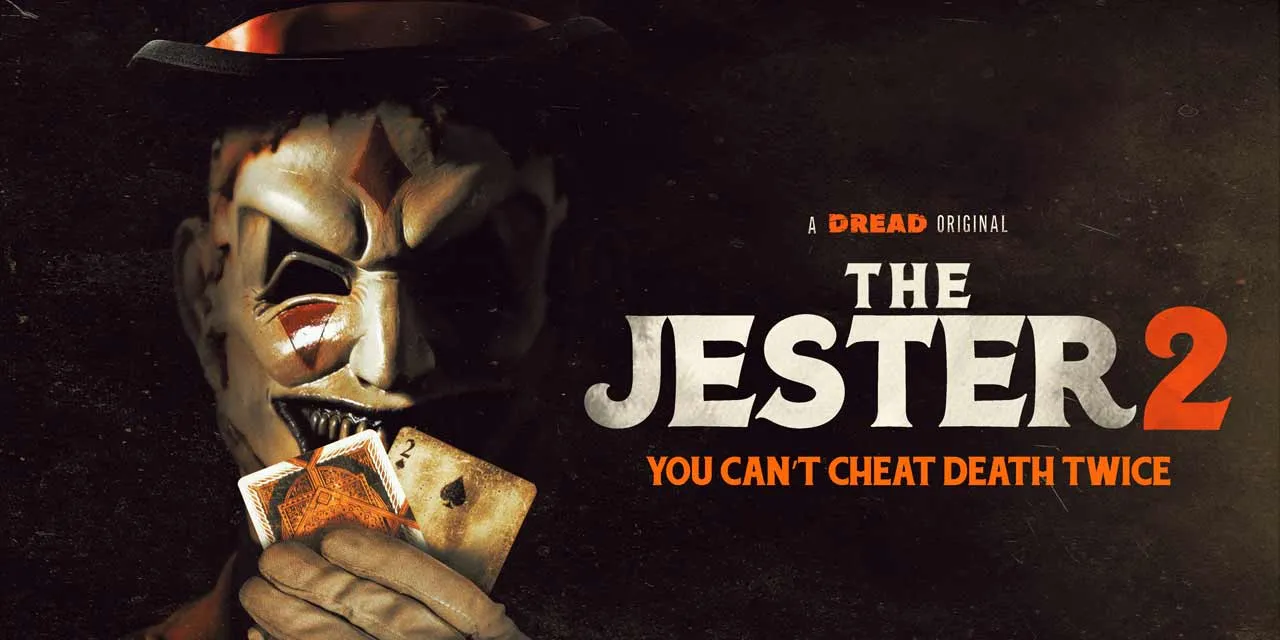

On a quintessential Halloween night, when the veil between worlds is thin and the air is crisp with mischief, a new folk devil stalks the suburban streets. The Jester 2 sets its stage amid a landscape of glowing jack-o’-lanterns and rustling autumn leaves, a perfect backdrop for the macabre theater that is about to unfold. The film introduces its titular monster not as a mere masked killer, but as a figure of silent, supernatural menace.
Clad in a garish orange suit and a ghastly, grinning mask, The Jester is a trickster entity who communicates through a disturbing pantomime of dark illusions and lethal acts of magic. His malevolent performance finds an unlikely audience in Max, a lonely 15-year-old girl who seeks her own refuge in the meticulous and often misunderstood art of stage magic.
The film immediately establishes its central conflict as a fascinating duel of deceptions. It pits Max’s studied sleight-of-hand against a demonic showman whose tricks are terrifyingly real, creating a playful yet deeply sinister seasonal premise that promises a unique kind of horror.
The Outcast and The Oracle of Chaos
The film’s greatest strength, and a marked improvement over its predecessor, lies in the compelling dynamic between its two central figures. Max, portrayed with a genuine and affecting vulnerability by Kaitlyn Trentham, is a sympathetic and grounded heroine.
Her sincere passion for magic is not a quirky hobby; it is her shield against a world that misunderstands her. This is established through sharp, efficient scenes, from the cold dismissiveness of her mother to the casual cruelty of her school peers. Her deep-seated isolation provides the necessary emotional anchor for the film’s fantastical horrors, making her a protagonist the audience can actively support.
Opposite her is Michael Sheffield’s Jester, a character defined entirely by an exquisite physical performance. His resolute silence recalls the expressive power of non-verbal archetypes seen in performance traditions like Indian Kathakali, where elaborately costumed figures convey complex narratives through gesture, posture, and gaze alone.
The Jester is a similar vessel of pure chaos. His fixed mask, a permanent rictus of mirth, forces the performance into his body language: a sharp tilt of the head, the unnerving fluidity of his movements, the theatrical flourish with which he presents each deadly trick. He is less a person and more a walking symbol of malevolent spectacle.
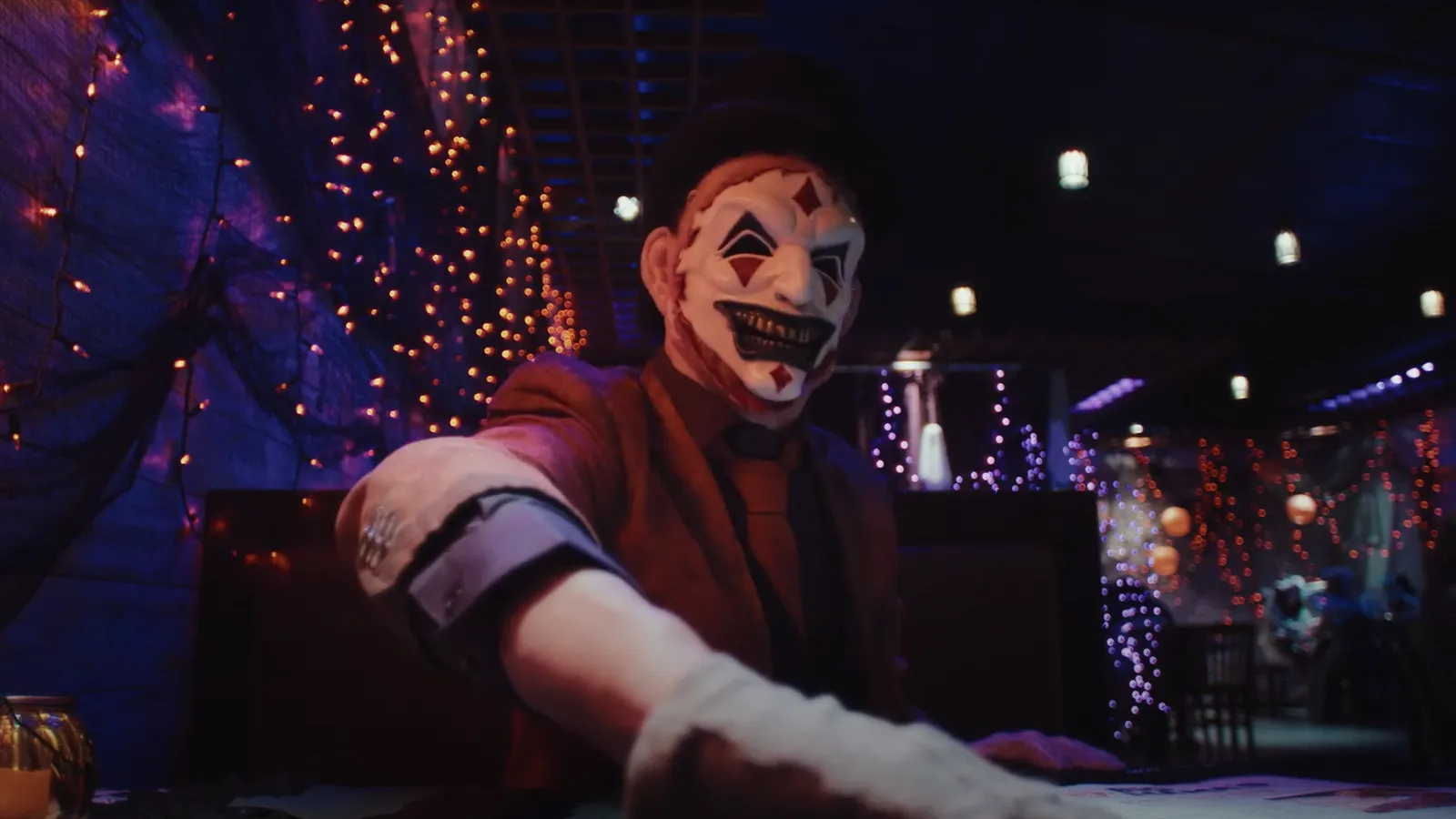
The story truly ignites in a diner scene where the creature takes an interest in Max’s own talents, pulling her from the mundane into his world. This begins a twisted cat-and-mouse game that evolves into a forced, uneasy partnership, moving the film beyond a simple hunter-and-prey narrative into far more interesting territory.
A Nostalgic Nightmare with Practical Punch
Director Colin Krawchuk infuses the film with a distinct tone that feels like a deliberate throwback to 90s young adult horror, evoking the spirit of authors like R.L. Stine, but painted with a fresh coat of R-rated gore. The atmosphere is steeped in Halloween iconography, successfully balancing a certain campiness with moments of genuine, startling cruelty.
The pacing is noticeably brisker than the original film, a welcome change that keeps the energy high. The story moves confidently from one deadly set piece to another, preventing the audience from getting bogged down in the melodrama that hampered the first installment.
The Jester’s supernatural abilities are a creative blend of theatrical misdirection and raw demonic power. He does not just appear and disappear; he teleports in puffs of orange smoke, pulls razor-bladed flowers from his lapel, and manipulates his environment to turn everyday objects into instruments of death. These powers are showcased in the film’s inventive kills, which lean heavily on impressive practical effects.
In one particularly memorable sequence, a bully is placed inside a magician’s cabinet for the classic “sawing a person in half” trick. The Jester performs with a showman’s flair, his mock panic turning to sinister glee as the trick concludes with a gruesomely real and bloody separation of the victim’s torso.
Another scene features a different tormentor pulling an endless, razor-sharp ribbon from their own throat, a horrifying perversion of a simple party trick. While some minor digital effects appear unpolished, the commitment to tangible, gooey carnage gives the horror a satisfying and visceral punch.
The Spellbook’s Missing Pages
Beneath the stylistic flair and creative carnage, the film’s narrative structure is quite conventional. The plot follows a serviceable slasher formula, hitting familiar beats such as the systematic elimination of secondary characters and the eventual “final girl” confrontation.
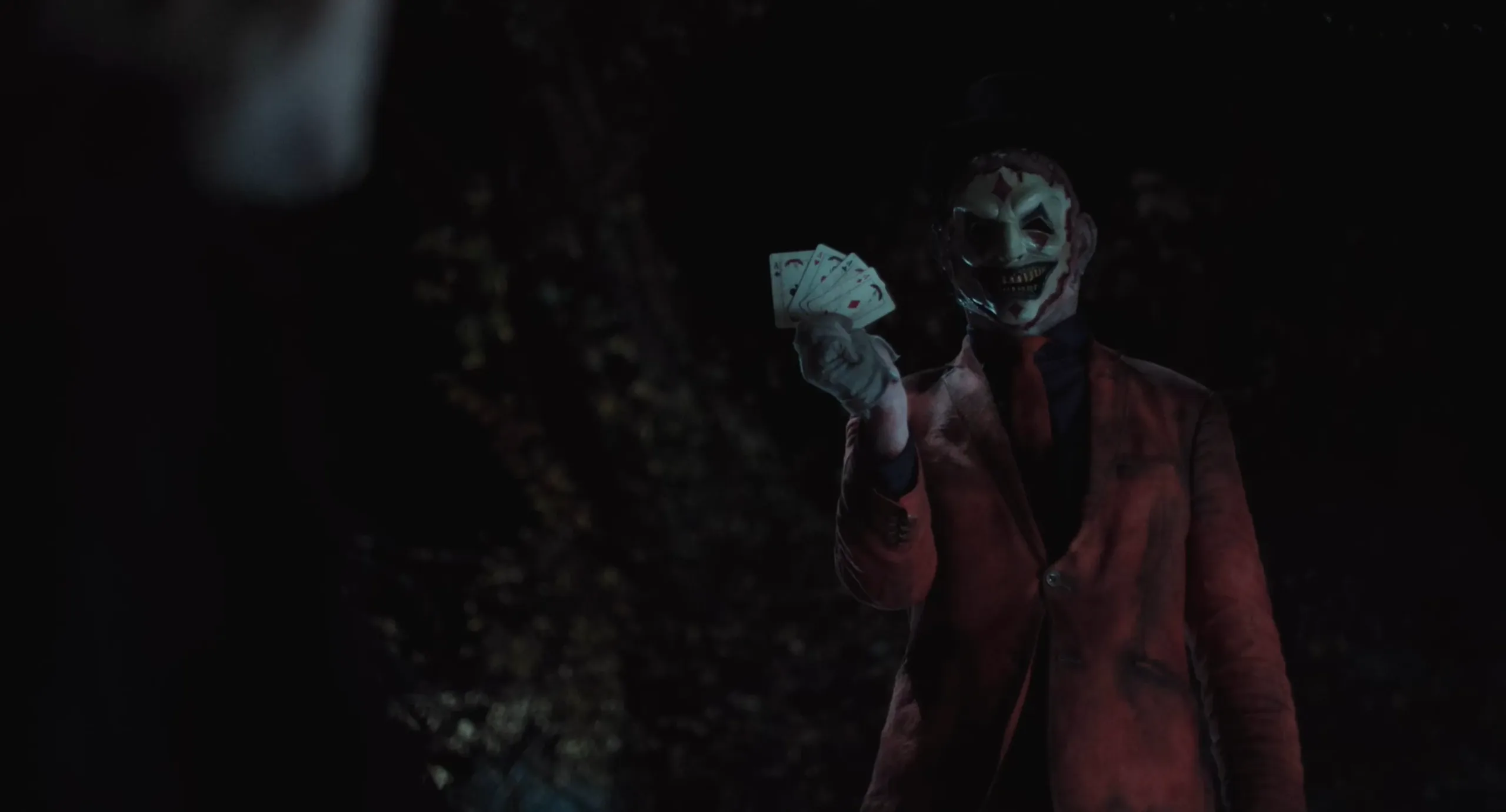
The story’s primary driver is a simple ticking clock: The Jester is bound to complete a dark ritual before a magical candle burns out. This device gives the proceedings a basic sense of urgency, but the story itself offers few genuine surprises for seasoned horror fans.
The script attempts to expand the villain’s origins, a significant departure from the first film’s effective but thin ambiguity. This new lore, however, feels underdeveloped and clumsily integrated. The film introduces supernatural rules but explains them so superficially that they raise more questions than answers, a frustrating tease of a deeper mythology.
This approach can weaken the Jester’s mysterious allure without providing satisfying new depth. While many global horror films, such as the Indian masterpiece Tumbbad, build profound narratives by deeply integrating their folklore, The Jester 2 treats its mythology as a simple plot device.
This is a missed opportunity to transform a good creature feature into a great one. The film works effectively as a fun, straightforward monster movie for the Halloween season, yet it stops short of building the resonant and complex world its compelling villain clearly deserves.
The Jester 2 is a horror sequel that premiered in theaters on September 15, 2025, with a special two-night screening. It is a horror film about a teenage magician named Max who has to outsmart a supernatural killer known as the Jester on Halloween night. The film will also be available on VOD at a later date.
Full Credits
The Review
The Jester 2
The Jester 2 is a significant improvement over its predecessor, succeeding as a fun and stylish Halloween slasher. Its strength lies in the compelling dynamic between a sympathetic heroine and its physically captivating, silent villain. Fueled by creative practical kills and a welcome nostalgic tone, the film is an entertaining seasonal watch. It is held back by a formulaic script and a frustratingly underdeveloped mythology that prevent it from fully realizing the potential of its clever premise.
PROS
- A strong central relationship between the protagonist Max and the Jester.
- Michael Sheffield's menacing and charismatic physical performance.
- Inventive and gruesome kills executed with impressive practical effects.
- A fun, nostalgic tone and excellent Halloween atmosphere.