

















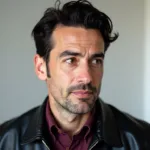
Every person has a map of their past, marked with triumphs, wrong turns, and territories of deep regret. Most accept these borders as fixed. The Senior is about a man who attempts a violent act of cartography: to physically march back to a painful landmark and redraw the map of his own life.
The film’s subject, 59-year-old Mike Flynt, decides to rejoin his college football team four decades after his temper cost him his senior season. This premise, rooted in a true story, uses the uniquely American arena of college football to explore the universal desire for a second chance.
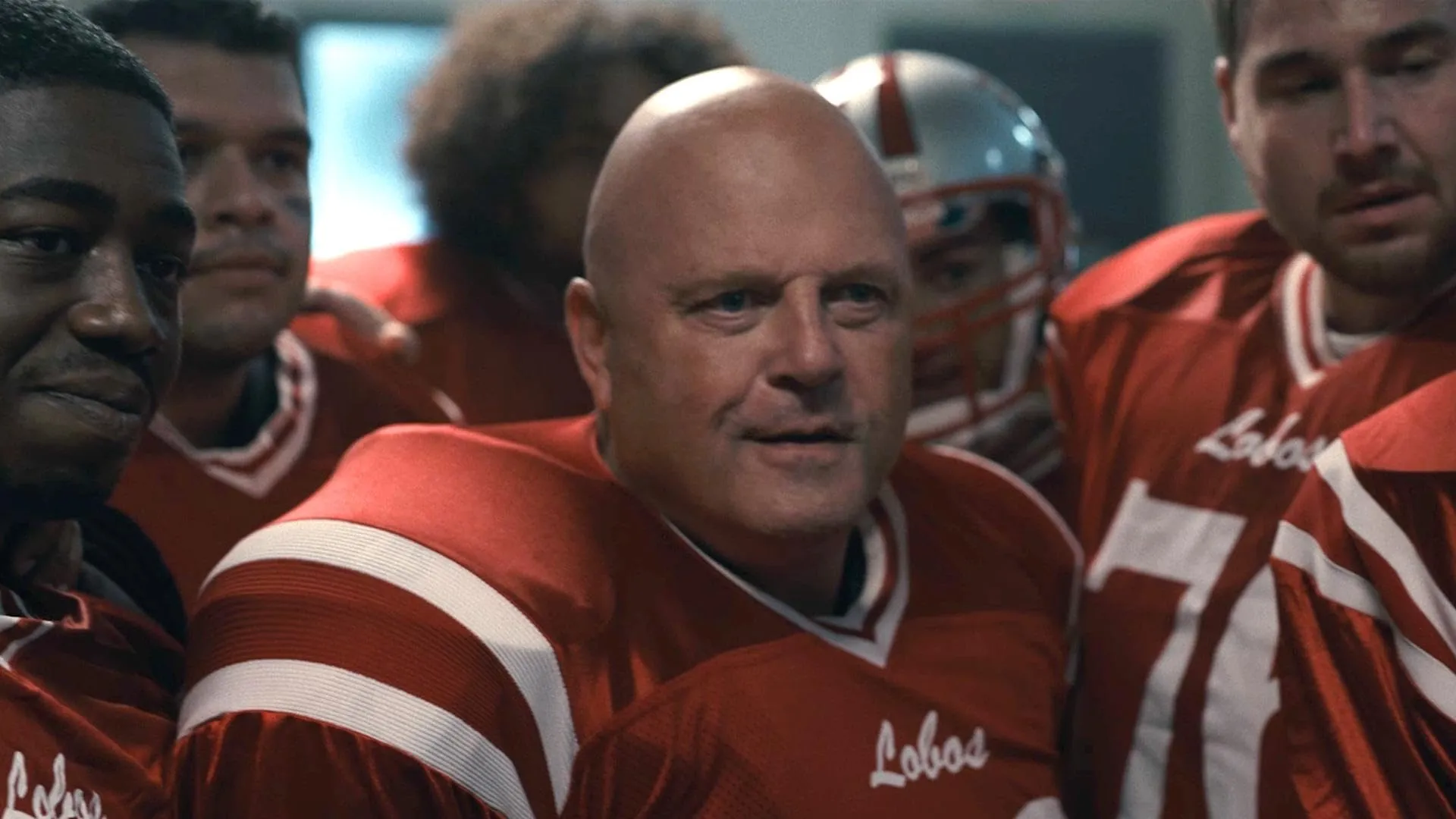
Michael Chiklis plays Flynt as a man whose body has aged but whose defining failure remains fresh. The story is not about recapturing youth’s glory. It is a psychological drama played out on a physical field, an examination of whether a person can confront their own history and find a different way to the finish line.
The Ghosts of Masculinity
Mike Flynt’s life is a quiet monument to a single mistake. As a construction foreman, his days are filled with physical labor that has kept his body strong, yet his spirit is burdened. His unresolved anger is a coiled spring, and an early scene shows it uncoiling violently during a roadside dispute. This flash of rage confirms that the man who was expelled for fighting is still very much present.
His quest to return to football is less a mid-life crisis and more an exorcism. He is driven by a need for closure that has haunted him for decades. Director Rod Lurie skillfully uses flashbacks to reveal the source of this rage: a brutal upbringing under a father (James Badge Dale) who taught him that masculinity was synonymous with physical domination.
For his father, violence was the only language of conflict resolution. This generational trauma is the film’s true antagonist, a cycle of aggression that Mike unknowingly perpetuates. The college reunion is merely the spark. Seeing his old teammates again crystallizes forty years of regret into a single, tangible, if seemingly impossible, goal. His impulsive choice to pursue it, made in isolation, is the act of a man desperate to prove he can be better than the ghost that raised him.
Testing the Body, Mending the Spirit
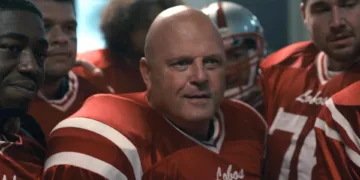
On the practice fields of Sul Ross State University, Mike’s body becomes the stage for his internal war. The initial reception is one of dismissive amusement. Coach Sam Weston (Rob Corddry) and the young players see a grandfather, not a linebacker. The film grounds Mike’s improbable journey in the harsh reality of physical preparation.
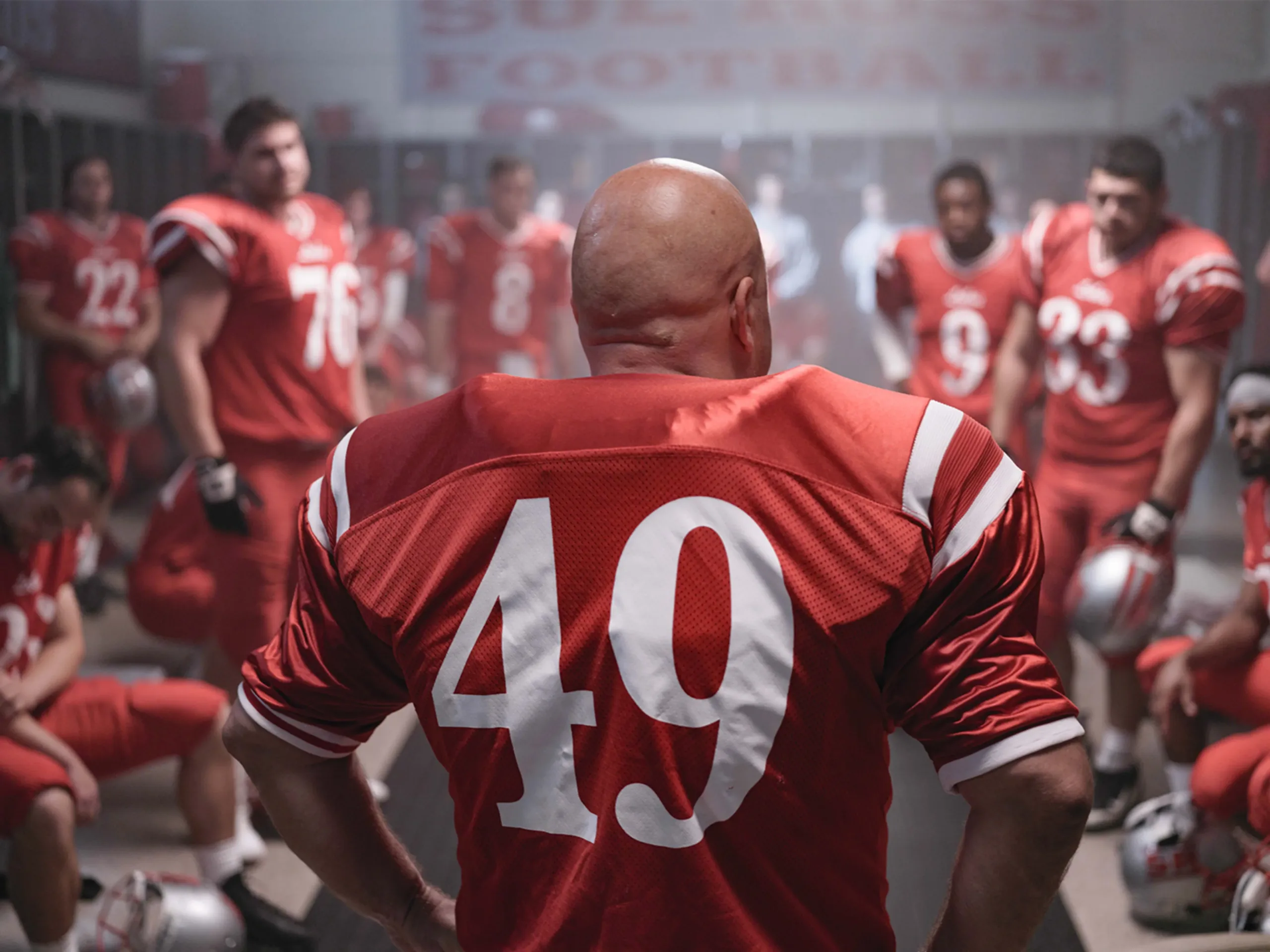
We see him enduring grueling two-a-days in the oppressive Texas heat, his aging muscles screaming in protest. The training montages are not just about getting in shape; they are about an older man’s sheer force of will against the tide of time. A key scene involves a drill where players must hold a 45-pound weight plate with arms extended.
As younger, stronger athletes drop out, Mike remains, his face a mask of agony, winning not through superior strength but through superior endurance born of lifelong hardship. He is a “fish-out-of-water” on the team, his 1970s musical tastes a source of friendly ridicule. His success is carefully measured.
Earning the nickname “Grandpa Rudy,” he is benched, his value shifting from player to locker-room mentor. The physical stakes are raised when a cheap shot from a resentful teammate causes a severe neck injury. In that moment of intense pain and vulnerability, his quest confronts the very real possibility of permanent damage.
Fractured Fields of Home
Mike’s war on the gridiron sends shockwaves through his family life. The conflict with his wife, Eileen (Mary Stuart Masterson), is a poignant counterpoint to his public battle. She supports his need for closure but is justifiably furious at his unilateral decision, one that risks the life they have built together.
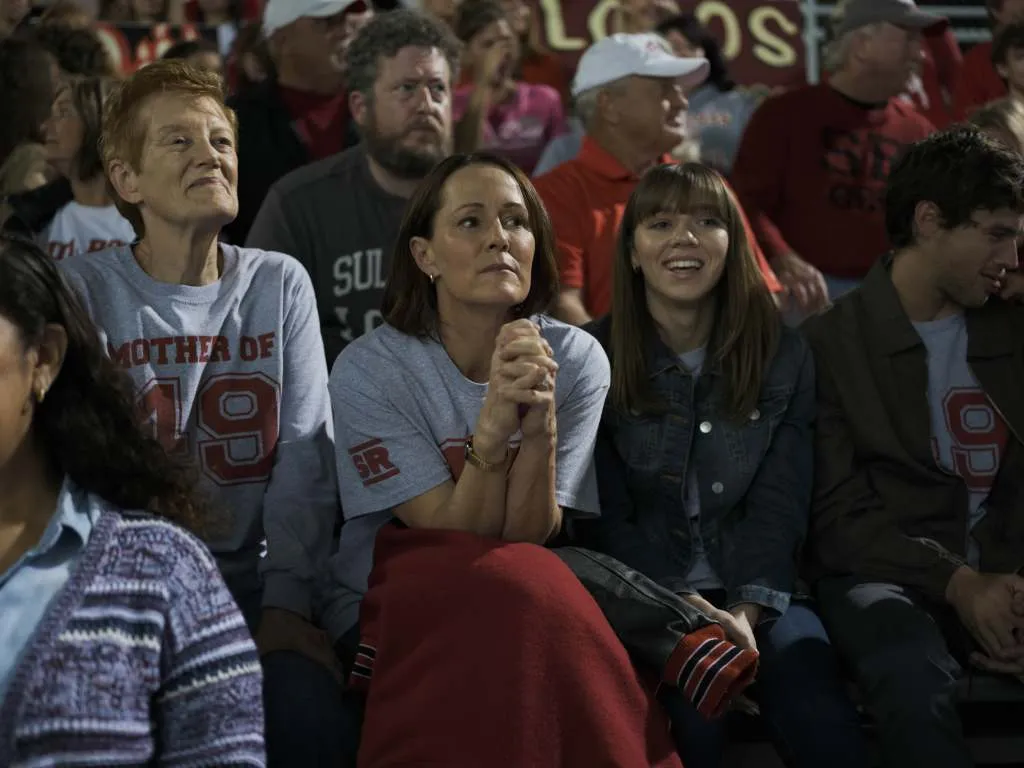
Her confrontation with him is a masterclass in quiet strength, reminding him that his identity is also that of a husband and father. The film’s most resonant emotional thread is the fraught relationship with his son, Micah (Brandon Flynn). A university professor, Micah represents a different kind of masculinity—one based on intellect and peaceful discourse.
He sees his father’s return to a violent game not as noble, but as a selfish refusal to evolve beyond the toxic lessons of the past. Their arguments are charged with years of resentment, with Micah acting as the voice of a generation trying to escape the shadow of its fathers.
The film introduces Mike’s embrace of Christian faith as the key that unlocks his emotional defenses. This spiritual development allows him, a man raised in stoic silence, to finally express his fears and regrets. It opens a path toward forgiveness, the most difficult yardage he must gain.
Playing to the Whistle
The film rests squarely on the shoulders of Michael Chiklis. His performance is a feat of both physical power and emotional transparency. Known for intense roles, Chiklis uses his formidable presence to make Mike’s athletic prowess believable, while also conveying the deep well of sadness behind his eyes. Director Rod Lurie approaches the story with a refreshing lack of irony.
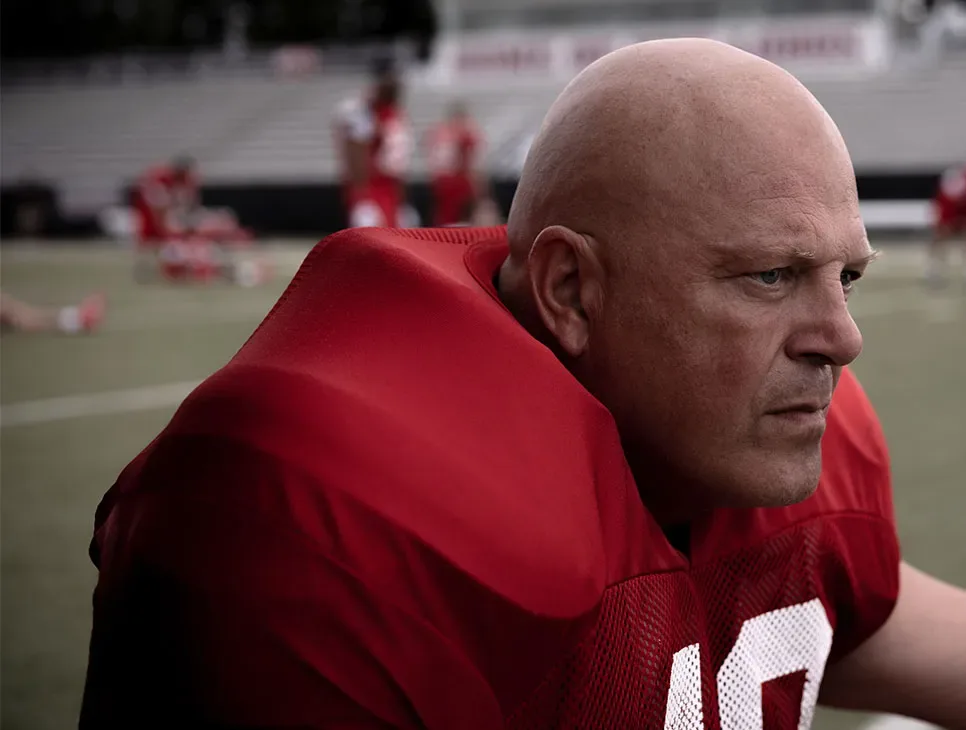
He steers into the familiar beats of the sports genre with sincerity. The Senior consciously evokes Rudy in its celebration of the underdog spirit. It deals with an aging athlete confronting his past, much like The Wrestler, but it sharply diverges from that film’s tragic cynicism. Instead, it chooses to affirm the power of redemption, offering an uplifting resolution that aligns with its inspirational purpose.
The supporting cast provides crucial depth, particularly Mary Stuart Masterson as the resilient Eileen and Rob Corddry, who underplays the coach role effectively. Ultimately, the film succeeds because it commits fully to its heartfelt, culturally specific story of American persistence.
“The Senior” is a 2023 American sports drama film. The movie is based on the true story of a man who, at age 59, becomes a college football linebacker. The film was directed by Rod Lurie. It premiered at the Fort Lauderdale International Film Festival on November 9, 2023, and was distributed by Angel. It was originally scheduled for a US theatrical release on March 7, 2025, and later set for September 19, 2025.
Full Credits
Director: Rod Lurie
Writers: Robert Eisele
Producers and Executive Producers: Mark Ciardi, Campbell McInnes, Justin Baldoni, Andrew Calof, Manu Gargi
Cast: Michael Chiklis, Mary Stuart Masterson, Brandon Flynn, Rob Corddry, James Badge Dale, Terayle Hill, Corey Knight
Composer: Larry Groupé
The Review
The Senior
Anchored by a commanding and physically committed performance from Michael Chiklis, The Senior is a sincere and effective sports drama. It adheres closely to the genre's familiar beats, yet its earnest exploration of generational anger and late-life redemption provides significant emotional substance. The film successfully translates a remarkable true story to the screen, delivering a heartfelt and uplifting narrative that plays its formula with genuine conviction.
PROS
- A powerful and physically believable central performance from Michael Chiklis.
- The exploration of family dynamics and generational trauma adds emotional weight.
- Effectively directed within the familiar framework of an inspirational sports film.
- An uplifting and sincere tone that feels earned.
CONS
- The plot follows a predictable and conventional sports-movie formula.
- Some emotional beats and character arcs feel familiar to the genre.
- The faith-based elements can feel slightly disconnected from the main narrative.