
























![Kingdom Hearts Collection [I-III] Review](https://gazettely.com/wp-content/uploads/2026/10/Kingdom-Hearts-Collection-I-III-1-360x180.webp "Kingdom Hearts Collection [I-III] Review: KHII Holds Steady as Newer Entries Fluctuate 37")



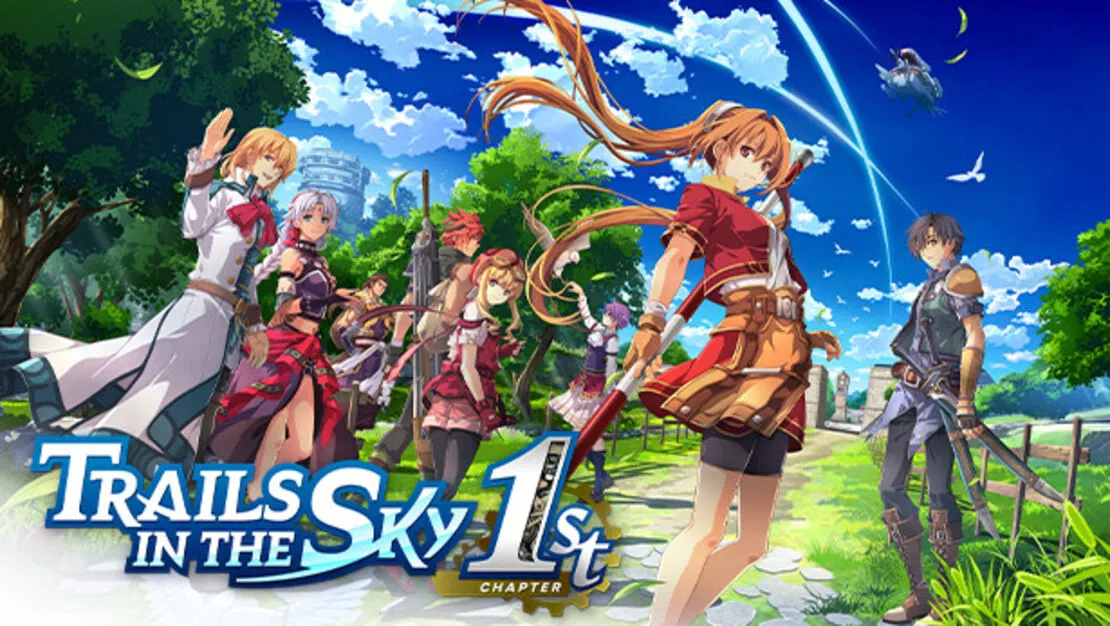

Many role-playing games ask players to save the world. Trails in the Sky 1st Chapter asks for something different: to get to know it first. It stands as a confident answer to the problem of starting a famously long series, presenting its world not through a deluge of exposition, but through a slow, deliberate journey of a thousand small steps.
We are introduced to this world through the eyes of Estelle Bright and her adopted brother, Joshua. They are not chosen heroes or figures of prophecy, but new recruits to the Bracer Guild, a public service organization. Their first tasks are humble, their ambitions local. They set out to prove themselves in their community, unaware that their simple path will eventually intersect with a conspiracy threatening the very foundations of the Kingdom of Liberl.
The Heartbeat of Liberl
The game’s design is an exercise in narrative patience. In an era where many RPGs begin with high-stakes action, Trails in the Sky dedicates its opening dozen hours to building a sense of place. It asks you to care about the Kingdom of Liberl before you are asked to save it. This is achieved by embedding the player in the mundane. Early quests involve finding lost items or exterminating monsters troubling a local farm.
This slow burn is the game’s greatest strength. It allows the world to unfold naturally, building its political tensions and cultural nuances piece by piece through the eyes of its protagonists. The relationship between Estelle and Joshua is the anchor for this exploration. Estelle’s infectious optimism and occasional cluelessness make her a perfect audience surrogate, learning about the world alongside the player. Joshua’s reserved, hyper-competent demeanor creates a compelling mystery, with his unknown past providing a constant thread of underlying tension.
Their journey is colored by a memorable supporting cast. Scherazard Harvey, a senior Bracer with a love for drink, acts as an early mentor, her professionalism showing the duo the serious side of their chosen career. Later, they meet Olivier Lenheim, a traveling musician whose flamboyant personality and constant flirtations hide a sharp intellect.
These characters are more than archetypes; they feel like genuine people who inhabit the world. This feeling extends to the entire population. The game’s non-player characters are its most impressive achievement in world-building. Each town is filled with named citizens who have their own routines, relationships, and evolving stories. After major story events, their dialogue changes to reflect their new reality.
Following a political speech in the city of Ruan, for instance, you can spend an hour walking around listening to nobles debate its implications, merchants worrying about new tariffs, and children playing games inspired by the events. One couple can even be found traveling across the entire kingdom, their conversations in each new city detailing their progress and personal anecdotes, making them feel like fellow travelers on a parallel adventure.
Action and Order in Combat
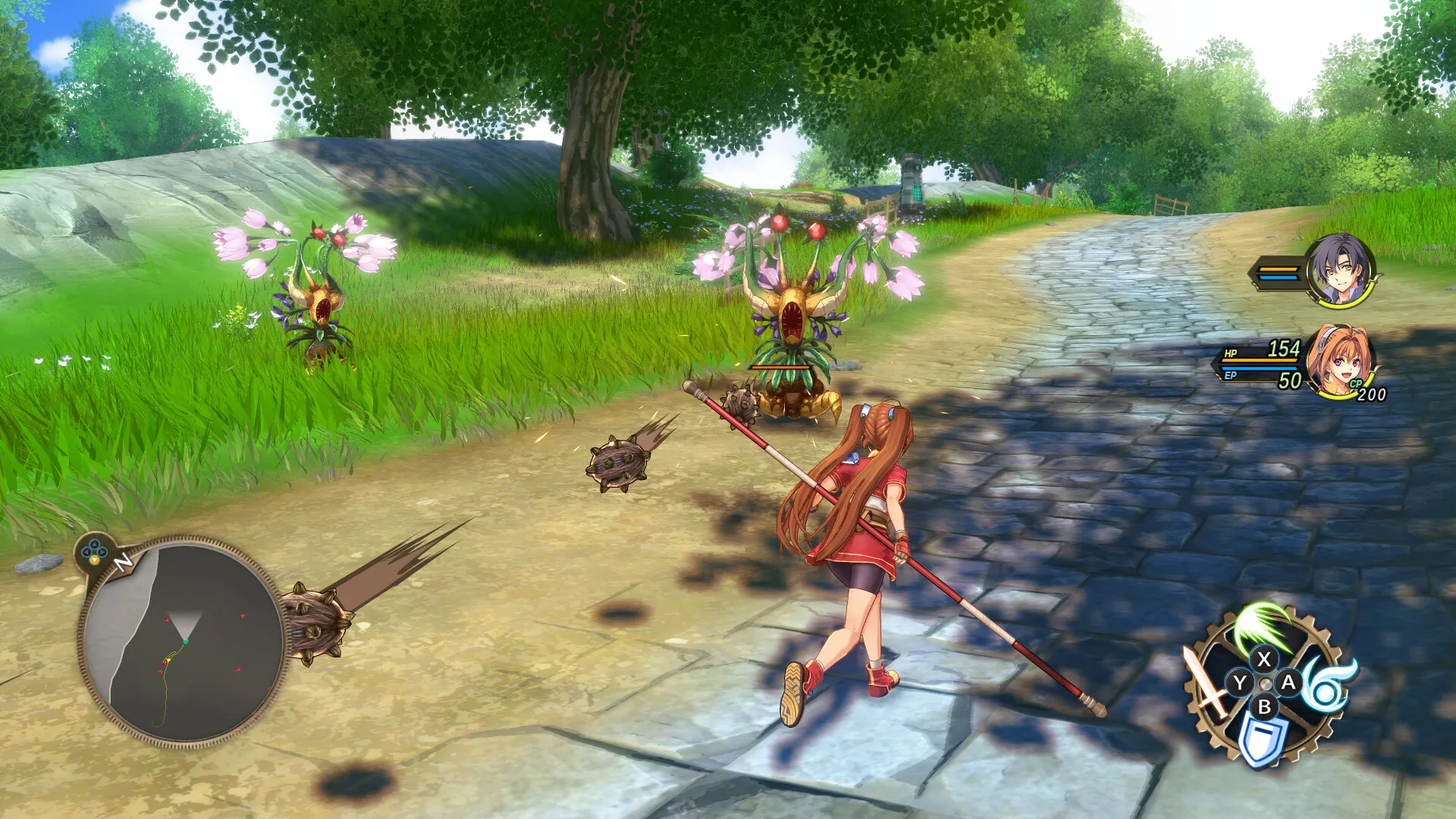
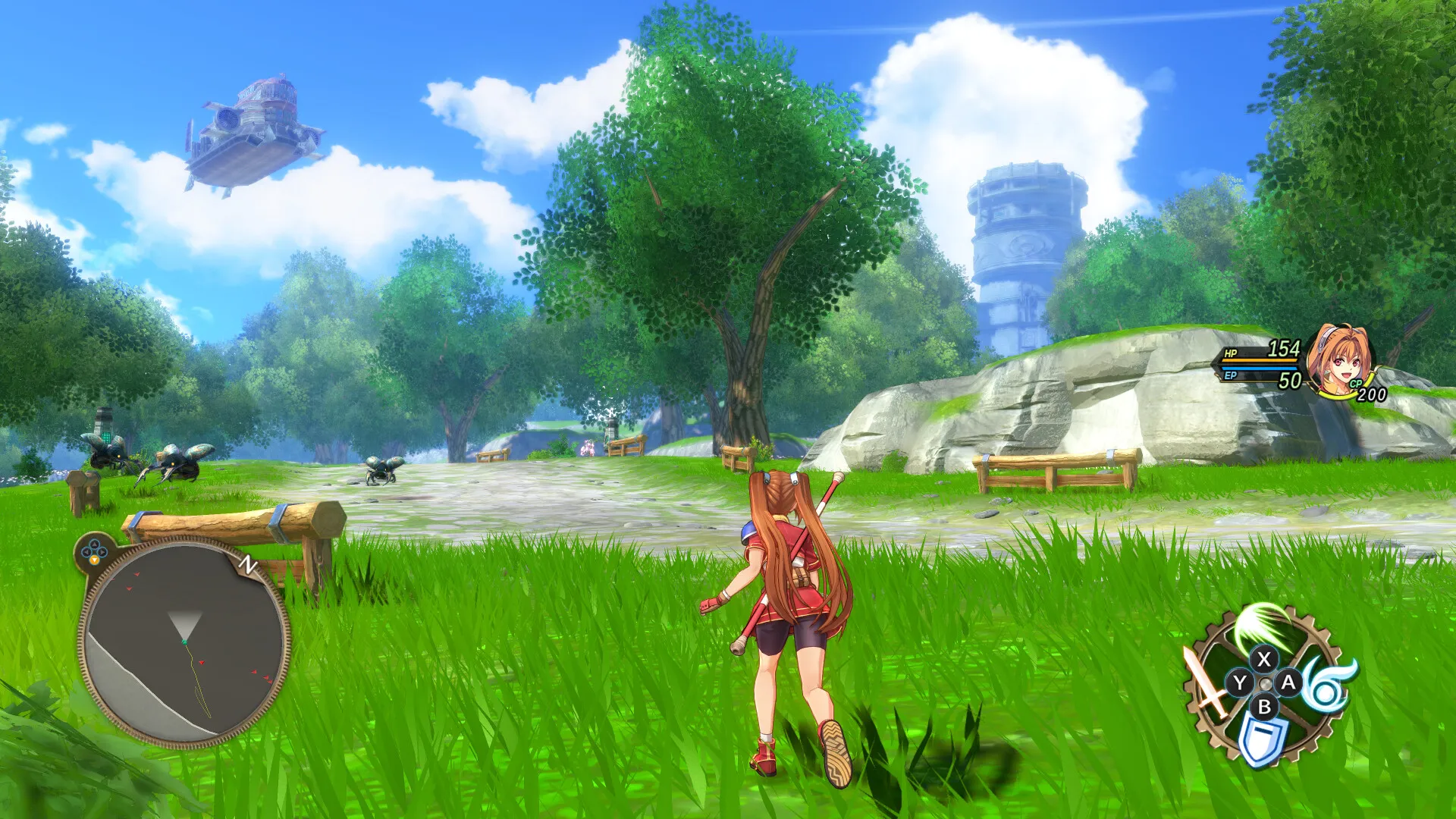
The work of a Bracer is divided between investigation and enforcement, a loop mirrored in the gameplay. Quests from the guild board send Estelle and Joshua across Liberl’s now seamless and expansive regions, where combat is an inevitability. The remake overhauls the original’s purely turn-based system by introducing a hybrid model seen in later Falcom titles. On the field, you can engage enemies in real-time action combat.
This mode is fluid and fast, perfect for clearing out weaker monsters without the formality of a full battle, which helps maintain the pace of exploration. When facing a stronger opponent, or when a more tactical approach is needed, a single button press instantly transitions the fight to a grid-based, turn-based battle. This transition is seamless and provides a strategic advantage if you manage to stun an enemy in the action phase first.
In the turn-based mode, the system reveals its depth. Positioning is key, as many enemy attacks and friendly skills have specific areas of effect. The turn order is displayed on a timeline, which is more than just a simple queue. Certain turns come with powerful bonuses, such as a guaranteed critical hit, health recovery, or an instant boost to a character’s stats. This transforms combat into a puzzle of turn manipulation.
You might use an ability that delays an enemy’s turn just to prevent them from landing on a critical hit bonus, or use a speed-increasing spell on an ally so they can claim it instead. Resource management is split between Craft Points (CP), which are gained by dealing and receiving damage, and Energy Points (EP), a finite pool for Arts. This design encourages aggressive play to build CP for powerful Crafts and ultimate S-Crafts, while the finite nature of EP makes the use of Arts a more calculated decision.
The Artifice of the Orbment
Character growth is tied directly to the world’s central technology. The Orbal Revolution powers Liberl, and the tactical Orbment is a personal application of this energy. It is a device with a series of unlockable slots, functioning as a flexible customization system that recalls the Materia from Final Fantasy VII.
Progress is not just about gaining levels; it is about gathering a resource called sepith from defeated enemies to unlock these slots and craft quartz to place within them. Each piece of quartz provides a passive benefit, like increased attack power or defense, and is aligned with a specific element.
The true depth comes from how these elements interact. Placing multiple quartz of the same element in a connected line on the Orbment’s grid unlocks increasingly powerful Arts, the game’s magic. A character with a long, unbroken line of water quartz slots can become a master healer, while one with several fire quartz will gain access to devastating offensive spells.
This system creates meaningful choices. Some characters have Orbments with a single long line, making them ideal for specializing in high-level Arts. Others have several shorter lines, better suiting them for a versatile mix of low-level magic or a pure focus on stat-boosting quartz.
Do you equip a quartz that grants a useful status effect immunity, or do you use that slot to complete a chain that unlocks a powerful area-of-effect spell? These decisions allow for a high degree of personalization and encourage experimentation with party roles. The system feels like a natural extension of the game’s world, integrating its lore directly into its mechanics.
A New Coat of Orbal Paint
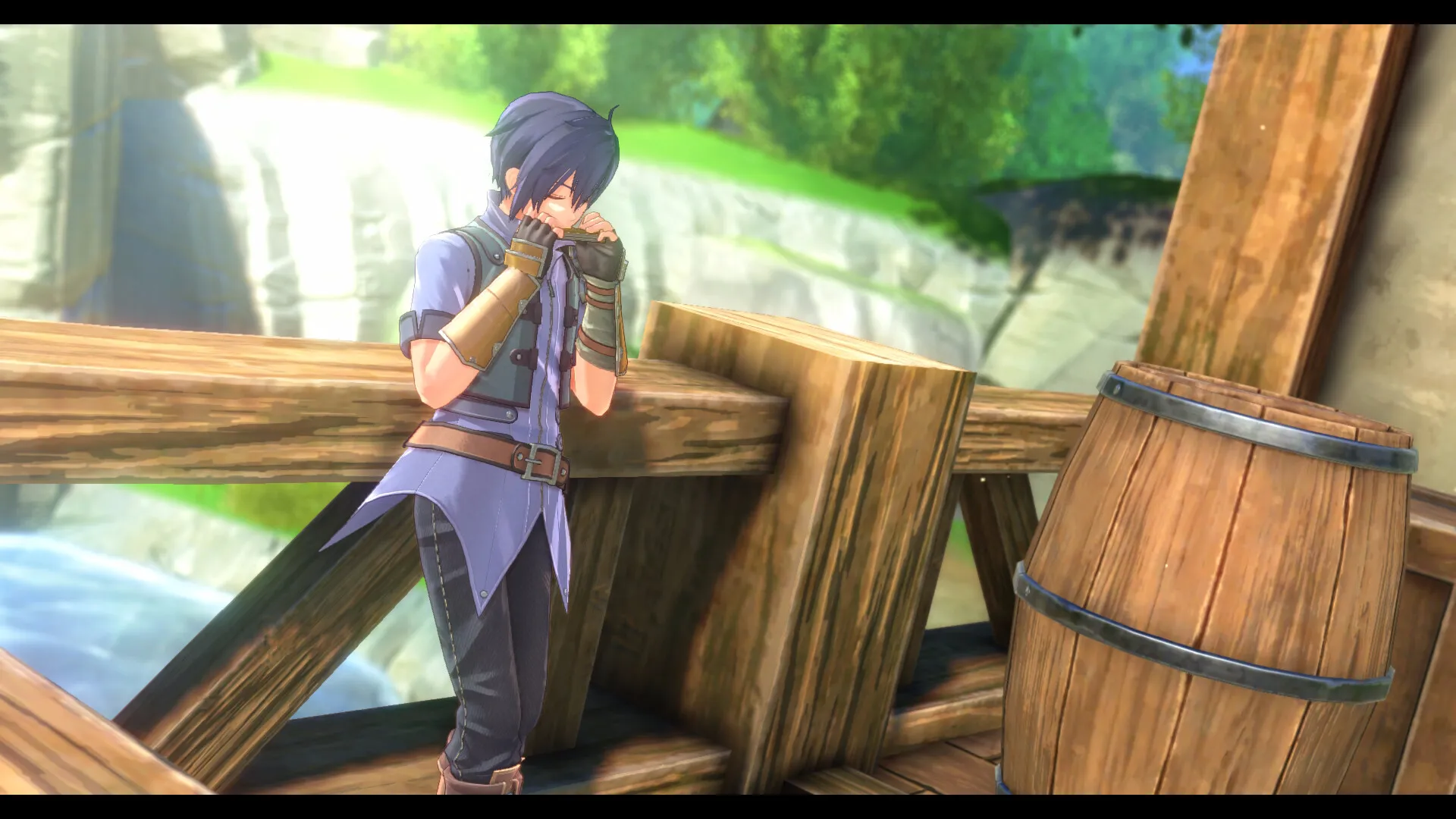
The original game’s charm was conveyed through 2D sprites. This remake rebuilds the world entirely in 3D, using a clean, cel-shaded art style that brings new life to its characters and locations. Character models are highly expressive, and dynamic camera work during cutscenes makes key story moments more impactful.
A school play sequence, a narrative high point, is transformed from a charming scene with simple sprites into a genuinely moving performance with full animation. Environments are also expanded from simple pathways into “wide-linear” zones with more room for exploration, making the travel between cities feel like a genuine expedition. The soundtrack features beautifully rearranged versions of the original’s score, elevating the emotional weight of every scene.
The most significant modern addition is voice acting. The performances are excellent, giving the cast a new dimension of personality. However, the implementation is inconsistent. Important scenes often start with a fully voiced line from one character, only for the protagonist’s response to be delivered through silent text. This can disrupt the flow of a conversation and pull you out of the moment.
These instances are a noticeable flaw in an otherwise polished presentation. The game runs flawlessly, with a stable high framerate that ensures both exploration and the fast-paced action combat feel smooth and responsive. This level of technical stability is a welcome feature, allowing the game’s strengths in storytelling and system design to shine without distraction.
The Review
Trails in the Sky 1st Chapter
Trails in the Sky 1st Chapter is a masterfully executed remake that preserves the heart of a classic RPG while modernizing its mechanics for a new audience. Its greatest success is its patient, deliberate world-building, which creates a deep sense of place and investment in its characters. While the slow narrative pace and inconsistent voice acting are minor blemishes, the engaging hybrid combat, charming story, and beautiful presentation make it an essential experience. It stands as the definitive starting point for one of the genre's most rewarding sagas.
PROS
- Exceptional world-building with reactive, detailed NPCs.
- A memorable cast of characters and a heartfelt story.
- The hybrid action/turn-based combat system is deep and engaging.
- Beautifully updated visuals and a remastered soundtrack.
CONS
- The narrative’s extremely slow beginning may deter some players.
- Partial voice acting is occasionally jarring and breaks immersion.
- The story concludes on a direct cliffhanger, requiring the next game for resolution.







