
























![Kingdom Hearts Collection [I-III] Review](https://gazettely.com/wp-content/uploads/2026/10/Kingdom-Hearts-Collection-I-III-1-360x180.webp "Kingdom Hearts Collection [I-III] Review: KHII Holds Steady as Newer Entries Fluctuate 37")



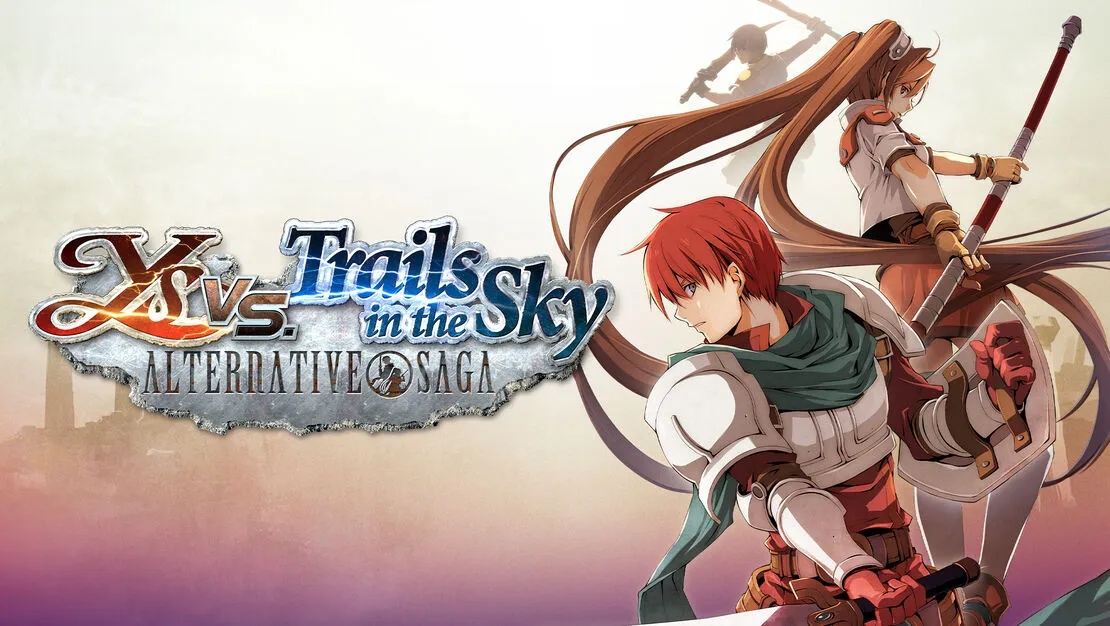

Ys vs. Trails in the Sky: Alternative Saga stands as a curious artifact from Nihon Falcom’s PSP era. Originally released in 2010 as a Japan-exclusive title, this crossover fighting game united two of the developer’s most beloved franchises during a pivotal moment in the company’s history. Coming after Ys Seven in 2009 and just before Trails from Zero, the game served as both a celebration and a showcase of Falcom’s catalog at that exact snapshot in time.
The concept is straightforward: an arena fighter built on the Ys Seven combat system, featuring 17 playable characters split between the Ys and Trails in the Sky series. What makes this 2025 release through publisher refint/games particularly noteworthy is how much care went into modernizing the experience.
The game now runs at 60fps with enhanced visuals, includes full English voice acting using the Geofront translation previously applied to Trails from Zero and Azure, and features online multiplayer with rollback netcode and crossplay support. Beyond the two main franchises, Alternative Saga pulls from deeper cuts in Falcom’s library, with characters and music from Xanadu, Zwei, Brandish, and Gurumin appearing as assists and background elements.
Heroes Against the Dragon King
The narrative framework for Alternative Saga is minimal by design. Heroes from both Ys and Trails find themselves transported to the world of Xanadu, where the evil dragon Galsis has taken control. The twist: Galsis has brainwashed most of the cast, forcing them to battle one another. A peculiar creature named Lappy acts as your guide, leading whichever hero you choose through a series of confrontations meant to free their allies.
Five characters are available for story mode: Adol and Geis from Ys, and Estelle, Kloe, and Tita from Trails. Each route takes approximately two hours to complete, with the main difference being the order in which you face opponents and the specific dialogue exchanges that occur. The structure is entirely menu-driven. You select stages from a world map, watch cutscenes before and after battles, and progress linearly toward the final confrontation. There’s no exploration, no NPC conversations, no towns to visit.
The narrative itself treads familiar “heroes unite against evil” territory without attempting anything deeper. What it can offer are character interactions, and here the game finds its footing when you already know who these people are. The game makes no effort to introduce characters or explain their relationships, assuming you’ve played the source material.
One charming touch involves Adol’s traditional silence. Players select his dialogue lines from multiple choice options, and Bryce Papenbrook then voices whatever you choose. Other characters speak naturally, drawing on their established personalities. The Sky cast carries much of the personality here, simply because those games spent far more time developing character dynamics than Ys Seven did.
Fair warning: Alternative Saga contains significant spoilers for Trails in the Sky Second Chapter. Character inclusions, outfit designs, specific stage locations, and dialogue all reference events from that game. The remaining twelve characters can be accessed through arcade mode, which strips away story elements entirely and offers straightforward AI battles.
Arena Combat with RPG Roots
Alternative Saga takes the Ys Seven combat system and successfully translates it into an arena fighter. The fixed camera angle and 3D battlefields create spaces where positioning and movement matter. You have access to basic ground and aerial combos, dodge rolls, dashing, blocking, and jumping. The stamina meter is key here, depleting whenever you guard or dodge excessively. This prevents matches from devolving into endless defensive play, keeping the pace aggressive and dynamic.
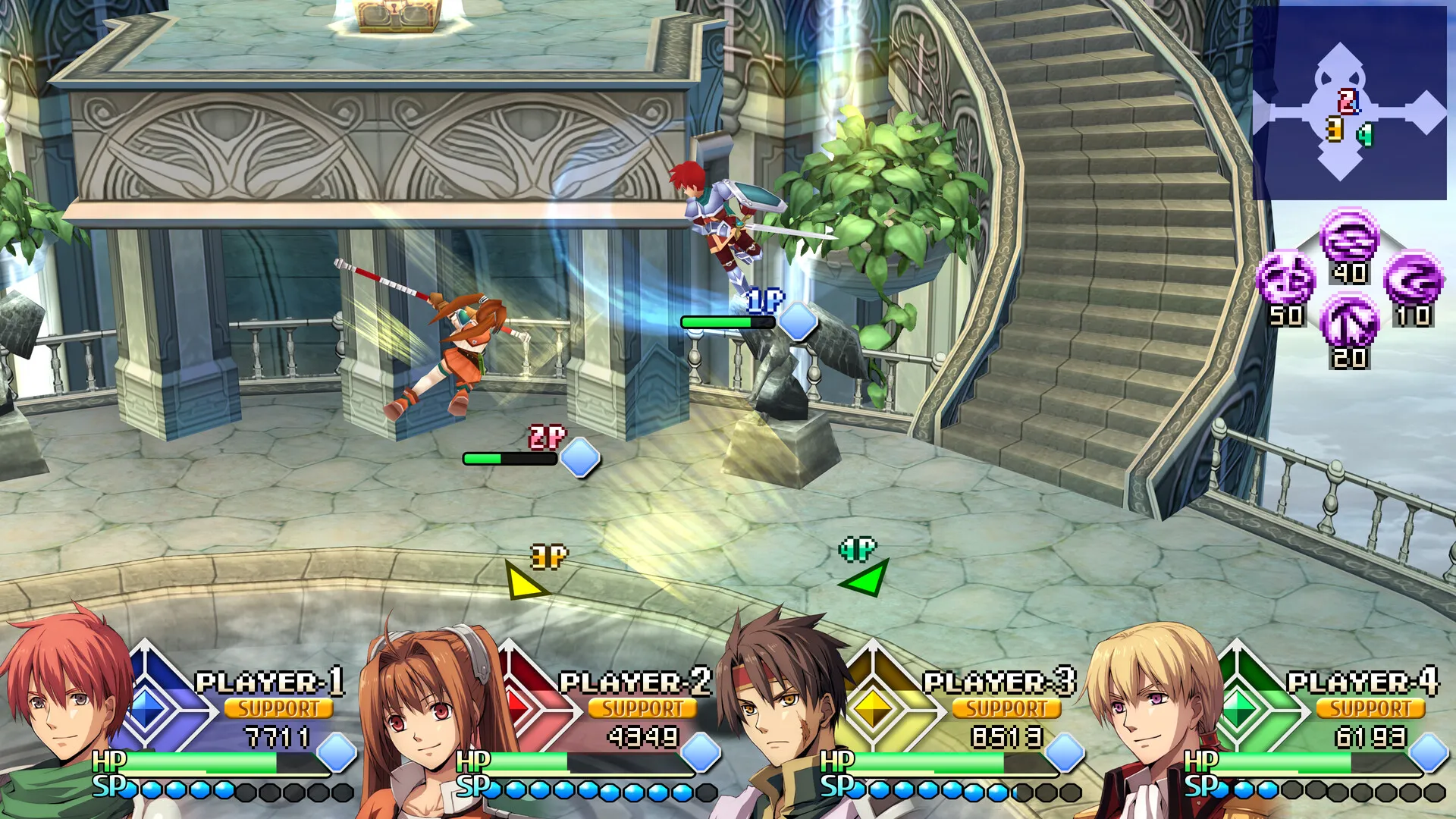
The flash guard mechanic, borrowed directly from Ys Seven, rewards perfectly timed blocks with mini-critical hits for a brief window. Special skills are limited by an SP gauge that fills through charge attacks and general combat activity, meaning you can’t simply spam your most powerful moves. Four skills can be equipped at once, mapped to button combinations. Assist characters provide significant buffs when called upon, and once your ultimate meter fills completely, you can unleash an E-Burst attack for massive damage.
Supporting up to four players simultaneously, the combat can become genuinely chaotic. Different team configurations are possible, and the psychological element of fighting another person replaces the pattern memorization that defines traditional Ys boss encounters. You’re constantly adapting to unpredictable behavior rather than learning a specific sequence of attacks.
The 17-character roster feels genuinely diverse in how each fighter operates. Ys characters retain their movesets and combat styles from their original appearances, giving series veterans immediate familiarity. The Trails characters required more creative adaptation, transitioning from turn-based combat into real-time action while preserving their iconic crafts and abilities.
Stage design pulls from memorable locations across both franchises. Some arenas include environmental hazards or shortcuts that open tactical options, while others keep things straightforward. Breakable objects scatter items across the battlefield, and there’s generally enough space to create distance when you need breathing room. The combat pacing deserves specific praise. Matches feel appropriately hectic without dragging on too long, maintaining the frenetic energy of Ys boss fights. There’s a learning curve, certainly, but once the systems click, the combat becomes satisfying in ways that reward both mechanical skill and tactical thinking.
Balance was clearly not a priority during development. Some assist characters are demonstrably overpowered, and ranged fighters tend to dominate. But Alternative Saga isn’t trying to be a competitive esport, so the imbalance matters less when you’re playing casually with friends.
Depth Through Customization
Alternative Saga’s RPG heritage shows most clearly in its progression and customization systems. Playing through battles earns currency and experience, which funnel into an extensive equipment shop. Weapons, armor, and accessories can be purchased and upgraded, with accessories providing both stat increases and special effects like elemental damage or passive abilities. Each character has a roster of attack skills that must be unlocked and leveled up individually.
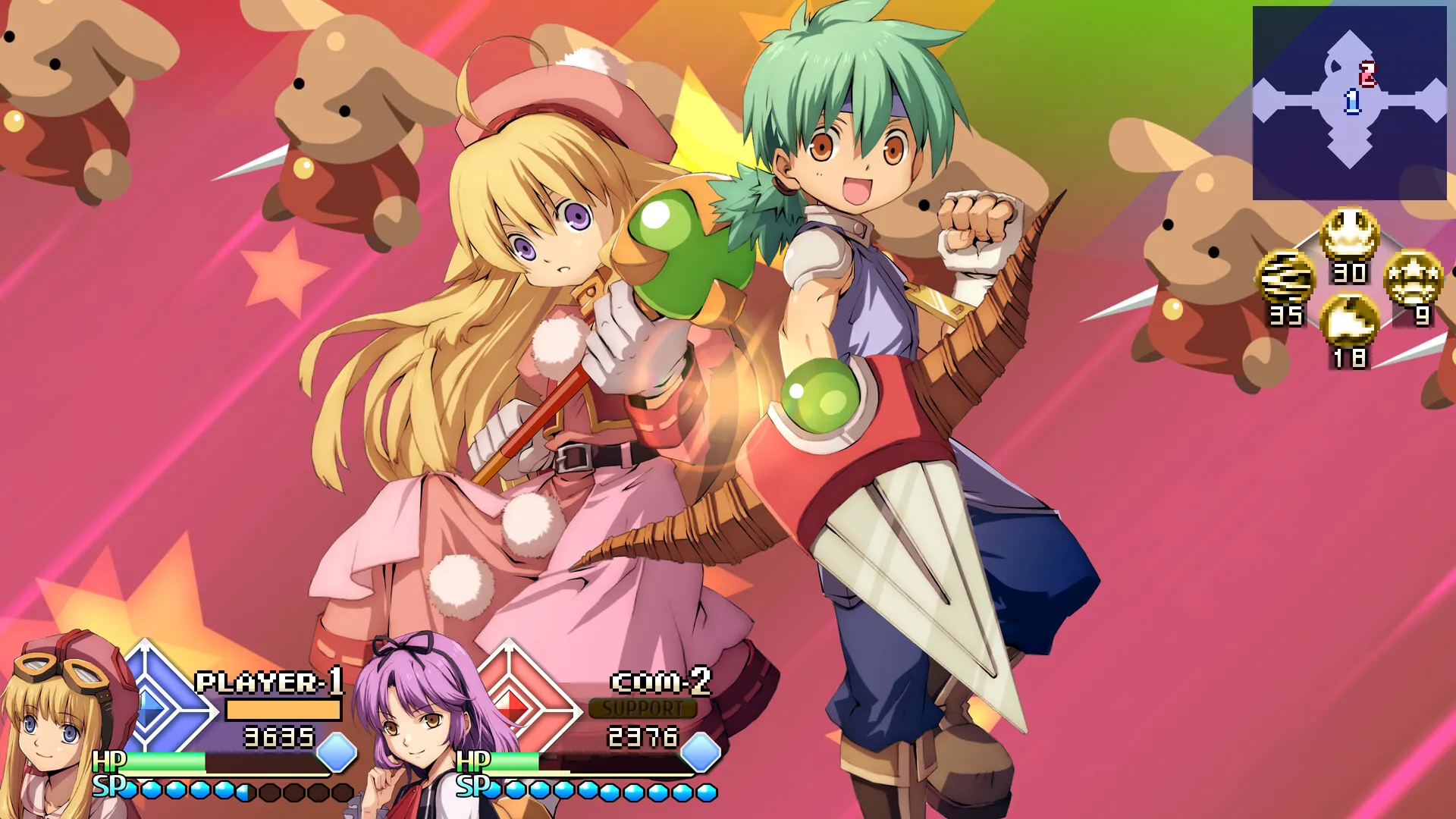
The shared equipment pool is smart design. Once you’ve completed a story route with one character, all your purchased gear and accumulated wealth carry over to the next playthrough. Free match mode opens up even more options. You can set custom rules, manually adjust character levels, and apply specific buffs or debuffs before matches start. CPU fighters use randomized equipment loadouts, so facing the same character twice doesn’t mean identical matches.
The BP system rewards completing specific objectives by unlocking new playable characters for arcade and online modes, plus additional assist characters. Story mode offers the bulk of single-player content at roughly ten hours total across five campaigns. The difficulty curve is strange because this plays like an RPG rather than a traditional fighter. Struggling with a particular opponent often means you just need better equipment or a few more levels.
The jump to modern platforms makes a tangible difference. The framerate doubling from 30fps to 60fps improves responsiveness significantly. English voice acting features returning cast members like Bryce Papenbrook, Stephanie Sheh, and Matt Mercer, lending authenticity for players familiar with these characters.
Online multiplayer received excellent netcode implementation with rollback functionality and crossplay between platforms. The reality, however, is that this game will likely maintain a small player base. The Venn diagram of people who love both Ys and Trails, want a fighting game spinoff, and own the game on modern platforms is inherently limited. The optimal way to experience multiplayer involves gathering friends and establishing house rules rather than treating it as a competitive test of skill.
The music deserves specific mention. Alternative Saga features 153 tracks spanning decades of Falcom’s output, all unlockable for use in any stage during multiplayer and free battle modes. Falcom built its reputation partly on exceptional game soundtracks, and having this massive catalog available to customize your matches is genuinely special.
Unlocking everything requires significant time investment, with 15 to 20 hours needed to see all content and access the full roster. The grinding can feel repetitive. Performance across the 2025 release is generally stable, with only minor technical hiccups reported.
Alternative Saga exists for a specific audience: fans of Ys and Trails who want something different from the usual JRPG formula. It’s difficult to recommend this to fighting game enthusiasts unfamiliar with the source material. But for those already invested in Falcom’s worlds and characters, this crossover offers a fun diversion that respects both series. The care put into this 2025 release shows genuine respect for the material, making what could have been a quick port into something fans can genuinely appreciate.
The Review
Ys vs. Trails in the Sky: Alternative Saga
Ys vs. Trails in the Sky: Alternative Saga is a loving tribute to Falcom's history that successfully adapts Ys Seven's combat into a chaotic arena fighter. The extensive customization, massive soundtrack, and quality-of-life improvements make this 2025 release the definitive version. However, its appeal remains limited to existing fans of both franchises. The bare-bones story and grinding required to unlock content may test patience, but those who appreciate these series will find genuine enjoyment in this experimental crossover.
PROS
- Fast-paced, satisfying combat with meaningful customization options
- 153-track soundtrack featuring Falcom's greatest musical hits
- Excellent modern port with 60fps, rollback netcode, and crossplay
- 17 unique characters with distinct playstyles
- Shared equipment system streamlines multiple playthroughs
CONS
- Story mode feels repetitive and minimal
- Significant grinding required to unlock all content
- Small expected player base limits online longevity
- Contains major spoilers for Trails in the Sky Second Chapter
- Difficult to recommend without familiarity with source material







