















![Kingdom Hearts Collection [I-III] Review](https://gazettely.com/wp-content/uploads/2026/10/Kingdom-Hearts-Collection-I-III-1-360x180.webp "Kingdom Hearts Collection [I-III] Review: KHII Holds Steady as Newer Entries Fluctuate 37")



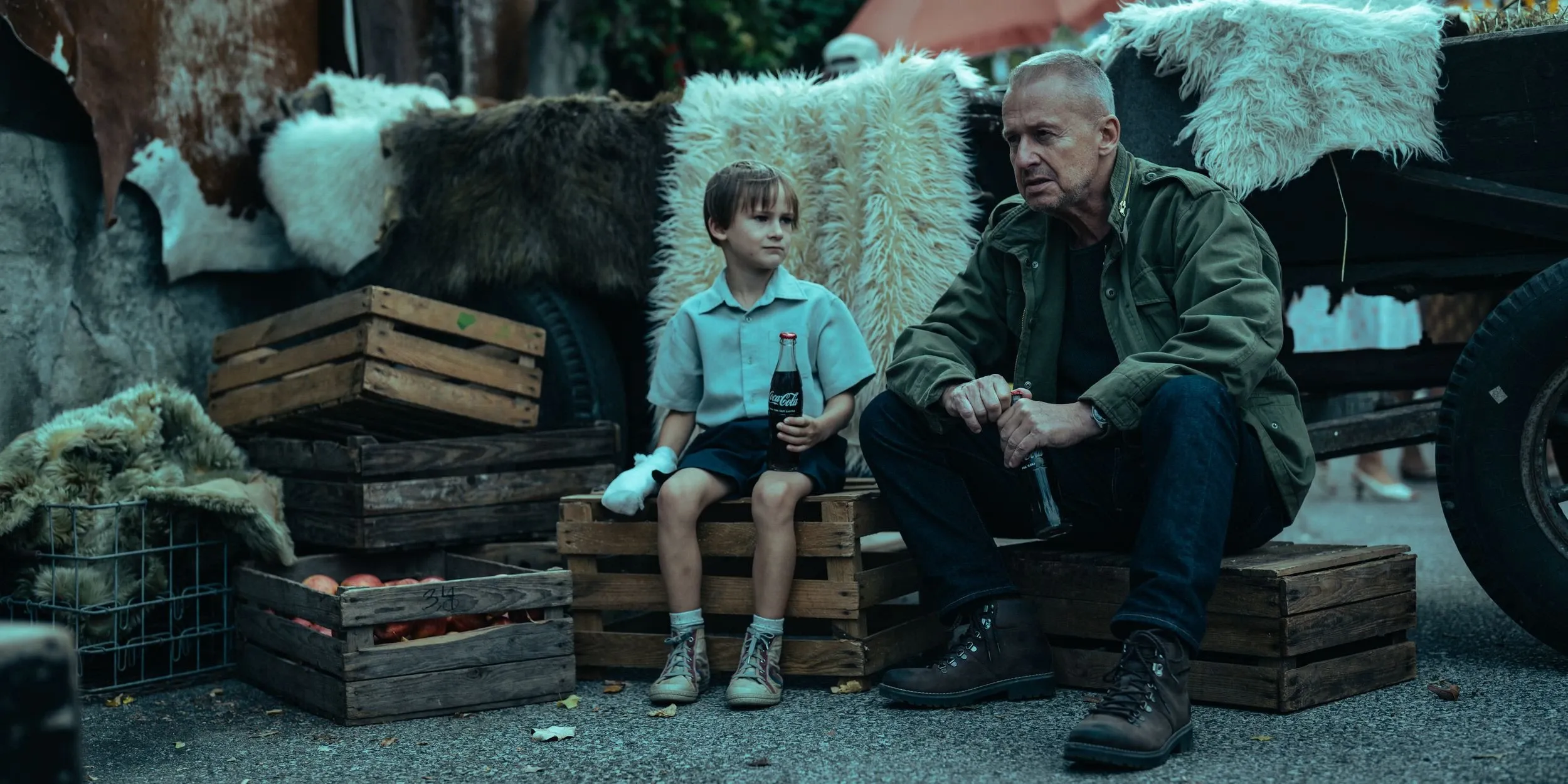

What is a man when the state that forged him into a weapon decides to lift him from the dust for one final strike? He is a memory given flesh, a tool whose purpose is absolute. So it is with Konstanty “Bruno” Brusicki, a name whispered down the cold corridors of Polish intelligence. The year is 1981. The world is a chessboard of grays. Bruno, a master sniper now retired to the quiet decay of his own body, is pulled back into the world of shadows.
His mission is not a simple act of political murder. He is tasked with a more intricate violence: to trail the man who will attempt to kill Pope John Paul II and then, in the aftermath, to extinguish that man’s life. He is to be the period at the end of a sentence written by others. The cruel poetry of the arrangement is that Bruno himself is dying. His terminal cancer makes him the perfect asset, a self-disposing instrument whose silence is guaranteed by a power higher than the state.
The Weight of a Final Breath
The film is not a chronicle of an assassination plot. It is a slow, methodical portrait of a man’s final negotiation with himself. The machinery of espionage, the clandestine meetings and coded words, all recede into a distant hum. What remains is the stark, quiet presence of Bruno, a man whose life has been a study in detachment.
His stoicism is a fortress built over decades, a defense against the moral corrosion of his trade. He moves through the world with a profound stillness, his soul reflected in the patient, solitary ritual of trout fishing. He waits, as he always has, for the slight tremor that signals a life caught on the line. The cancer inside him is a second shadow, a constant companion that forces a reckoning. The film becomes a meditation on how a life defined by causing death confronts its own inevitable end.
His search for connection leads him to Bianka, a prostitute whose company offers a fragile warmth. Their bond is not one of passion, but of two solitudes briefly touching, a shared space away from the cold transactions that define their lives. The narrative mirrors his internal state, moving with a deliberate slowness that some might call tedious. It is the pace of a man counting his remaining breaths.
A Tale Interrupted
This contemplative stillness, however, proves too fragile for the film to maintain. The narrative splinters, its focus diverted by a subplot that feels imported from an entirely different story. Bruno becomes entangled in a local investigation concerning missing children, a small-town crime that sits awkwardly beside the monumental weight of his Roman assignment.
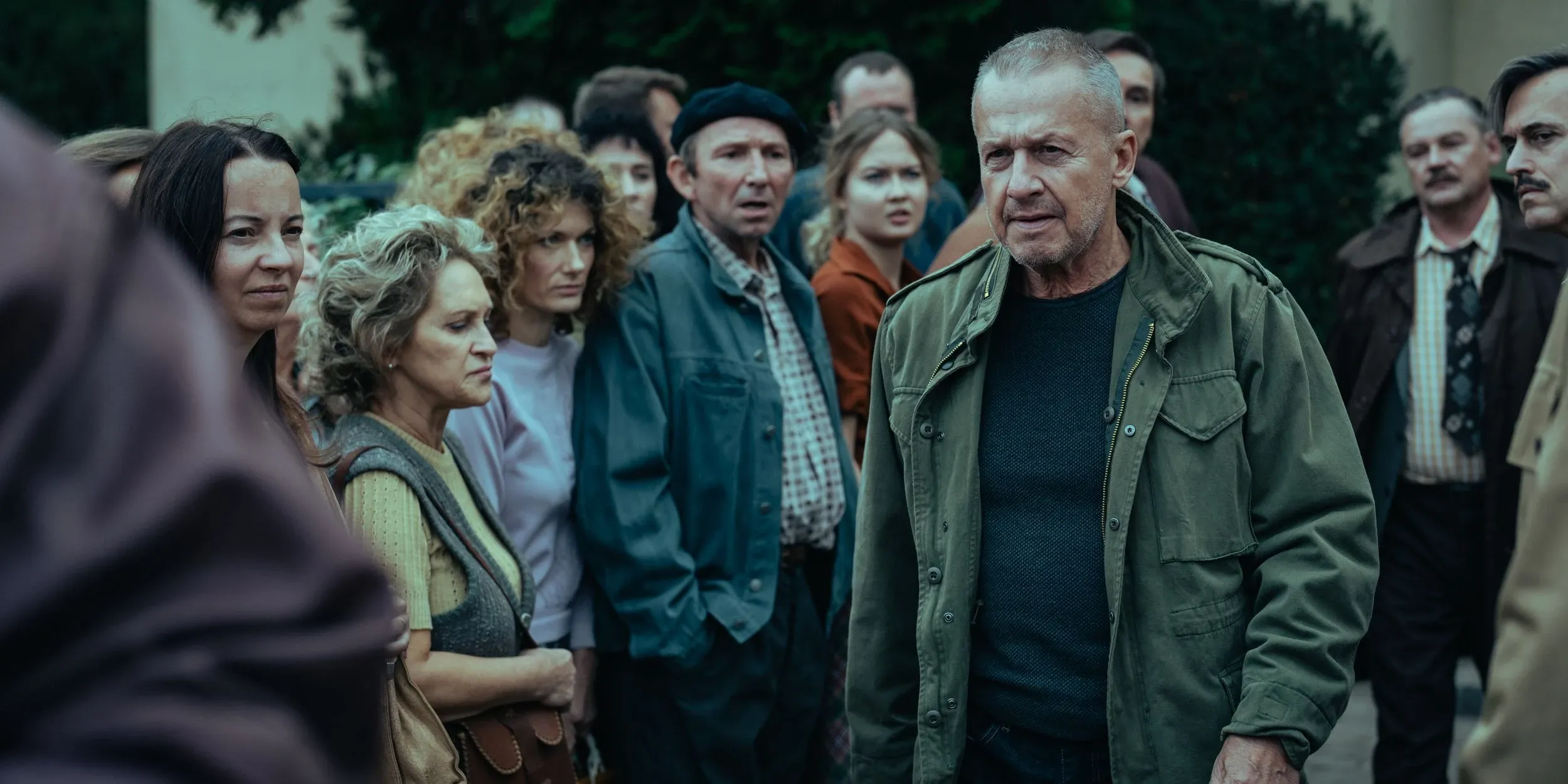
This narrative detour is not a brief aside; it consumes a significant portion of the film, pulling the dramatic center away from the existential crisis that gives the story its power. The secondary plot is a shallow distraction, failing to deepen our understanding of Bruno or to connect thematically to his primary purpose. It feels like a failure of nerve, an attempt to inject conventional drama into a story that was succeeding as something far more unconventional.
The result is a catastrophic loss of momentum. The film’s first half cultivates a potent atmosphere of suspense and melancholy, only to dissipate it. When the main plot finally reasserts itself, it does so with a frantic, desperate energy. The finale is a chaotic collision of events, a flurry of resolutions that depend on luck and happenstance. It feels like a retreat from the difficult questions the film initially had the courage to ask.
An Elegy in Sepia
In the wreckage of the film’s fractured structure, Bogusław Linda’s performance stands as a monolithic achievement. He gives Bruno a soul-deep weariness, a physical presence that communicates a lifetime of violence and regret with the barest of gestures. His face is the film’s true, unforgiving landscape. He is a dying star holding the entire system in his orbit.
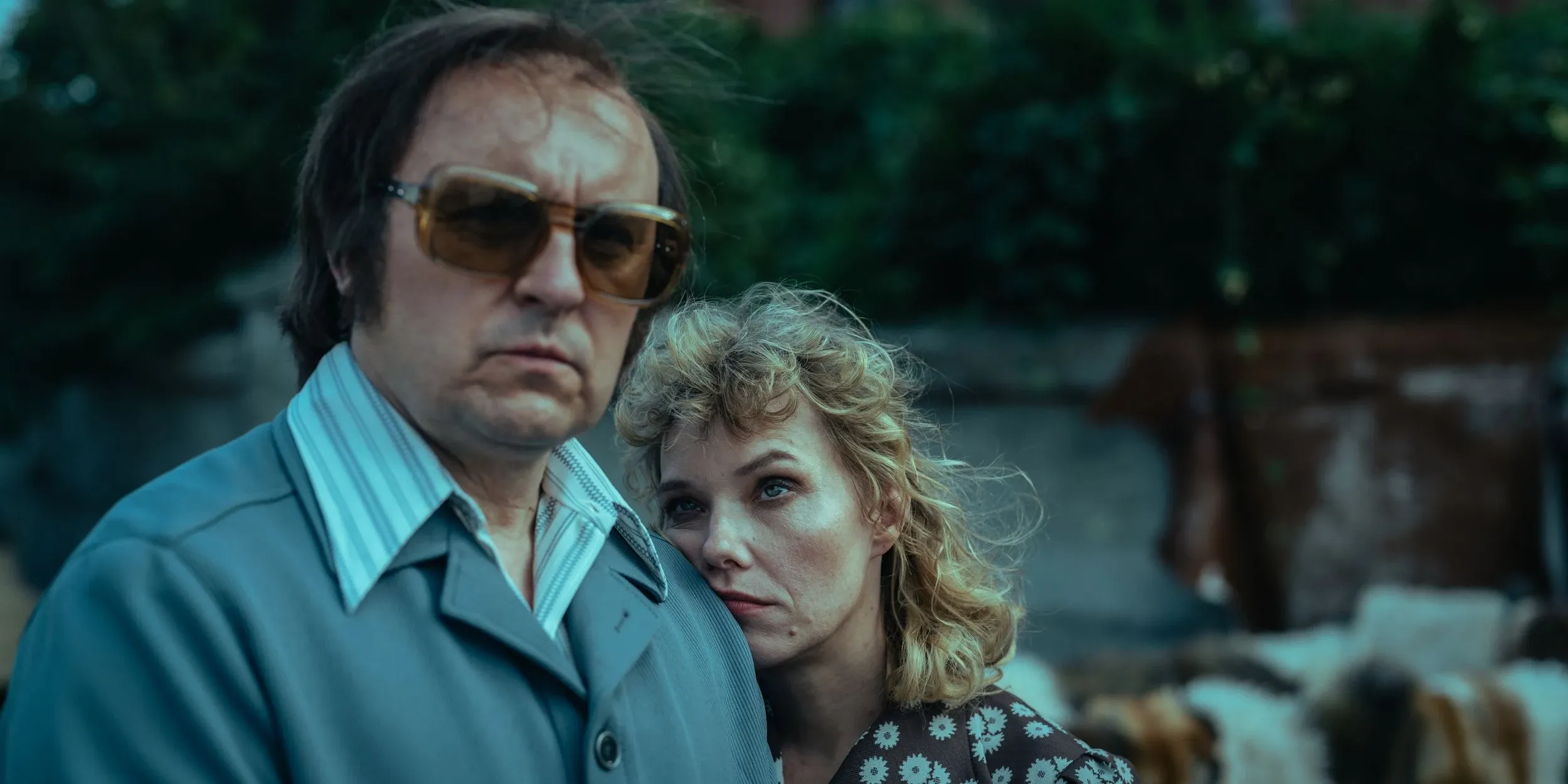
The agents sent to monitor him, played with a grimly comic energy by Ireneusz Czop and Dobromir Dymecki, serve as a perfect counterpoint. They are the functionaries of the machine, their cynical banter a glimpse into the banal absurdity of the oppressive state. The film itself is a ghost, an artifact from another era of cinema.
Its visual language, its somber pacing, and its mournful trumpet score all belong to the Polish thrillers of the 1990s. It is a work steeped in nostalgia, a final collaboration between a director and his iconic star, filled with echoes of their past work. It is an elegy, not just for a character, but for a certain kind of masculine, fatalistic filmmaking, a tribute to a world where everything, even despair, felt simpler.
Operation Pope is a dense and gripping Polish thriller inspired by true events, centered on the 1981 assassination attempt on Pope John Paul II. The film is directed and written by Władysław Pasikowski. It premiered in Poland on September 26, 2025, and follows Konstanty “Bruno” Brusicki (played by Bogusław Linda), a former sniper and intelligence agent, who is forced into a secret mission to cover up the plot and eliminate the assassin, Ali Agca. The film is a production of Wonder Films and explores themes of espionage and ruthless power struggles within the historical context of the Cold War. While its Polish theatrical release date is confirmed, information on where to watch it internationally is dependent on local distribution agreements.
Full Credits
Director: Władysław Pasikowski
Writers: Władysław Pasikowski
Producers and Executive Producers: Klaudiusz Frydrych, Inga Kruk, Ewa Jastrzębska
Cast: Bogusław Linda, Karolina Gruszka, Ireneusz Czop, Adam Woronowicz, Zbigniew Zamachowski, Dobromir Dymecki, Wojciech Zieliński
Director of Photography (Cinematographer): Maciej Lisiecki
The Review
Operation Pope
Operation Pope is a film of immense ambition, built around a truly monumental performance from Bogusław Linda. It reaches for the solemnity of a philosophical meditation on a violent life confronting its own quiet end. This profound potential is ultimately sabotaged by a fractured narrative, which wanders into a distracting and underdeveloped subplot that shatters the film's focus and pacing. What remains is a powerful portrait of a man, haunting and unforgettable, adrift in the wreckage of a structurally broken film.
PROS
- A commanding and deeply felt central performance by Bogusław Linda.
- A potent, contemplative atmosphere that is powerfully established in the first half.
- A compelling, existential exploration of mortality and violence.
- Effective supporting characters who provide moments of dark, bureaucratic humor.
CONS
- A fractured narrative structure that loses the central thread of the story.
- A distracting and underdeveloped subplot that feels disconnected from the main plot.
- Significant pacing problems leading to a chaotic and unsatisfying finale.
- An outdated cinematic style and score that can feel anachronistic.