




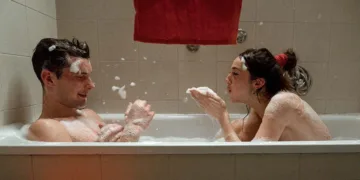















The film opens not in the quiet of a studio but in the chaos of a Berlin nightclub. Strobing lights cut across a scene of performative hedonism, a place where Kate Moss, the empress of cool, finds herself momentarily barred from entry. Her solution is swift and theatrical, a display of the casual audacity that defined her public image. Then, the scene cuts.
The noise evaporates, replaced by the profound silence of a London studio, sunlight filtering through dust motes onto paint-flecked floorboards. This jarring transition is the film’s core promise: an exploration of the space between these two extremes. Moss and Freud chronicles the nine months the supermodel spent sitting for the painter Lucian Freud, a period that culminated in his stark Naked Portrait 2002.
The story seeks to chart the unlikely territory between two fiercely private people, one defined by the fleeting image and the other by the permanence of the canvas. It is a fascinating premise, suggesting a collision of worlds where vanity and vulnerability might find common ground.
Figures Without Shadow
The film’s portraits of its subjects remain curiously underdeveloped, rendered with a frustrating lack of depth. Ellie Bamber effectively channels the cadence of Moss’s speech and the guarded, almost brittle physicality she projected. Her performance is one of studied weariness; she portrays a young woman encased in fame, seeking an escape hatch through the demanding stillness of the artist’s studio.
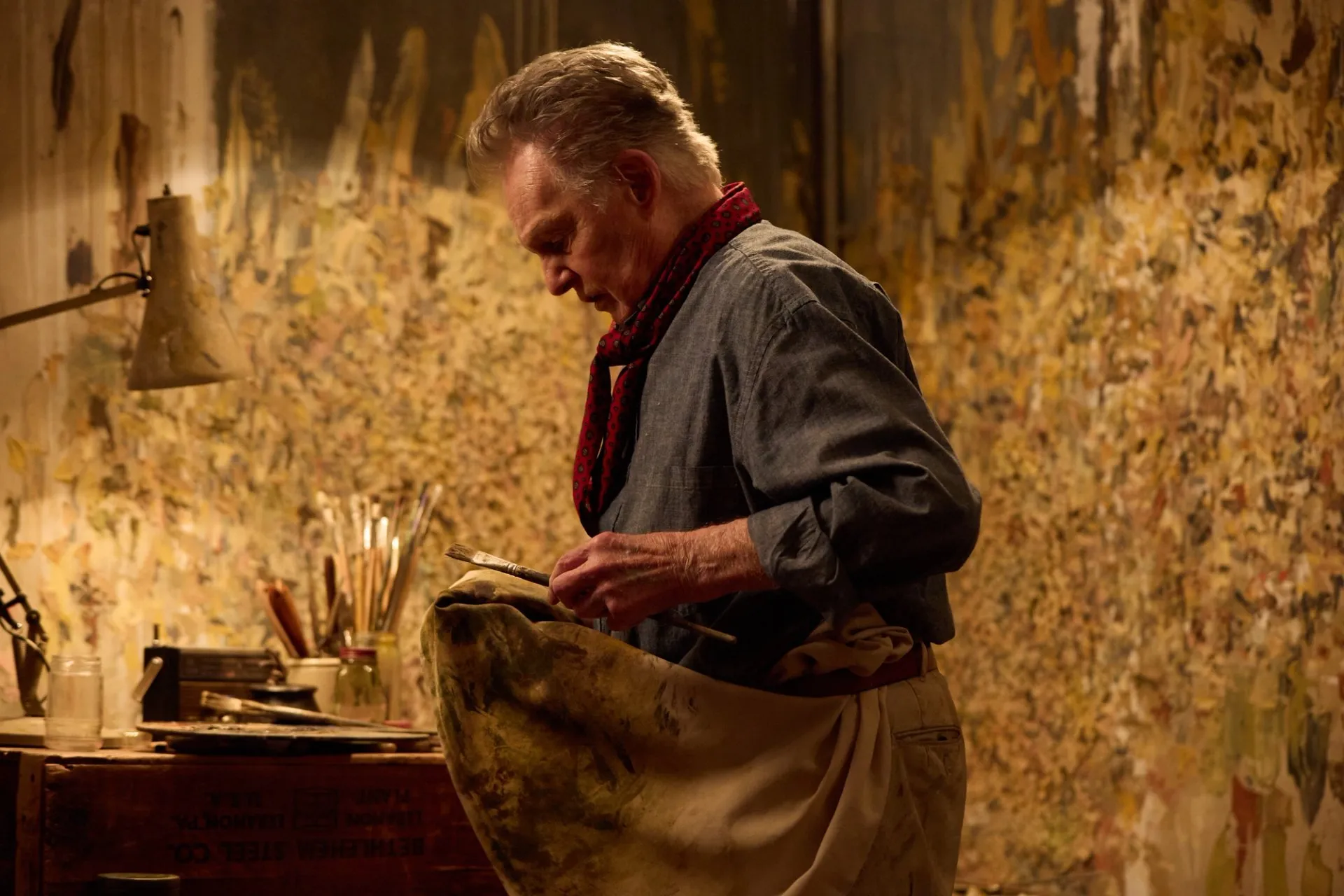
The decision to pose nude is framed as her ultimate act of defiance, a shedding of the commercial skin to find something more authentic underneath. Her journey is one of wanting to be truly seen. Yet, the characterization rarely moves beyond this concept. Opposite her, Sir Derek Jacobi portrays Lucian Freud not as the fearsome, psychologically piercing artist of legend, but as a softened, almost cuddly eccentric.
His Freud is a man of quaint habits and grandfatherly musings, his notorious intensity all but erased. This choice is a critical flaw, for it removes any sense of risk from their interactions. Without Freud’s formidable and even dangerous presence, Moss’s act of vulnerability feels less profound, and the entire dynamic loses its dramatic tension.
Their relationship, meant to be the film’s anchor, never feels fully formed. It is built on exchanges that sound less like human conversation and more like scripted pronouncements, such as when Moss neatly summarizes her identity as both artist and muse. A brief, shared dance at a party hints at a genuine, spontaneous connection, but the moment is fleeting, an island in a sea of stilted, expository monologues.
A Polished Surface
The film’s aesthetic choices consistently undermine its dramatic potential, wrapping a complex subject in a polished, unchallenging package. The screenplay, by director James Lucas, is the most significant issue, relying on dialogue that is painfully direct. Characters do not have conversations so much as they announce their inner states, trading biographical details and thematic statements as if reading from notes.
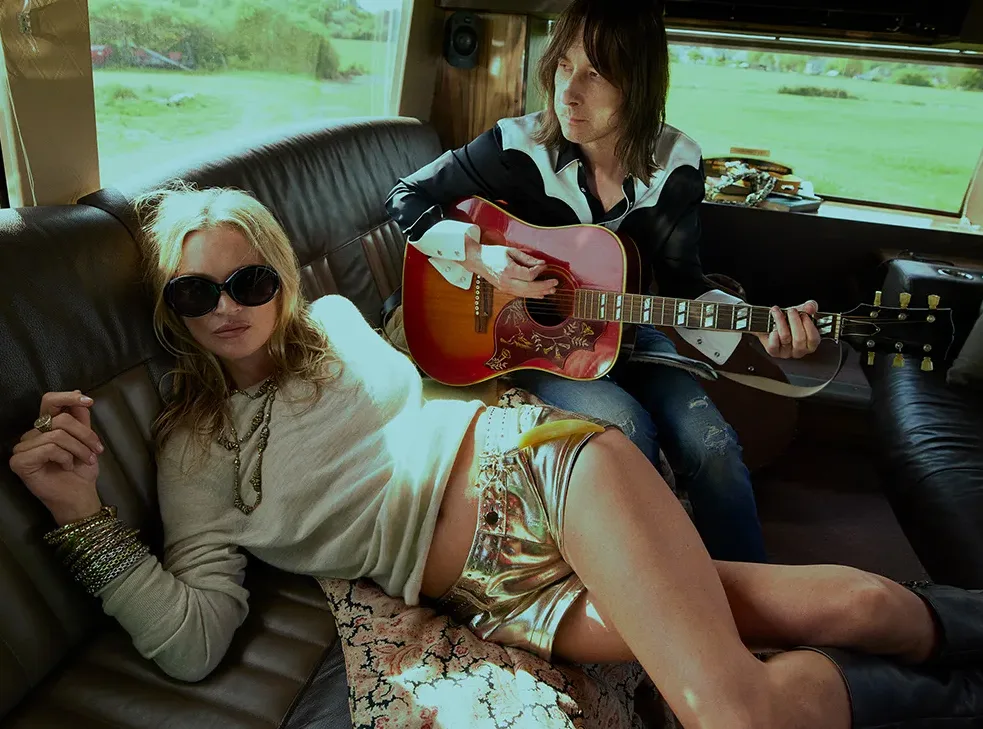
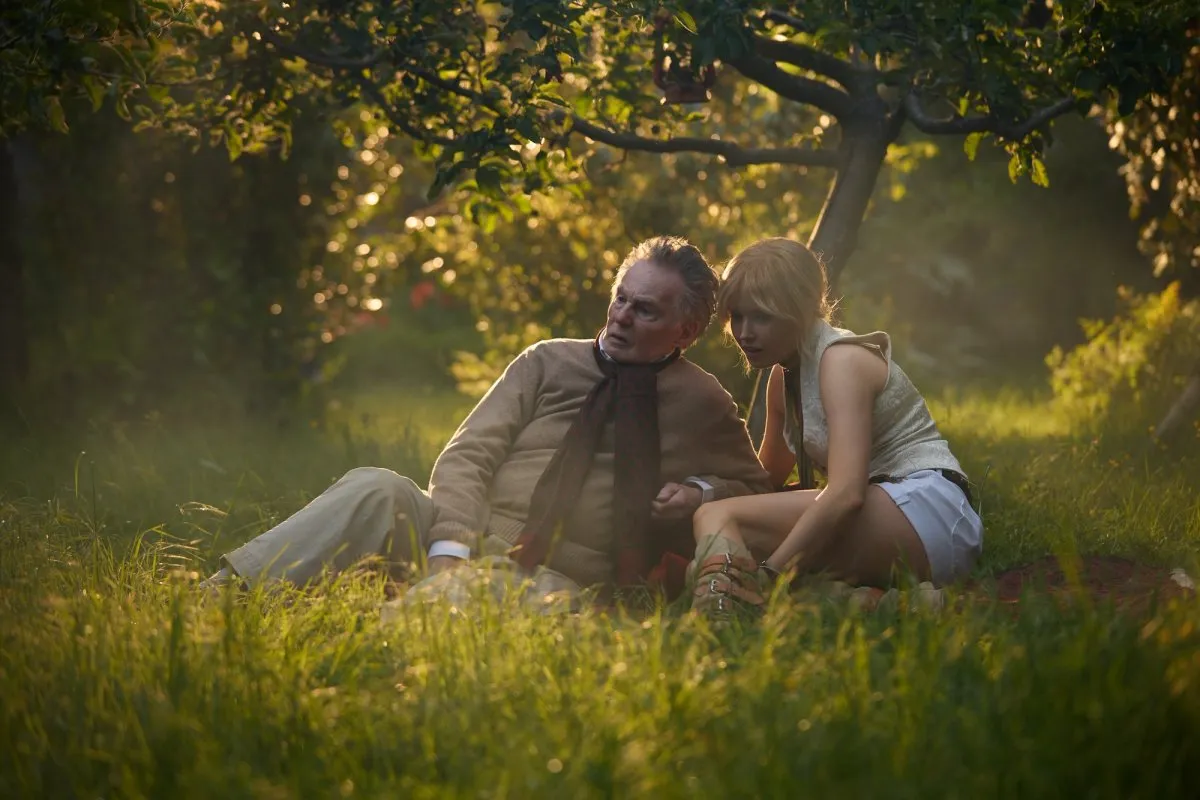
This leaves them feeling like mouthpieces for research rather than living, breathing people. The direction attempts a certain metropolitan swagger, but the narrative feels episodic and sluggish. It drifts between disconnected vignettes—a clumsy scene in the Berlin club, a hazy opium session in a sun-dappled garden—that fail to build into a cohesive whole.
These scenes feel like detours designed to add flavor but instead distract from the central drama of the studio. Most puzzling is the film’s lack of interest in the actual process of painting. The slow, methodical, and often grueling work of creating a portrait is glossed over. The film’s visual language is similarly at odds with its subject.
Freud’s own canvases are famous for their visceral texture, their thick impasto and unflinching depiction of flesh. The cinematography here is the exact opposite: clean, flat, and safe, with a glossy sheen that feels more appropriate for a prestige television drama. The detailed period costumes are immaculate, but the overall atmosphere lacks the grit and turpentine-scented reality of an artist’s workspace.
The Varnish of Legacy
Ultimately, Moss and Freud feels less like an inquiry into the creative process and more like an exercise in reputation management. The narrative insists on positioning Moss as a co-creator, an artist whose contribution to the portrait is equal to Freud’s. This framing, undoubtedly influenced by Moss’s credit as an executive producer, transforms the story into a piece of personal branding, a deliberate effort to solidify her status beyond that of a passive muse.
The film’s greatest obstacle, however, is the looming presence of the artwork itself. Freud’s painting is a masterpiece of uncompromising physicality and brutal honesty. It is a difficult, challenging, and profoundly human work. The film is its antithesis: a polite, sentimental, and emotionally cautious story that avoids any difficult truths.
It smooths every rough edge, presenting a cozy fantasy of artistic communion that feels entirely synthetic. It chooses comfort over confrontation, anecdote over analysis. By refusing to engage with the complexity and even the cruelty inherent in Freud’s gaze, the movie becomes a superficial treatment of a fascinating encounter. It is a story about the creation of a masterpiece that possesses none of the masterpiece’s courage, candor, or confrontational power.
Moss & Freud is a biographical drama that chronicles the unexpected friendship and artistic collaboration between supermodel Kate Moss and renowned painter Lucian Freud, specifically focusing on the nine-month period in 2002 when Moss, pregnant with her daughter, sat nude for Freud’s portrait, “Naked Portrait 2002.” The film, written and directed by James Lucas (an Oscar winner for the short film The Phone Call), premiered at film festivals such as the BFI London Film Festival, and had a general release in some territories around October 10, 2025. As a newer film, streaming availability in the United States has not been widely announced, but potential platforms include digital rental/purchase services and eventual streaming deals.
Full Credits
Director: James Lucas
Writers: James Lucas
Producers and Executive Producers: Matthew Metcalfe, Norman Merry, Maile Daugherty, Kate Moss
Cast: Ellie Bamber, Derek Jacobi, Will Tudor, Jasmin Blackborow, Ross Ringwood, Lauren O’Hara, Winston Hayles, Amber Lily Butterworth
Director of Photography (Cinematographer): Maria Ines Manchego
Editors: Nick Carew
Composer: Karl Sölve Steven
The Review
Moss and Freud
Moss and Freud takes a fascinating real-life encounter and reduces it to a polished, sentimental anecdote. With a sanitized script that smooths every rough edge and characterizations that lack psychological depth, the film fails to generate any meaningful conflict. It is a visually clean but dramatically inert work that cannot begin to capture the raw, confrontational power of the very painting it purports to explore. The result is a superficial portrait that feels more like legacy management than a serious inquiry into art and celebrity.
PROS
- An intriguing premise centered on the meeting of two cultural icons.
- Meticulous attention to period detail in costumes and production design.
- Ellie Bamber successfully captures some of Kate Moss’s specific mannerisms and vocal patterns.
CONS
- An overwritten screenplay with artificial, expository dialogue.
- A conflict-free narrative that lacks dramatic tension and psychological depth.
- The sanitized portrayal of Lucian Freud undermines the story's potential.
- Flat, clean cinematography that feels at odds with the gritty subject matter.
- A sluggish, disjointed pace that fails to build momentum.