



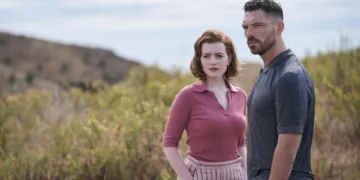














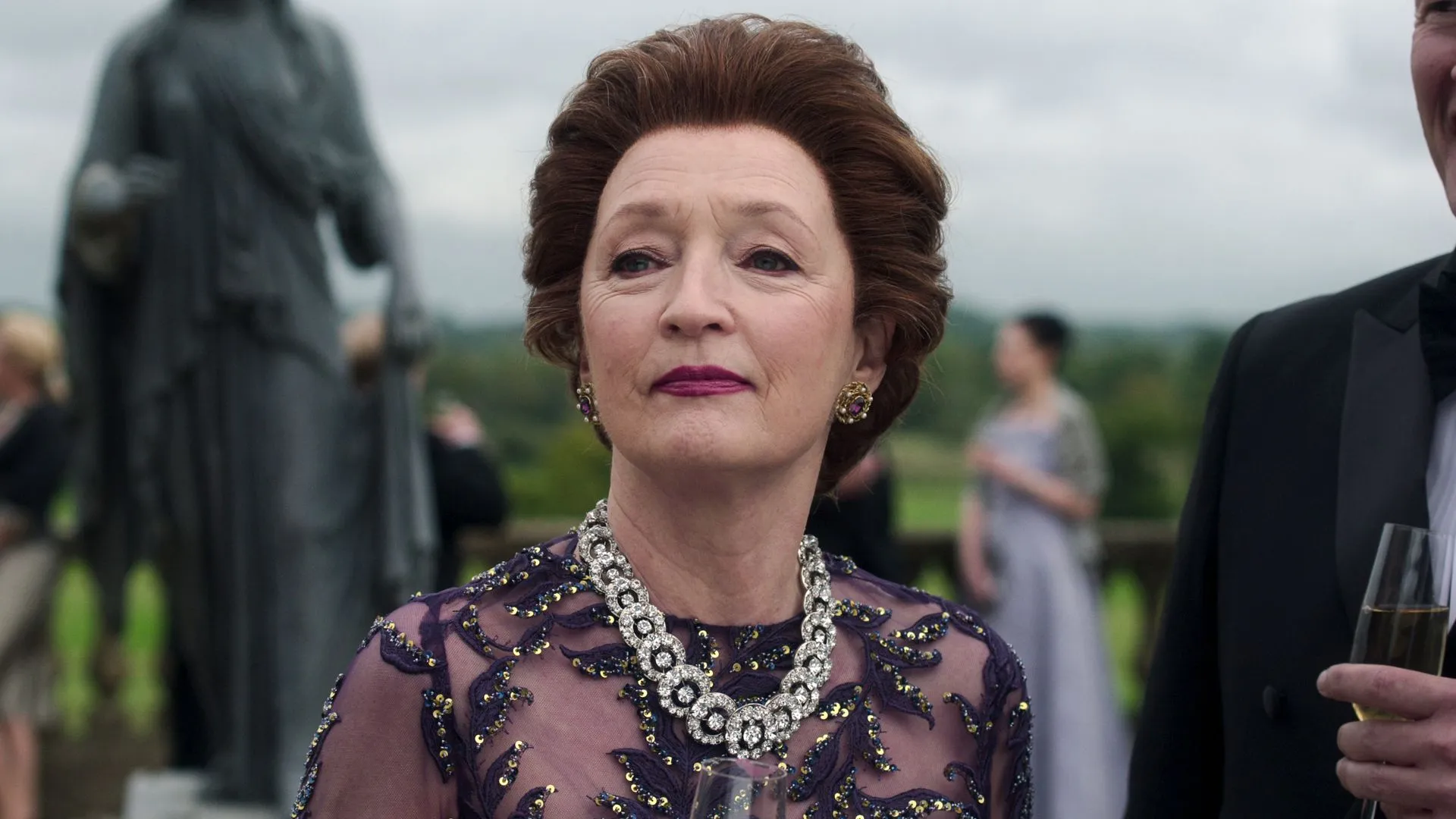
Winter of the Crow plunges the viewer into the frigid paranoia of a Cold War thriller. The film introduces Dr. Joan Andrews, a distinguished British professor of psychiatry played by Lesley Manville. She arrives in Warsaw in the deep winter of December 1981, intending to deliver a career-defining lecture.
Her arrival, however, coincides with a moment of extreme political tension, as Poland sits on the precipice of martial law. The story’s initial premise is one of escalating disruption; a carefully planned academic trip quickly unravels into a disorienting struggle for survival.
This setup, where an outsider is caught in the gears of a nation’s internal crisis, echoes the narrative structure of many films from Indian parallel cinema, which often used a visitor’s perspective to expose the fractures within a society. The film immediately establishes a sense of foreboding, turning a professional visit into a nightmare.
The Architecture of Paranoia
The film’s most potent quality is its suffocating atmosphere, a world rendered in shades of grey and shadow. Director Kasia Adamik and cinematographer Tomasz Naumiuk create a Warsaw that is itself a hostile entity, a physical manifestation of the state’s oppressive ideology. The cinematography is relentlessly cold and desaturated, with a soupy, almost monochromatic texture that makes the air feel thick with dread.
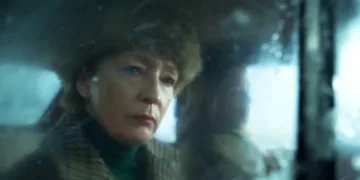
The camera work often induces a powerful sense of claustrophobia, shooting through fogged up car windows that smudge faces into ghostly abstractions or using tight frames that refuse to let the viewer escape Joan’s immediate, terrifying reality. This visual approach is powerfully complemented by a production design that emphasizes the city’s sterile, imposing brutalist architecture.
These concrete structures feel less like buildings and more like parts of a vast, inescapable prison, their uniformity mirroring the regime’s attempts to crush individuality. The bleakness of the slushy, unwelcoming streets is matched only by the clammy, poorly lit interiors of apartments and offices.
This technique of using an urban landscape as a mirror for systemic oppression is reminiscent of the gritty realism in Indian New Wave films. In Govind Nihalani’s Ardh Satya, the dark alleys and corrupt halls of Mumbai become a physical representation of a system that grinds down its inhabitants, a clear parallel to Adamik’s use of Warsaw.
The symbolism of crows, a visual pun on the secret police’s acronym “WRON” (close to the Polish word for crow, “wrona”), and Joan’s recurring nightmare of a concrete labyrinth further externalize her psychological entrapment.
From Observation to Survival
At the center of this bleak landscape is Lesley Manville’s formidable performance as Dr. Joan Andrews. She first appears as a character as bright and brittle as an icicle; intellectually proud, easily irritated, and completely detached from the political turmoil surrounding her. Her initial concerns are professional and personal: a hijacked lecture, a lost suitcase.
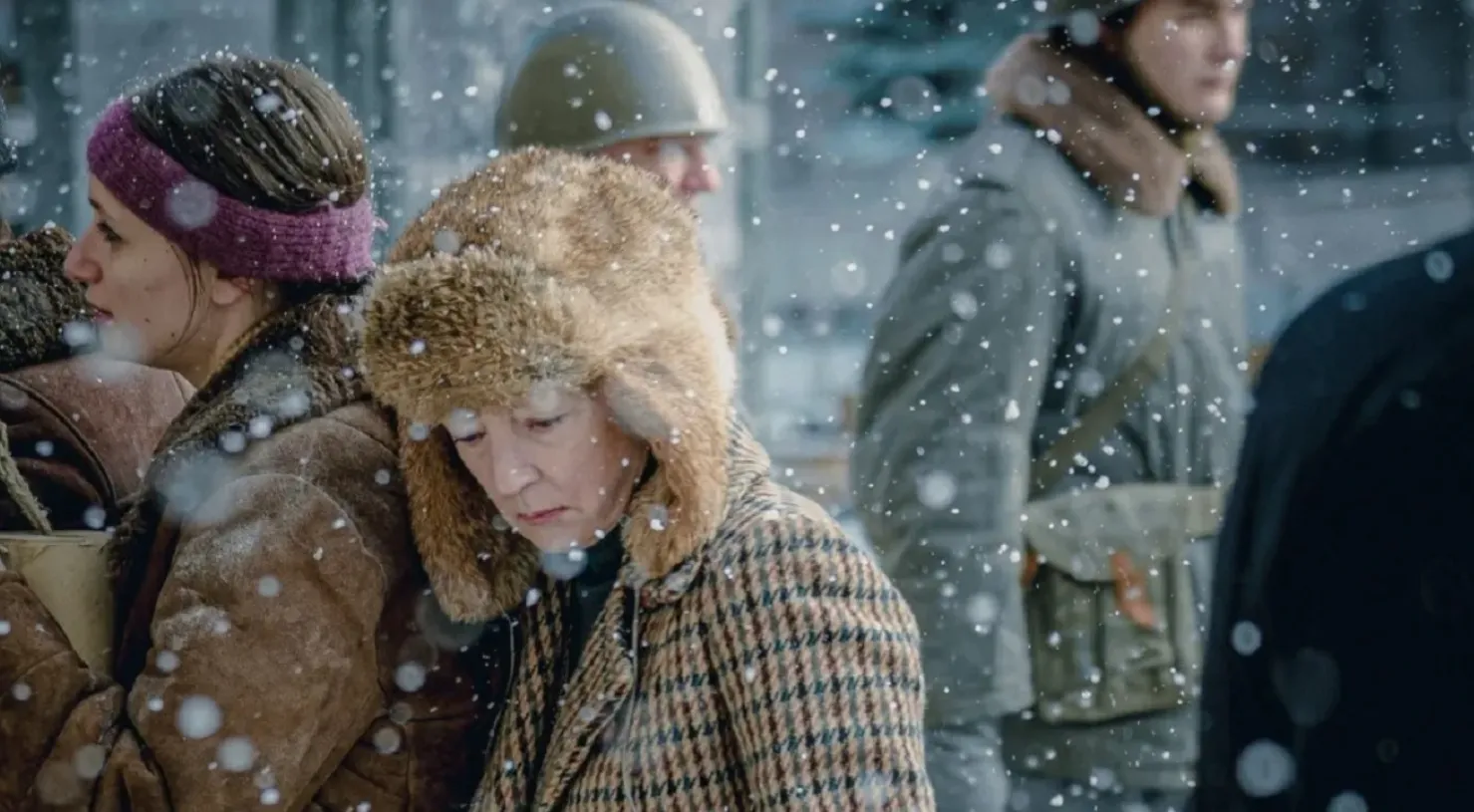
The film meticulously charts her stark transformation from this frosty observer into a desperate, resourceful survivor. Manville communicates this internal shift with remarkable subtlety, her confident posture slowly giving way to the hunched exhaustion and darting glances of a woman hunted. There is a deep, painful irony in her predicament.
As a psychiatrist, she has built a career on analyzing the human mind and creating order from mental chaos, yet she is thrown into a world of pure political chaos where her academic skills are useless against brute force. Her reliance on a Polaroid camera, a tool for capturing and freezing moments, can be seen as a desperate attempt to impose understanding on a situation that defies it.
This journey from passivity to action is a universal theme, seen in characters from Satyajit Ray’s films who are gradually awakened to the harsh realities outside their sheltered lives. Zofia Wichłacz provides a strong counterpoint as Alina, a student activist whose mixture of fragility and fierce conviction represents a generation fighting for its future, while Tom Burke’s brief appearance as an ambiguous British ambassador complicates her path to safety with the cold calculus of international diplomacy.
A Tense but Uneven Escape
As a thriller, Winter of the Crow succeeds by grounding its suspense in plausible human vulnerability rather than explosive set pieces. The cat-and-mouse game between Joan and the secret police is consistently tense because she is an ordinary, competent woman, not a trained operative.
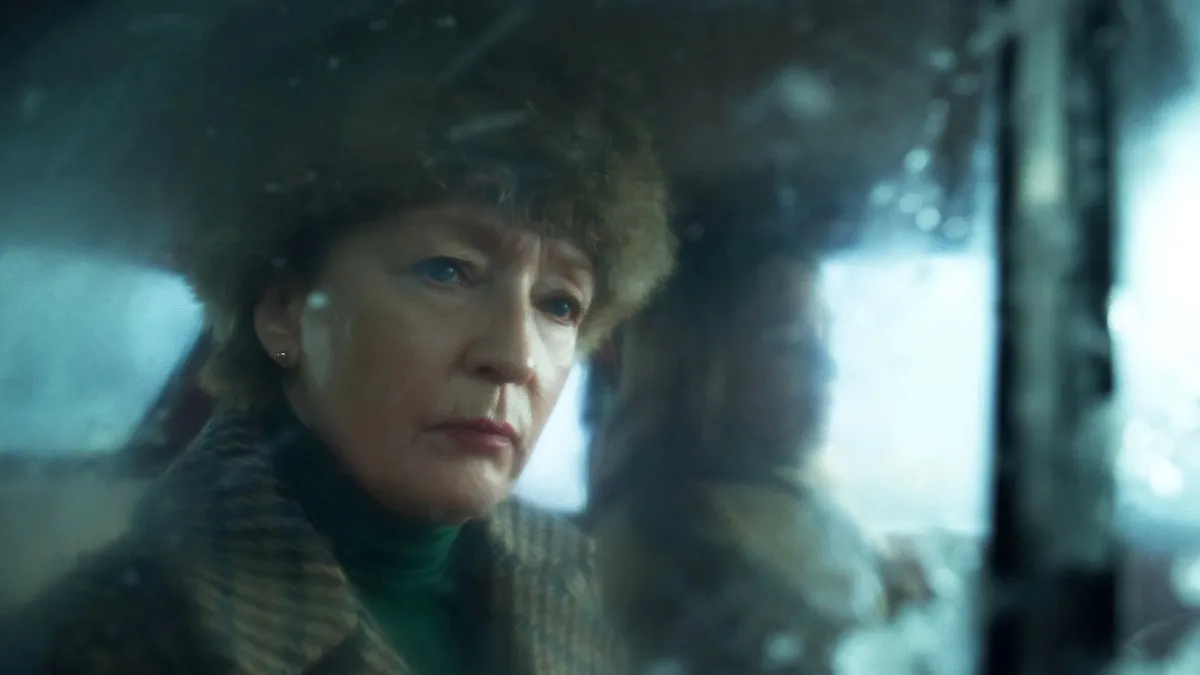
The action sequences, like a claustrophobic car chase, derive their power from hyper-involving camera angles and Joan’s terrified reactions, not from speed or spectacular crashes. The director cultivates a pervasive paranoia where any flickering light in a window or a sudden knock on a door feels like an imminent threat. The narrative structure, however, shows some strain and prevents the film from maintaining a flawless grip.
The initial setup feels slightly rushed, leaving some early character motivations unclear. The momentum also flags in the middle sections, with quiet interludes that linger a touch too long and momentarily dissipate the carefully built tension.
Certain plot mechanics, particularly the Polaroid camera, begin as an interesting character detail but evolve into a slightly overused device that tests credulity as the story escalates. The film regains its footing for a nerve-shredding finale, a quiet but rousing airport sequence that provides a fitting crescendo to Joan’s character arc. The film’s greatest strength is its commitment to this character-driven story within a genre framework, making it a thoughtful political thriller instead of a simple action film.
“Winter of the Crow” premiered at the Toronto International Film Festival on September 6, 2025. It is scheduled to be the closing film of the San Sebastián International Film Festival. A wider release date has not yet been announced.
Full Credits
Director: Kasia Adamik
Writers: Sandra Buchta, Kasia Adamik, Lucinda Coxon
Producers and Executive Producers: Olga Chajdas, Stanisław Dziedzic, Katarzyna Ozga, Nicolas Steil, Samantha Taylor, Agnieszka Holland
Cast: Lesley Manville, Zofia Wichlacz, Andrzej Konopka, Sascha Ley, Tom Burke, Magdalena Smalara, Miron Jagniewski, Jakub Guszkowski, Rhianne Barreto, Ali Cook, Joanna Hole, Julian Nest, Denis Simonetta, Denis Jousselin, Arron Long, Janina Rachon, Danuta Piszek
Director of Photography (Cinematographer): Tomasz Naumiuk
Editors: Andonis Trattos
Composer: Emre Sevindik
The Review
Winter of the Crow
Winter of the Crow is a potent and atmospheric Cold War thriller, anchored by a formidable lead performance from Lesley Manville. Director Kasia Adamik masterfully crafts a paranoid world of brutalist architecture and grey despair, creating palpable tension. While the narrative occasionally falters with uneven pacing and a few contrived plot points, the film remains a gripping study of an ordinary woman’s transformation under extraordinary pressure. It is a chilling, character-focused journey into a dark chapter of history.
PROS
- Lesley Manville delivers a commanding and nuanced central performance.
- The suffocating, tense atmosphere is expertly crafted through cinematography and production design.
- Suspense is grounded in plausible character psychology rather than spectacle.
- Effectively immerses the viewer in a specific, dark historical moment.
CONS
- The narrative pacing is uneven, with a noticeable sag in the middle section.
- Certain plot devices, particularly the use of the Polaroid camera, test credibility.
- The film's initial setup feels slightly rushed.