












Some films feel manufactured on an assembly line, every digital seam polished to an invisible sheen. Others feel built, assembled by hand with passion, glue, and a gleeful disregard for subtlety. Steven Kostanski’s Deathstalker is a proud member of the second camp, a messy, glorious construction of latex and ambition.
It throws us straight into the muck of its world with a hero who is anything but. Deathstalker is a scavenger, a warrior whose moral compass points only toward the heaviest coin purse. After cutting down a horde of undead soldiers, his first instinct is to loot the dying prince he just “saved.” This cynical transaction sets the tone perfectly.
His prize, a strange amulet, proves to be more trouble than it’s worth. It’s a cursed artifact that binds itself to him, attracting the attention of the dreaded necromancer Nekromemnon and his monstrous legions. To free himself, Deathstalker is forced into a reluctant quest, accompanied by the cowardly goblin sorcerer Doodad and a resourceful thief named Brisbayne. Their journey is not one of noble purpose, but of desperate, chaotic survival.
A Symphony of Slime and Latex
The film’s soul resides in its absolute devotion to handmade creature effects. Its aesthetic is a tangible celebration of latex masks, rubber suits, and intricate puppetry. You can almost feel the sticky texture of the slime and smell the workshop air in every frame. This commitment gives the monsters a weighty, physical presence that digital creations often lack.
Kostanski populates the land of Abraxion with a memorable bestiary, from flapping, bat-winged eyeball demons to squelching swamp golems and armor-plated pig men. Each creature feels like a lost artifact from a bygone era of filmmaking, brought back to life with renewed energy. This production intentionally embraces a rough, low-budget look as a core stylistic choice.
The effects are not meant to achieve seamless realism; they aim to capture the spirit of Roger Corman’s inventive productions. There is an immense charm in seeing the “seams.” When a hulking, two-faced troll lurches onto the screen, you can practically sense the puppeteers within, giving the beast a clumsy, endearing menace.
A fight between two skeletons, animated with loving, slightly jerky stop-motion, is a direct homage to the pioneering work of Ray Harryhausen. Kostanski’s approach isn’t about hiding the budget; it’s about showcasing how rich imagination can make an inexpensive aesthetic feel spectacular. This philosophy extends to the film’s use of hyper-violent, cartoonish gore, which functions as a form of visceral comedy. The bloodshed is a punchline delivered with a firehose.
Heads don’t just get cut off; they explode like overripe melons. Bodies are sliced cleanly in half with a wet schling, and geysers of fake blood erupt with theatrical intensity. In one standout moment, a disemboweled ogre resourcefully uses its own intestines as a weapon. The violence is consistently outlandish, designed to elicit a shocked laugh rather than a grimace, landing the film squarely in the proud tradition of splatter-comedy.
Forging a World from Chaos and Heavy Metal
Deathstalker excels at building a vast world through small, telling details. The most brilliant example is a simple travelling shot: as our heroes traverse a misty forest, the background reveals the silhouettes of two colossal monsters locked in a titanic struggle.

The protagonists don’t even acknowledge them. This single, throwaway visual does more to establish the scale and peril of Abraxion than pages of exposition ever could. It paints a picture of a world so saturated with epic events that a kaiju battle is just part of the scenery. The directorial tone masterfully balances on a sword’s edge between affectionate parody and sincere celebration. It mocks the genre’s familiar tropes while clearly adoring them.
This energy is fueled by the pounding, guitar-driven musical score, which features the legendary Slash. The music is not mere background noise; it is the film’s frantic pulse. It drives the action, dictates the rhythm of the combat, and gives every scene a headbanging, heavy-metal swagger. The film’s presentation, however, has some notable inconsistencies.
The production design for locations like the Abraxeon castle is wonderfully imaginative, feeling both ancient and bizarre. This makes the monotonous, muddy-brown color grading used for all the Dreadite scenes feel like a misstep. The bleak tint flattens the image, obscuring the fantastic detail of the very creature costumes the film wants to showcase. Similarly, the fight choreography is uneven. Early battles feel impactful and creative, but many later sword fights become generic exchanges, prioritizing the gory payoff of a final blow over the tension and skill of the duel itself.
A Trio of Scoundrels with Surprising Heart
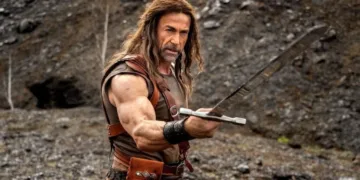
Daniel Bernhardt’s performance as the titular warrior is the stoic anchor in a sea of madness. He portrays Deathstalker with a deadpan wit and an imposing physical presence, perfectly suited for the film’s tone. Yet, beneath the cynical, battle-hardened exterior, the script allows for moments of unexpected depth.

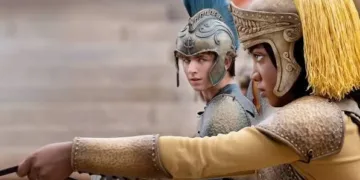
A scene where the only way to defeat a monster is to give it a heartfelt hug becomes a surprisingly touching moment of vulnerability for a man who is clearly starved of any positive connection. It’s a small beat that adds a layer of humanity to the character, making his journey more engaging. His companions are equally essential to the film’s success. Patton Oswalt’s frantic, high-pitched voice work gives Doodad a constant comedic anxiety, while Christina Orjalo’s Brisbayne is a charismatic scene-stealer, a thief whose flexible morals and sharp tongue make her instantly likable.
The chemistry between the three leads is the film’s emotional core. They bicker and trade insults like a dysfunctional family, slowly forging a genuine, platonic bond. The film wisely avoids a forced romance, allowing their connection to grow into something more akin to a sibling dynamic. The plot itself is the film’s most conventional element.
It’s a standard fantasy quest: find the person, get the thing, defeat the bad guy. This simple, almost RPG-like structure is not a weakness. It’s a deliberate choice, providing a sturdy, familiar framework that allows the audience to focus on what truly matters: the wild creature designs, the creative gore, and the charming character interactions. The journey is far more important than the destination.
A Bloody, Cheesy Love Letter to an Era
As a reboot, Deathstalker is a resounding success because it understands the spirit of its source material, not just the brand name. It lovingly preserves the core appeal of the original—swords, sorcery, and a rebellious attitude—while intelligently jettisoning the dated and sleazy exploitation elements that have aged poorly. Kostanski’s version replaces misogyny with monster craft and heartfelt humor, celebrating the genre’s potential for pure, absurd fun.

This is a film made for a very specific audience, and it caters to them beautifully. It is a perfect midnight movie, crafted for enthusiasts of practical effects, B-movie aesthetics, and anyone with a deep-seated nostalgia for the video store era of fantasy films. It has the infectious energy of a cult classic you’ve just discovered, creating an experience that feels communal and joyous.
It asks the audience not just to suspend their disbelief, but to actively participate in the fun of its own creation. It succeeds on its own gloriously messy, blood-soaked terms, delivering a sincere and potent mixture of action, gore, and comedy. It is a confident and loving tribute to the genre, achieving exactly what it set out to do.
Deathstalker is a 2025 sword and sorcery fantasy film directed and written by Steven Kostanski, serving as a remake of the 1983 film of the same name. The movie stars Daniel Bernhardt as the titular warrior, alongside Patton Oswalt, Christina Orjalo, and Nina Bergman. The film premiered at the 78th Locarno Film Festival on August 15, 2025, and was subsequently released in the United States by Shout! Studios on October 10, 2025. You can watch it in theaters or through its distributor, Shout! Studios. The story follows the warrior Deathstalker as he navigates the Kingdom of Abraxeon, which is under siege by dark forces, requiring him to break a curse and confront rising evil.
Full Credits
Director: Steven Kostanski
Writers: Steven Kostanski
Producers and Executive Producers: Pasha Patriki, Michael Paszt, Avi Federgreen, James Fler, Peter Kuplowsky, Andrew Hunt, Slash
Cast: Daniel Bernhardt, Patton Oswalt, Christina Orjalo, Paul Lazenby, Nina Bergman, Laurie Field
Director of Photography (Cinematographer): Andrew Appelle
Editors: Robert Hyland
Composer: Blitz//Berlin
The Review
Deathstalker
Deathstalker is a triumphant celebration of B-movie mayhem. While its narrative is as thin as a goblin's patience, its unapologetic commitment to practical effects, inventive gore, and heartfelt character dynamics makes it an absolute joy. Steven Kostanski has crafted a loving, slime-soaked tribute to 80s fantasy that is wildly entertaining for those who appreciate its handcrafted charm. It's a film with a massive heart beating inside a rubber monster suit.
PROS
- A masterful and joyous use of practical, handmade creature effects.
- Inventive and comedic gore that is consistently entertaining.
- Charming lead characters with wonderful, platonic chemistry.
- Clever world-building that suggests a larger, chaotic universe.
- A confident, affectionate tone that perfectly captures the B-movie spirit.
CONS
- The plot is a simple and generic fantasy quest.
- Inconsistent cinematography, with some scenes looking overly dark and muddy.
- Fight choreography becomes repetitive in the second half.