

























![Kingdom Hearts Collection [I-III] Review](https://gazettely.com/wp-content/uploads/2026/10/Kingdom-Hearts-Collection-I-III-1-360x180.webp "Kingdom Hearts Collection [I-III] Review: KHII Holds Steady as Newer Entries Fluctuate 37")




In many cultures, great value is placed on finding one’s purpose, a singular path to be perfected through discipline. The Japanese concept of ikigai, or a reason for being, speaks to this pursuit. Kenji Iwaisawa’s animated feature 100 Meters takes this cultural ideal and places it under immense, painful pressure. The film asks what happens when that reason for being is confined to the ten seconds it takes to sprint down a track.
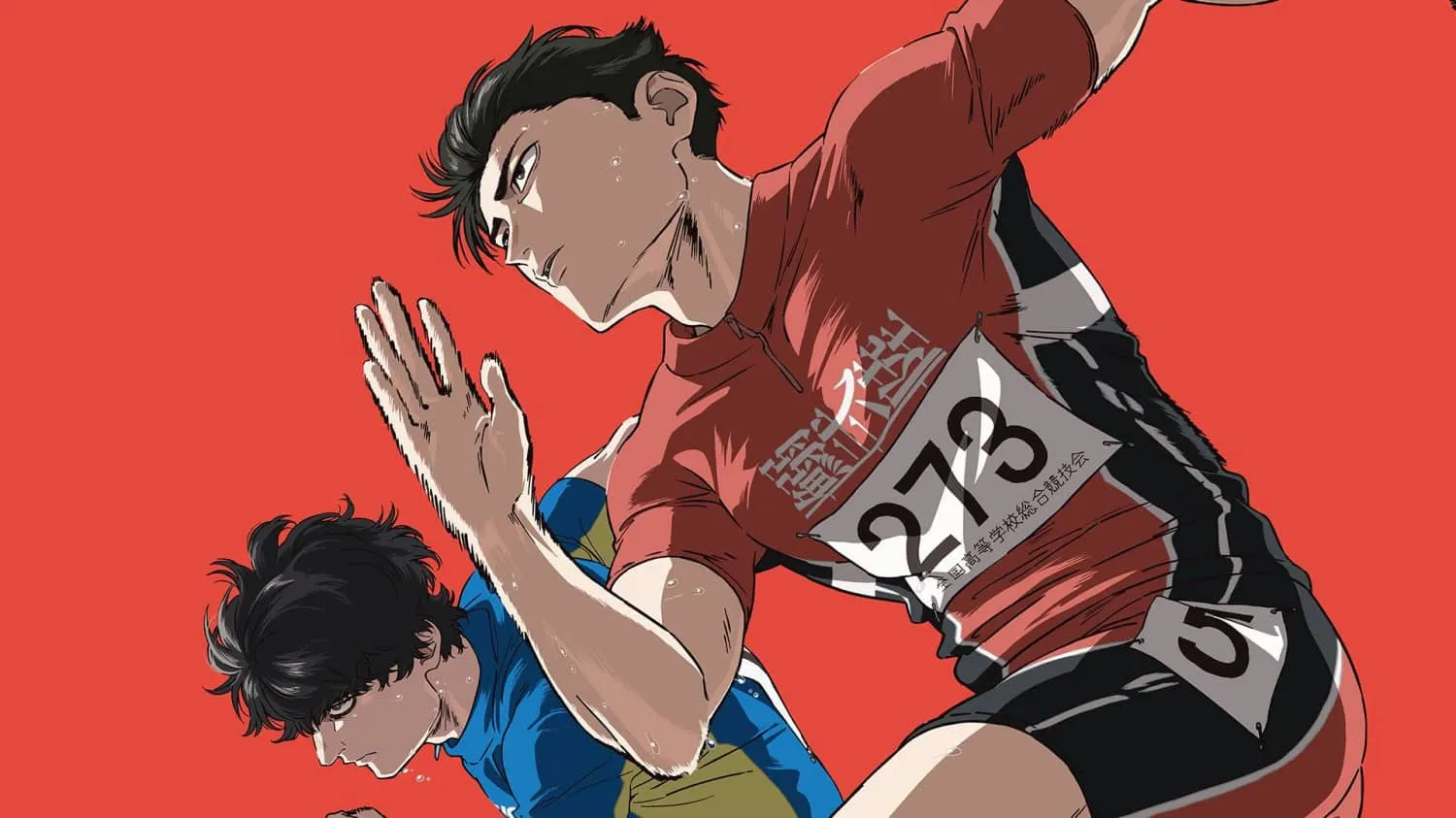
What is the human cost of a purpose so fleeting, so dependent on the body’s peak performance? The story presents the 100-meter dash not as a sport, but as an existential arena. It is a space where lives are defined and identities are shattered. This is seen through the film’s two central runners: Togashi, an athlete born with seemingly perfect talent, and Komiya, who runs with a desperate, all-consuming drive.
Two Paths, One Obsession
Togashi is the embodiment of natural talent, a golden boy whose flawless form earns him constant admiration. His public persona is calm and collected, a model athlete. Yet this effortlessness is a curse. His identity is built on a foundation of external praise rather than internal passion, making his sense of self dangerously fragile.
His movements, while perfect, have a robotic quality, lacking the spark of human struggle. This hollowness consumes him over time, leading to a devastating breakdown when he must finally confront a life without the effortless victories that once defined him. Komiya is his dark mirror. Lacking any obvious gift, he runs with a punishing intensity that borders on self-harm.
His ragged form and pained expression show that for him, running is not a release but a form of physical penance. He seeks to blur out the world, to outrun some unnamed internal torment. Their relationship evolves far beyond a simple rivalry into a strange codependency. In their first meetings, Togashi’s mentorship is laced with a fascination for Komiya’s raw desperation. Togashi seems to need Komiya’s pain to feel anything himself, while Komiya uses Togashi’s unattainable perfection as a distant star to steer his self-destructive course.
The Anatomy of a Ten-Second World
Director Kenji Iwaisawa’s use of rotoscoping gives the runners a startling physical presence. Their muscles strain with believable weight, creating a strange and effective tension against the film’s more painterly, impressionistic backgrounds. This visual choice isolates the athletes, trapping them in the reality of their own bodies while the world around them fades away.

The film’s genius is in how it visualizes each race differently to externalize the runners’ internal states. The technique is not mere stylistic flair; it is the story’s emotional language. One critical race dissolves into stark black and white, stripping the event of all spectacle and reducing it to a silent psychological duel between the athlete and his own limitations.
Another sprint is conveyed almost entirely through sound: the sharp gasp for air, the rhythmic, percussive thud of sneakers on the track, creating an intimate and claustrophobic symphony of effort. These moments of intense, kinetic animation are contrasted with deliberately static, dialogue-heavy scenes. The quiet conversations in locker rooms and hallways feel intentionally drained of life, reinforcing the idea that for these characters, the only place they truly exist is on the track.
A Marathon of the Mind
The film’s structure and philosophy stand in stark contrast to most Western sports narratives, which traditionally build toward a single, cathartic victory. 100 Meters offers no such simple release. Instead, its perspective feels more cyclical, reflecting a cultural outlook where the process and the internal spiritual state hold more significance than the final outcome.

The story is broken by large time jumps, a narrative choice that denies the audience the familiar satisfaction of a training montage that leads to a predictable climax. These leaps forward are jarring, forcing the viewer to confront the slow, quiet erosion of self that defines the characters’ lives. We see the long-term consequences of their single-mindedness, the injuries, the burnout, and the existential drift that follows.
The film suggests the most difficult race is not against another runner, but against the fear of failure and the terror of anonymity. The central challenge it presents is not about learning how to win. It is about learning how to live a meaningful life after the race is over, when the singular identity of “runner” has been stripped away and one must find a new reason for being.
100 Meters is an anime sports-drama film directed by Kenji Iwaisawa, known for his work on On-Gaku: Our Sound. The film is an adaptation of the manga Hyakuemu by Uoto and centers on the intense rivalry between two track stars, Togashi, a naturally gifted runner, and Komiya, a hard worker driven by sheer determination. The story explores their existential journey in the world of competitive track and field. The film premiered at the Annecy Festival and was scheduled for release in Japan on September 19, with GKIDS distributing the film in North American theaters in October.
Full Credits
Director: Kenji Iwaisawa
Writers: Yasuyuki Mutō, Uoto
Producers and Executive Producers: Yūsuke Terada, Yūki Katayama, Akane Taketsugu
Cast: Tori Matsuzaka, Shota Sometani, Koki Uchiyama, Kenjiro Tsuda, Jun Kasama, Rie Takahashi, Yuki Tanaka, Atsumi Tanezaki, Aoi Yūki, Yuma Uchida
Director of Photography (Cinematographer): Maaki Komatsuki
Editors: Ayumi Miyazaki
Composer: Hiroaki Tsutsumi
The Review
100 Meters
100 Meters is a stunning and unconventional sports film that replaces the thrill of victory with a profound, often painful, examination of identity and purpose. It uses breathtakingly innovative animation to translate the inner torment and fleeting ecstasy of its characters into a visceral visual language. While its unconventional structure may challenge some, this is a deeply thoughtful and visually spectacular animated feature that lingers long after the race is run. It’s a powerful meditation on the high cost of a life measured in seconds.
PROS
- A deep, philosophical exploration of ambition, failure, and identity.
- Visually stunning and creative animation, particularly the dynamic and varied race sequences.
- Successfully subverts the standard sports movie formula for a more thought-provoking narrative.
- Compelling and nuanced character studies of the two rival protagonists.
CONS
- The narrative structure, with its large time jumps, can feel disjointed.
- Focus on the two leads leaves secondary characters feeling underdeveloped.
- Pacing slows considerably during the dialogue-focused scenes between races.