
























![Kingdom Hearts Collection [I-III] Review](https://gazettely.com/wp-content/uploads/2026/10/Kingdom-Hearts-Collection-I-III-1-360x180.webp "Kingdom Hearts Collection [I-III] Review: KHII Holds Steady as Newer Entries Fluctuate 37")



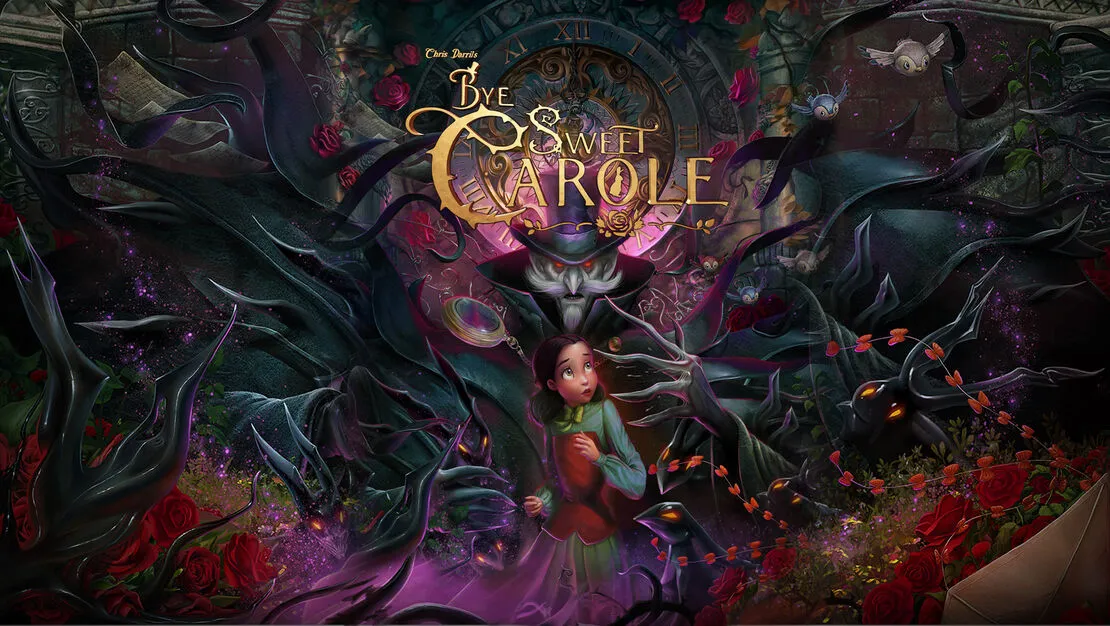

Bye Sweet Carole arrives with a striking promise: to transport players into the warm glow of classic Disney animation while telling a story that ventures into darker territory than those childhood favorites ever dared. Developed by Little Sewing Machine, this 2D adventure takes place in early 1900s England, where players guide Lana Benton through the oppressive halls of Bunny Hall, a boarding school designed to mold young women into society’s narrow expectations. When Lana’s closest friend, Carole Simmons, vanishes under mysterious circumstances, the search leads beyond the confines of reality and into Corolla, a fantasy realm that bleeds into the mundane world with unsettling frequency.
The game positions itself at an ambitious crossroads, attempting to merge puzzle-adventure gameplay reminiscent of LucasArts classics with stealth sequences, platforming challenges, and touches of horror. All of this unfolds against the backdrop of the suffragette movement, weaving themes of women’s emancipation into a fairy tale framework. The hand-drawn aesthetic immediately captures attention, promising an experience that feels plucked from animation history. This four-hour journey aims to balance atmosphere and storytelling with interactive challenge, though the weight of these competing ambitions proves difficult to carry.
When Art Speaks Louder Than Mechanics
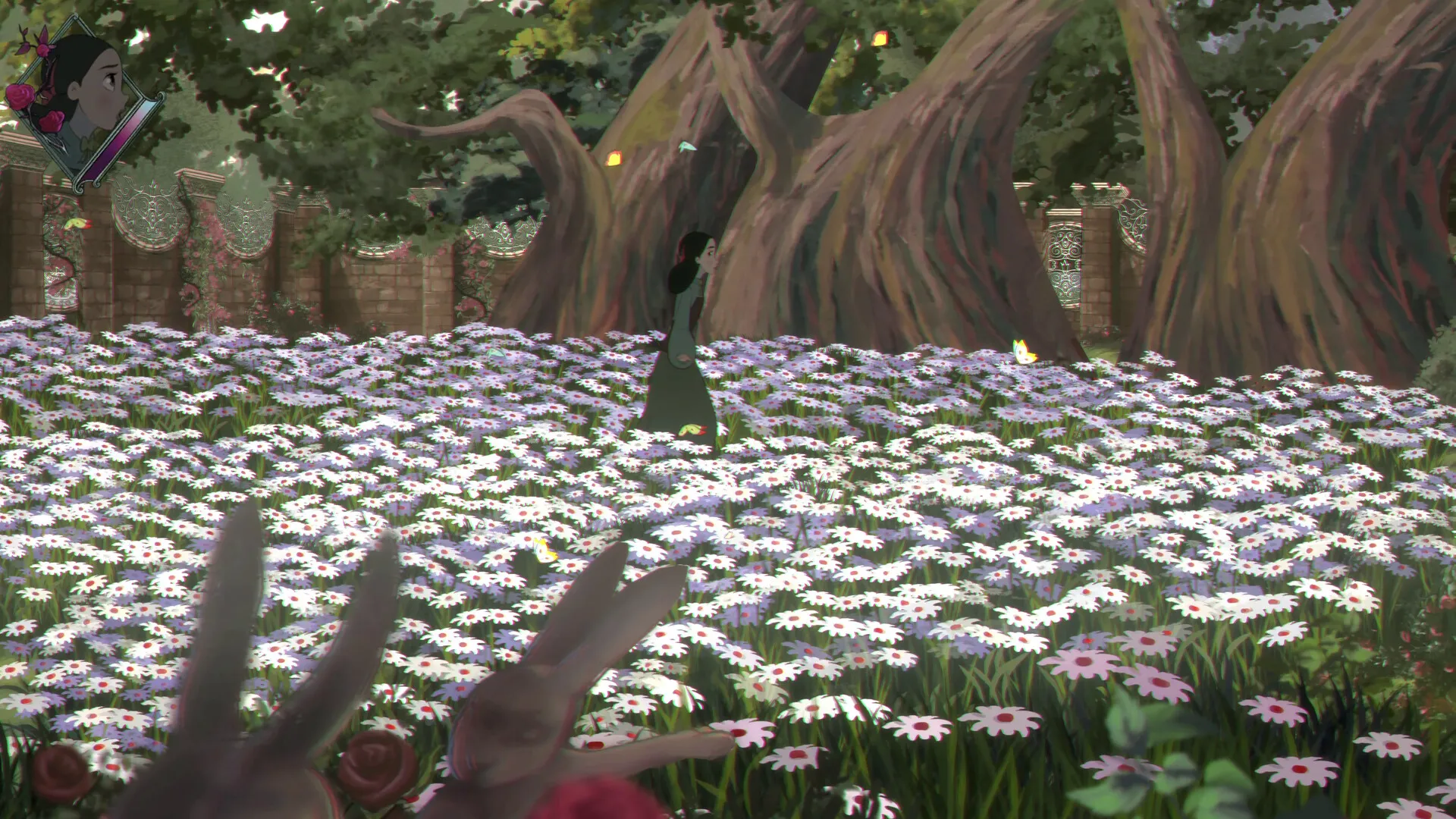
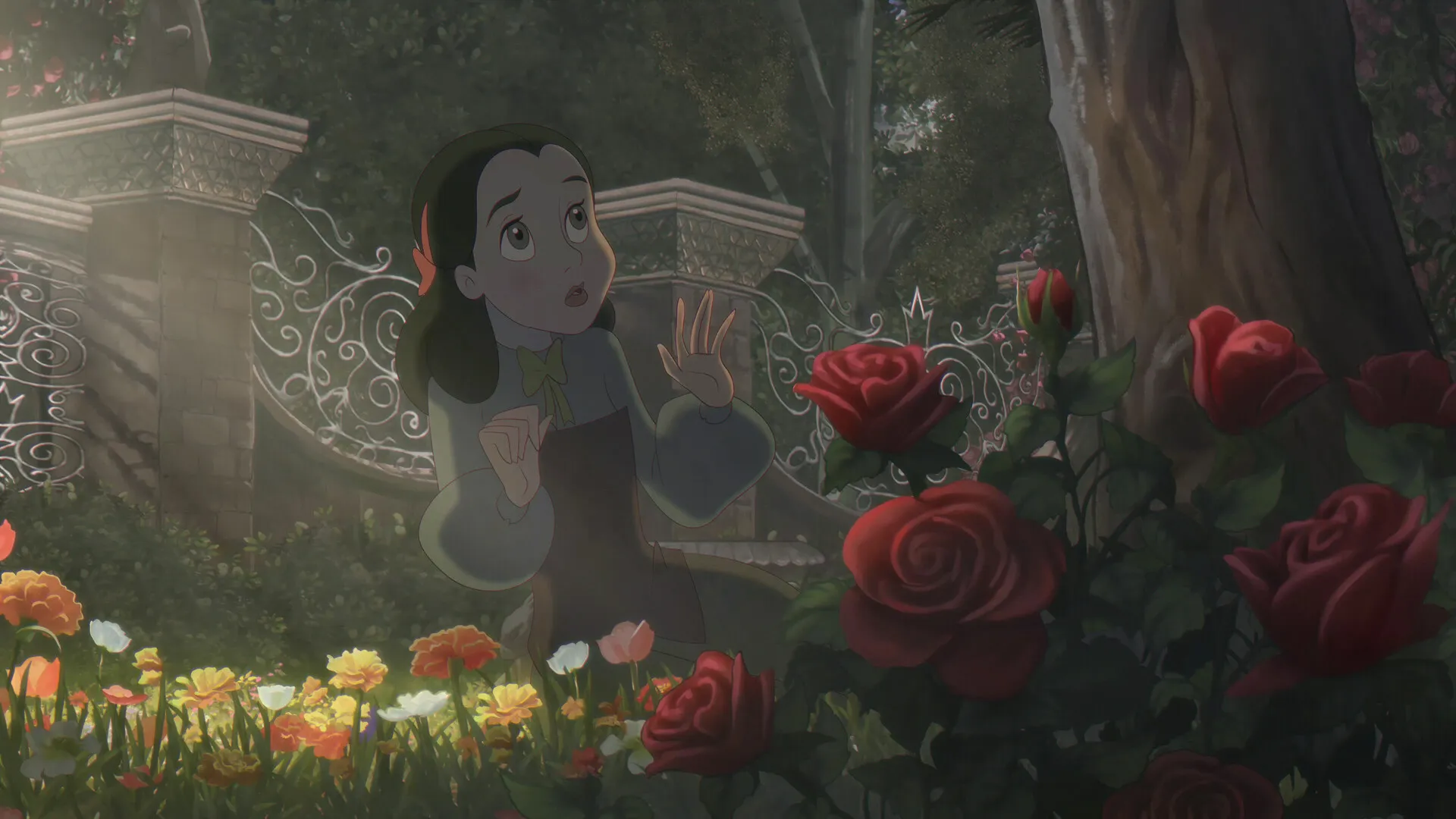
The visual presentation stands as Bye Sweet Carole’s most undeniable achievement. Every frame feels deliberately crafted to evoke the aesthetic of mid-century animation, complete with the choppy, limited frame rate that defined cartoons from that era. This isn’t a modern game trying to look retro; it commits fully to the illusion, down to the grainy VHS filter that adds texture and warmth to every scene. The effect creates an immediate sense of nostalgia, particularly for anyone who grew up watching these films on old televisions or worn videotapes.
Character movement and environmental design embrace period-appropriate animation techniques. The 2D side-scrolling perspective keeps action close enough to appreciate intricate details, from costume design to facial expressions. Painterly backgrounds provide gorgeous backdrops, particularly during sequences set in Corolla, where the color palette explodes into vibrant fantasy hues. By contrast, Bunny Hall’s interiors maintain more muted tones, reinforcing the oppressive atmosphere.
Technical limitations become apparent under scrutiny. Animation cycles repeat frequently, and many dialogue scenes feature characters facing away from the camera to avoid lip-syncing challenges. Close-ups sometimes reveal resolution issues, with artifacting visible in 4K. Cutscenes offer the most polished visual moments, allowing players to pause from interaction and simply watch the story unfold with cinematic flair.
The audio design matches the visual ambition with surprising success for an indie production. Full voice acting throughout remains uncommon at this budget level, yet the performances consistently land with professional polish. The musical score adapts intelligently to shifting circumstances, offering tension during chase sequences, calm melodies during puzzle-solving moments, and atmospheric pieces during exploration. Together, these elements create a presentation that succeeds in its nostalgic goals, even as technical rough edges remind you this is a small studio project.
A Fairy Tale Struggling to Find Its Voice
The narrative foundation rests on Lana’s investigation into Carole’s disappearance, a mystery that quickly expands beyond the walls of Bunny Hall. The fantasy kingdom of Corolla intrudes on reality through visions and magical transformations, with Lana discovering a potential connection to this otherworldly realm. She may be its lost princess, or perhaps these visions stem from an overactive imagination seeking escape from institutional oppression. The sinister presence of Mr. Kyn (complete with villainous mustache and oversized hat) and a menacing red-eyed owl suggest genuine supernatural threats.
The chapter structure attempts to build momentum through escalating stakes, each segment adding new layers to the mystery. Some twists arrive predictably, following familiar fairy tale logic, while others feel insufficiently developed to land with impact. The pacing suffers from the same slow, deliberate tempo that serves the presentation so well, creating stretches where narrative momentum stalls. Dialogue often falls into expository territory, with characters delivering information rather than conversing naturally.
Thematically, Bye Sweet Carole reaches for substance beyond simple fairy tale trappings. The suffragette movement provides historical grounding, positioning the story during a period of genuine social upheaval. Women’s liberation becomes a recurring thread, contrasting Bunny Hall’s restrictive environment with the freedom Corolla represents. Some moments handle these themes with genuine subtlety, allowing them to emerge naturally from character interactions. Others deliver them with all the grace of a manifesto accidentally dropped in front of a teacher, complete with books listing accomplished women throughout history. The heavy-handed approach undercuts sincere intentions.
Character development presents similar inconsistencies. Lana functions adequately as a protagonist, driven by loyalty to her friend and curiosity about her own identity. Yet the relationship between Lana and Carole, which should anchor the emotional core, remains underdeveloped. We’re told they share a deep bond, but we rarely see it demonstrated through meaningful interaction. Supporting characters read as archetypes rather than fully realized individuals, filling roles the story requires without developing much personality beyond their function.
Where Ambition Exceeds Execution
The puzzle-solving elements draw clear inspiration from classic point-and-click adventures. Players explore environments, gather items into an inventory, combine objects when logic demands it, and apply solutions to environmental challenges. These puzzles generally strike an acceptable balance between challenge and accessibility, rewarding observation and patience rather than demanding obscure leaps in logic.
The straightforward nature of puzzle design creates both comfort and constraint. Everything you collect serves a purpose, eliminating the possibility of red herrings or optional content. Exploration feels guided rather than free, following a predetermined path. Technical issues compound these limitations. Softlocks occur with frustrating regularity, forcing restarts when puzzles fail to trigger properly despite correct solutions.
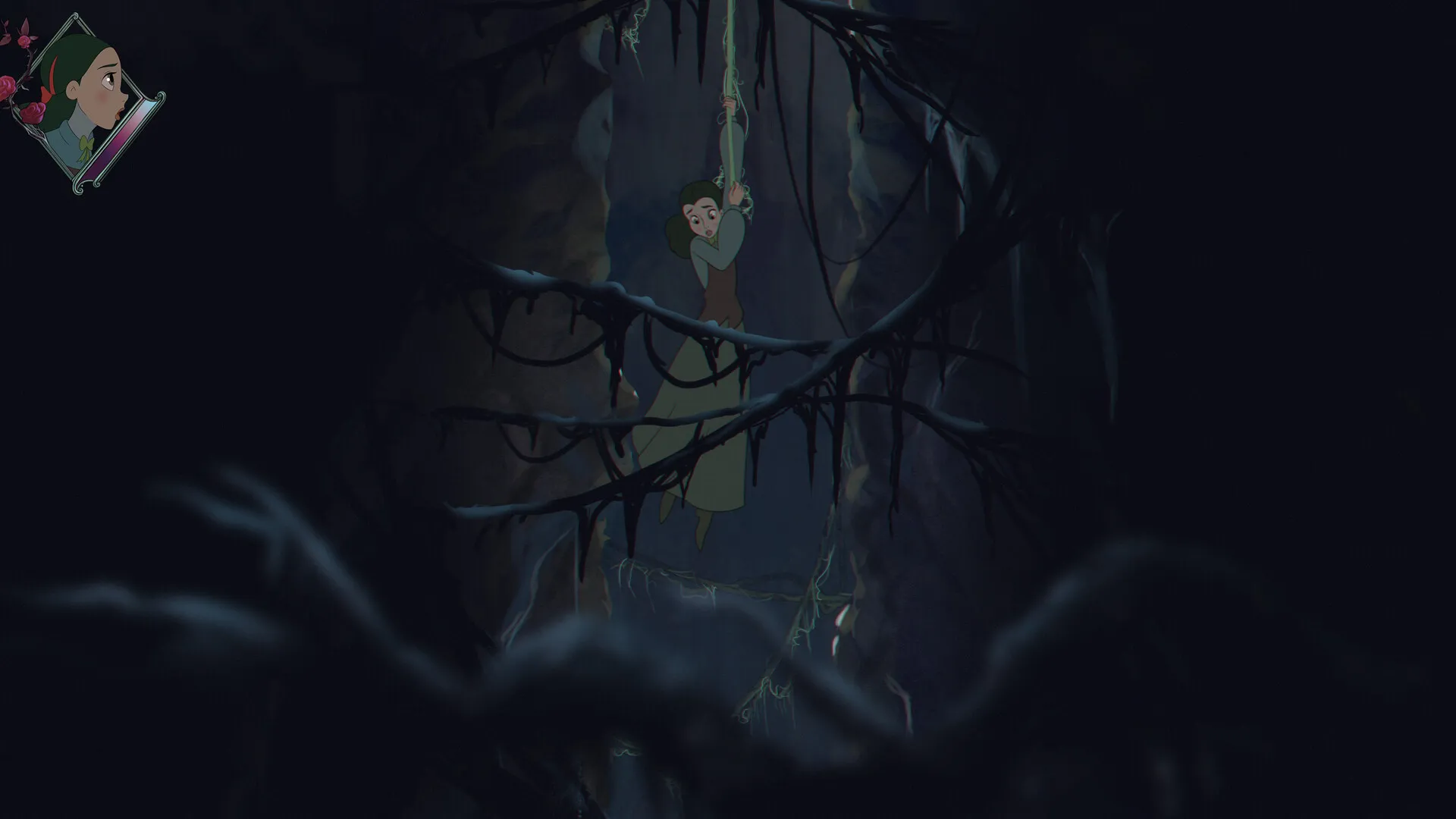
The rabbit transformation mechanic introduces platforming sequences that expose control issues. Wall-jumping feels inconsistent, with inputs sometimes registering and sometimes ignored. Collision detection proves unreliable, leaving you uncertain whether a ledge is reachable. Quick-time events appear regularly, most frequently as balancing minigames. Rather than increasing in difficulty as the game progresses, these sequences simply get longer, forcing you to repeat the same simple challenge multiple times.
Stealth sections represent the most contentious gameplay choice. Nearly every chapter includes segments where enemies patrol while you attempt to solve puzzles. Getting caught often means death in one or two hits. Enemy AI follows scripted patterns that become predictable once observed, though technical hiccups undermine reliability. Guards get stuck on environmental objects, sometimes making evasion trivial and other times trapping you with them. Line-of-sight mechanics lack clarity, leaving you guessing whether you’re visible from certain positions. The resulting gameplay loop involves luring enemies to one side of an area, rushing to complete an objective, and hoping you can return to hiding before they catch up.
Small rooms with limited hiding spots and inflexible enemy patterns make certain sections feel less like stealth challenges and more like memorization exercises. Some enemies can break through barriers when pursuing you, adding unpredictability but also frustration. The game clearly wants these sequences to inject horror and urgency, yet they usually generate tedium instead.
Combat appears sparingly, which proves fortunate. When controlling Baesie during action sequences, gameplay reduces to button-mashing attacks while waiting for segments to end. The rhythm minigame presents a simple timing challenge that repeats throughout without variation, making each instance feel like padding.
The most enjoyable gameplay moments arrive during puzzle sequences requiring character switching. Different characters possess unique abilities that must be combined to overcome obstacles, creating genuinely clever challenges. Time-travel elements in certain sections introduce creative problem-solving opportunities. These segments occupy only a small fraction of playtime, overshadowed by the stealth and platforming that dominate most chapters. Frequent loading screens between rooms disrupt pacing, and the four-hour runtime feels stretched beyond its content.
An Experience Defined by Contradiction
Bye Sweet Carole exists in permanent tension between what it achieves and what it attempts. The artistic presentation succeeds beautifully, delivering on its promise to evoke classic animation with enough authenticity to transport players back to childhood afternoons. The audio design supports this vision with professional voice acting and an adaptive score. These elements alone make the game worth seeing, even if actually playing it proves less satisfying.
The gameplay tells a different story. Puzzle design provides solid foundations, recalling adventure game traditions with generally logical challenges. Yet technical issues, repetitive stealth sequences, clumsy platforming, and uninspired combat sections undermine the experience. The game would have benefited from focusing on its strengths rather than attempting to be a stealth game, platformer, and action title simultaneously.
For players willing to value presentation over mechanics, Bye Sweet Carole offers something genuinely special. It succeeds as an animated experience that happens to include interactive elements. As a complete package judged by gameplay standards, it stumbles too often to recommend without significant caveats. The fairy tale charm is real, but the path through it requires patience with systems that needed more development time to match the artistic vision.
The Review
Bye Sweet Carole
Bye Sweet Carole captivates with its gorgeous hand-drawn animation and nostalgic charm, successfully recreating the warmth of classic Disney cartoons. The presentation is nearly flawless, supported by excellent voice acting and an adaptive musical score. However, the gameplay consistently undermines these achievements. Clumsy stealth mechanics, frustrating platforming, technical glitches, and repetitive minigames transform what could have been a delightful puzzle adventure into a tedious slog. The artistic vision deserves praise, but the interactive elements need significant refinement. Worth experiencing for the art alone, though the gameplay demands considerable patience.
PROS
- Stunning hand-drawn animation that authentically recreates 1950s Disney aesthetics
- Professional voice acting throughout, rare for an indie production
- Adaptive musical score that enhances every scene
- Clever character-switching puzzle segments
- Strong thematic exploration of women's emancipation
CONS
- Frustrating stealth mechanics with poor AI and unclear detection
- Clumsy platforming with inconsistent controls and collision detection
- Frequent technical issues including softlocks and bugs
- Repetitive minigames that pad the runtime
- Underdeveloped central relationship between Lana and Carole
- Heavy-handed delivery of thematic messages
- Constant loading screens disrupt pacing