














The year 2003 hangs in a peculiar amber. It sits at the edge of a widening digital landscape that soon turns daily life into a parade of tiny panes, while traces of analog grime still cling to pavement and personality. Brighton provides the scene. The West Pier is a charred skeleton; arsonists reduced the concert hall and the salt spray blackened the beams. It functions as a monument to ruin. Bunny Munro moves inside that ruin. He sells beauty door to door, a suitcase of creams and lipsticks in tow. He offers promises of rejuvenation to housewives while carrying his own collapse like an odour.
Adapted from the 2009 novel by Nick Cave, the series reads as an elegy for a particular kind of masculine failure. Bunny returns to find Libby dead by suicide, hanging from the ceiling while he is fresh from a sordid hotel encounter. The event does not lead to introspection. It triggers a panicked flight. He takes his nine-year-old son and leaves, intent on outrunning social services and outpacing his guilt.
The action unfolds along the grey, windswept coast of southern England. The show blends kitchen-sink realism with fevered hallucination (a curious hybrid: the everyday rubbed raw by the uncanny). We watch disintegration in stages, a man unravelling in real time, dragging his son through cheap motels, roadside diners, a procession of small cruelties. Destination is incidental. Motion keeps Bunny breathing.
The Protagonist: A Portrait of Narcissism and Decay
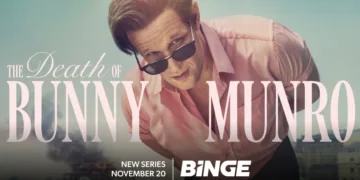
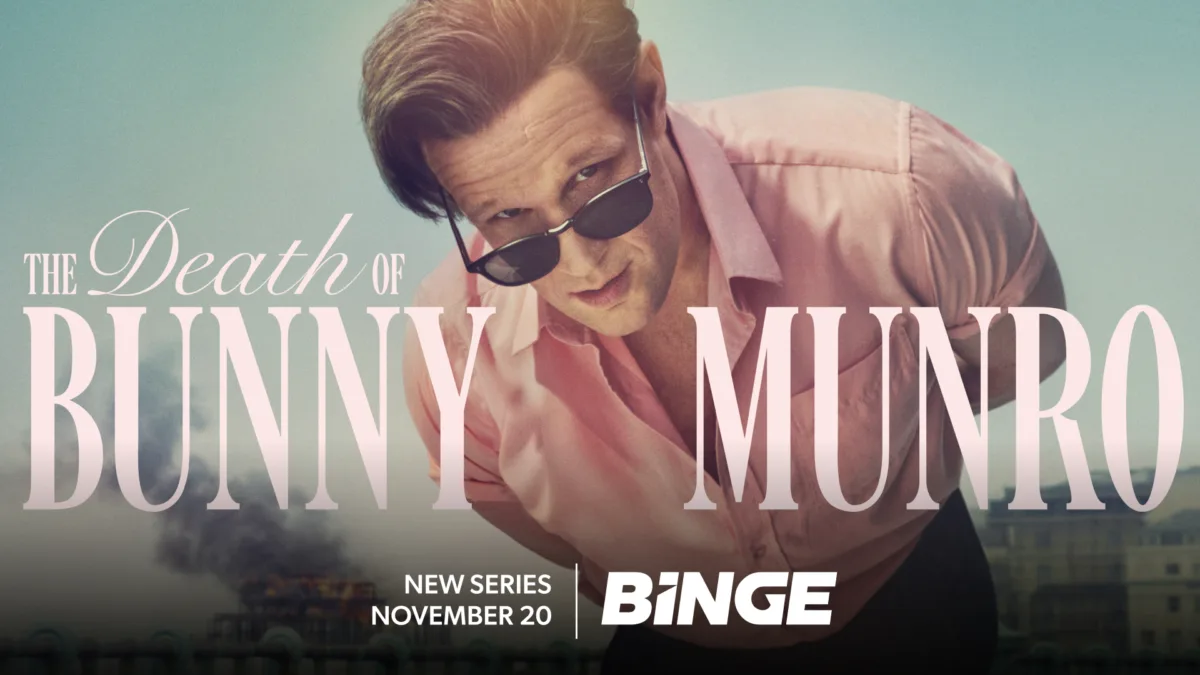
Matt Smith gives a performance that reads like a physical exorcism. The whimsical eccentricity associated with his previous roles is stripped away to reveal something rot-infused beneath the patter. Bunny Munro behaves like a biological mechanism of impulse. He must keep moving and consuming in order to function. Alcohol, cocaine, sex: these form his routine maintenance. They supply no pleasure, only the palliation of silence. Smith uses an angular, gangly, frenetic physicality to fill space in an invasive way. He leans in. He smiles too wide. Charm operates as a reflexive weapon.
The central irony here is occupational. Bunny sells beauty; he sells the notion that the right product will repair a person. He markets transformation while remaining unable to change himself. He repeats the name like an incantation: “I’m f***ing Bunny Munro.” The name acts as talisman. He assumes identity carries weight. The show reveals the hollowness beneath that assumption. He is a suit filled with appetites and anxieties. The series asks us to spend six hours with a man who lacks a moral compass. He propositions a waitress while his son waits in the car. He smokes in the toilets at his wife’s funeral. The actions read as grotesque.
Smith prevents caricature. He injects pathetic desperation into Bunny. We see sweat, hear the crack in a voice when charm fails. He imagines himself the hero of some grand romance. He pictures a Casanova. Reality is sadder. The predatory posture devolves; the teeth loosen. The camera lingers on degradation.
Also Read

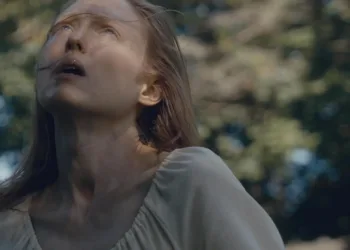




Confident gait becomes a stumble. Smooth patter dissolves into incoherent rambling. He argues with his reflection and loses. The performance forces the viewer to search for humanity in an odious figure, to witness the ego’s death. Layer by layer Bunny discards dignity until only an exposed nerve remains — a man confronting the sensation of a life squandered.
The Father-Son Dynamic: Generational Trauma
The bond between Bunny and his son forms the narrative spine. Rafael Mathé plays Bunny Junior with a quiet, watchful presence. The boy wears thick glasses and suffers from blepharitis; that chronic eye infection functions as a sharp emblem. The father refuses to face reality. The son must look at it even when his eyes hurt. Junior is bookish and sensitive, everything his father is not. He stands for the possibility of a different kind of man. Bunny treats the child like an accessory, like luggage that occasionally needs feeding.
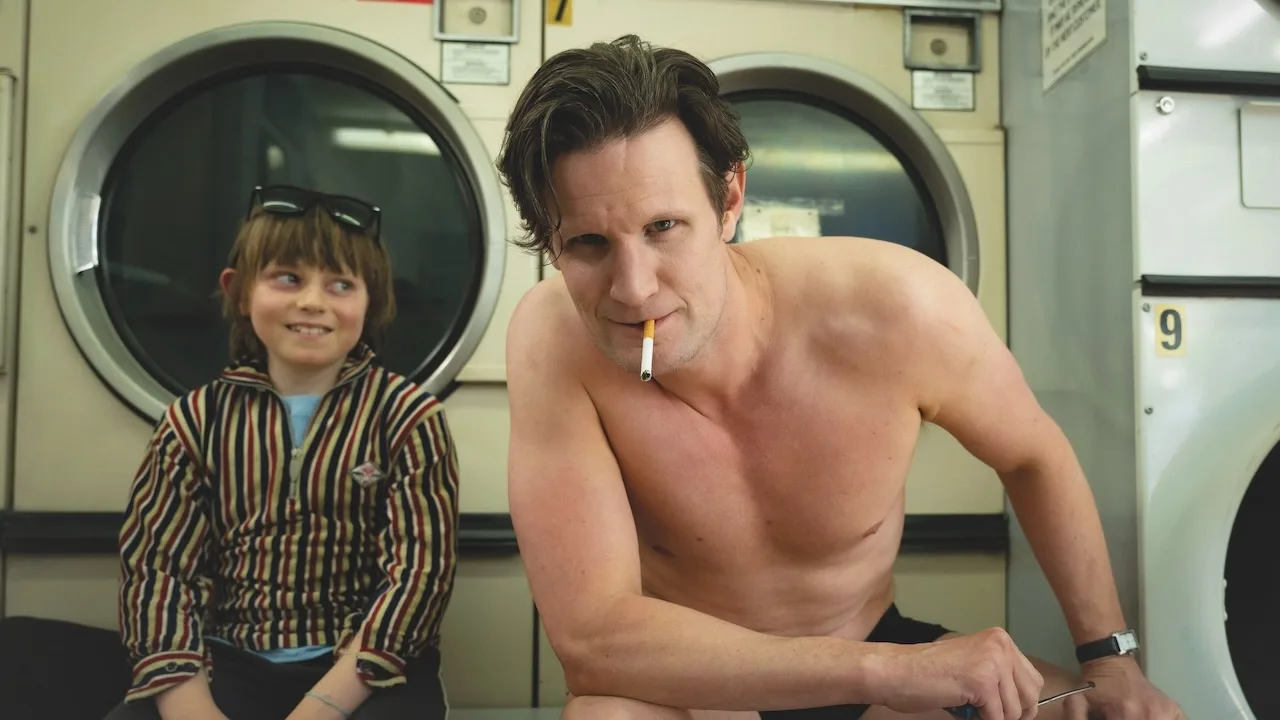
The road trip becomes a perverse rite of passage. Bunny frames the escape as instruction in “the ways of the world.” His lessons are corrosive. He introduces Junior to transactional sex and casual cruelty, brings him to sales calls where vulnerable women are manipulated, exposes him to the interior of strip clubs. The mentorship operates like infection. Bunny hands his disease to the next generation. Mathé plays these sequences with heartbreaking stillness; he waits for a father who never arrives.
The source of the contamination appears in David Threlfall’s portrayal of Bunny’s father. He sits in a house of pornography and resentment; bile defines him. The lineage clarifies itself. Bunny Munro reads as product, not anomaly. His father damaged him; now he damages his son. The series probes the persistence of this cycle and asks whether damage can transmit through example. Junior reaches a crossroads. He can model his behaviour on his father or he can refuse to repeat it. Tension emerges from that choice.
Moments of fracture in the pattern do occur. Bunny sometimes looks at his son with a gesture approaching tenderness. He buys a small gift. He steps in against a bully. Those acts complicate the moral picture. Partial kindness makes the abuse harder to dismiss. Pure villainy is tidy; a monster who occasionally remembers fatherhood is messier and more tragic. The show presents love without responsibility as another form of selfishness. Bunny’s affection appears conditional, activated when it feeds his sense of self.
Atmosphere, Visual Style, and Tone
The series fashions an aesthetic from the grim, tactile world of the British seaside. Surfaces feel sticky. The camera lingers on grease clinging to a plate of eggs. Dust motes drift in stale hotel air. A muted palette answers grey skies and the churned brown of the English Channel. Glamour familiar from American road cinema is absent. Sweeping vistas do not exist here. The route is the A27 and its succession of roundabouts. The 2003 setting enforces isolation; characters cannot retreat into smartphones and so must inhabit silence. The burning West Pier remains visible, an ever-present reminder that beauty burns down into ash.

Isabella Eklöf directs with an appetite for discomfort. She holds on awkwardness. Shots persist through failed encounters; vomit on shoes receives attention. That realism sits beside surreal intrusions. A serial killer in a devil mask appears, carrying a pitchfork. The figure acts as manifestation of a wrath Bunny fears. The series blends horror tropes with kitchen-sink drama, equating domestic tragedy with slasher dread.
The protagonist’s psychology governs style. As Bunny’s grip loosens, the world distorts: editing jagged, lighting pushed into feverish tones. Ghosts appear. Libby surfaces in the corner of rooms. She functions as witness; her presence offers no consolation. The soundtrack by Nick Cave and Warren Ellis intensifies dread.
The score hums anxiety: an engine grinding and wheezing. It punctures the “cool” Bunny projects. The sound design and visuals manufacture a sensory hangover: headache-inducing, nauseating by design. The viewer occupies Bunny’s skull. The direction finds a strange, even perverse poetry in filth; the ugliest moments gain texture that rewards scrutiny.
Narrative Structure and Supporting Characters
Libby Munro’s ghost anchors the story. Sarah Greene plays the deceased wife; the plot limits her screen time because she dies in the first act. Her absence structures the space. Writers invoke her sparingly through flashbacks that chart marital decay. Hope becomes disappointment. Light leaves her face. She functions as a moral yardstick. Her suicide indicts Bunny’s life. Greene imbues the spectre with intelligence; she is the one who saw him clearly.

Six episodes follow a loose episodic pattern. The road trip supplies a picaresque frame: Bunny and Junior meet a string of strangers. These encounters work as vignettes. Lonely widows cross their path. Angry husbands appear. Fellow drifters surface. Each meeting peels back another layer of Bunny’s pathology. Tone varies to avoid repetition; some scenes register dark comedy, others unfold as pure tragedy. Pacing remains tight. Episodes conserve momentum; the story moves like a car running out of fuel.
A parallel subplot involves the “horned killer.” Initially this thread feels like a genre graft on top of a character study. The killer gradually moves closer to Bunny geographically as the episodes proceed. Convergence seems inevitable. The horned figure externalizes the protagonist’s interior violence and imposes a ticking clock. Collision looms.
Women in the series function as reflective surfaces. Bunny projects fantasies onto them and receives his ugliness back. The camera aligns with their disgust and grants it weight. Their perspective frames him as nuisance and threat; charm is absent where he expects admiration. The series dismantles the myth of the lovable rogue and traces the collateral damage such men leave behind. Structure and tone build toward a crescendo that carries an odd mix of the inevitable and the abstract. The road runs out. Land ends. Bunny faces the sea.
The Death of Bunny Munro is a British black comedy and drama television series based on the 2009 novel by Nick Cave. The six-part limited series, which premiered on Sky Atlantic and NOW on November 20, 2025, stars Matt Smith as Bunny Munro, a troubled and sex-addicted door-to-door cosmetics salesman who takes his young son on a chaotic road trip across Southern England following the suicide of his wife. Written by Pete Jackson and directed by Isabella Eklöf, the show is produced by Clerkenwell Films in association with Sky Studios and is currently available to watch on Sky Atlantic and the streaming service NOW in the UK.
Full Credits
Title: The Death of Bunny Munro
Distributor: Sky Atlantic, NOW
Release date: November 20, 2025
Rating: 15
Running time: 6 episodes, approximately 30–50 minutes each
Director: Isabella Eklöf
Writers: Pete Jackson
Producers and Executive Producers: Matthew Mulot, Nick Cave, Matt Smith, Pete Jackson, Isabella Eklöf, Manpreet Dosanjh, Petra Fried, Ed Macdonald, Emily Harrison
Cast: Matt Smith, Rafael Mathé, Sarah Greene, Johann Myers, Robert Glenister, Alice Feetham, David Threlfall, Lindsay Duncan, Elizabeth Berrington
Director of Photography (Cinematographer): Nadim Carlsen
Editors: Luke Dunkley, John Dwelly, Tony Kearns
Composer: Nick Cave, Warren Ellis
The Review
The Death of Bunny Munro
This adaptation is a bruising examination of a man hollowed out by his own appetites. Matt Smith delivers a career-defining performance that strips away all vanity to reveal the pathetic creature beneath the swagger. It is difficult to watch at times due to the relentless bleakness and the refusal of the protagonist to seek redemption. However, the direction creates a mesmerizing aesthetic of decay that commands attention. It effectively deconstructs the myth of the lovable rogue, leaving only a cautionary tale about the damage fathers pass down to their sons.
PROS
- Matt Smith delivers a fearless, physically transformative performance.
- Rafael Mathé provides a heartbreaking emotional anchor as Bunny Junior.
- The direction by Isabella Eklöf captures a distinct, grimy atmosphere.
- The score by Nick Cave and Warren Ellis perfectly complements the tone.
- It offers an unflinching look at toxic masculinity and generational trauma.
CONS
- The relentless misery may be too punishing for some viewers.
- Libby Munro serves more as a plot device than a fully fleshed-out character.
- The surreal horror elements sometimes clash with the kitchen-sink realism.