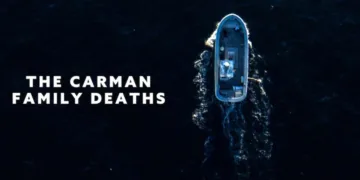










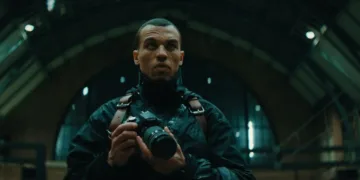












In contemporary global entertainment, the true crime documentary often acts as a reflective surface for social anxieties about wealth, mental health, and the limits of forensic explanation. The Carman Family Deaths, directed by Yon Motskin, frames an American story that probes those concerns. The film traces a sequence of domestic catastrophes: the mysterious 2016 disappearance of Linda Carman during a fishing trip and the earlier 2013 murder of her father, the wealthy Connecticut developer John Chakalos.
Nathan Carman, Linda’s son and Chakalos’s grandson, links these events. The documentary concentrates on the murky intersection of suspicion, intense family conflict, and Nathan’s autism diagnosis. It avoids presenting a tidy answer and layers evidence and competing recollections for viewers to weigh.
The Core Cases: Structural Ambiguity and Investigative Doubt
Motskin organizes the narrative by threading two apparently separate incidents into a single tragic frame. This structural choice encourages the viewer to see pattern and motive where individual events might otherwise read as accidents. The 2016 disappearance functions as the film’s opening pressure point. Linda and Nathan set out on a fishing trip and their boat sank. A six-day Coast Guard search turned up no trace, and Nathan was found alive eight days later in a life raft. That survival account becomes a focal point, and its plausibility is repeatedly questioned.
Skepticism from investigators and relatives counterbalances Nathan’s account. Authorities and family members point to inconsistencies. They note his relatively intact physical state and the absence of a distress call before the sinking. Maritime experts in the film treat the life raft narrative as anomalous, prompting the theory that Nathan sabotaged his vessel, The Chicken Pox, prior to leaving the marina. This alleged calculation shifts the interpretive frame from accident toward premeditation.
The documentary then examines the earlier, unresolved homicide of John Chakalos. Chakalos, a real estate mogul, was shot in his home. Nathan was the last person confirmed to have seen him alive, and investigators focused attention there. The absence of forced entry in Chakalos’s home is presented as evidence that the assailant was someone known to the family.
The discussion of the millions in estate payouts assigned to Chakalos serves as the connective tissue between episodes, offering a motive that critics and commentators invoke. That emphasis on sudden wealth as a possible catalyst echoes themes common in international crime reportage and certain literary treatments of family violence.
Character, Perspective, and the Cultural Reading of Affect
The film’s strongest section examines how cultural expectations about emotion and behavior shape legal and popular interpretation. It assembles a wide array of voices: Coast Guard investigators, local police, the FBI, family members, and attorneys. That chorus exposes deep divisions in how Nathan is read.
Accusers in the film—relatives, notably Linda’s sisters, and some law enforcement figures—present Nathan’s outward manner as evidence. They describe a flat affect and emotional detachment during police interviews and treat those displays as signs of culpability and cold calculation. Actions singled out in the film include Nathan’s purchase of an assault rifle and his consultations with lawyers about the will prior to the deaths. These items are marshaled as indicators of premeditation.
A contrasting defense emerges from Nathan’s father, Clark Carman, and the legal team. They argue that Nathan’s behavior is often misread through a neurotypical standard, citing his formal diagnosis on the Autism spectrum. That position brings a cross-cultural interpretive element into the narrative: institutions and communities can struggle to interpret behavior that departs from dominant emotional scripts. The documentary suggests that a law enforcement emphasis on expected displays of distress may have amplified suspicion.
The succession of testimonies builds intense emotional pressure. Anger and suspicion voiced by family members press against the steadfast defense offered by his father and legal advocates, producing sustained tension. The film records how suspicion fractures familial bonds, showing that relational collapse can extend beyond the immediate loss of life. Motskin’s directorial approach reinforces this tone through measured pacing and a restrained visual approach. By presenting conflicting, credible accounts without sensational editorializing, the film turns the material into an affecting study of perception under the strain of sudden wealth and grief.
Stylistic Restraint and the Power of Ambiguity
The documentary’s formal economy contributes to its force. Clocking roughly 80 to 90 minutes, it avoids the extended, episodic pacing of many serialized true crime projects and keeps the narrative concentrated.

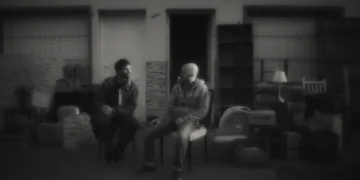
Motskin constructs the film from a curated mix of sources: archival footage, excerpts from Nathan’s police interrogations, and contemporary interviews. The inclusion of professional maritime investigators provides a procedural, experience-based critique of the survival story. Their clinical assessments function in the film as a kind of objective testimony that challenges the personal narratives on screen.
The case remains formally unresolved, and the legal process ends abruptly when Nathan Carman died by suicide before he could stand trial. That definitive cessation of a public adjudication leaves the central question—”did he kill his mother and grandfather for money?”—open. The film’s persistent refusal to resolve that question gives it its lasting shape.
The Carman Family Deaths operates as a portrait of unresolved human complexity. It asks viewers to inhabit a space where sudden wealth, damaged relationships, and difficult-to-interpret behavior intersect. For audiences familiar with open-ended true crime work, the film offers a compact, culturally attentive examination of how narrative construction, visual evidence, and institutional reading of affect produce contested meanings.
The Carman Family Deaths is a true-crime documentary that premiered exclusively on Netflix on November 19, 2025. The film explores the shocking case of Nathan Carman, who was found alive in a life raft after his boat sank in 2016, leading to the disappearance of his mother, Linda Carman. The subsequent investigation resurrected questions about the 2013 unsolved murder of his wealthy grandfather, John Chakalos. The documentary features archival footage, court records, and new interviews with family members and investigators to examine the complex, unsettling family dynamics and the allegations of murder and financial greed. The film is currently streaming on Netflix.
Full Credits
Title: The Carman Family Deaths
Distributor: Netflix
Release date: November 19, 2025
Running time: 1 hour 30 minutes (90 minutes)
Director: Yon Motskin
Producers and Executive Producers: Mary-Jane Mitchell, Yon Motskin, Heidi Ewing, Rachel Grady
Cast: Logan Markus, Keli Solomon, George Banghart Jr., Clark Carman, Evan Lubofsky
The Review
The Carman Family Deaths
The Carman Family Deaths is a compelling, yet deliberately frustrating, piece of true crime filmmaking. It excels as a character study of suspicion and inherited tragedy, using the dual, unsolved cases to explore the cultural biases against neurodivergent individuals and the corrupting influence of wealth on family trust. The documentary’s restraint and refusal to offer a definitive answer elevate it beyond standard procedural fare, making it a powerful meditation on the ambiguity of justice. It is a necessary but emotionally taxing watch for those interested in complex, unresolved real-life mysteries.
PROS
- Thoughtfully handles the complexity of Nathan Carman's autism diagnosis and its role in police/family perception.
- Masterfully interweaves two separate tragedies (2013 murder and 2016 disappearance) to build narrative pressure.
- Avoids sensationalism, relying instead on credible testimony and factual inconsistencies to drive the drama.
- Explores profound themes of inheritance, wealth corruption, and the limits of forensic evidence in maritime cases.
CONS
- The absence of a legal conclusion (due to Nathan's death) leaves the central questions permanently unanswered.
- The focus on conflicting family testimonies creates a highly unsettling and emotionally draining experience.
- May frustrate viewers who prefer documentaries that offer clear evidence or a definitive viewpoint on guilt.