









![Kingdom Hearts Collection [I-III] Review](https://gazettely.com/wp-content/uploads/2026/10/Kingdom-Hearts-Collection-I-III-1-360x180.webp "Kingdom Hearts Collection [I-III] Review: KHII Holds Steady as Newer Entries Fluctuate 33")





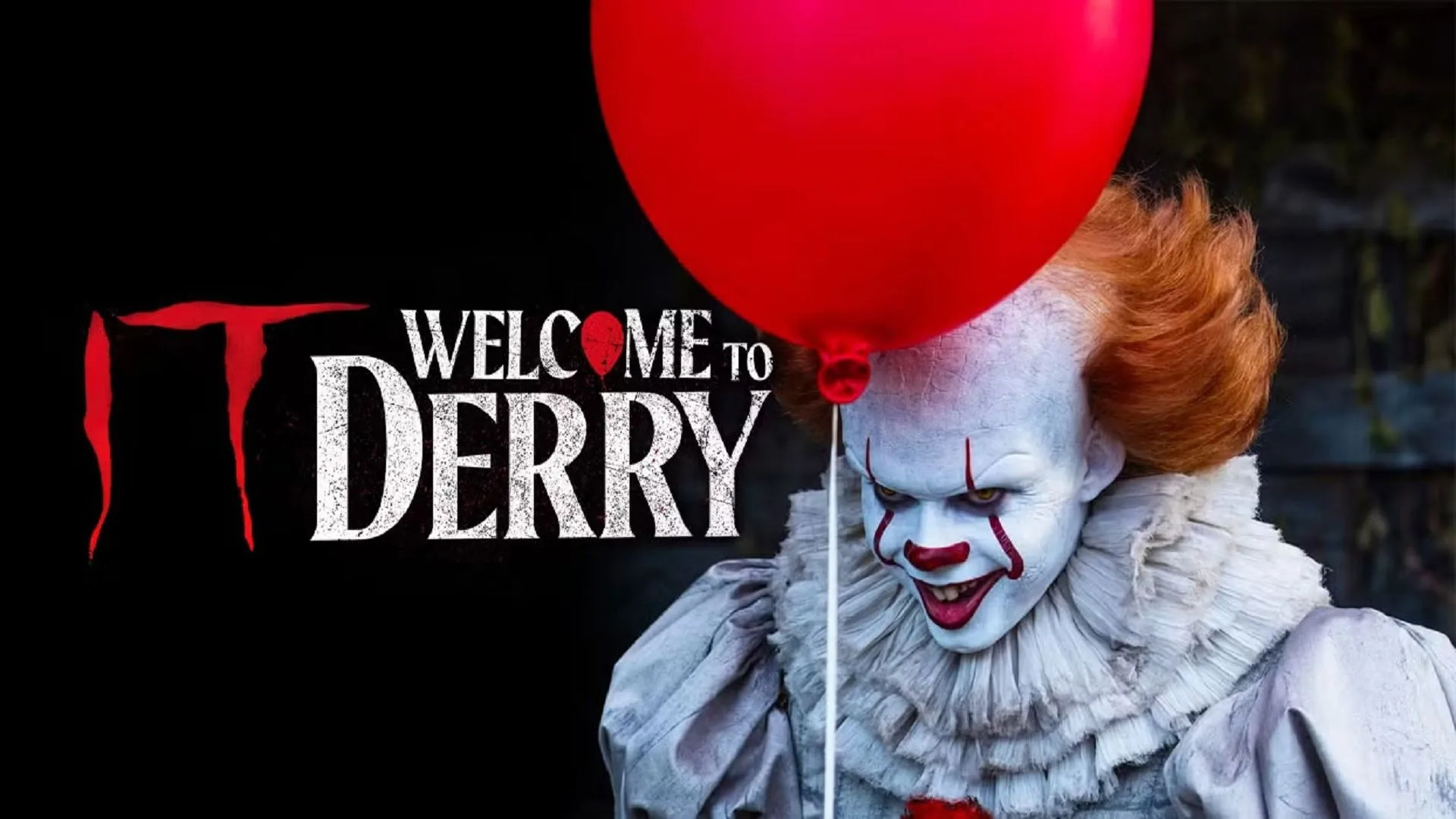

The fictional Maine township of Derry functions as a civic oubliette, a place where history repeats itself in 27-year cycles. Welcome to Derry presents itself as an archaeological excavation of the site of that temporal and metaphysical curse. This eight-episode season returns to 1962 and acts as a serialized prologue to Andy Muschietti’s cinematic vision. The series focuses on the town’s wider, cyclical horror and offers viewers a look behind the curtain of an enduring malevolence.
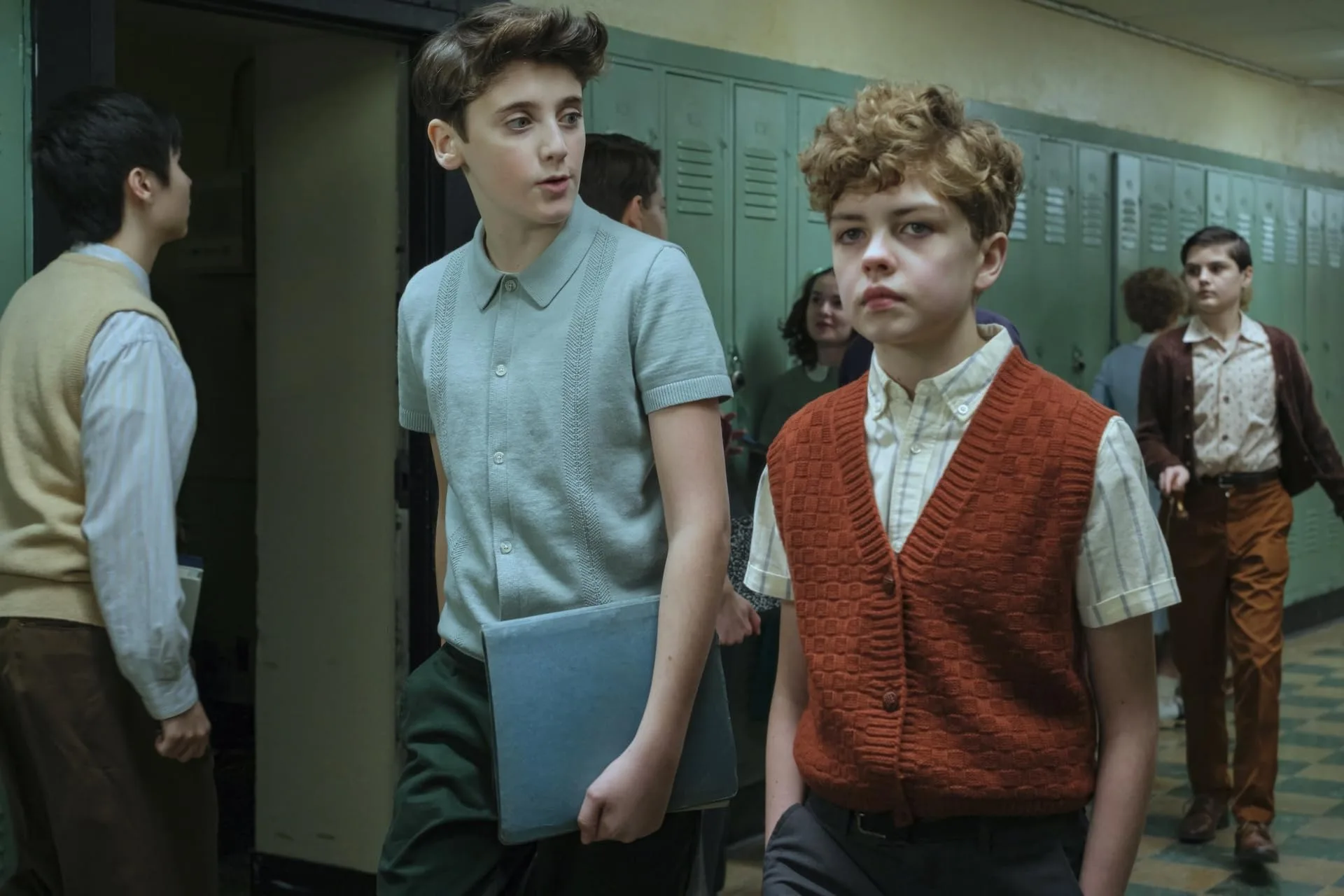
A string of disturbing child disappearances tears at the town’s veneer of calm, forcing residents to face a growing dread they cannot name or rationally process. The narrative establishes a divided focus, a stylistic choice meant to enlarge the scale of fear. One strand follows a new group of middle-schoolers confronting private terrors as the supernatural entity takes forms tied to their traumas.
A parallel strand follows a secret Air Force installation on Derry’s edge, which signals institutional engagement with the darkness. The show links this mythic evil to the charged socio-political anxieties of the Cold War, suggesting that Derry’s nature sits where myth and politics intersect.
The Prequeled Paradox of Lore
The central difficulty of any prequel is the predetermined terminus; the audience already knows where events must arrive, so suspense becomes a formal problem. Welcome to Derry addresses this by building an original narrative inside an established past. The series substitutes the suspense of the unknown with the uneasy pleasure of dramatic irony. We watch with the grim foresight of spectators at a Greek tragedy.
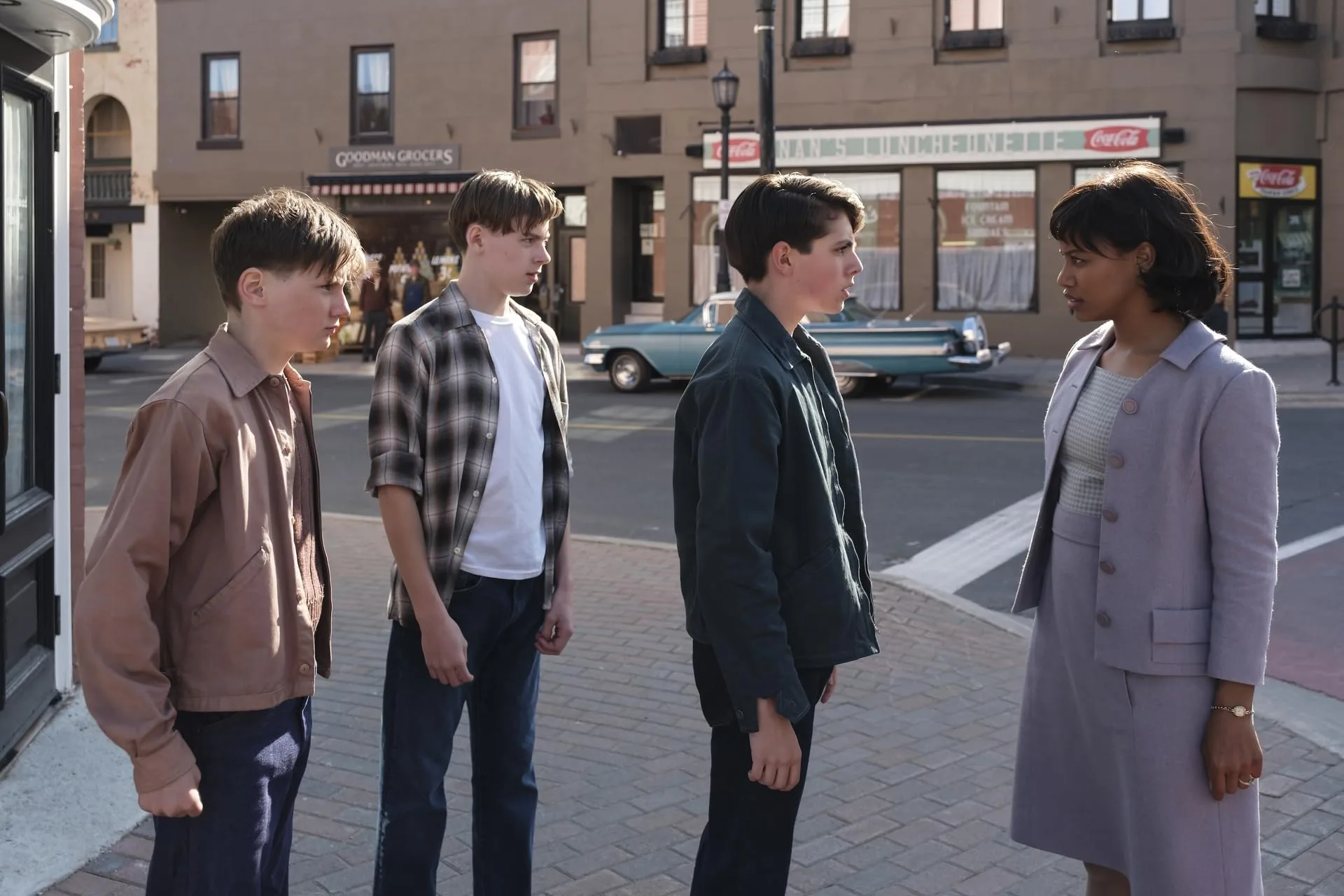
The series arranges two main narrative conduits with care. One follows the Hanlon family — Major Leroy, his wife Charlotte, and their son Will — whose arrival draws them into Derry’s secrets. The other follows local children: Lilly, Ronnie, Phil, and Teddy, each encountering the town’s horror in distinct ways. The show spends substantial time mobilizing these elements. Leroy Hanlon’s posting at the military base operates as a pivot, linking the geopolitical fight against Communism to the primeval force that lies beneath the soil.
That structural choice cultivates what might be called Deep State horror: the government’s search for advantage becomes an entry into the incomprehensible. The 1962 setting supplies a potent atmosphere of civic paranoia, an era when fear of an external enemy and fear of internal difference were easily exploited. The military’s effort to isolate or control the entity, an ancient interdimensional force, reads as a study in human hubris, a geopolitical folie à deux enacted with chilling institutional efficiency.
Pacing sometimes falters. The volume of narrative the show attempts to cover — the entity’s history and the political intrigue around it — stretches material across episodes, and the forward drive pauses to lay out lore in careful detail. That world-building can slow momentum, though it opens rich veins for King-verse archaeology (a phrase I will defend). The series introduces figures such as a younger Dick Hallorann, an intertextual flourish that reframes his abilities as a resource the government seeks to harness. The show expands the mythology outward and fills narrative gaps at the same time.
A Cast Against the American Grain
The adult ensemble supplies much of the series’ dramatic weight and lifts the material beyond structural constraints. Jovan Adepo, as Major Leroy Hanlon, anchors the proceedings. His decorated status offers no protection from systemic racism on base and in town. Adepo plays a man torn between duty and a fierce need to shelter his family from both everyday prejudice and an emergent cosmic threat. He conveys the exhaustion of constant code-switching with quiet force, a social tension that ranks as terrifying as any monstrous apparition.
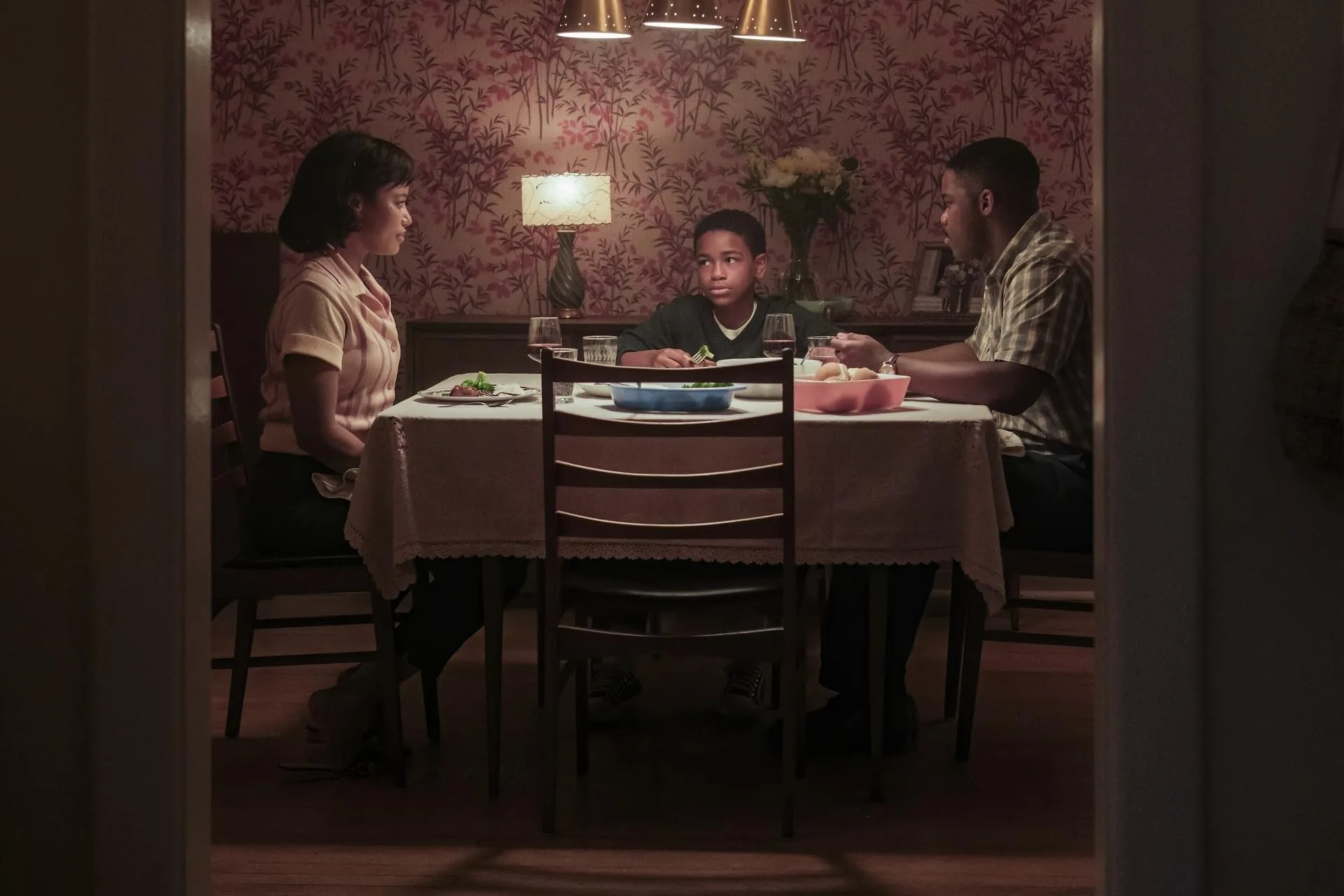
Taylour Paige, as Charlotte Hanlon, is magnetic. She gives the character a world-weary defiance and a moral clarity born of experience. An educated woman resisting the social and racial strictures of 1962, Charlotte’s pushback supplies the series with emotional and cultural heft. She functions as a moral compass; her courage concerns confronting the town’s prejudices as much as confronting a supernatural menace. Her scenes are frequently the most charged, whether a creature lurks nearby or not.
Chris Chalk’s Dick Hallorann is reverent and singular. He honors the character’s telepathic “shine” while showing a younger man reluctantly pulled into a military-supernatural project. Chalk captures the anxiety of possessing a gift that powerful institutions seek to exploit. His performance, particularly as he begins to perceive the entity’s nature, ranks among the show’s strongest. James Remar’s General Shaw stands as an imposing foil, an institutional figure whose ambition eclipses ethics. The military strand uses these adults to explore another fear: the terror of being a pawn in a larger, unfathomable game.
The younger cast functions with a different mandate than previous iterations of the Losers Club. Their dynamic is quieter and less given to rapid-fire banter. Clara Stack’s Lilly stands out. Her trauma — grievous loss and institutional isolation — makes her especially attuned to Derry’s evil. She embodies a vulnerability central to the show’s examination of how malevolence targets its prey.
Writing for the youth sometimes leans on predictable lines to advance plot, yet their arc still touches the show’s core theme of childhood exposure to danger. Their efforts to solve the mystery feel less like a nostalgic adventure and more like necessary acts of communal survival against indifferent adult authority.
Spectacle and the Scariness Deficit
Visually, the series follows Andy Muschietti’s maximalist horror instincts. The show commits frequently to gore and a wide variety of scares. The entity’s manifestations vary in success. Some are finely conceived and viscerally unsettling, accessing surreal, primal anxieties. Others rely heavily on visible CGI, which can distract and push images toward genre pastiche rather than sustained fright. Digital spectacle sometimes undercuts the potential for lasting practical dread.
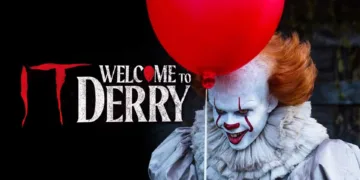
Pennywise’s presence (Bill Skarsgård) is intentionally sparse in these early episodes. That absence alters the series’ capacity to sustain a pervasive dread. The entity’s favored forms in the prequel often lack the intimate, twisted familiarity of the dancing clown. The split perspective — adult machinations and immediate child frights — fragments suspense; the audience is shuffled between political tension and direct scares, and the psychological pressure occasionally thins.
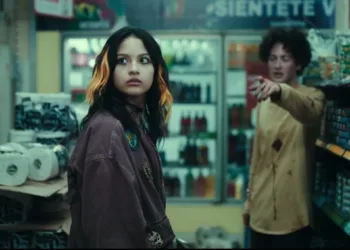
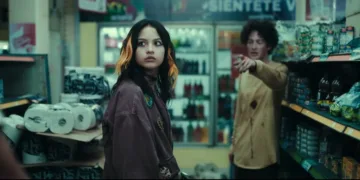
Horror erupts in large, surreal set pieces placed inside everyday locations: a movie theater, a grocery store, a car. This technique yields jolting shocks. The series frequently privileges shocking, explicit sequences and the cinematic punch of grotesque moments over slow-building psychological terror. The show’s aesthetic can be described as Hyper-Horror, where scare volume and intensity remain consistently amplified. That choice risks desensitizing the viewer; when every shadow conceals exploding horror, shadows lose their power.
Symbolic Topography and American Sin
The choice of 1962 operates as an effective crucible for contemporary concerns. The setting confronts systemic racism and the specific prejudices that the Hanlon family endures. Derry’s darkness is presented as rooted in American social history alongside the monster in the sewer. Civil rights struggles flicker on background television screens and serve as a stark counterpoint to the town’s supposed quaintness.
An important thread traces the Indigenous tribe’s history with the entity and the military’s disregard for sacred land. The series acknowledges that Derry’s evil predates the 27-year cycle and connects the entity to a continent-spanning history of violence and suppression. The military’s violation of ancestral grounds appears as a catalyst for the entity’s stirring, which suggests a relation between colonial transgression and cosmic response.
Derry functions as a Malefic Microcosm: idyllic surfaces conceal monstrous truths that mirror national sins beneath white picket fences. The adult plot probes the terrifying implications of institutional fear during the Cold War period.
Childhood innocence remains the central, enduring theme. The series shows the adults’ frustrating narrow-mindedness: paralyzed by their own fears or social blind spots, they refuse to see the children’s danger until it threatens them directly. The adults’ blindness to the monster parallels their unwillingness to see the prejudice in their midst.
The traumas—abuse, loss, ostracism—that afflict the young characters become the fuel the entity consumes. Fear, the series insists, is the entity’s steady diet. Welcome to Derry delivers a visually rich and conceptually ambitious examination of fear, arguing that the supernatural threat is symptomatic of a social sickness already present.
It: Welcome to Derry is a prequel television series based on the interlude chapters and mythology of Stephen King’s novel It. Set in 1962, decades before the events of the modern films, the series explores the origins of the entity known as Pennywise and how its terror intersects with the geopolitical and social anxieties of Cold War-era Derry, Maine. The series is scheduled to premiere on October 26, 2025, on HBO and will be available to stream on Max (formerly HBO Max), with new episodes releasing weekly.
Full Credits
Director: Andy Muschietti
Writers: Jason Fuchs, Brad Caleb Kane, Andy Muschietti, Barbara Muschietti, Stephen King
Producers and Executive Producers: Andy Muschietti, Barbara Muschietti, Jason Fuchs, Brad Caleb Kane, Bill Skarsgård, David Coatsworth, Roy Lee, Dan Lin, Shelley Meals
Cast: Bill Skarsgård, Taylour Paige, Jovan Adepo, Chris Chalk, James Remar, Stephen Rider, Madeleine Stowe, Rudy Mancuso
Composer: Benjamin Wallfisch
The Review
It: Welcome to Derry
It: Welcome to Derry is a structurally ambitious prequel that seeks to widen the narrative and thematic scope of its source material. It succeeds in offering a compelling examination of American prejudice and institutionalized fear through its powerful adult performances, particularly those of Taylour Paige and Jovan Adepo. The horror is frequent and visually assertive but often favors spectacle over sustained, psychological dread, sometimes suffering from a fragmented focus. The series is essential viewing for King completists, yet its narrative sprawl occasionally dilutes the sharp tension necessary for pure horror.
PROS
- Taylour Paige and Jovan Adepo deliver captivating, nuanced performances that anchor the series' dramatic and thematic weight.
- Successfully integrates real-world social commentary (racism, institutional prejudice, Cold War paranoia) with the supernatural horror.
- Expands the "King-verse" mythology, cleverly integrating characters like a younger Dick Hallorann.
- Features high production value and frequent, visually assertive horror sequences consistent with the films' aesthetic.
CONS
- The narrative is sometimes stretched too thinly across the episode count, leading to periods of slow narrative momentum.
- The constant jumping between adult and child storylines can diminish the overall sense of dread and psychological tension.
- Over-reliance on explicit, CGI-heavy spectacle sometimes detracts from subtle, psychological terror.
- The known outcome of the timeline reduces the stakes of the immediate plot.