

























![Kingdom Hearts Collection [I-III] Review](https://gazettely.com/wp-content/uploads/2026/10/Kingdom-Hearts-Collection-I-III-1-360x180.webp "Kingdom Hearts Collection [I-III] Review: KHII Holds Steady as Newer Entries Fluctuate 37")





The human condition appears bound to the terror of unmaking, the sudden, brutal collapse of the scaffolding we call reality. Josh Boone’s film, adapted from Colleen Hoover’s novel, attempts to map that collapse when a seemingly stable life is vaporized by a single, catastrophic event. The story grows from a fatalism tied to postponed desire.
It centers on Morgan (Allison Williams), her partner Chris, Morgan’s sister Jenny, and Jenny’s partner Jonah (Dave Franco). A fatal car accident instantly removes two of the four, and the survivors must sift through the wreckage of loss and the corrosive secrets revealed within it. A years-long betrayal emerges, complicating grief and forcing Morgan and Jonah to face decades of unspoken history.
The film follows the gradual reshaping of their lives alongside Morgan’s teenage daughter, Clara (Mckenna Grace), a young figure struggling to mourn what she believed to be true. The narrative sets itself up as an immersion in the price paid for existential misdirection.
Shadows of Misdirected Choice
The drama’s architecture rests on profound miscalculation. Boone opens with a 2007 flashback that marks the precise instant two lives diverged. Morgan and Jonah appear as quiet, intellectually aligned counterparts drawn to one another while remaining tethered to unsuitable partners. An unvoiced attraction is interrupted by Morgan’s unexpected pregnancy with Chris, a moment that fixes their life assignments. The film poses a central philosophical question: what burden comes when a hasty choice determines the trajectory of nearly two decades?
The central tragedy functions as a violent intervention, a melodramatic mechanism that liberates the protagonists from self-imposed cages. Chris and Jenny’s deaths and the immediate discovery of their long-term affair add a grotesque layer of melodrama to the survivors’ reality. Morgan and Jonah must navigate loss, confusion, and the bewildering relief of a newly opened freedom. The film examines how authentic grief becomes tangled when the dead are revealed as deceivers.
The arc that draws Morgan and Jonah toward one another struggles to make their suppressed history register as compelling cinema. Allison Williams approaches Morgan’s grief with tense rigidity; the magnitude of losing a husband and a sister, coupled with the humiliation of betrayal, requires an emotional depth that her performance does not fully supply. Dave Franco’s Jonah often reads as inert.
His responses rely on small physical gestures rather than an evident internal turmoil, and when the camera lingers on him he appears to be showing sadness rather than living it. This scarcity of inner life leaves the adult relationship emotionally thin. After seventeen years of suppressed longing, the spark that emerges between them feels muted and anticlimactic. The screenplay treats their past as a logistical problem, a set of inconvenient relationships dissolved by death, rather than the profound emotional dilemma that should carry the weight of unlived lives.
The storyline about long-term regret, the investigation into the cost of those suppressed choices, becomes repeatedly marginalized beneath the unfolding high school elements. The emotional journey of these aging protagonists, who ought to shoulder existential dread, feels compressed and underdeveloped.
The Artifacts of Broken Trust
The film transfers heavy emotional responsibility to Clara, a potent force set in sharp relief against the adults’ inertness. Mckenna Grace supplies the story’s most vital moments of raw pain and acts as the necessary emotional anchor. Her grief and the increasingly strained mother-daughter dynamic intensify the tension. Morgan’s urgent need to sanitize the deceased, her determination to hide the affair from Clara, creates the source of this friction.
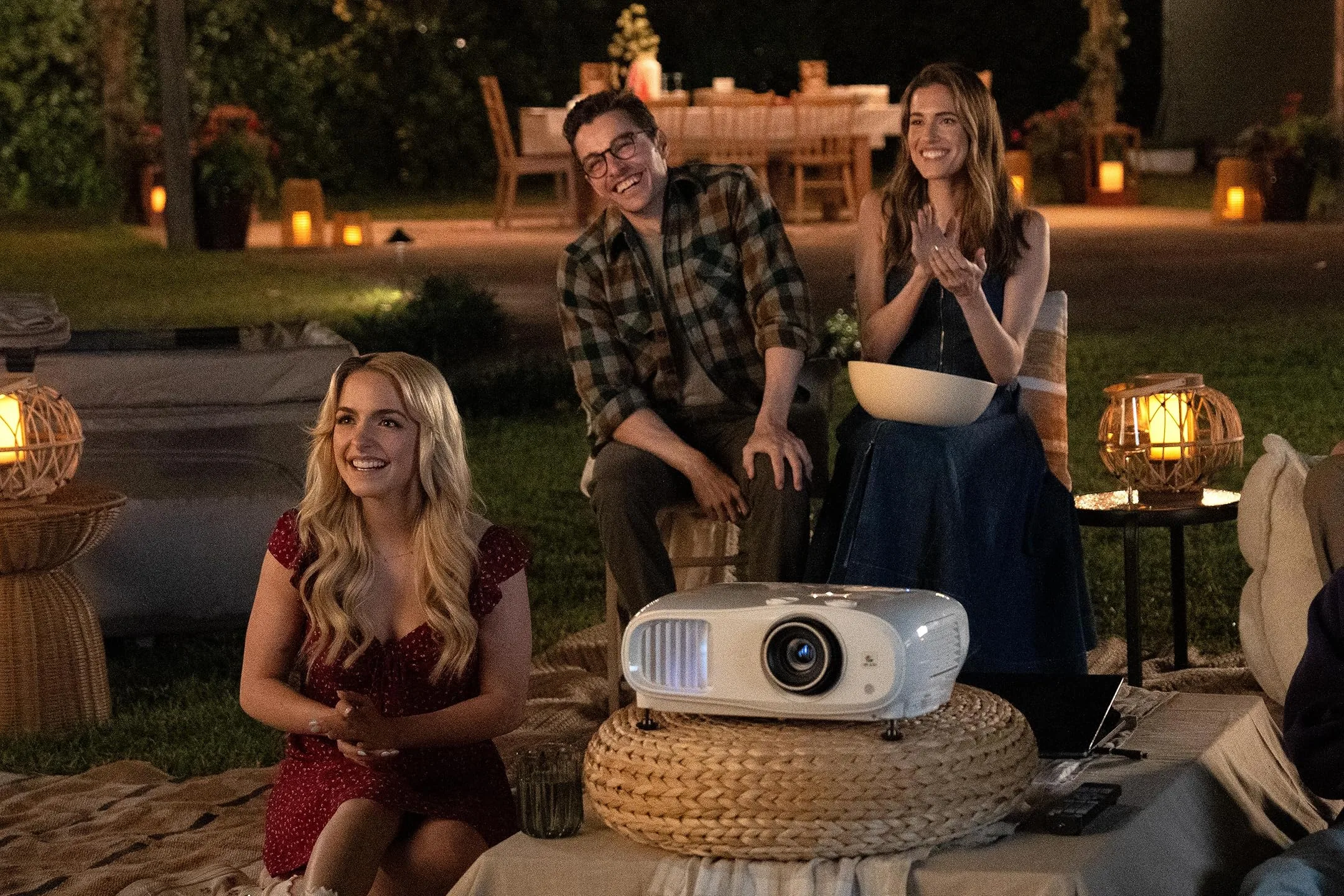
That concealment traps Clara in distorted mourning and prevents her from grieving the man her father truly was. The constructed tension drives much of Clara’s rebellion and her emotional distance from Morgan. The narrative’s handling of this dynamic stretches credibility; it strains belief that a smart, headstrong teenager would not question the suspicious circumstance of her father and aunt dying together in the same vehicle. Clara is left to grieve a false idol, a tragedy that runs deeper than the surface melodrama.
Clara’s escape from her mother’s control and her ensuing confusion lead her into a youthful romance with Miller (Mason Thames). Miller presents as the cinematic embodiment of unassuming goodness, a gentle, aspiring filmmaker who becomes a receptacle for Clara’s displaced affection and bewilderment. He functions as a structural convenience and a sanctuary rather than a fully developed character.
A minor “forbidden fruit” tension tied to his family background exists but the film never examines it seriously. The chemistry between Grace and Thames brings an ease and warmth that the adult relationship lacks. That ease creates a tonal dissonance: a saccharine, uncomplicated young romance sits against the heavy reality of adult betrayal and death. The prominence of the young subplot implies the film favors a readily consumable young-adult romance over the grimmer, morally complex labor of adult repair.
The narrative’s reluctance to commit to the more agonizing arc of Morgan and Jonah means the young-adult thread, while well acted, reads as a distraction and robs the central drama of necessary emotional room. Miller’s role remains transparent; he offers Clara a safe, simple option and permits her to avoid confronting her mother and the ugly truth.
An Aesthetic of Avoidance
Boone’s stylistic choices can ground individual moments yet lack the structural rigor required to sustain a story of this intensity. The primary problem is structural: melodrama overwhelms subtlety. The script, especially in the second half, moves with a hurried sense of closure. Major emotional conflicts—complicated financial futures, paternity doubt, years of quiet resentment—are resolved through narrative convenience rather than through sustained reckoning. The film trades an artificially neat resolution for the long, painful labor of moral and emotional repair.
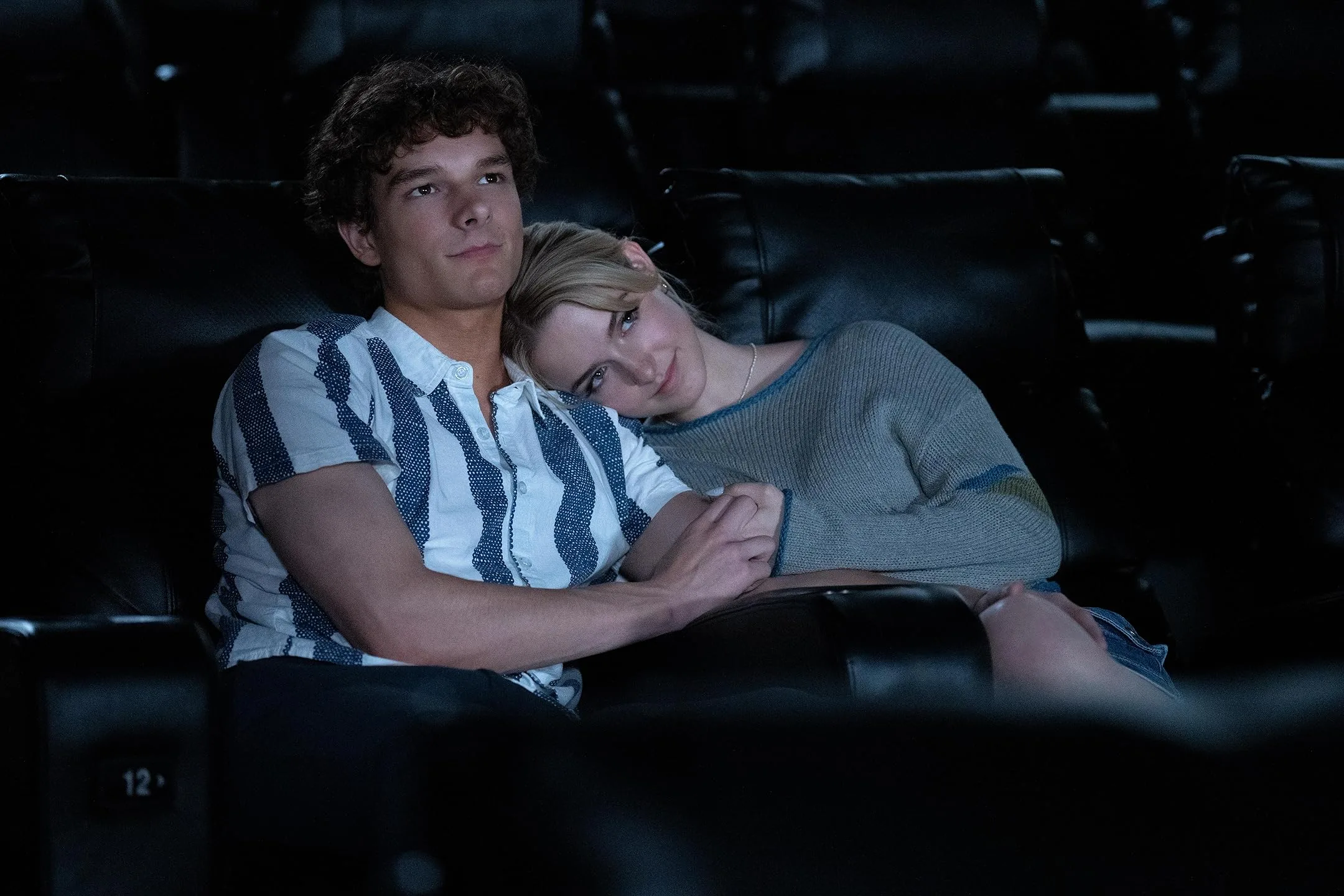
A broader failing lies in the treatment of grief. Loss and betrayal operate largely as plot machinery designed to free Morgan and Jonah for a destined pairing. There is little sense of lingering shadow or moral complication. The protagonists shift from devastated survivors to potential lovers too quickly, which suggests the film evades the dark and ugly dimensions of their situation.
This avoidance appears in aesthetic choices throughout the film. Tone oscillates between overwrought sentiment and moments of oddly placed comic relief that fracture the fragile atmosphere. Cinematography favors a cloyingly sun-dappled visual style that sanitizes the inherent horror of betrayal and renders the tragedy oddly impotent. The film’s reliance on animated text message bubbles and voiceovers further undermines immersion.
These devices, used to convey crucial connections, replace actors’ capacity to register feeling and reveal a lack of faith in the performers’ ability to communicate without text on screen. The structural reliance on such techniques highlights the film’s difficulty grasping the subtlety of human connection. Finally, persistent, blatant product placement intrudes into intimate moments with neon clarity, a reminder of commercial origin that cheapens the emotional stakes. The result is an aesthetic of avoidance that shies away from the necessary weight of its subject.
Regretting You is a romantic drama based on the novel by Colleen Hoover. The story centers on Morgan Grant and her teenage daughter Clara, whose already complicated mother-daughter relationship is shattered following a tragic car accident that kills Morgan’s husband, Chris. The incident uncovers a shocking betrayal—a long-term affair—forcing Morgan and her late sister’s husband, Jonah, to confront their shared grief, the unearthed family secrets, and their own long-suppressed feelings for each other. The film is scheduled for a theatrical release in the United States by Paramount Pictures on October 24, 2025.
Full Credits
Title: Regretting You
Distributor: Paramount Pictures (US), Constantin Film (Germany)
Release Date (US): October 24, 2025
Rating: PG-13 (for sexual content, teen drug and alcohol use, and brief strong language)
Running Time: 117 minutes
Director: Josh Boone
Writers: Susan McMartin, Colleen Hoover (based on the novel by)
Producers and Executive Producers: Brunson Green, Anna Todd, Flavia Viotti, Robert Kulzer, Oliver Berben, Colleen Hoover, Allison Williams, Mckenna Grace, Dave Franco, Jon D. Wagner, Emily Magee, Pete Chiappetta, Anthony Tittanegro, Andrew Lary, Michael Rothstein, Samuel Hall, Warren Goz
Cast: Allison Williams, Mckenna Grace, Dave Franco, Mason Thames, Scott Eastwood, Willa Fitzgerald, Clancy Brown, Sam Morelos, Ethan Costanilla, Luke Pierre Roness
Director of Photography (Cinematographer): Tim Orr
Editors: Marc Clark, Robb Sullivan
Composer: Nathaniel Walcott
The Review
Regretting You
Regretting You presents a high-stakes premise about destiny and betrayal but lacks the necessary rigor to explore its philosophical core. The narrative uses tragedy as a convenient plot tool, favoring a facile young adult romance over the agonizing complexity of adult sorrow and moral reckoning. Despite Mckenna Grace's compelling performance, the film’s superficial aesthetic and rushed emotional resolutions prevent it from achieving genuine resonance. It is a testament to the easy spectacle of suffering, not the difficult work of enduring it.
PROS
- Mckenna Grace’s compelling, headstrong performance as Clara.
- The genuine, charming chemistry within the young adult storyline.
- The high-stakes initial premise of dual betrayal and fate.
CONS
- Surface-level exploration of grief and betrayal.
- Weak chemistry and undeveloped emotional depth in the adult romance.
- Distracting reliance on text message visuals and voiceovers.
- Significant tonal inconsistency and a rushed, sanitized resolution.
- Excessive, unsubtle product placement.







