









2025 was exhausting. That’s the word that keeps coming back. Another year of watching studios spend Scrooge McDuck money on projects that felt focus-grouped into oblivion, then wondering why nobody cared. The “is this even a movie or just IP management?” conversation got old somewhere around March, but we kept having it anyway because what else are you supposed to do when a $250 million film feels like watching someone’s LinkedIn profile?
At Gazettey, we watched everything. The good, the baffling, the ones that made us pause mid-review to ask “wait, who approved this?” Some films surprised us. A few even reminded us why we still do this job instead of, I don’t know, becoming park rangers or something peaceful.
This list isn’t for those films.
These are the ones that had everything going for them, budget, talent, hype; and still managed to face-plant in interesting or occasionally infuriating ways. Some are fascinating disasters, the kind you can’t stop picking apart. Others are just…there. Expensive wallpaper. The sort of movie that makes you check your phone not because you’re bored, but because you genuinely forget you’re watching something.
Either way, these are the films that defined 2025’s particular brand of disappointment. The ones we’re still arguing about, even if we wish we weren’t.
#15: Old Guy
Why skip: A mismatched assassin-and-apprentice duo struggles to find their rhythm in a polite, low-stakes action comedy.
Runtime: 90 mins • MPAA rating: R • Notable line: “I’m not your mentor, I’m your insurance policy.”
Dir: Simon West | Cast: Christoph Waltz, Cooper Hoffman, Lucy Liu | Tone: Action/Comedy | Notable scene: The mentor and protégé bicker over tactical ethics during a routine hit.
The pitch promised a sharp assassin-comedy handoff: Christoph Waltz as the aging pro, Cooper Hoffman as the younger chaos agent, and the easy friction of a “mentor/protege” setup. Lucy Liu, in theory, could have been the stabilizer or the saboteur, the third point in a triangle that forces choices.
Old Guy never finds the sting that premise wants. Simon West has action muscle in his filmography, yet the film’s rhythm circles the same beats without escalation. The jokes feel pre-cleared, the violence stays polite, and the relationship reads like two actors sharing a schedule rather than a worldview. Liu ends up used as a familiar shape instead of a real counterforce, as if the script is saving her for a movie that never arrives. Even the box office footnote, a tiny theatrical gross, makes the project feel like a shrug you paid for.
#14: Regretting You
Why skip: A mother and daughter navigate a sea of secrets and grief in this glossy, safe adaptation of a Colleen Hoover bestseller.
Runtime: 110 mins • MPAA rating: PG-13 • Notable line: “The problem with secrets is they aren’t just yours to keep.”
Dir: Josh Boone | Cast: Allison Williams, McKenna Grace | Tone: Romantic Drama | Notable scene: A tense dinner conversation where the weight of unspoken history finally cracks the surface.
A Colleen Hoover adaptation sells emotional velocity. Regretting You arrived with commercial promise: Allison Williams and McKenna Grace anchoring a mother-daughter story built around grief, secrets, and open wounds. Josh Boone’s track record suggested a director who could keep big feelings legible without turning them into syrup.
The trouble is the film’s fear of discomfort. Key moments get cleaned into neat beats, and the plot leans on miscommunication mechanics that feel like gears turning rather than people breaking. Instead of letting a scene sit in silence and heat, the script keeps reaching for reassurance, like it is worried the audience might feel too much for too long. Financially, it did fine, with reporting that it cleared $83 million worldwide on a $30 million budget. Artistically, it plays like a made-for-TV ghost wearing theatrical makeup.
#13: Modì, Three Days on the Wing of Madness
Why skip: A chaotic, period-piece fever dream that attempts to capture seventy-two hours in the life of artist Amedeo Modigliani.
Runtime: 110 mins • MPAA rating: R • Notable line: “Art is the only thing that doesn’t have to apologize for existing.”
Dir: Johnny Depp | Cast: Riccardo Scamarcio, Al Pacino | Tone: Biopic/Experimental | Notable scene: A surreal, pastiche-heavy sequence where Modigliani wanders through a bohemian, dreamlike Paris.
A Modigliani biopic invites a familiar romantic lie: suffering as aesthetic, poverty as halo, genius as permission slip. Modì embraces that temptation with prestige confidence, a period Paris veneer, and Al Pacino on hand to bless the enterprise with gravitas.
Its central failure is tonal ping-pong. The film gestures toward silent-era pastiche, then swerves into modern vulgarity, then reaches back again, like a channel-surfing cinephile stuck on “art movie” mode. Shifts like that can be purposeful, but here they read as indecision wearing a beret. There is also a prickly irony in a luxury-backed production staging “starving artist” mythology with a tourist’s fascination, then asking the audience to treat the performance of hardship as authenticity. Actors go big, sometimes too big, and Modigliani’s tragedy gets blurred by noise. Performances tilt toward ham, which undercuts the subject’s gravity and turns tragedy into theater.
#12: Smurfs
Why skip: A high-energy, celebrity-voiced musical reboot that trades heart for frantic pop-culture references and zany antics.
Runtime: 95 mins • MPAA rating: PG • Notable line: “It’s not easy being blue, but it’s harder being a solo act.”
Dir: Chris Miller | Cast: Rihanna (Voice), Nick Offerman | Tone: Animated Musical | Notable scene: A massive, neon-lit musical number led by Smurfette that feels like a modern pop concert.
Reboots are rarely subtle; this one arrived singing. Smurfs framed itself as an animated musical with a stacked voice cast, Rihanna voicing Smurfette, and a clear aim to compete in the pop-kid lane.
Then the humor starts waving from a distance. The script goes antic without landing real punch lines, and the film talks down to children in a way that makes adults feel like accomplices. Pop-culture references hit with the shelf life of a trending tab, already aging mid-scene. Metacritic’s 31 score signals the chill. The musical energy keeps sprinting, hoping speed will read as charm, but songs can only do so much when the story treats curiosity as an obstacle. It is zany on paper, oddly empty in motion.
#11: Juliet & Romeo
Why skip: Shakespeare’s classic tragedy gets a “modern” pop-musical makeover designed to appeal to the TikTok generation.
Runtime: 105 mins • MPAA rating: PG-13 • Notable line: “We aren’t a tragedy, we’re a movement.”
Dir: Timothy Scott Bogart | Cast: Diego Tinoco, Francesca Reale | Tone: Teen Musical Drama | Notable scene: The iconic balcony scene reimagined as a rhythmic exchange set against a contemporary urban backdrop.
“Revisionist Shakespeare” has become a cottage industry: put Romeo and Juliet in sneakers, add a playlist, hope irony reads as insight. Juliet & Romeo leans into the pop-musical angle, selling the lovers as a fresh commodity, the old tragedy repackaged with hook-ready sentiment.
The modernization feels like a gimmick that keeps pointing at itself. Shakespeare’s poetry gets flattened into functional dialogue, and the tragedy loses oxygen while the film works overtime to look “current” for Gen Z. That audience can smell pandering faster than a studio can print a poster (they have lived through too many “hello fellow kids” moments). The box office is a shrug: Wikipedia lists a gross under $600,000. That number does not diagnose artistry, but it does show the pitch never found traction beyond curiosity.
#10: The Alto Knights
Why skip: A lethargic mob drama featuring a dual performance by Robert De Niro that feels like a fading echo of classic gangster cinema.
Runtime: 115 mins • MPAA rating: R • Notable line: “In this business, you don’t retire; you just get less popular.”
Dir: Barry Levinson | Cast: Robert De Niro, Debra Messing | Tone: Crime Drama | Notable scene: The two rival mob bosses—both played by De Niro—have a quiet, metaphorical standoff.
A mob drama with Robert De Niro in dual roles should come with natural electricity. Add Barry Levinson behind the camera, Nicholas Pileggi on the script, and a $45 to $50 million budget, and you can picture the pitch: grown-up crime cinema, a theatrical event, a little old-school swagger.
Instead, The Alto Knights drifts. The pacing feels lethargic, the vibe reads like a “sleepy dad movie,” and the genre beats arrive in familiar order without much pressure behind them. De Niro can carry a lot, yet the film keeps circling nostalgia, like it is searching for The Irishman’s shadow and finding only a dim outline. Box office makes the mismatch loud: about $9.6 million worldwide, per Wikipedia. There is a sad irony here: gangster films thrive on urgency and appetite, and this one feels politely full. It ends up feeling like a pale, geriatric imitation of The Irishman, minus the ache.
#9: Tron: Ares
Why skip: The neon digital frontier spills into the physical world, trading its psychedelic identity for city-street chase sequences.
Runtime: 125 mins • MPAA rating: PG-13 • Notable line: “The Grid was a cage; the real world is a playground.”
Dir: Joachim Rønning | Cast: Jared Leto, Jeff Bridges, Greta Lee | Tone: Sci-Fi Action | Notable scene: A high-speed light cycle chase through broad daylight on busy city streets.
Tron: Ares had a promise: give people the Grid, make it neon, make it strange, make it sing. Marketing leaned into mood, light trails, and a digital program stepping into physical reality, with Jeff Bridges returning as Kevin Flynn.
The screenplay’s big bet is also its self-sabotage. Ares shifts much of the action out of the digital Grid and into the real world, including light cycles cutting through city streets. That choice drains the franchise’s identity, trading psychedelic abstraction for chase-scene familiarity. The irony is that Tron was always about the seduction of an unreal space, a glowing metaphor for control and labor. Put the set pieces in daylight and the metaphor starts paying rent.
Box office reflects the deflation. Box Office Mojo lists $142,249,983 worldwide. That number is not microscopic, yet for a tentpole sequel it reads like a cult project wearing blockbuster clothes. By late October, trade coverage pegged the worldwide total around $124 million, a figure that later crept higher, but the narrative had already set: expensive sequel, muted return.
#8: Clown in a Cornfield
Why skip: A YA slasher that struggles to find the balance between its satirical potential and its standard horror tropes.
Runtime: 98 mins • MPAA rating: R • Notable line: “Tradition is just another way of saying we’ve always done it wrong.”
Dir: Eli Craig | Cast: Adelaide Park, Charlie Tahan | Tone: Horror/Slasher | Notable scene: The first appearance of the killer clown amidst the towering stalks of a small-town cornfield.
Eli Craig’s brand thrives on the push-pull between horror mechanics and comedic release. A YA slasher like Clown in a Cornfield should have been a playground for that tension: teen archetypes, small-town rot, and a killer clown built for satire.
Audience response shows the wobble. CinemaScore gave it a C+, the grade of a crowd that watched the movie and then checked its watch. The film struggles to balance scares and jokes, so the slasher side loses bite and the comedy side loses timing. It can feel derivative of Children of the Corn, then hesitate, then remember it wants to be clever, then retreat to expected kill rhythm. “Toothless” is the worst possible label for a clown movie. Teeth are half the brand.
The sad part is that the premise could have skewered generational paranoia, small-town nostalgia, and the way “protecting the kids” turns into a license for cruelty. Instead, it mostly plays the hits.
#7: Snow White
Why skip: A massive-budget live-action reimagining that swaps fairy-tale wonder for uncanny CGI and modern procedural logic.
Runtime: 130 mins • MPAA rating: PG • Notable line: “I’m not looking for a prince; I’m looking for a way to lead.”
Dir: Marc Webb | Cast: Rachel Zegler, Gal Gadot | Tone: Fantasy Musical | Notable scene: A controversial musical sequence involving the heavily digitalized Seven Dwarfs.
Disney’s live-action Snow White carried a budget reported in the $240 to $270 million range and the weight of its own mythology. The pitch is corporate comfort food: a familiar fairy tale, a musical wrapper, and a marketing machine that can turn a trailer into an event. The execution became a case study in how “modernization” can turn into a nervous tic.
Box office makes the stumble visible. Wikipedia lists $205.7 million worldwide. The magical elements lean heavily on CGI, and the dwarfs debate landed hard in uncanny valley territory, with coverage focusing on how artificial the characters look. That visual discomfort bleeds into the story’s emotional engine. The fairy tale’s tenderness gets replaced by a compliance checklist, and songs have to work harder than they should.
Then the public noise swallowed the movie. Reporting tied the underperformance to controversy and backlash that kept hijacking the conversation, pushing craft and performance into the background. Snow White became a referendum instead of a film, which is a brutal job for a fairy tale, and a very modern one. It keeps rewriting the fairy tale’s emotional logic into managerial language, so wonder turns procedural. The controversies then dominate the frame, and the film never earns space to breathe on its own terms.
#6: Hurry Up Tomorrow
Why skip: A moody, psychological thriller that serves as a hazy visual companion to The Weeknd’s 2025 album.
Runtime: 102 mins • MPAA rating: R • Notable line: “The sun doesn’t rise until I say it does.”
Dir: Trey Edward Shults | Cast: Abel Tesfaye, Jenna Ortega, Barry Keoghan | Tone: Psychological Thriller | Notable scene: A long, claustrophobic tracking shot through a backstage corridor that blurs reality and performance.
Trey Edward Shults makes films that sit in discomfort. Hurry Up Tomorrow, billed as a psychological thriller and a companion piece to The Weeknd’s 2025 album, looked like a match for that intensity: Abel Tesfaye playing a fictionalized version of himself, Jenna Ortega and Barry Keoghan in orbit, and a studio willing to sell the vibe.
The issue is drift. The film is moody, then oppressive, then oddly self-indulgent, mistaking sustained pressure for forward motion. Shults can turn minimal plot into a pulse, yet here the narrative meanders, asking viewers to live in the fog without delivering a shape. The experience can feel like being trapped in a backstage corridor listening to someone insist the party is happening in the next room.
Box office is blunt: $7.8 million worldwide on a $15 million budget, per Wikipedia. Fans of the music may want more story. Fans of the director may want more discipline. Everyone gets more haze. The film keeps asking for trust, then refuses to show its work.
#5: The Electric State
Why skip: A $320 million Netflix spectacle that delivers high-gloss “streaming slop” instead of the source material’s gritty, robotic dread.
Runtime: 140 mins • MPAA rating: PG-13 • Notable line: “The robots didn’t win; they just stayed while we left.”
Dirs: Anthony and Joe Russo | Cast: Millie Bobby Brown, Chris Pratt | Tone: Sci-Fi Adventure | Notable scene: A massive, expensive-looking battle involving retro-futuristic robots in a desert wasteland.
Netflix’s The Electric State is a clean emblem of the “$300M streaming slop” era, with Wikipedia reporting a $320 million budget. Millie Bobby Brown and Chris Pratt headline, the Russos direct, and the whole thing arrives with the algorithmic confidence of a platform that thinks scale equals emotion.
The frustration is how little that spend becomes a felt world. The source material’s bleak strangeness gets sanded into a safer, shinier adventure, with edges filed down until nothing catches. Robots and ruins become wallpaper rather than dread, and the human beats feel pre-approved for maximum watchability, as if the movie is designed to play while viewers also scroll, cook, and answer emails. Blockbuster size is there; blockbuster personality is not. If you wanted a word for it, call it synthetic sincerity cinema: the film simulates the shape of wonder without the messy interior that makes wonder stick.
The Russos can stage chaos, yet here the chaos feels like product. The visuals can look curiously bland for that price tag, a reminder that money buys pixels, not taste. It is Netflix slop with prestige wrapping, and the wrapping is the loudest thing in the room. A $300M-plus movie that looks strangely modest is its own kind of punch line, and Netflix is the one telling it.
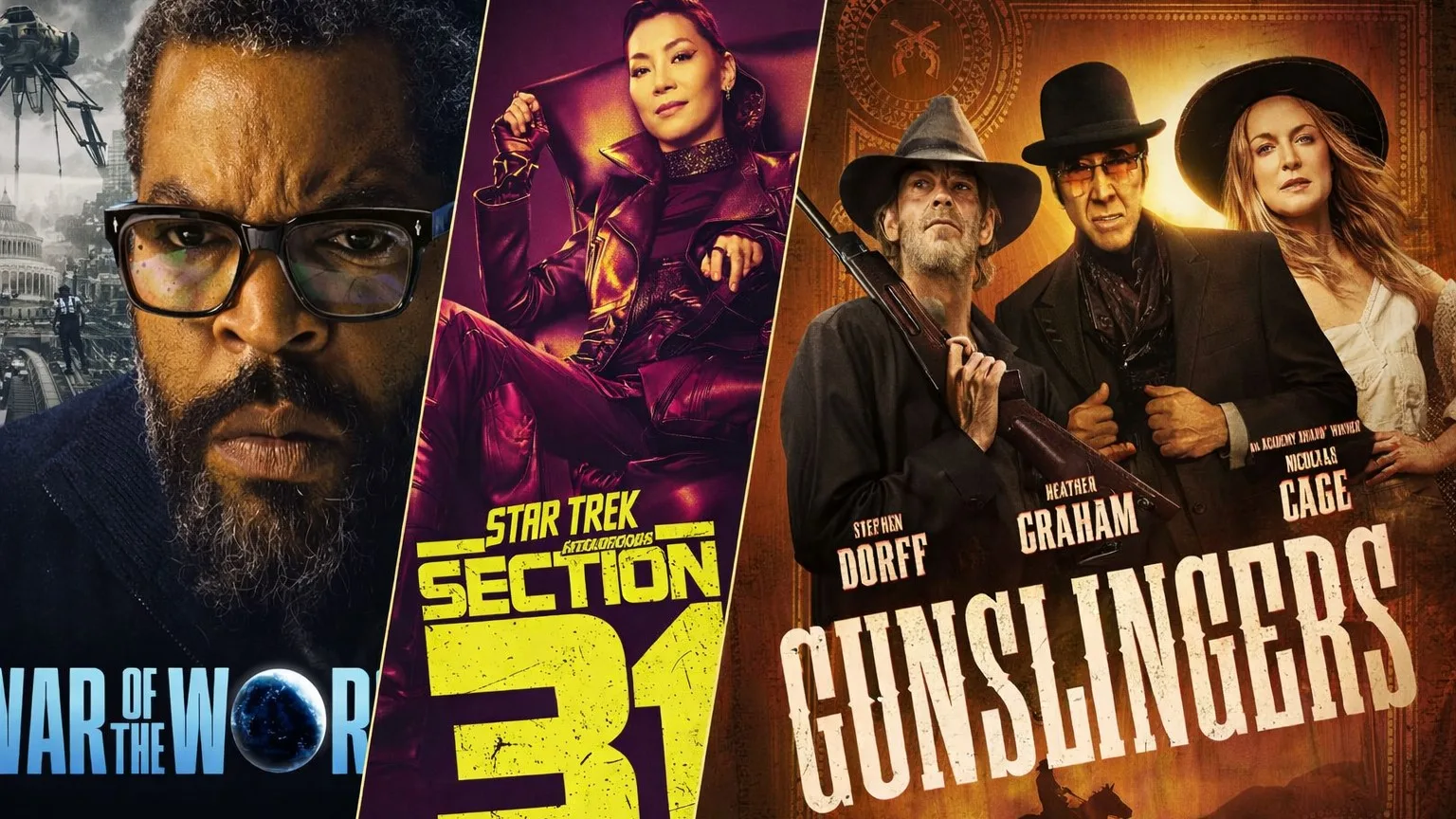
#4: Star Trek: Section 31
Why skip: A cynical, action-heavy spin-off that abandons Trek’s core optimism for the shadows of interstellar espionage.
Runtime: 112 mins • MPAA rating: TV-MA • Notable line: “Peace is a luxury provided by people like me.”
Dir: Olatunde Osunsanmi | Cast: Michelle Yeoh, Omari Hardwick | Tone: Sci-Fi Spy Thriller | Notable scene: Georgiou executes a cold, calculated infiltration of a high-security diplomatic gala.
Star Trek carries a moral brand: optimism, curiosity, a future where cooperation is not a punch line. Section 31, centered on Michelle Yeoh’s Philippa Georgiou, was always going to stress-test that brand by leaning into espionage and moral compromise.
Reception suggests the test went poorly. Wikipedia reports a 20% approval score on Rotten Tomatoes and a 37 on Metacritic. It plays less like a Star Trek film and more like a slick streaming action product wearing the franchise’s uniform. The bigger betrayal is philosophical: cynicism keeps creeping in, and the story’s “secret ops” posture squeezes out the wonder that makes Star Trek feel like a promise. There are ways to write moral compromise as tragedy, or as warning, or as a mirror held up to state power. Section 31 often treats it as a vibe.
Yeoh can sell almost anything, yet even she can’t fully disguise how much this feels like a rejected pilot inflated into a feature-length duty shift. Trek has always treated ethics as plot, not wallpaper; here, ethics get relegated to background noise while quips and gunfights take the wheel. It feels small on a big stage.
#3: Gunslingers
Why skip: A low-rent Western that relies on genre clichés, incomprehensible editing, and a “costume rack” approach to history.
Runtime: 92 mins • MPAA rating: R • Notable line: “There’s no room for mercy in a town named Redemption.”
Dir: Brian Skiba | Cast: Stephen Dorff, Nicolas Cage | Tone: Western/Action | Notable scene: A frantic, poorly edited shootout in the center of a dusty, stereotypical frontier town.
Gunslingers belongs to Brian Skiba, who writes, directs, and edits, which already suggests a certain DIY stubbornness. The concept is straight-to-VOD comfort: a town named Redemption, a mob of pursuers, and bullets as punctuation.
The problems start at the sentence level. Dialogue leans on catchphrases, exposition drops like sandbags, and characters arrive as types rather than people. Action is cut into incomprehensibility, the kind of “fast” that feels like panic in the edit bay. The film treats Western history like a costume rack: accents, hats, vague talk about justice, then another shootout. That is not provocation; it is laziness dressed as grit. A Western can be myth, critique, or nightmare. Gunslingers picks noise, then turns that noise into “style.” It also stumbles into ugly shorthand about the frontier, leaning on caricature instead of research, which turns history into a punch line.
Even the title feels like an apology for its own genre, like the movie is already pleading for forgiveness from anyone who has seen a better one.
#2: Playdate
Why skip: A tonal disaster where suburban dad humor and mercenary violence collide in a desperate, frantic chase movie.
Runtime: 95 mins • MPAA rating: R • Notable line: “I thought we were just going to the park!”
Dir: Luke Greenfield | Cast: Kevin James, Alan Ritchson | Tone: Action Comedy | Notable scene: A chaotic escape from an suburban home involving improvised weapons and aggressive ADR jokes.
Playdate sells itself as suburban escalation: Kevin James as a recently unemployed dad, Alan Ritchson as the charismatic wild card, and a casual playdate that turns into a mercenary chase. Even the setup reads like a dad-comedy fever dream, the kind where juice boxes lead to gunfire.
Then it becomes atomically awful. The tone ricochets between action-thriller pose and jokes that land like spite, so every scene feels like a fight between two movies sharing one timeline. ADR issues pull you out of moments, and punch lines collapse under their own desperation, as if the film is trying to brute-force laughter through volume. It also has that “we wrote this in a rush” smell, a synthetic stink that is hard to scrub off in editing.
Its cultural afterlife comes fast: it turns into a punching bag, a title people cite as proof that “content” is winning. Prime Video distribution seals the vibe. It plays like a dare, and the movie loses that dare in the first reel. It misfires at every turn.
#1: War of the Worlds
Why skip: A disastrous “screenlife” experiment that replaces alien terror with blatant Amazon product placement and low-budget technical chaos.
Runtime: 88 mins • MPAA rating: PG-13 • Notable line: “I’m seeing the end of the world through a four-bar connection.”
Dir: Rich Lee | Cast: Ice Cube, Eva Longoria | Tone: Sci-Fi Thriller | Notable scene: The climax where an Amazon Prime Air drone delivers a crucial plot device amidst an alien invasion.
If 2025 has a patron saint of hubris, it might be this screenlife War of the Worlds, released on Amazon Prime Video. Ice Cube plays William Radford, a surveillance expert watching an alien invasion through feeds and dashboards. The concept nods to Orson Welles’ 1938 radio panic, translated into screenlife.
Bizarre casting is the first collision. Ice Cube’s persona is blunt and physical, anchored in presence. Screenlife turns presence into a cursor. That mismatch could have been clever, yet here it reads like a pandemic logistics compromise. Production lasted fifteen days and the budget was reported below $10 million. The film still aims for the look of an event, which sets up technical chaos: effects that feel cheap, interfaces that look like corporate demos, and spectacle that never stops reminding you it is happening inside windows.
Then the tone collapses into ad-space theater. Wikipedia notes wall-to-wall Amazon placement, including a Prime Air drone delivering a flash drive in the climax, a moment that plays like satire that forgot to be satirical. Reception is brutal: 4% on Rotten Tomatoes and 6 on Metacritic. The movie becomes a meme-generator for all the wrong reasons, a disaster you can share in GIF form. Its legacy is the clearest warning label on the 2025 blockbuster: ambition is not the same thing as vision, and technology is not the same thing as imagination.