
















TV in 2025 gave us some genuinely great stuff—the kind of episodes that make you immediately grab your phone to see if anyone else is losing their mind over what just happened. But it also gave us… well, this list.
Look, nobody sets out to make bad television. These shows had real budgets, actual talent, writers’ rooms full of people who presumably wanted to make something good. And yet somehow we ended up with series that felt half-baked, or over-thought, or like they were trying to be three different shows at once and failing at all of them.
At Gazettely, we covered a lot of TV this year. Most of it was fine to great. These shows were not.
To be clear: “worst” here means the craft fell apart, not that we’re trying to shame anyone for liking them. If you loved one of these, genuinely, good for you—we’re not the taste police. But by the basic standards we use for every review (does the writing work, do the characters feel real, does the show know what it’s trying to be), these didn’t get there. Some had flashes of something better buried in there, which almost makes it worse.
We’re starting with the least-offensive disaster: a workplace comedy that had a solid premise and then proceeded to trust its joke algorithm more than its actual characters.
#10: The Z-Suite (Tubi)
Why skip: A workplace comedy that treats generational identity like a series of hollow Twitter tropes rather than building actual characters.
Runtime: 30 mins • MPAA rating: TV-MA • Notable line: “Is this a pivot or a nervous breakdown?”
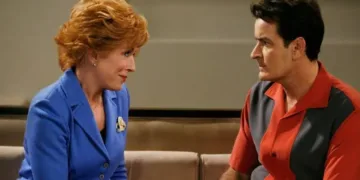
Dir: Various | Cast: Lauren Graham, Luenell | Tone: Satirical workplace comedy | Notable scene: A focus group where Gen Z and Gen X employees argue over the semiotics of a thumbs-up emoji.
The Z-Suite has a premise that should work: generational friction in an ad agency, where status and language are constantly being renegotiated. Office anthropology as comedy. The setup practically writes itself.
Except the show keeps treating “Gen X” and “Gen Z” like Halloween costumes instead of actual people. Characters turn into labels. Labels turn into dialogue. Dialogue turns into noise you stop hearing.
At #10 on this list, the failure feels fixable. You can imagine a version where the office dynamics have real texture, where both the older guard’s panic and the younger team’s certainty carry actual contradictions. Instead, too many scenes feel like they were assembled from whatever was trending on Twitter that week. Lots gets said. Almost nothing gets revealed. The comedy rhythm lurches forward, stalls out, then lurches again.
The weirdest part? A show about advertising can barely sell its own jokes. It keeps showing you the pitch deck and forgetting to actually pitch.
Next up: a reality series that promises danger and survival, then delivers safe beats and predictable reaction shots.
#9: Celebrity Bear Hunt (Netflix)
Why skip: A survival reality series that trades genuine stakes for manufactured drama and predictable, over-rehearsed emotional breakthroughs.
Runtime: 45 mins • MPAA rating: TV-14 • Notable line: “I’ve never felt more alive than when I was eating that bug.”
Dir: Various | Cast: Bear Grylls, Various Celebrities | Tone: Reality/Survival | Notable scene: A celebrity has a staged panic attack while crossing a perfectly safe rope bridge.
Celebrity Bear Hunt has a primal pitch: famous people in the jungle, stripped of comfort, guided by Bear Grylls and his brand of manufactured grit. Reality TV loves this fantasy—the celebrity returned to something like a state of nature, minus the PR team, plus a lot of mud.
The problem is commitment. The show sells intensity, then delivers tension you can spot from a mile away: the staged panic, the pep talk, the predictable setback, the “I surprised myself” confessional. It’s a survival show with training wheels. A theme park version of hardship. Even the jungle, which should feel like an active threat, becomes pretty wallpaper between talking-head segments.
This lands at #9 because the concept still works in flashes. A well-shot landscape can carry real weight. A smart challenge can actually shape a narrative. The show just keeps looping back to the same emotional beats, like it’s terrified of letting things get genuinely weird.
From a format that can’t sustain suspense, we move to a franchise extension that can’t manufacture chemistry on command.
#8: Suits LA (NBC/Peacock)
Why skip: A glossy spin-off that captures the expensive tailoring of the original but forgets to include the sharp writing or character chemistry.
Runtime: 42 mins • MPAA rating: TV-14 • Notable line: “In this city, you don’t just win; you own the scoreboard.”
Dir: Victoria Mahoney | Cast: Stephen Amell, Josh McDermitt | Tone: Legal drama | Notable scene: A high-stakes negotiation in a glass office that feels like a retread of every legal trope from 2011.
A spin-off inherits two things it didn’t earn: attention and comparison. Suits LA shows up with a name that works like a keycard. Viewers expect a certain tempo, a certain swagger, a certain pleasure in watching smart people turn language into a weapon. A legal show can survive weak cases if the interpersonal stuff is strong. It can even survive thin characters if the dialogue sings.
Here, the engine sputters. The show has the surface polish of the original, but the internal logic feels shaky. Relationships never lock into that addictive push-pull that makes workplace dramas feel like competitive sports. The dialogue often hits “law-show cadence”—a tone that signals intelligence without actually proving it. Cases feel generic, built to keep the episode moving rather than to reveal character.
The tonal issue makes it worse. Suits LA wants to project seriousness while reaching for breezy cool. That tension could be interesting. Instead, it just muddles the show’s identity. You end up with a series wearing expensive tailoring while forgetting to build a body underneath.
From a brand that can’t find its spark, we jump to a thriller built on urgency that can’t keep the clock ticking.
#7: Countdown (Prime Video)
Why skip: A conspiracy thriller that screams about urgency while padding its runtime with repetitive filler and schematic plot obstacles.
Runtime: 50 mins • MPAA rating: TV-MA • Notable line: “The clock isn’t ticking, it’s screaming.”
Dir: Various | Cast: Jensen Ackles | Tone: Action thriller | Notable scene: A race against time through a crowded terminal that inexplicably takes ten minutes of screen time.
Countdown arrives shouting its theme from the first frame: time is running out. The modern thriller’s favorite move. Every minute matters. Your attention will be rewarded with escalation. The setup aims for procedural mechanics fused with conspiracy, the kind of plot that should tighten like a tourniquet as episodes stack.
Instead, the pressure leaks. The “race” framing becomes repetitive—more slogan than structural discipline. Scenes announce stakes, then drift into filler. Obstacles feel schematic, like boxes being checked on a template rather than events that force characters into meaningful choices. Momentum exists in patches, but it never accumulates into the kind of dread you feel in your chest.
There’s a cultural echo here too. Post-9/11 thriller TV trained audiences to accept perpetual emergency as background noise. Countdown tries to tap that lineage while also showing how exhausted the formula looks when urgency is treated as decoration. A thriller needs escalation you can actually trace, not just alarms and running.
From a modern conspiracy that can’t sustain tension, we step back into the past, where a frontier drama builds atmosphere and then lets it evaporate.
#6: The Abandons (Netflix)
Why skip: A gorgeous-looking Western that mistakes slow-burn atmosphere for actual narrative progression, resulting in a story that circles its own campfire.
Runtime: 60 mins • MPAA rating: TV-MA • Notable line: “The land doesn’t care about your blood, only your sweat.”
Dir: Kurt Sutter | Cast: Lena Headey, Gillian Anderson | Tone: Frontier drama | Notable scene: A tense standoff over a property line that is discussed for three episodes before any action is taken.
A western carries myth in its saddlebags. The Abandons arrives with a strong genre promise: lawless territory, family power struggles, survival pressure, and the moral arithmetic of building a community through force. The premise has the bones of a classic—people inventing civilization while civilization invents them back.
The series often looks the part, which is its first trap. Prestige styling can seduce a show into confusing mood for movement. Here, arcs feel stretched. Emotional beats repeat. Conflicts get staged, then restaged, like the narrative is circling its own campfire waiting for something to happen. Stakes start to feel distant, more talked about than embodied.
A western thrives on specificity: the price of water, the cost of a lie, the terror of being outnumbered. When that specificity fades, the genre becomes a costume drama with dust. The Abandons ends up feeling like a show that knows the iconography of frontier brutality but can’t make character decisions land with clean consequence.
From a drama that drifts, we arrive at a series that tries to sprint, piling plot on plot until coherence starts to wobble.
#5: The Hunting Party (NBC/Peacock)
Why skip: A high-concept thriller that collapses under the weight of its own nonsensical twists and a complete lack of character motivation.
Runtime: 43 mins • MPAA rating: TV-14 • Notable line: “We aren’t the hunters anymore; we’re the bait.”
Dir: Various | Cast: Melissa Roxburgh | Tone: Procedural/Action thriller | Notable scene: The team uses “super-science” to track a fugitive who is standing in a remarkably obvious location.
The Hunting Party has a hook built for breathless television: a secret facility, an explosion, dangerous criminals released back into the world, and a team assembled to track them down. A premise designed to turn each episode into a hunt and the full season into a paranoia spiral.
The series plays like it can’t decide what it wants to be. Part procedural, part conspiracy thriller, part high-concept pulp. It stacks tones that don’t harmonize. The show keeps adding fuel—a new twist, a bigger secret, a darker backstory. That can work if character logic stays clear. Here, plot moves replace motivation. People do things because the episode needs them to, not because the story has cornered them into that choice.
There’s a weird mismatch between subject and texture too. A show about tracking killers should feel like strategy under stress. Instead, the tactics blur into generic action beats. It becomes a cat-and-mouse story where the cat sometimes forgets why it entered the room.
From a thriller that overfeeds its premise, we move to a lifestyle series that bets everything on intimacy and can’t make that intimacy feel earned.
#4: With Love, Meghan (Netflix)
Why skip: A lifestyle series so heavily curated and controlled that it feels more like a corporate branding exercise than an invitation into a home.
Runtime: 30 mins • MPAA rating: TV-G • Notable line: “Everything begins with a touch of intentionality.”
Dir: Various | Cast: Meghan, Duchess of Sussex | Tone: Lifestyle/Cooking | Notable scene: A gardening segment where not a single speck of dirt actually touches anyone’s hands.
Lifestyle television looks simple until you try to do it. With Love, Meghan sells warmth: cooking, hosting, gardening, and a sense of invited space. The genre’s currency is trust. Viewers want specificity, ease, and the feeling that a segment reveals something human rather than something polished.
The show’s polish is the problem. It feels curated in a way that keeps you outside the gate. Moments are arranged like a catalog—aesthetically pleasing and emotionally distant. The series also faces the format problem that haunts modern streaming lifestyle content: episodic rhythm. A good lifestyle show creates a loop of anticipation and reward, a small ritual that turns into habit. Here, the ritual feels mechanical, like steps being completed rather than pleasures being discovered.
Culturally, this lands in a fascinating spot: celebrity lifestyle as soft power, a performance of accessibility that depends on careful control. That control reads as caution, and caution kills the mood. The result is a show that sometimes feels like it’s demonstrating hospitality while keeping both hands on the steering wheel.
From a series that can’t feel personal, we turn to a true-crime anthology that can’t justify revisiting its own darkness.
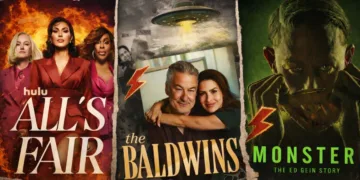
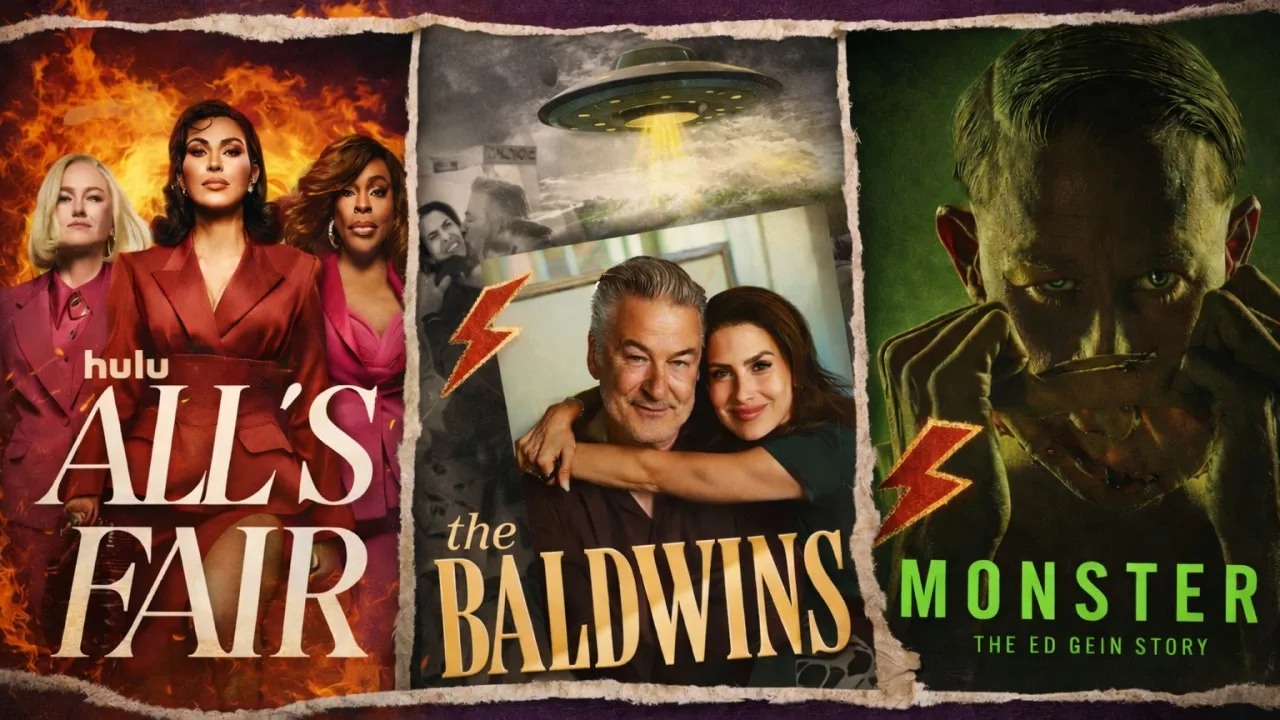
#3: Monster: The Ed Gein Story (Netflix)
Why skip: An exploitative retelling of historical horror that offers plenty of grim imagery but zero new psychological or social insight.
Runtime: 55 mins • MPAA rating: TV-MA • Notable line: “The neighbors think I’m just a quiet man.”
Dir: Various | Cast: Charlie Hunnam | Tone: True-crime drama | Notable scene: A lingering, uncomfortable shot of the Gein farmhouse that prioritizes shock value over storytelling.
True-crime dramatization carries an ethical charge. It asks viewers to watch horror with the promise of insight: a psychological map, a social diagnosis, a warning. Monster: The Ed Gein Story steps into a lineage that includes tabloid fascination, courtroom spectacle, and the long shadow of mid-century American violence repackaged for entertainment. The title itself carries a thesis, then dares the show to earn it.
The criticism around this season points to familiar fatigue: the anthology’s template becomes visible. Once the structure shows its seams, the shock loses force. Grim material turns into repetition. Scenes that should clarify motive start to feel like ritualized escalation. The risk is exploitation without illumination, a retelling that circulates dread without adding meaning.
Ed Gein sits near the source code of modern horror, a figure whose crimes helped shape cultural nightmares in film and fiction. A series focusing on him automatically enters conversation with decades of genre storytelling. That conversation demands precision. The show’s low placement on this list signals that many critics felt the precision slipped.
From an anthology running on fumes, we reach a docu-reality series that leaves viewers asking: what is this show trying to accomplish on camera?
#2: The Baldwins (TLC)
Why skip: A family docu-reality show that functions as a transparent image-management tool rather than providing any genuine or candid glimpses into celebrity life.
Runtime: 44 mins • MPAA rating: TV-PG • Notable line: “In this house, we do things the Baldwin way.”
Dir: Various | Cast: Alec Baldwin, Hilaria Baldwin | Tone: Reality TV | Notable scene: A clearly negotiated family argument that ends with a perfectly timed product placement.
Celebrity family docu-reality lives or dies on editorial clarity. The Baldwins arrives in a media era where audiences have learned to read the frame itself: what gets included, what gets avoided, what moments feel spontaneous, what moments feel negotiated in advance. The genre can succeed when it admits its own artifice and still offers candor, humor, or genuine tension.
Here, the series struggles to control how it’s perceived. Scenes feel like image management rather than storytelling. Emotional beats don’t build into narrative momentum, which is deadly for a format that depends on the sense of lived time. Viewers expect insight. They want to see how a family moves through conflict and contradiction. Instead, the show presents a surface and asks the audience to accept it as depth.
There’s a broader media echo worth naming: the modern celebrity exists inside a permanent feedback loop, where public narrative and private life blur into a third thing—part brand, part survival strategy. A show like this can either interrogate that loop or become trapped inside it. The low ranking suggests many critics felt trapped.
From a series that can’t settle its framing, we arrive at the year’s harshest critical consensus: a prestige-packaged legal drama that can’t build a convincing story engine.
#1: All’s Fair (Hulu/Disney+)
Why skip: A prestige-packaged legal drama that is remarkably hollow, featuring stiff dialogue and a confusing tone that can’t decide if it’s a soap or a thriller.
Runtime: 48 mins • MPAA rating: TV-MA • Notable line: “Divorce is just war with better stationary.”
Dir: Ryan Murphy | Cast: Kim Kardashian, Glenn Close | Tone: Glossy legal soap | Notable scene: A courtroom monologue delivered with so much theatricality it loses all sense of reality.
All’s Fair sits at the bottom of this list because the gap between packaging and payoff is almost comical, in the bleak way that makes you laugh and then wonder why. A legal drama about power and divorce should have easy access to sharp conflict: money, intimacy, betrayal, the courtroom as theater, the contract as emotional weapon.
The series reportedly struggles with tone first. Legal drama wants tension. Glossy soap wants sensation. Camp wants self-awareness. All’s Fair flirts with each mode without committing cleanly, creating scenes that feel weightless. Dialogue lands with a dated stiffness, like the show is borrowing an older television language that no longer carries the same charge. Big performances can’t compensate if the writing doesn’t give them meaningful turns, and star power becomes a spotlight aimed at empty space.
There’s a cultural irony here. Prestige TV has trained audiences to trust production value as a proxy for quality control. 2025 kept poking holes in that belief. All’s Fair becomes the cautionary artifact: a reminder that expensive can still be hollow, and that viewers have gotten pretty good at spotting the difference.
If 2025 proved anything, it’s that risk can be thrilling, and confusion wearing confidence rarely stays convincing for long.