

















A culture’s memory is stored in its music, a resonant frequency that defines a place long before any image appears on screen. Minore begins not with a landscape but with a sound: the distinct, melancholic pluck of the bouzouki. This is the sonic soul of its Greek port town, a melody that carries the weight of history, myth, and the quiet rhythms of daily life. The film argues that this sonic identity is the first line of defense when the unimaginable arrives.
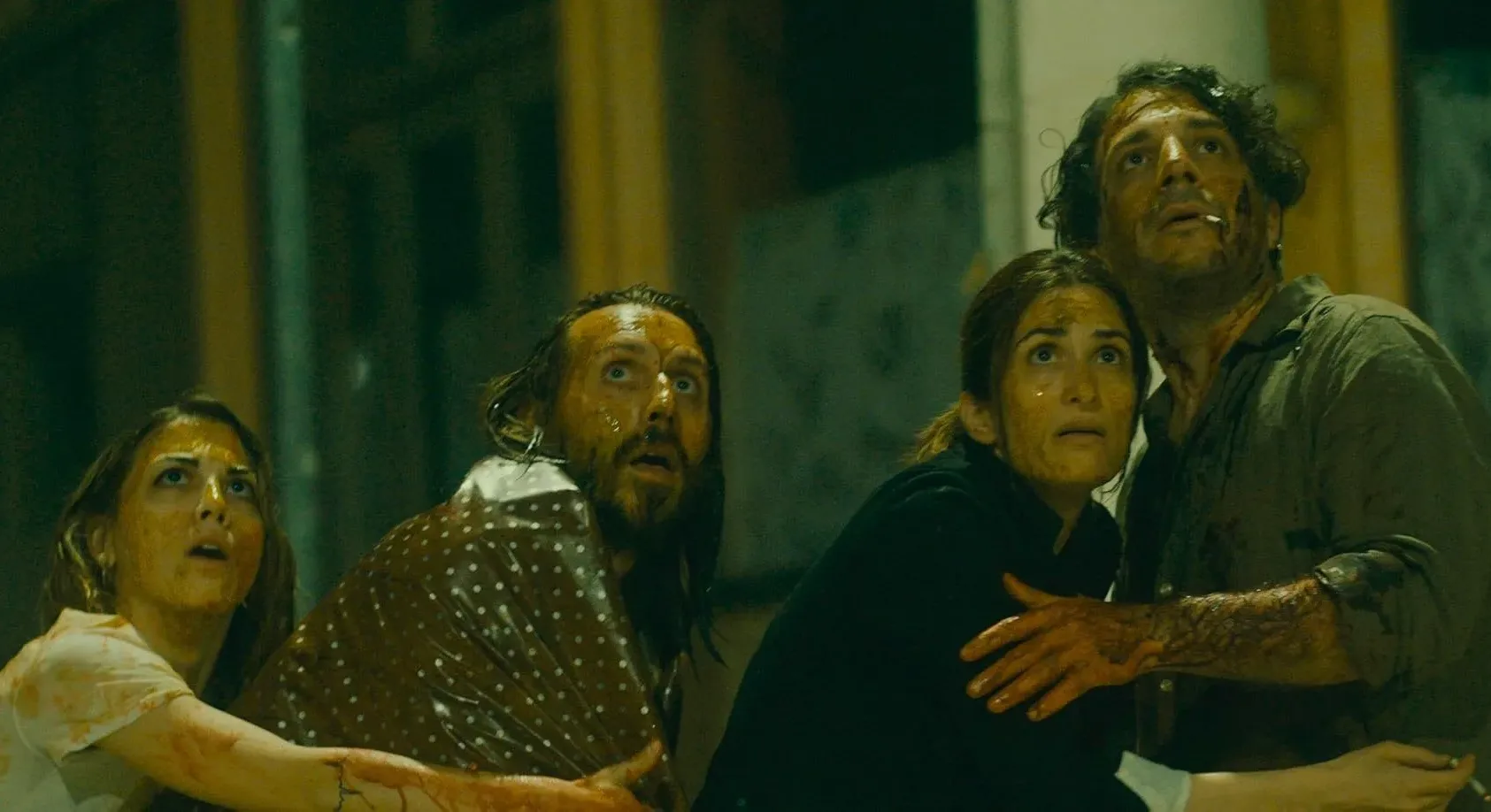
For this town, the threat is not an invading army or a modernizing corporation, but something far more ancient and amorphous. An unnatural fog smothers the coastline, the sea gives birth to a new, unmapped island, and the very ground seems to reject its own stability. This is the language of cosmic horror, a genre that often erases cultural specificity. The film’s central project, however, is to insist on that specificity, pitting the deeply local sound of a bouzouki against the universal silence of an otherworldly void.
A Modern Greek Chorus
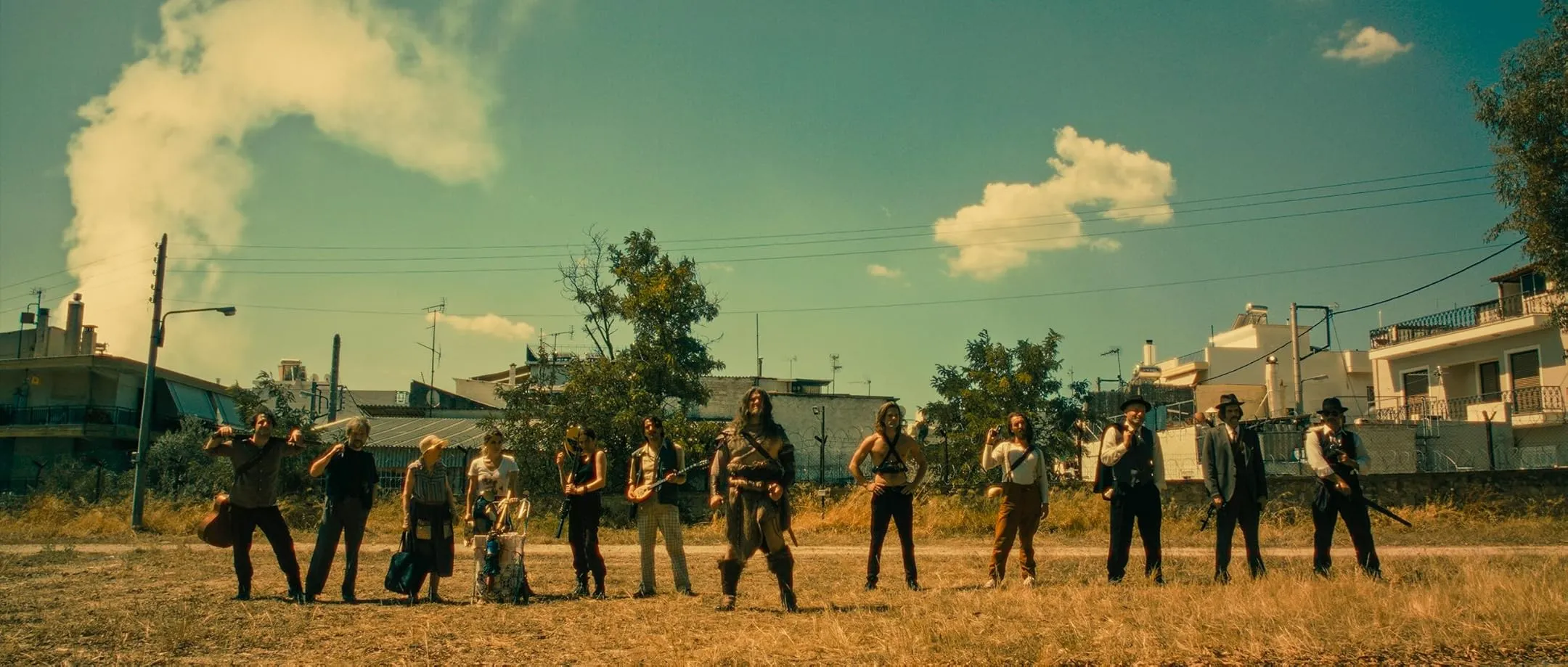
In a cinematic landscape dominated by the solitary hero, the film’s narrative structure is a quiet rebellion. It rejects the individualistic journey in favor of a sprawling, collective portrait of a community, a method that feels inherently more communal and culturally specific. The first hour is a patient immersion into this world, asking the viewer to learn the town’s network of relationships before it is threatened.
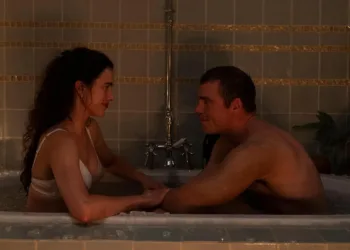
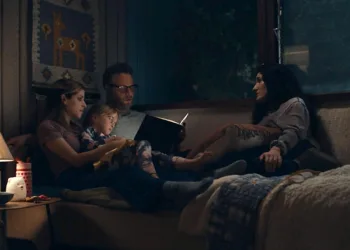
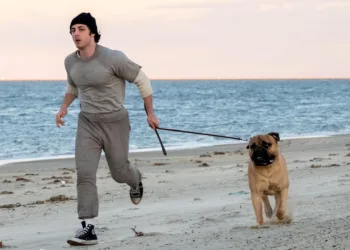
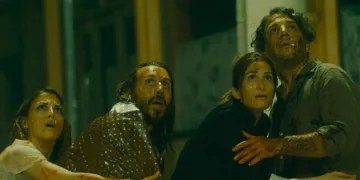
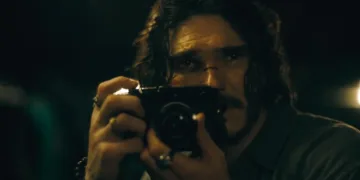
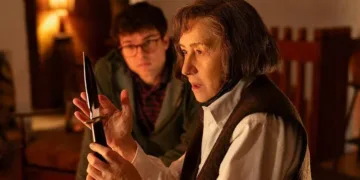
There is no single protagonist to latch onto; instead, we are given a modern chorus of vibrant, imperfect characters. We meet Naris, a soulful artist whose queer identity exists comfortably within the town’s traditional framework, and Alexis, a muscular dancer who seems a living echo of some Dionysian rite. We see the fierce loyalty of Marianna to her grandmother, a woman whose prophetic visions are treated with the respect folkloric wisdom commands.
The actors perform with a grounded naturalism that makes the eventual fantasy believable, their easy chemistry building the foundation for their collective stand. The cinematography supports this approach, frequently capturing characters in shared spaces against the stunning coastal scenery, framing the environment not as a backdrop, but as an active participant in their lives.
Carnival of Cosmic Horror
The film’s tone shifts dramatically when the monsters appear, trading its gentle, observational style for a spectacle of delightful chaos. Here, the movie engages in a fascinating cross-cultural dialogue. The creature designs feel imported from a global B-movie tradition, their tentacled forms and laser eyes reminiscent of Japanese kaiju productions and American drive-in schlock.
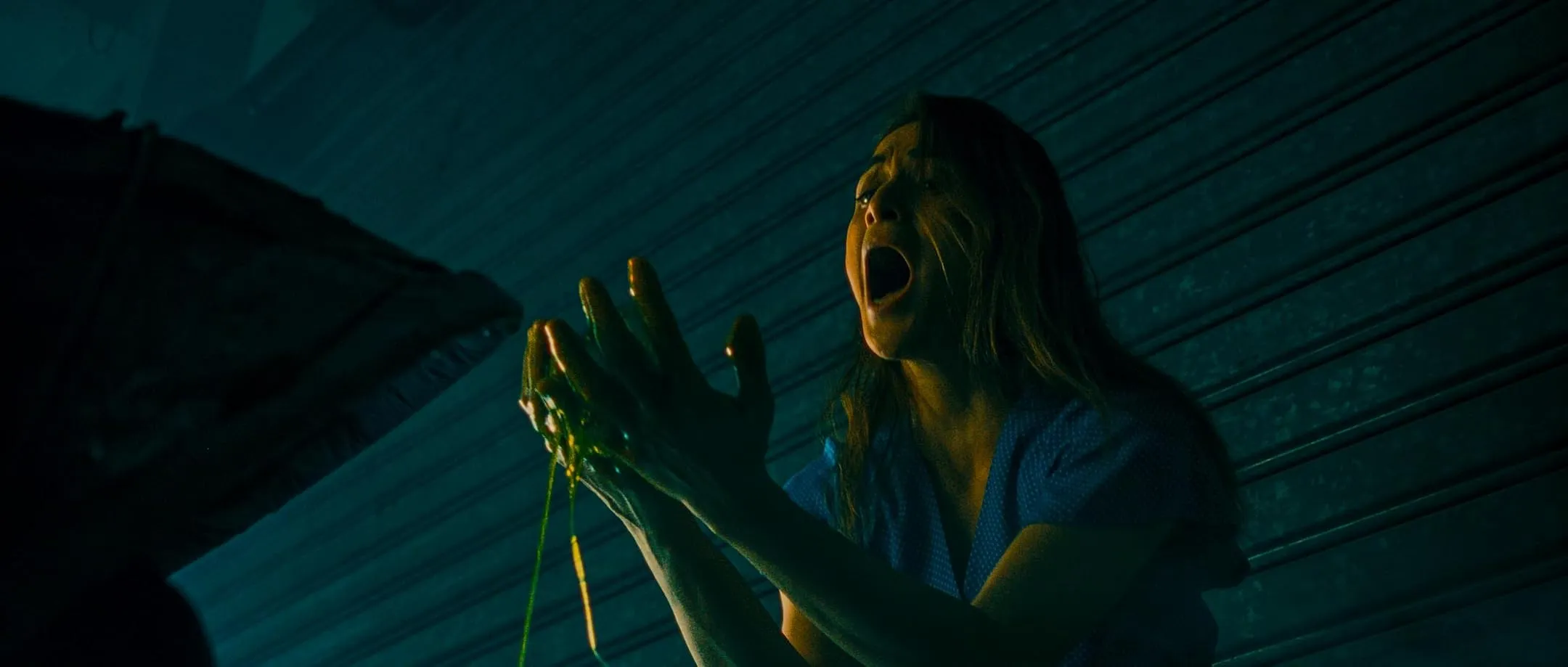
By placing these recognizable genre figures within such a fiercely local Greek setting, the film creates a compelling friction. The response to the invasion is equally telling. Instead of the grim terror that defines much Western horror, the town’s defense is a zany, almost carnivalesque explosion of action and gore. This is horror filtered through a sensibility of communal resilience and dark humor, much like the British horror-comedies that use wit as a coping mechanism.
The film celebrates the artistry of practical effects, with one gruesome yet hilarious “face-off” scene standing as a testament to the tactile craft of Grand Guignol theater. This dedication to physical effects feels like a pointed choice, an embrace of a more grounded, hands-on craft in an age of placeless digital creations.
Chaos with a Bouzouki
Minore is a film that weaponizes its own culture. The narrative’s most brilliant stroke is making the town’s bouzouki music the key to fighting the monsters, a perfect synthesis of theme and mechanic. It proposes that art and tradition are not passive artifacts to be preserved, but active, essential tools for survival against an existential threat.
The movie’s various elements—queer romance, family drama, gangster posturing, and creature feature mayhem—coalesce into a beautifully messy whole. It is a work that embraces its imperfections, its sometimes-obvious digital effects only adding to its charm.
This refusal to be polished aligns it with a global tradition of cult cinema that values personality and creative audacity above all else. It is a cinematic statement that rejects the homogenous gloss of mainstream productions, choosing instead to be something strange, specific, and alive. The film is a joyous and defiant celebration of the idea that to save a place, you must first remember its song.
The movie is a quirky blend of horror, comedy, and fantasy, and is a Greek Lovecraftian creature feature. Directed and co-written by Konstantinos Koutsoliotas, Minore premiered at various film festivals in 2023, including the Thessaloniki International Film Festival and FrightFest. The story is set in a small Greek seaside port, where a mysterious fog descends, followed by an invasion of tentacled, Lovecraftian sea monsters, forcing a misfit band of musicians and locals to fight for their survival. In the US, the film is distributed by Freestyle Digital Media and is available on various VOD platforms.
Full Credits
The Review
Minore
Minore is a brilliantly chaotic fusion of Lovecraftian horror and vibrant Hellenic culture. Its strength lies in its audacious personality and its heartfelt celebration of community, weaponizing music and folklore against a cosmic threat. While its low-budget seams occasionally show, the film’s sheer creative energy and memorable character ensemble make it a standout piece of international genre cinema.
PROS
- A strong, authentic sense of Greek cultural identity.
- Rich ensemble of memorable and well-developed characters.
- Creative and ambitious blending of horror, comedy, and mythology.
- Unique narrative focus on music as a central plot device.
- Entertaining practical effects and a wonderfully campy tone.
CONS
- Unpolished CGI and visual effects in some scenes.
- The deliberate, slow pacing of the first hour may test some viewers' patience.
- Its climactic action sequence can feel tonally messy and over-extended.