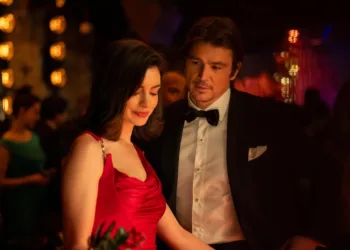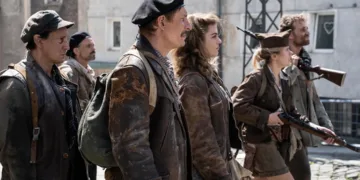










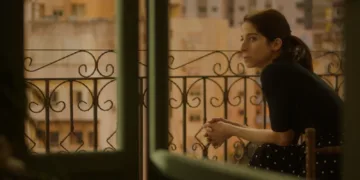







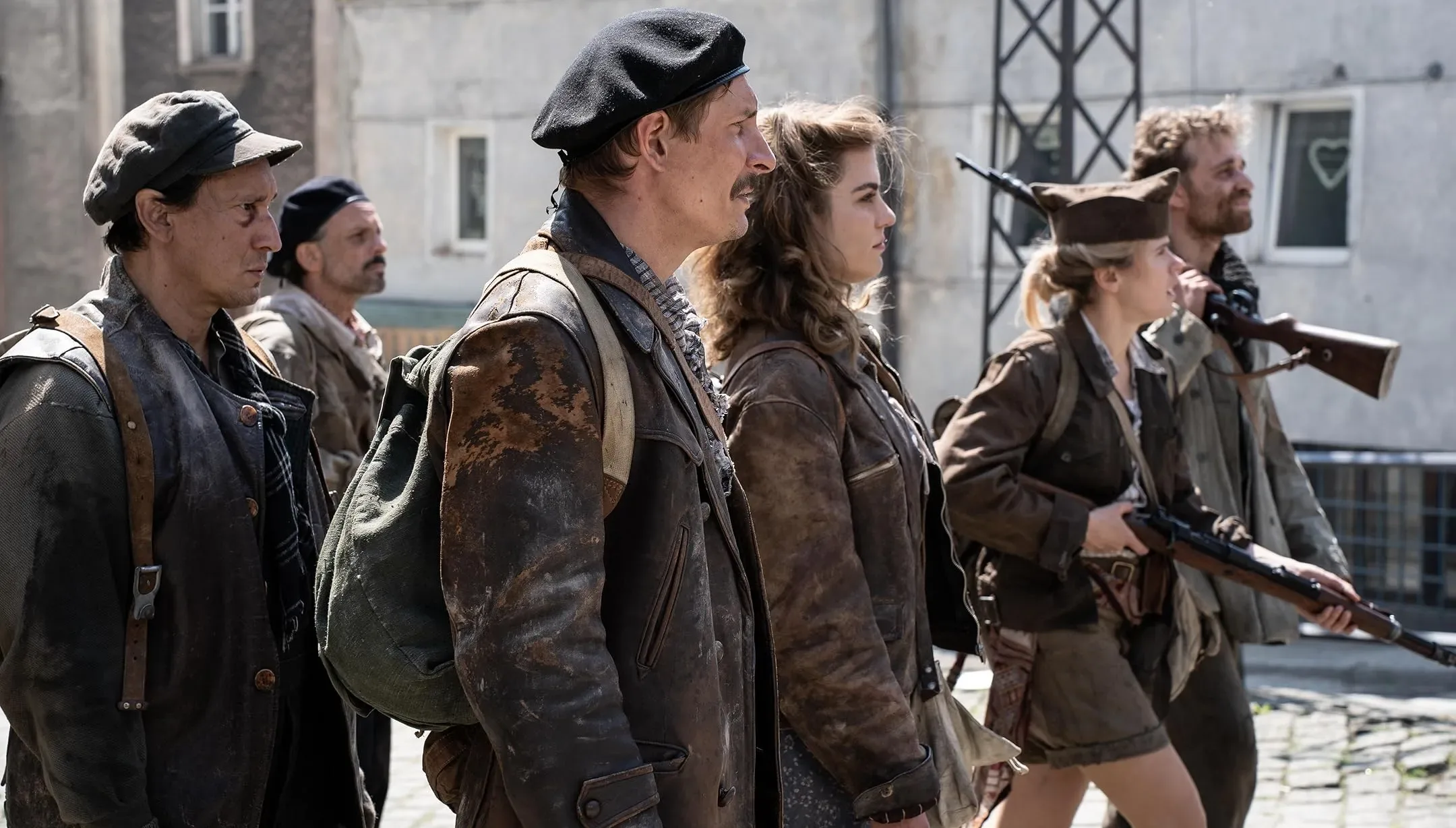

In the world of character creation, some builds are legendary from the start. They have the perfect backstory, a compelling skillset, and a moral complexity that promises an unforgettable experience. Krystyna Skarbek, the real-life Polish aristocrat turned Churchill’s favorite spy, is one such character. The Partisan attempts to load this incredible avatar into a biographical drama, placing her inside two of her most harrowing World War II missions.
The game world is immediately established as perilous and unforgiving, a grim theater of espionage where survival depends on a willingness to abandon convention. The film correctly identifies that Skarbek’s lethality as an agent was inseparable from her wild, unpredictable, and deeply human flaws, setting the stage for what should be a knockout narrative. The potential is immense, but the question is whether the game engine can do justice to the character.
A Ferocious Central Performance
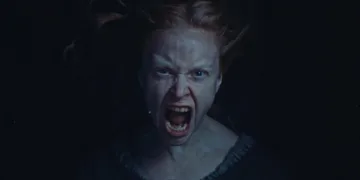
If The Partisan has a single mechanic that works flawlessly, it is Morgane Polanski’s ferocious performance. She doesn’t just play Krystyna; she inhabits her, making the character the compelling, high-stakes core of the entire experience. Polanski portrays a woman who operates on a different psychological plane, driven by an internal logic that is both terrifying and magnetic.
She isn’t asking for the audience’s approval. Her Krystyna is a force of nature, embodying a wildness that feels genuinely dangerous. This is most evident in the film’s standout sequence, where, upon capture, she bites clean through her own tongue. The act is a stunning piece of improvised psychological warfare, a high-risk maneuver executed with the chilling precision of a perfectly timed special ability.
It’s in moments like these that the film transcends its limitations, showing us a mind uniquely adapted to the horrors of her world. Polanski’s face is a landscape of controlled emotion; she uses a mask of impassivity as a form of social stealth, only to let flashes of raw fury or deep-seated pain break through, grounding the larger-than-life spy in something achingly real. She makes you invest in the character, even when the narrative framework around her begins to crumble.
A Tale of Two Missions
The most significant design flaw in The Partisan is its disjointed narrative structure. The film operates like two pieces of standalone DLC rather than a cohesive campaign, asking the audience to follow a mission in 1941 Poland before cutting out the entire mid-game and dropping us into 1944 France.
The jarring time jump severs any emotional or narrative threads that were just beginning to form, resetting the stakes and killing the momentum. It’s a baffling choice that leaves the viewer feeling adrift. The French segment is particularly problematic, a slow and confusing questline with murky objectives and little forward progression. The tension dissipates as the plot wanders. This structural issue is compounded by a script that refuses to explore its protagonist’s backstory.
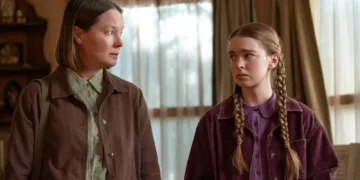
We see Krystyna execute her missions with incredible skill, but the film provides no lore, no context for how she acquired these abilities or what truly drives her. She feels like a powerful but unexplained avatar, a collection of cool stats with no character sheet to read. This lack of depth extends to the supporting cast, who are little more than shallow NPCs. They appear, deliver their lines to move the plot along, and disappear without impact, leaving Polanski’s Krystyna to operate in an emotional vacuum.
A Visually Authentic World
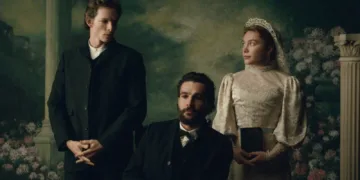
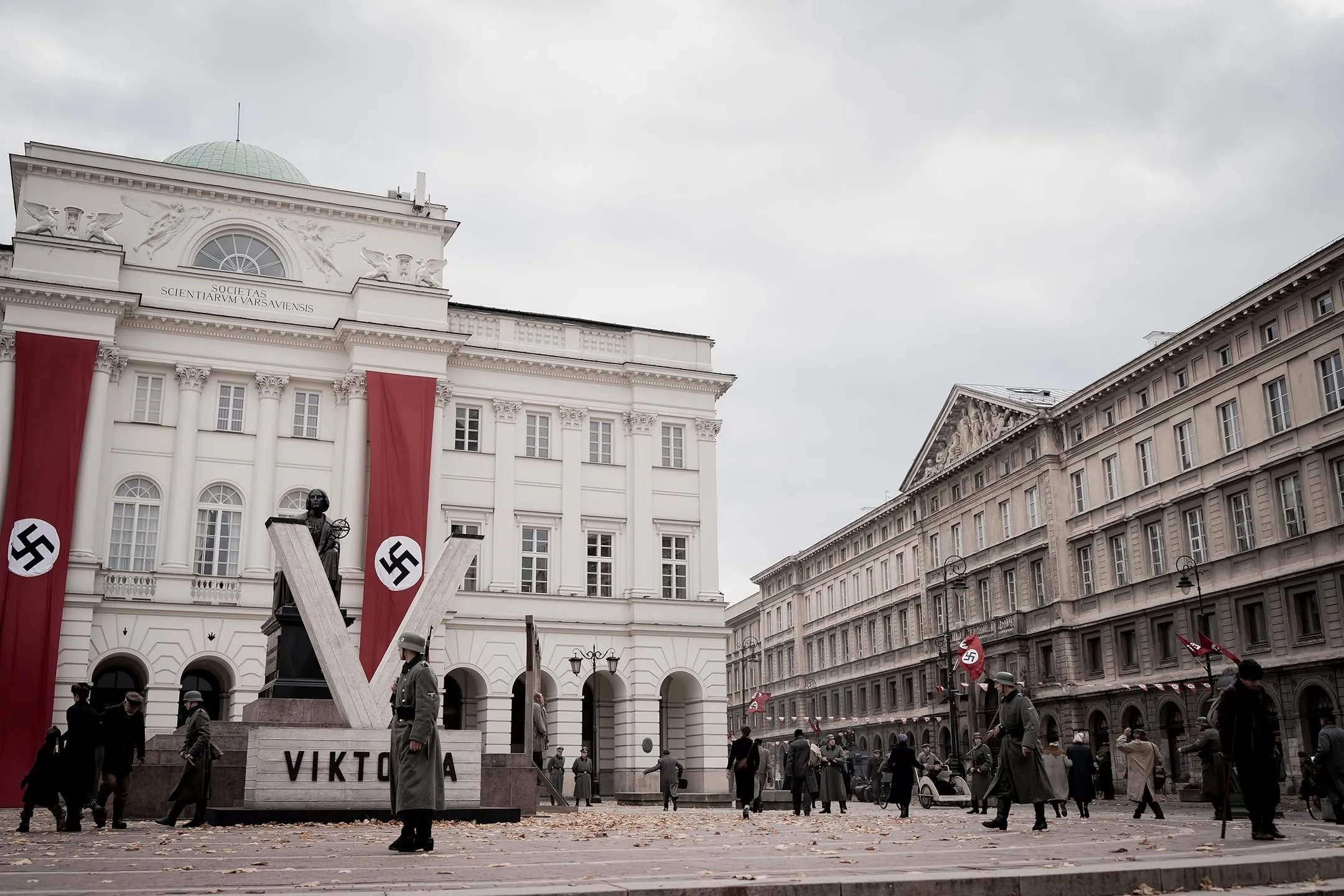
While the narrative gameplay is rickety, the world design of The Partisan is stunning. This is a game with breathtaking graphics running on a buggy engine. The production team has meticulously crafted an authentic 1940s Europe, immersing the viewer in a world that feels lived-in and historically accurate, from the texture of the costumes to the design of the period-specific machinery.
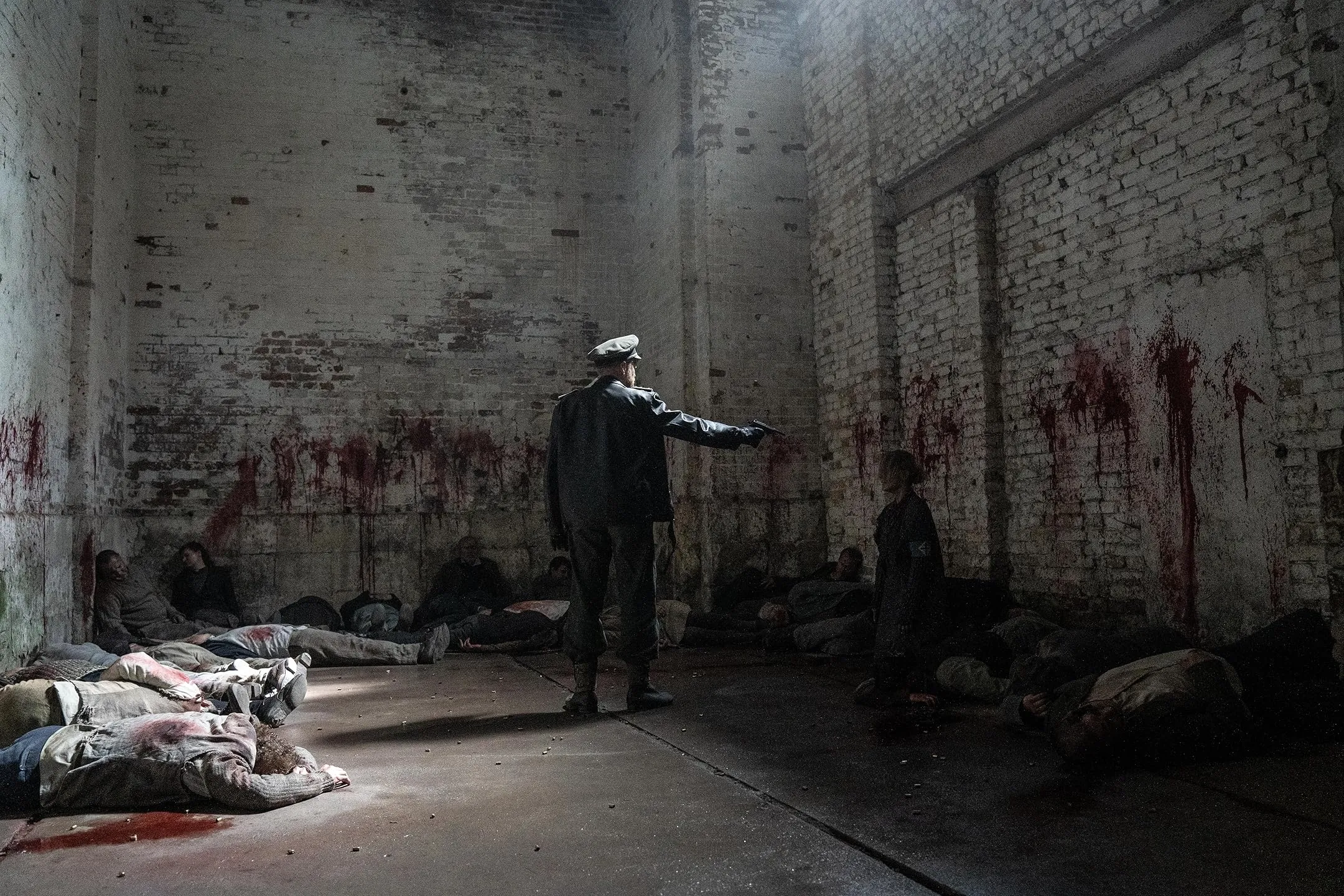
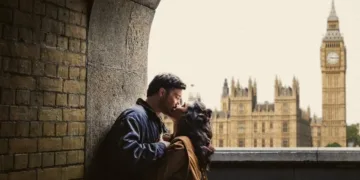
The cinematography elevates this world further, using bold and often beautiful compositions to capture the haunting landscapes and the claustrophobic tension of occupied cities. There is a tangible sense of place and time that makes the film’s visual texture a genuine strength. This technical excellence, however, creates a frustrating disconnect.
The visual language promises a premium, triple-A experience, but the core storytelling mechanics feel unpolished and underdeveloped. The film is a study in contrasts: a beautifully realized world that you wish you could explore, but you’re stuck playing a story with an uninspired quest design. It has all the right assets—a compelling lead, gorgeous art direction—but they are held back by a flawed script that prevents this good idea from becoming a great one.
The Partisan is a 2024 biographical spy thriller film directed and written by James Marquand. The movie tells the extraordinary true story of Krystyna Skarbek, a Polish agent who worked for the British Special Operations Executive during World War II, navigating a dangerous world of espionage behind enemy lines. The film premiered at the Gdynia Polish Film Festival on September 27, 2024, and is set for theatrical release in the United Kingdom by Signature Entertainment and in the United States by Brainstorm Media. It is a Polish-French-UK co-production and is often referred to as a story about “Churchill’s favourite spy.”
Full Credits
Director: James Marquand
Writers: James Marquand
Producers and Executive Producers: Robert Chadaj, Krystian Kozlowski, Matthew Whyte
Cast: Morgane Polanski, Malcolm McDowell, Agata Kulesza, Steven Waddington, Piotr Adamczyk, Andrew Schofield, Lech Dyblik, Ingvar Eggert Sigurðsson, Frederick Schmidt, Grégoire Colin, Piotr Trojan, Dorota Landowska, Jacek Beler, Barbara Liberek, Tomasz Tyndyk, Philip Lenkowsky, Wenanty Nosul, Maciej Kosiacki, Daniel Namiotko, Rozalia Mierzicka
Director of Photography (Cinematographer): Karol Lakomiec
Editors: Przemyslaw Chruscielewski
The Review
The Partisan
Anchored by a truly ferocious and compelling lead performance from Morgane Polanski, The Partisan is a visually stunning piece of historical drama. However, its impressive production values and powerful central turn are consistently undermined by a disjointed, rickety script and confusing narrative structure. The film successfully builds a world and introduces a fascinating character, only to leave them both stranded by weak storytelling. It’s a frustrating watch where immense potential is ultimately squandered.
PROS
- A powerful and intense lead performance from Morgane Polanski.
- Excellent production design with authentic period detail.
- Bold and impressive cinematography.
CONS
- Fractured narrative with a confusing, disjointed structure.
- Underdeveloped script that fails to explore character motivations.
- Slow pacing, particularly in the second half.
- Weak and undeveloped supporting characters.