


















![Kingdom Hearts Collection [I-III] Review](https://gazettely.com/wp-content/uploads/2026/10/Kingdom-Hearts-Collection-I-III-1-360x180.webp "Kingdom Hearts Collection [I-III] Review: KHII Holds Steady as Newer Entries Fluctuate 37")

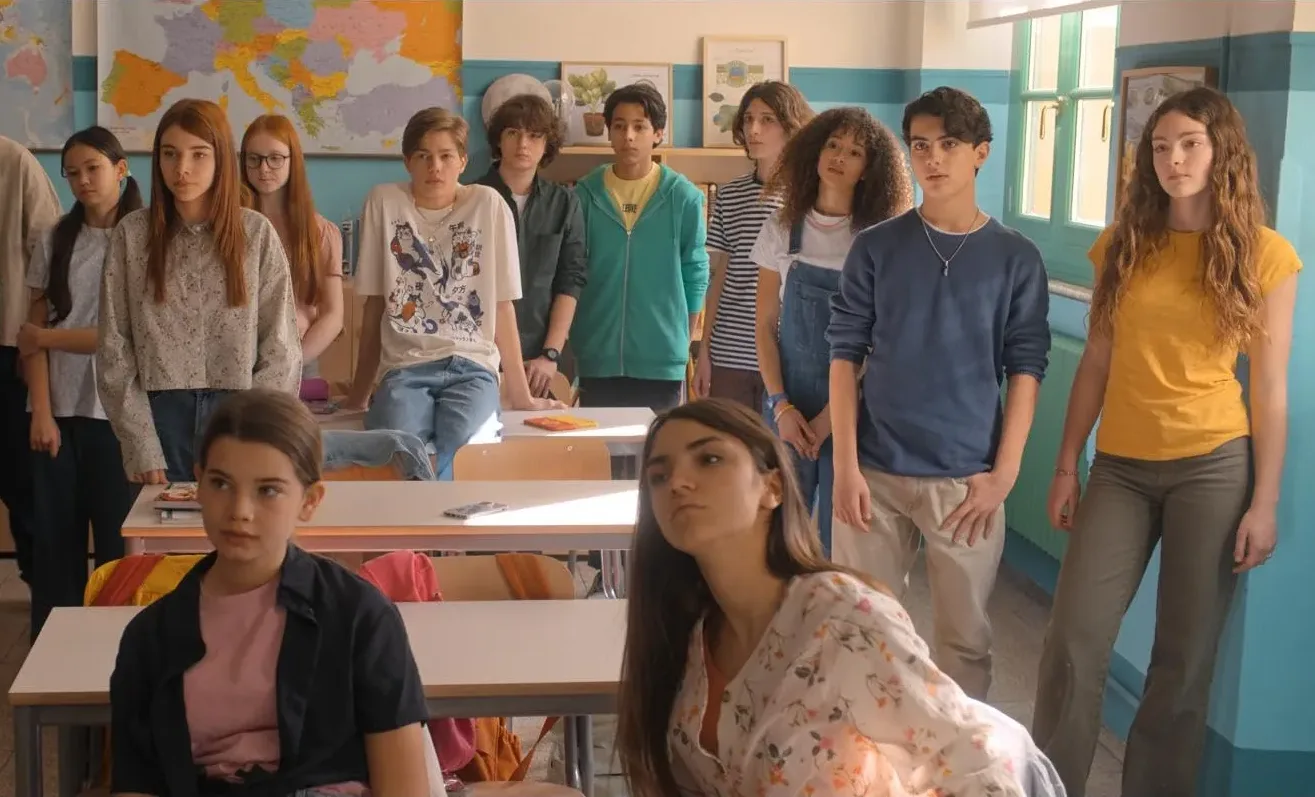

A principal enters a classroom, her face a mask of stern disappointment. A vandal, known only as “Wally,” is among the students, and she will fail the entire class unless the culprit confesses. This is where RIV4LRIES begins, with a flash-forward to a cold war that has already turned hot. The series then rewinds four months, tasking itself with explaining the social schism that led to this moment of collective punishment.
We land in Pisa, a city of historic grandeur, which becomes the stage for the decidedly less grand dramas of middle school. The catalyst for the coming conflict is Terry, a girl newly arrived from Rome with a sharp haircut and an even sharper distaste for arbitrary authority. Her arrival at Montalcini Middle School is a stone tossed into the still pond of its social life.
The ripples soon become waves, splitting the class into two distinct, warring camps: the entrenched, popular “Insiders” and the defiant, newly-formed “Outsiders.” The show sets itself up not just as a story of teenage rivalry, but as a forensic investigation into how a community breaks apart.
A Line Drawn in the Schoolyard
The social geography of Montalcini Middle School is, at first, brutally simple. The “Insiders” rule this small kingdom with the casual entitlement of a born aristocracy. Their leader is Claudio, a boy who commands respect through a combination of charisma and his family’s wealth, the latter having funded the school’s prized new soccer pitch.
He sees the school and its inhabitants as his domain. Flanking him are characters sketched from the manual of high-school archetypes: Dario, the smooth-talking friend who views every new girl as a potential conquest, and Sabrina, a talented gymnast whose ambition immediately curdles into jealousy upon meeting Terry, an equally skilled competitor.
Their power is maintained through exclusion, a silent consensus that dictates who is worthy of acknowledgment and who is to be ignored. They operate less as friends and more as a political bloc, their unity built on a shared sense of superiority.
Into this rigid hierarchy walks Terry, who commits the cardinal sin of failing to be impressed. Her formation of the “Outsiders” is not a premeditated grab for power but an act of social self-defense. The group she assembles is a collection of the Insiders’ cast-offs, each exiled for a different reason. Mariza is the class genius, an intellectually vibrant girl who is building an app to decode human emotion, yet she is treated like a walking calculator. Her intelligence makes her useful but not welcome.
Alessio is a social pariah, ostracized by a rumor that has cemented his reputation as a liar. Paolo bears the unfortunate title of “the principal’s son,” a label that paints him as a spy in the student body, isolating him completely. Terry does not recruit them; she simply sees them.
The conflict solidifies around two key events. First, Terry publicly questions Claudio’s biased team selections for the soccer tournament. Second, and more decisively, Claudio orchestrates a mass boycott of Terry’s birthday party after she invites the entire class, an unforgivable breach of social protocol. This act of targeted cruelty is the true beginning of the war, drawing a line that forces everyone to choose a side.
The Architect of Rebellion and the Lonely King
Terry is a rare creation in the world of teen drama: a protagonist whose strength comes from her principles, not her popularity. She is the architect of the rebellion, yet her methods are often subtle and strategic. Kartika Malavasi plays her with a grounded intelligence, making her defiance feel like a natural extension of her character rather than a teenage affectation.
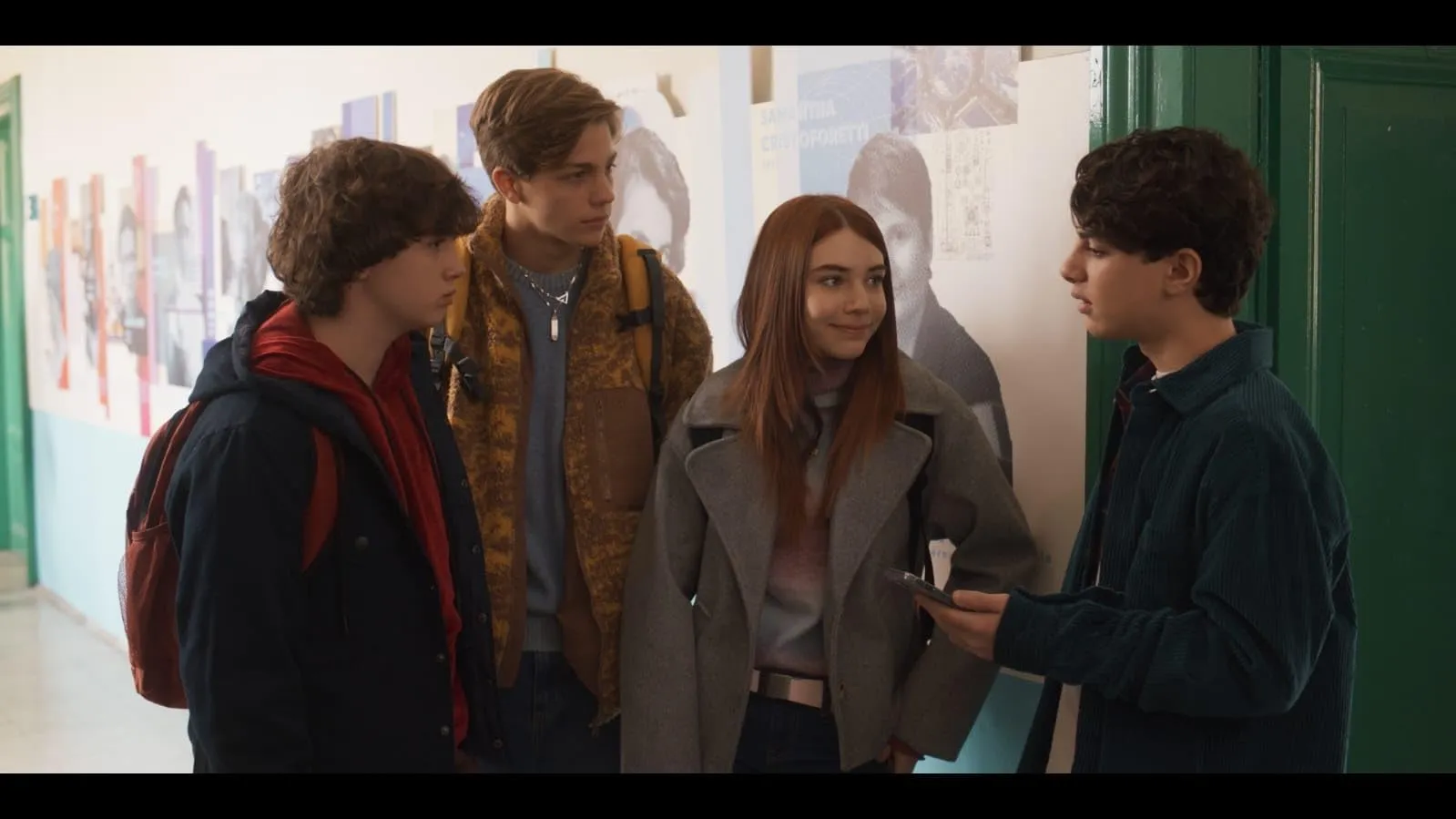
An early, defining moment comes after Claudio ruins her classroom birthday celebration with an exploding soda bottle. When the principal arrives demanding to know who made the mess, Terry calmly takes the blame. It is not an act of martyrdom but a calculated tactical move, a piece of psychological warfare that leaves Claudio confused and indebted. The show gives her small details, like her management of diabetes, that root her in a specific reality, making her feel less like an ideal and more like a person.
Claudio, in contrast, is a carefully constructed facade. His leadership of the Insiders is a performance designed to mask a deep-seated insecurity. The show repeatedly cuts to him alone in his large, empty house, leaving hopeful voicemails for a father in Dubai who is too busy building skyscrapers to notice his son. The soccer tournament, funded by his father’s money, becomes a desperate proxy for earning paternal affection. If the team wins, maybe his dad will finally pay attention.
Samuele Carrino’s performance captures this duality well, showing the cracks in Claudio’s confident exterior. His commands to his friends carry a brittle edge, revealing a fear of losing the control at school that he so clearly lacks at home.
He is a king ruling over a tiny, fragile empire. The strength of the series lies in the chemistry of its young performers. The growing bond among the Outsiders is particularly well-realized, conveyed in shared glances and quiet moments of support. They make the viewer believe that this small group of misfits could genuinely challenge the established order.
A Polished Throwback in a Gritty Era
RIV4LRIES arrives on the television landscape as a conscious rejection of the dominant teen drama trend. In an era where shows about adolescents often explore dark, provocative, and adult-oriented themes, this series is a return to a more sincere and less cynical mode of storytelling. Its conflicts, while deeply felt by the characters, remain firmly within the bounds of school life.

The show’s stylistic choices reinforce this earnest tone. The most notable device is the breaking of the fourth wall. Both Terry and Claudio turn to the camera to narrate their feelings, granting the audience a privileged insight into their motivations. This technique, often used for comedic effect in other shows, is employed here to foster a direct, confessional relationship between character and viewer. It is a decision that emphasizes intimacy over irony.
The direction and cinematography present a version of Pisa that is almost hyper-real in its beauty. Every frame is bathed in a warm, golden light, a sun-kissed aesthetic that makes middle school look like a permanent vacation. The historic cobblestone streets and ancient architecture provide a stark contrast to the very modern anxieties of the students.
The camera often uses the city’s spaces to heighten the story’s emotional stakes, framing moments of isolation against sprawling, empty plazas or moments of connection in tight, cozy alleyways. The series’ primary weakness is its pacing, a casualty of its 14-episode season. The central plot, while solid, does not always have enough fuel to sustain momentum.
The middle episodes, in particular, can sag into a repetitive cycle of pranks and retaliations that stall character development. A more compressed season might have maintained a greater sense of urgency. The show’s depiction of technology feels authentic, portraying social media not as an inherent evil but as a neutral tool that the students use to construct identities, organize, and fight back. Can a show built on such a hopeful vision of unity find its footing in a world that often feels more fractured than ever?
The series RIV4LRIES is an Italian dramedy for young audiences, set in a middle school in Pisa, where the arrival of a new girl disrupts the established social order and sparks new rivalries and friendships. The show explores themes of self-discovery, first love, and identity during the preteen years. It is a production from Stand by me and is set in the same narrative universe as the Netflix series DI4RI. The first season of RIV4LRIES is scheduled to premiere on Netflix on October 1, 2025.
Full Credits
The Review
RIV4LRIES
RIV4LRIES is a charming and refreshingly sincere teen drama, anchored by a fantastic young cast and a principled protagonist. It revives a gentler style of storytelling, focusing on the real emotional stakes of schoolyard politics without the grit of its modern contemporaries. While its familiar character types and a stretched 14-episode season cause the narrative to drag in places, its earnest heart and strong performances make it a worthwhile watch for those seeking a less cynical look at adolescence.
PROS
- Strong, natural performances from the young ensemble cast.
- An engaging and morally centered protagonist in Terry.
- A wholesome and sincere tone that stands apart from edgier teen shows.
- The "Outsider" characters are well-defined with interesting backstories.
CONS
- The 14-episode season harms the pacing, leading to repetition.
- Employs some familiar teen-drama character clichés.
- The "Insider" characters feel underdeveloped by comparison.
- The central conflict can feel drawn out across the middle of the season.