


























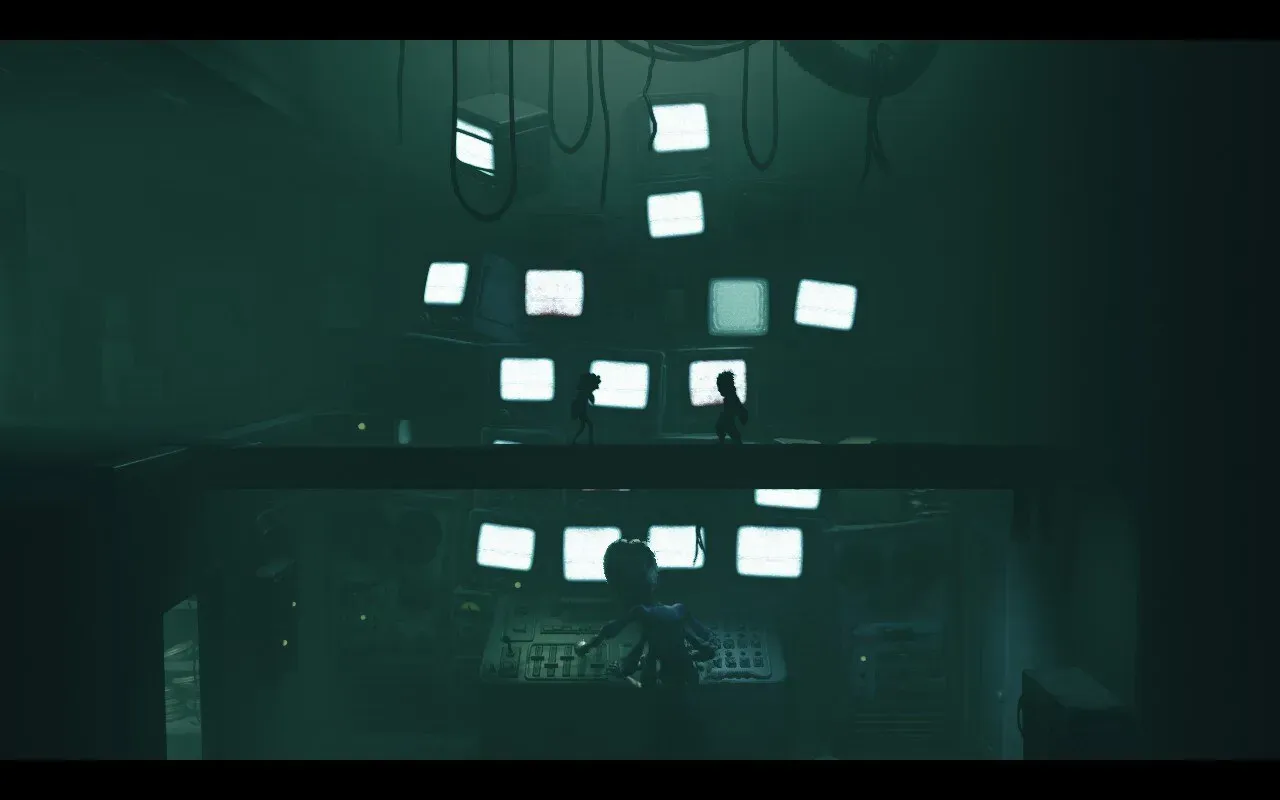

Little Nightmares III arrives as Supermassive Games takes the reins from Tarsier Studios, carrying forward a series that has carved out its own strange space in the horror-platformer genre. This third entry introduces two new protagonists, Low and Alone, each equipped with signature tools: Low wields a bow and arrow while Alone carries an oversized wrench. The game unfolds across four chapters set in The Nowhere, that dreamlike realm where childhood fears take physical form.
For the first time, the series embraces cooperative play through online multiplayer, though solo players can rely on an AI companion. The experience runs about five hours, maintaining the series’ wordless storytelling approach where character animation and environmental details communicate what dialogue never could. What emerges is a game caught between reverence for its predecessors and the need to justify its own existence.
Supermassive has crafted something technically sound and atmospherically consistent, yet the formula feels stretched thin across territory we’ve already explored. The monochromatic visual palette trades the earlier games’ deceptively warm tones for something starker, less intimate. Two additional chapters are planned as paid DLC, extending a journey that already struggles to distinguish itself from what came before.
The Mechanics of Partnership and Their Limits
The core gameplay loop alternates between puzzle-solving, platforming, stealth sequences, and frantic chase scenes where instant failure awaits any misstep. Low and Alone share basic movement capabilities like jumping, crouching, and manipulating objects, but their unique tools define how puzzles unfold. Low’s bow targets distant switches, severs frayed ropes, and occasionally pierces enemy weak points.
Alone’s wrench cranks mechanisms, demolishes weak walls, and serves as a blunt instrument against threats. The game layers additional equipment onto this foundation: umbrellas that catch updrafts or cushion falls dominate the first half, while a flashlight illuminates the latter chapters without adding much mechanical interest.
The problem surfaces quickly in how these tools function. Context-sensitive design means Low only raises his bow when a shootable target exists nearby, telegraphing solutions before you’ve had time to consider alternatives. Puzzles rarely demand creative thinking or careful observation. Instead, you push blocks, crank levers, time synchronized jumps onto trap doors, rip wooden planks from doorways, and drag crates into climbing positions. These tasks feel like busy work between the game’s more intense moments rather than engaging challenges in their own right. The camera shifts perspective frequently, moving players toward or away from the screen to create spatial depth, but this technique is borrowed wholesale from earlier entries without meaningful evolution.
Cooperative play represents the most substantial addition to the formula, yet its implementation feels surprisingly limited. The online-only requirement excludes local play, a puzzling choice for a game built around shared tension. The lack of drop-in functionality means switching between solo and cooperative modes requires restarting your entire campaign. A generous friend pass system allows a second player to join without purchasing the game themselves, which deserves credit for accessibility.
However, playing as Low versus Alone offers no meaningful variation beyond which tool you’re holding. The AI companion handles its responsibilities competently, sometimes solving environmental puzzles before you’ve even noticed the relevant interactive elements. This efficiency undermines the cooperative premise: if the AI can manage perfectly well on its own, what purpose does human partnership serve beyond social experience? The puzzles themselves rarely require intricate coordination or simultaneous actions, missing opportunities to make teamwork feel essential rather than optional.
Four Chapters of Diminishing Returns
The game’s four main environments each pursue distinct visual identities, though their execution varies wildly in quality. Necropolis opens the journey as a sand-choked desert city where petrified residents line ancient streets, their terror frozen in time. A towering baby doll looms over proceedings, its slack-eyed stare tracking your movements through predictable vision cone mechanics. The setting establishes atmosphere effectively but offers little you haven’t experienced in similar horror-platformers.
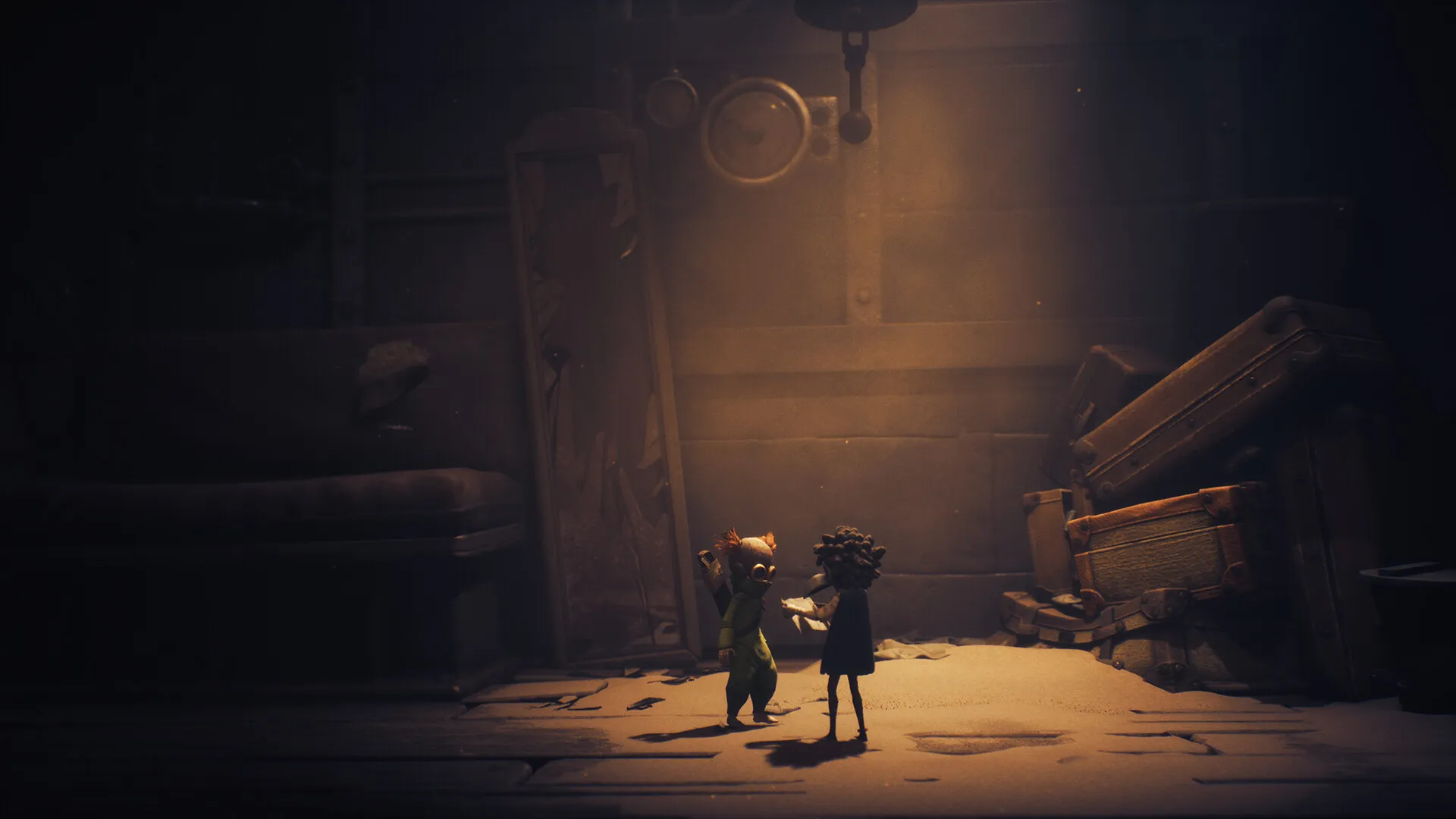
The Candy Factory attempts something more ambitious with its industrial hellscape of belching chimneys and bureaucratic absurdity. Rotting lollipops pile high in grimy alleyways, creating tableaux that gesture toward deeper satirical commentary the game never bothers to explore. The grey, oppressive architecture channels Kafka’s nightmarish bureaucracies, but the space functions primarily as a series of rooms to traverse rather than a world that invites interpretation.
Carnevale stands apart as the campaign’s highlight, a twisted fairground where big top tents glow under string lights and a Ferris wheel spins endlessly. Grotesquely overstuffed patrons abuse human pinatas and bury their faces in overflowing slop buckets. A disturbing riff on the classic sawing trick commits fully to its horrific implications. The wooden doll enemies dressed as sideshow barkers provide the game’s most engaging combat encounters: Low decapitates them with arrows while their headless bodies continue pursuing you, forcing Alone to pulverize their skulls before they can reattach. This chapter demonstrates what the game could achieve when Supermassive allows itself to push beyond established templates.
The Institute closes the campaign with generic hospital corridors that rely on overused horror imagery, though the warren of interconnected spaces allows for more playful perspective shifts. The final puzzles here show genuine ingenuity, and the closing monster design impresses, but these strengths arrive too late to redeem the journey’s weaker stretches.
The visual presentation favors stark monochrome palettes over the warmer tones that made earlier entries feel paradoxically inviting despite their horror content. Light and shadow create strong contrasts, and the environments demonstrate meticulous craft in their construction. The cinematic camera work grows increasingly confident in later chapters, framing shots that emphasize the world’s oppressive scale. Yet something feels sanitized compared to the fleshy, goopy grotesquerie that defined the first game. The reliance on wooden dolls and plastic dummies lacks the disturbing tactile quality that made encounters with stretched-limbed janitors or masked chefs genuinely unsettling.
Audio design remains a strength, building layered soundscapes that reward headphone use. Echoes bounce through empty spaces, metallic clanking maintains rhythmic ambiguity between environmental noise and stalking threats, and the game masterfully blurs the line between mundane building sounds and supernatural danger. The disappointing reduction in musical accompaniment removes one of the series’ most effective tools. Twisted lullaby melodies appear primarily in the main menu, with in-game music relegated mostly to chase sequences. This restraint might aim for minimalist tension, but it strips away atmospheric texture.
Technical performance proves solid across hardware configurations, maintaining stable frame rates on mid-range systems and offering three tiers of ray tracing for those with powerful rigs. The Steam Deck handles the game capably at lower settings. Accessibility options deserve praise for their comprehensiveness, including toggles for colorblind mode, camera shake, hold-as-toggle functionality, character indicators, and separate highlight controls for various elements. Full controller and keyboard remapping provides flexibility for diverse player needs.
When Familiarity Breeds Complacency
The wordless animation communicating Low and Alone’s developing bond represents some of the game’s finest work. Watch Alone consistently extend a hand to help Low through air vents, or notice how their body language shifts from wariness to mutual reliance. These moments of gentle characterization stand in sharp contrast to the world’s hostility, creating emotional stakes without exposition.

The second half gains momentum as Supermassive finds its footing. Starting with Carnevale’s garish horrors, the confidence and energy missing from earlier chapters finally surfaces. The final two environments feature ambitious set-pieces and imaginative scenarios that elevate the experience. Recurring visual motifs and cryptic narrative threads maintain enough intrigue to carry you through weaker stretches. The cooperative concept suits the series naturally, and the minimal UI presentation keeps you immersed in the world rather than fixated on menus and objective markers.
These strengths can’t compensate for the game’s fundamental issues. The first half moves through established routines without conviction, like a cover band hitting the expected notes without capturing the original’s spirit. The rhythm becomes painfully predictable: stealth sections where you crouch past enemy sightlines, chase sequences demanding perfect execution, puzzle rooms requiring obvious solutions. Set-pieces that should terrify instead feel rote, their choreography telegraphed by genre conventions you’ve internalized across three games.
The monster design disappoints most acutely. Wooden dolls and plastic dummies lack the visceral wrongness that made earlier antagonists memorable. The series has moved away from its fleshy, organic horror toward something cleaner and less affecting. This isn’t Supermassive’s invention; Tarsier already initiated this shift in the second game. But the trend continues here to the game’s detriment, creating a version of Little Nightmares that feels inappropriately tame.
Control issues that plagued previous entries persist unchanged. The perspective-based platforming creates frustrating depth perception problems, turning crucial jumps into guesswork. Instant-death failures during chase sequences demand pixel-perfect execution through multiple rooms without margin for error. Checkpointing is generally forgiving, but trial-and-error design philosophies transform these sections into memorization exercises rather than tests of skill or creativity. The AI partner occasionally malfunctions catastrophically, as when it repeatedly shoots the same enemy that then crushes it, forcing checkpoint restarts in a loop that borders on game-breaking.
Empty rooms dominate the first half, spaces you traverse without purpose or interesting detail. Repetitive tasks like crate-pushing and board-ripping grow tiresome well before the five-hour runtime concludes. The game never achieves genuine fear, trading tension for a peculiar sense of comfort. You understand the genre conventions too well: when you can explore safely, when danger approaches, when you’ll respawn at the nearest checkpoint. This “cosy horror” phenomenon might work for players seeking atmospheric experiences without genuine threat, but it undermines the series’ identity as nightmare fuel. Playing as Low versus Alone provides no meaningful variation, eliminating replay incentive beyond completionist impulses.
The pacing mirrors this unevenness. A weak, imitative opening gives way to stronger material around the halfway point, building toward genuinely impressive final chapters. But arriving at quality content after hours of mediocrity feels like poor design. The five-hour length means you can complete everything in a single session, yet the game still manages to feel padded with recycled ideas.
Little Nightmares III succeeds at being competent. It delivers the atmospheric horror-platforming fans expect, maintains technical stability, and occasionally reaches heights that justify the journey. Supermassive has proven capable of carrying Tarsier’s torch without extinguishing it entirely. But competence isn’t ambition, and this entry desperately needs ideas beyond refinement of existing systems.
The essence survives the studio transition, yet that essence alone can’t sustain another entry without significant evolution. Fans of previous games will find familiar pleasures here, and the cooperative mode offers social value even if it doesn’t transform the experience mechanically. The strong second half rewards patience. For those seeking innovation or scares matching the original game’s disturbing power, this installment disappoints. The series needs fresh nightmare fuel if it hopes to justify future entries.
The Review
Little Nightmares III
Little Nightmares III delivers atmospheric horror-platforming that fans will recognize instantly, but familiarity has calcified into limitation. Supermassive Games handles the transition competently, crafting visually striking environments and maintaining the series' wordless storytelling charm. The cooperative mode fits naturally, and the second half demonstrates genuine ambition. However, uninspired puzzle design, recycled mechanics, sanitized monster design, and persistent control frustrations hold it back. This is a capable sequel that honors its predecessors while revealing how desperately the formula needs reinvention. The nightmare feels too comfortable now.
PROS
- Strong atmospheric presentation with excellent sound design
- Cooperative mode integrates smoothly into the formula
- Second half features ambitious, well-executed set-pieces
- Wordless character animation effectively conveys emotional bonds
- Solid technical performance across platforms
CONS
- Overly familiar mechanics with minimal innovation
- Disappointing, obvious puzzle solutions
- Weak first half lacks confidence and originality
- Sanitized monster design lacks memorable impact
- Persistent control and perspective issues from previous games
- No meaningful difference between playing as Low or Alone