

















There is a new kind of historical fiction taking shape in the streaming era. It is a genre less concerned with the past as it was, and more interested in the past as a high-production-value playground for contemporary anxieties and modern vernacular. These shows wear period costumes but speak the language of today, offering a version of history flattened into a globally accessible aesthetic. French production Néro the Assassin is a perfect specimen of this movement.
It offers a meticulously crafted 16th-century France, ravaged by drought and religious paranoia, only to populate it with characters whose sensibilities feel entirely of the moment. The machinery for this experiment is a familiar one: a cynical killer for hire, Néro, finds his detached existence upended by the discovery of a teenage daughter, Perla.
This girl is no ordinary child; she is the subject of a dark prophecy, making her the target of Néro’s ruthless employer and a mysterious one-eyed witch. The ensuing chase across a desiccated landscape becomes the stage for the show’s particular brand of historical revisionism.
A Brutal World, Artfully Rendered
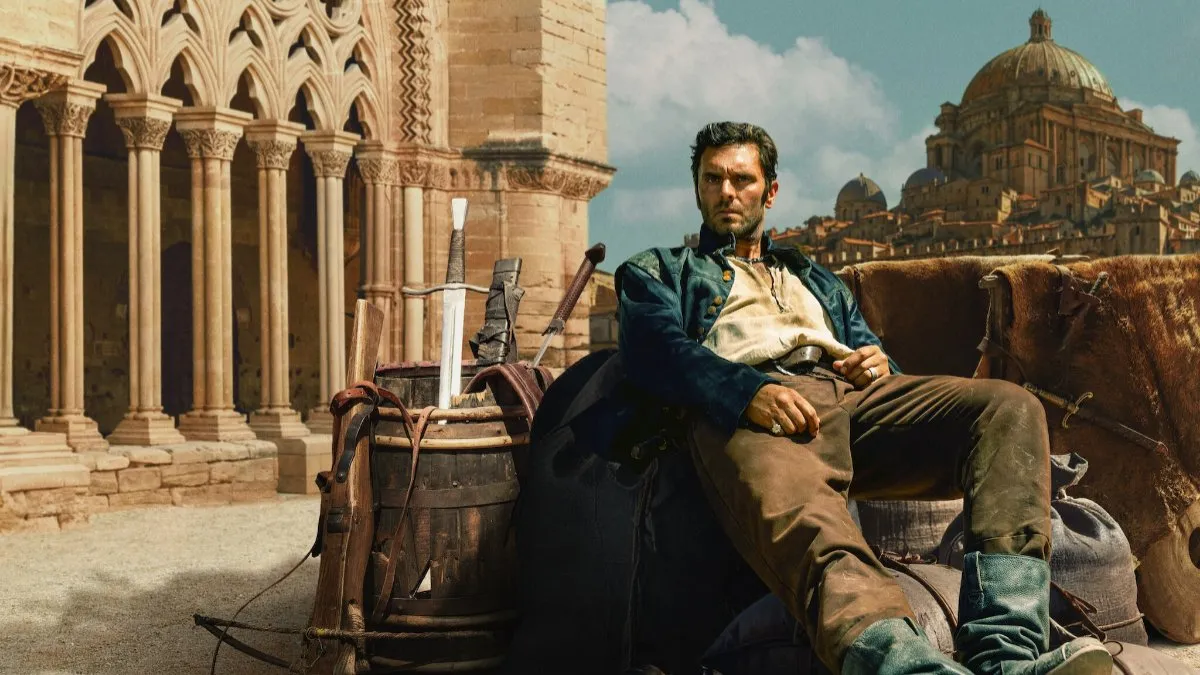
The series is, without question, a triumph of production design. Netflix’s investment is visible in every frame, presenting a version of history that is both gritty and breathtakingly cinematic. The visual language is built on a palette of baked earth tones: ochres, browns, and sun-bleached yellows dominate the screen, constantly reinforcing the oppressive reality of the drought.
This arid expanse is sharply contrasted with the deep shadows inside stone castles and the opulent, jewel-toned fabrics worn by the ruling class. This visual dichotomy is where the show’s most effective social commentary lies. The camera lingers on the faces of starving villagers and the desolation of their settlements, making the insulated political machinations of the powerful feel all the more obscene. Their world of plenty exists just walls away from mass suffering, a timeless portrait of systemic inequality.
The show sharpens this critique with the “Repentants,” sadistic religious fanatics whose white-smeared faces and brutal methods act as a physical manifestation of societal decay. They are what happens when faith curdles into fanaticism in a world bereft of hope. It is into this carefully crafted atmosphere that the show injects its most divisive element: modern-sounding, often profanity-laced dialogue.
This anachronistic choice feels less like a bold artistic statement and more like a calculated appeal to a global audience accustomed to a certain rhythm of speech. The effect is jarring, creating a stylistic dissonance that constantly reminds you that you are watching a 21st-century product, not immersing yourself in a 16th-century world.
Narrative Pacing and Thematic Depth
The story propels itself forward on the simple, effective engine of a chase narrative. Néro and Perla are perpetually on the run, a structure that should, in theory, create relentless momentum and suspense. In practice, the show’s energy is wildly inconsistent. The pacing lurches, bogging down in extended travel sequences where little happens, only to accelerate into frenetic, hastily edited action scenes.
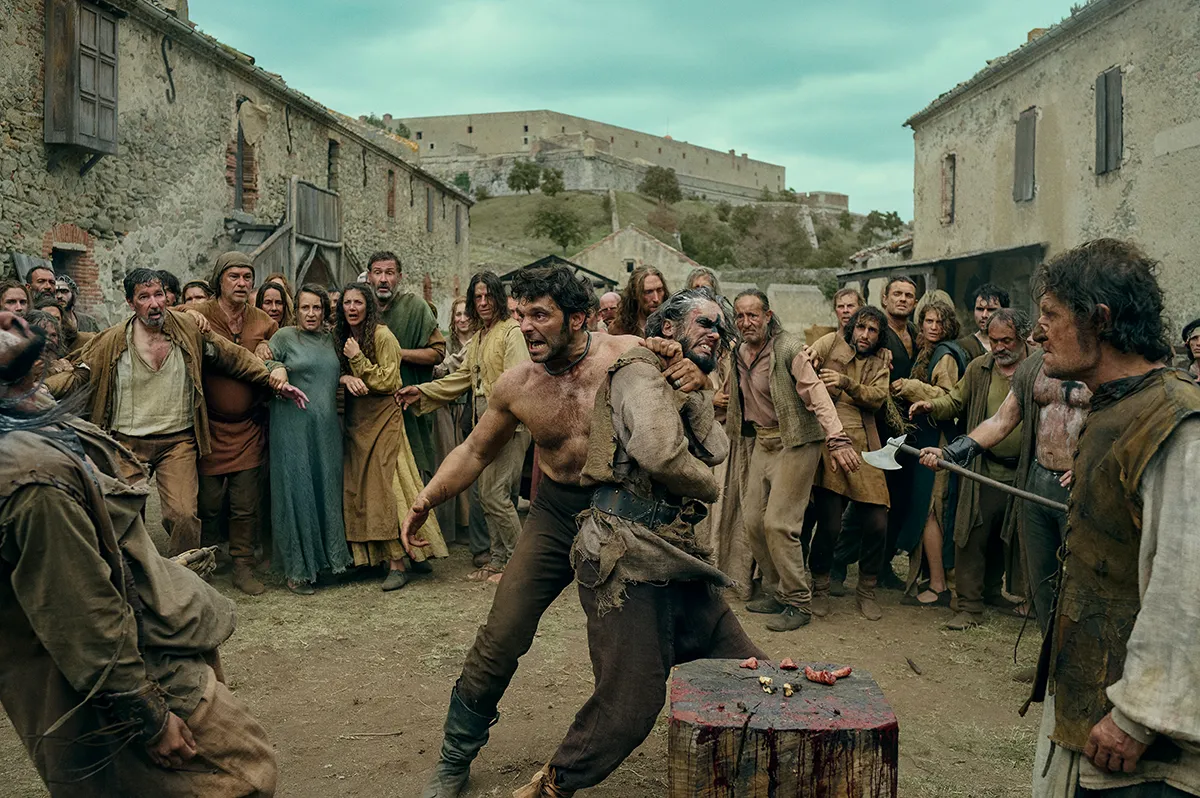
This erratic rhythm is most damaging during moments of intended emotional weight. A scene of profound character revelation will often be cut short, immediately followed by a jarring transition to a different location or a fight sequence.
The editing gives the audience no time to absorb the impact of events, sacrificing dramatic resonance for the sake of plot velocity. This is a common ailment in modern television, where the need to keep the viewer from clicking away overrides the fundamentals of sound storytelling.
This structural weakness is mirrored by a disappointing lack of thematic follow-through. The series sets up a fascinating triangle of conflicting belief systems: the rigid, institutional power of the church; the esoteric, elemental power of magic; and the cynical pragmatism of men like Néro. These are rich grounds for exploration, yet the script barely scratches the surface.
The conflict between religion and magic, for instance, is presented as a simple binary rather than a complex ideological struggle. The show’s mythology surrounding Perla’s prophecy is similarly ill-defined. Key questions about the nature of the prophecy and the identity of the forces behind it are left frustratingly vague.
This lack of clarity isn’t a sophisticated ambiguity; it feels like incomplete world-building. Without a solid foundation for the supernatural stakes, the central conflict loses its urgency, becoming a mere pretext for sword fights and frantic escapes. The show gestures toward big ideas about faith, power, and sacrifice but declines to engage with them in any meaningful fashion.
Characters Forged in Conflict
The series attempts to anchor its sprawling plot in two core father-daughter relationships. The central emotional arc is intended to be the growing bond between Néro and Perla, a journey from cynical detachment to paternal devotion. Yet, the script fails to earn this connection. Their interactions are sparse and functional, driven by the immediate needs of survival.
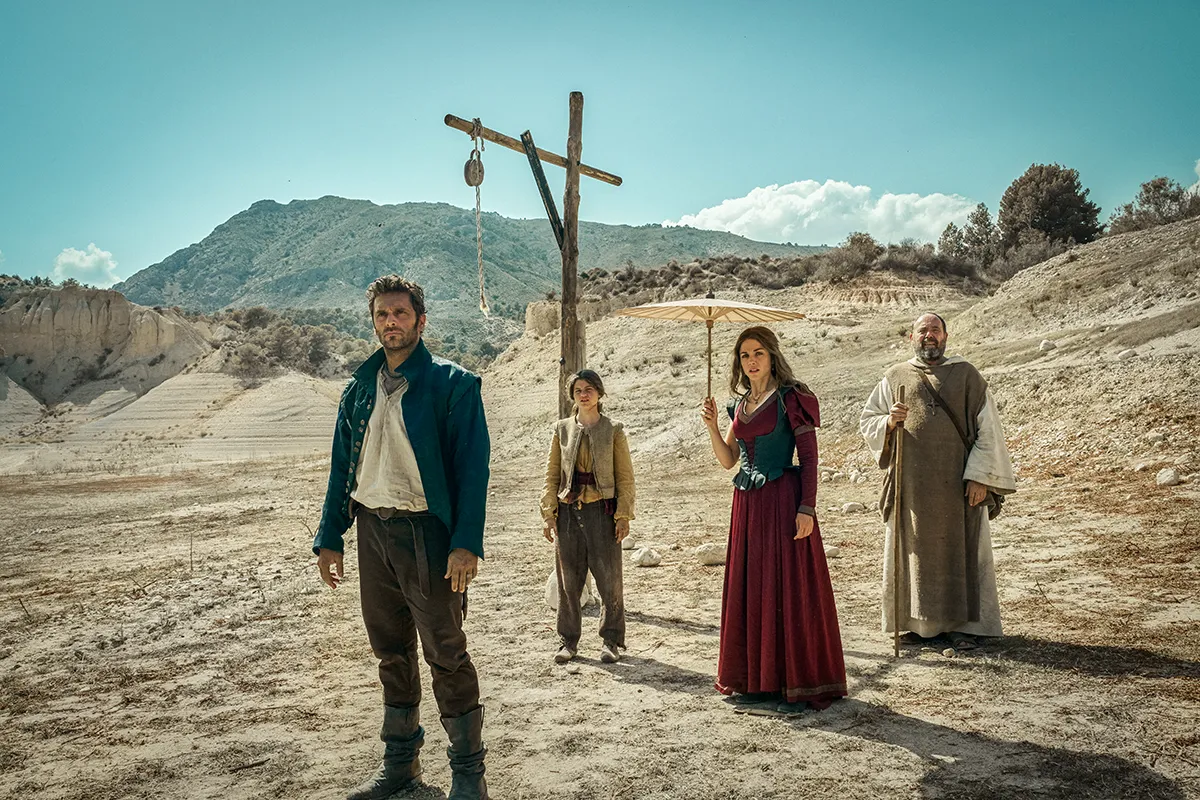
We are told they are becoming a family, but we are rarely shown the small, quiet moments that would make that transformation believable. Their relationship remains an idea the show is about, not a palpable emotional reality. The narrative’s hurried pace simply leaves no room for the emotional architecture required to build such a bond.
By contrast, the dynamic between the ruthless consul Rochemort and his daughter Hortense is more sharply realized. Hortense’s story is a compelling counter-narrative about securing female agency in a world designed to deny it. Trapped in a political marriage, she learns to wield manipulation and courtly intrigue as her primary weapons, subverting the expectations of her station. Her arc is a highlight, a genuinely insightful look at a different kind of survival.
The show’s antagonists also present a study in contrasts. Rochemort represents the banality of institutional evil, a man whose cruelty is filtered through political ambition and bureaucratic decree. La Borgne, the one-eyed witch, is a more archetypal threat, a figure of supernatural menace. The performances are commendable, with the actors doing their best to fill the gaps left by the script. Pio Marmaï brings a powerful physical presence and a deep sense of weariness to Néro.
Camille Razat is suitably unnerving as La Borgne, using a fixed gaze and measured delivery to great effect. Alice Isaaz finds the steel beneath Hortense’s polished exterior. These are strong performers working within a system that consistently prioritizes the plot’s forward motion over the characters’ inner lives.
Final Assessment
Néro the Assassin is a perfect paradox of modern streaming content. It represents both the peak of the industry’s production capacity and the valley of its narrative ambition. The series is an undeniable feast for the eyes; its stunning cinematography, detailed production design, and slickly choreographed action sequences showcase the incredible artistic and financial resources now available to international productions.
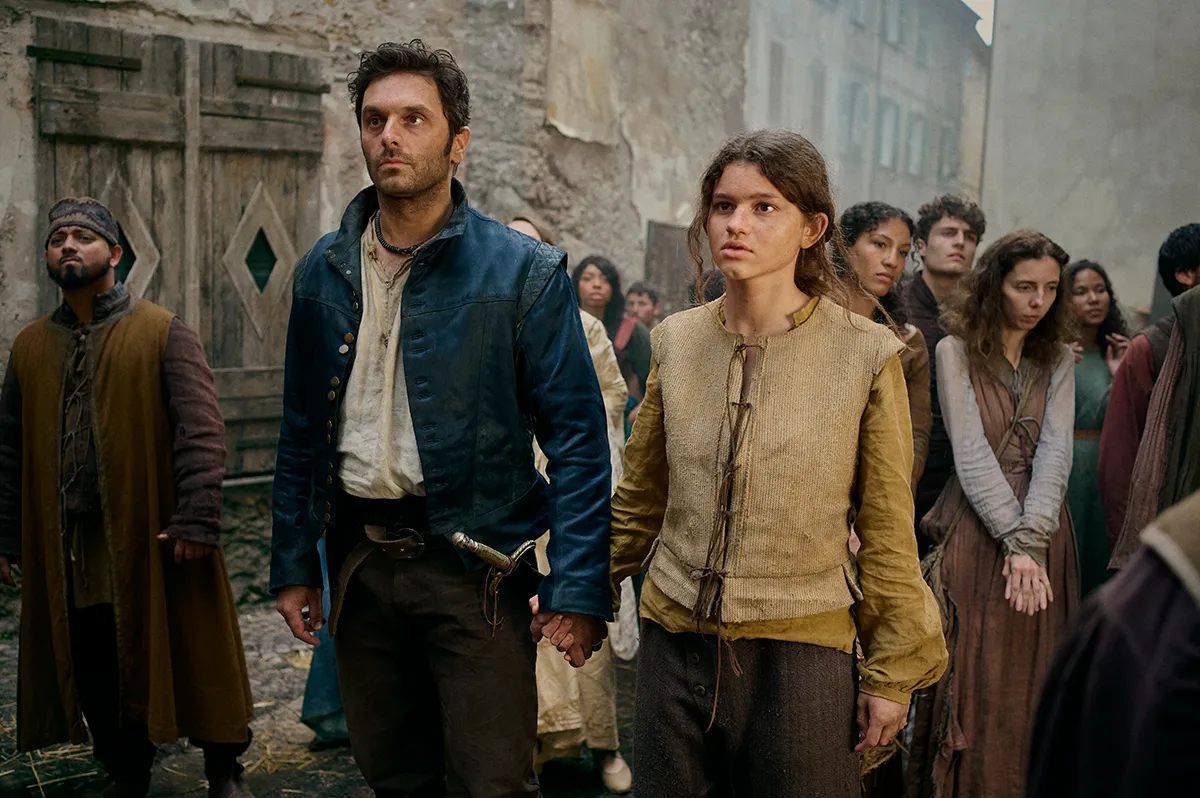
At the same time, this visual splendor is in service of a story that feels emotionally vacant. The narrative is hampered by erratic pacing and a script that shies away from exploring its own most interesting ideas. Its characters are sketches rather than portraits, their relationships underdeveloped.
The show can be recommended to a specific type of viewer: one who prioritizes aesthetic and atmosphere, who enjoys a stylish, action-heavy historical fantasy and is not bothered by a lack of character depth.
For this audience, the ride might be satisfying enough. Viewers seeking the kind of rich, emotionally resonant storytelling that defines the best of television, however, will likely find the experience frustrating. It is a beautiful object, expertly crafted and polished to a high sheen, but ultimately hollow. It is a sign of a television landscape where looking good has become more important than having something to say.
Néro the Assassin (also known as Néro) is a French historical action-adventure TV series set in 1504. The story centers on a cynical and ruthless assassin named Néro who is betrayed by his master. While on the run from dangerous enemies, he discovers his long-lost daughter, Perla, forcing him into a journey of vengeance and redemption where he must choose between saving himself or his daughter and the world. The series, which consists of eight episodes, premiered on Netflix on October 8, 2025, where it is available to stream.
Full Credits
Director: Allan Mauduit, Ludovic Colbeau-Justin
Writers: Martin Douaire, Allan Mauduit, Jean-Patrick Benes, Raphaëlle Richet, Nicolas Digard
Producers and Executive Producers: Karé Productions, Bonne Nouvelle (Production Companies)
Cast: Pio Marmaï, Alice Isaaz, Olivier Gourmet, Lili-Rose Carlier Taboury, Louis-Do de Lencquesaing, Camille Razat, Yann Gael, Tom Leeb, Sandra Parfait, Quentin d’Hainaut
Director of Photography (Cinematographer): Romain Lacourbas, Vincent Gallot
Composer: Guillaume Roussel
The Review
Néro the Assassin
Néro the Assassin is a showcase of streaming’s immense power, a visually stunning series with breathtaking production design and thrilling action. Its beauty, however, is a mask for a hollow core. The narrative prioritizes relentless forward momentum over emotional depth, leaving its characters as underdeveloped figures in a gorgeous, but soulless, world. While the spectacle may entertain, the story offers little to remember, making for a frustratingly superficial viewing experience.
PROS
- Exceptional cinematography and a striking visual aesthetic.
- High-quality production design and detailed world-building.
- Well-executed and exciting action sequences.
- Strong, committed performances from the main cast.
- An interesting premise combining historical fiction with dark fantasy.
CONS
- Character relationships, especially the central father-daughter bond, are emotionally underdeveloped.
- The story fails to explore its rich thematic potential with any real depth.
- Pacing is inconsistent, rushing through key dramatic moments.
- The central mythology and prophecy feel vague and ill-defined.
- Modern-sounding dialogue often feels out of place and jarring.