



























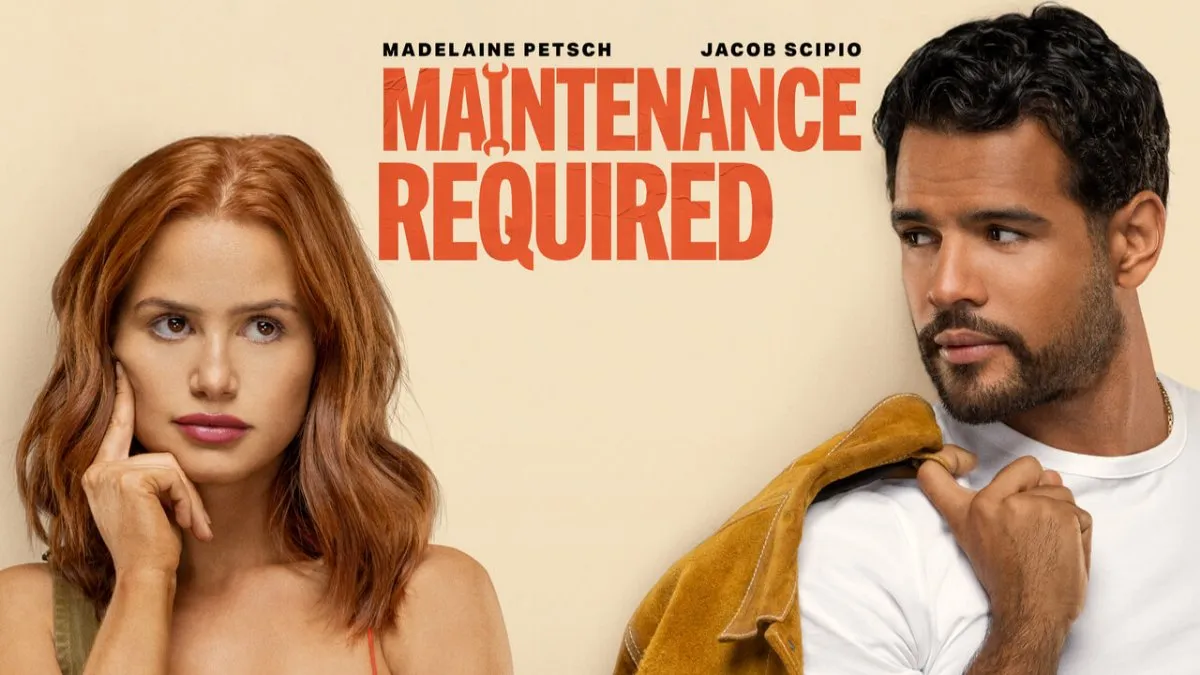

Romantic comedies in the age of streaming often seem assembled from a global parts catalogue, using familiar structures with the hope of creating something new. Maintenance Required is a prime example of this manufacturing process, a film built on a narrative blueprint that has found success everywhere from 1940s Hollywood to modern Bollywood.
It tells the story of Charlie, the proud operator of O’Malley’s, an all-female auto garage she inherited from her father. Her independent business faces an existential threat when a corporate chain, Miller Boys, opens a massive, sterile facility directly across the street, managed by the slick operator Beau.
The film’s central mechanism is a familiar one: while they are combative business rivals by day, they are also anonymous online kindred spirits, forming a deep connection through a forum for vintage car enthusiasts. This framework establishes a dual conflict, pitting a local artisan against a corporate machine while a hidden romance blossoms in the digital ether.
The Engine of the Romance: Chemistry Versus Character
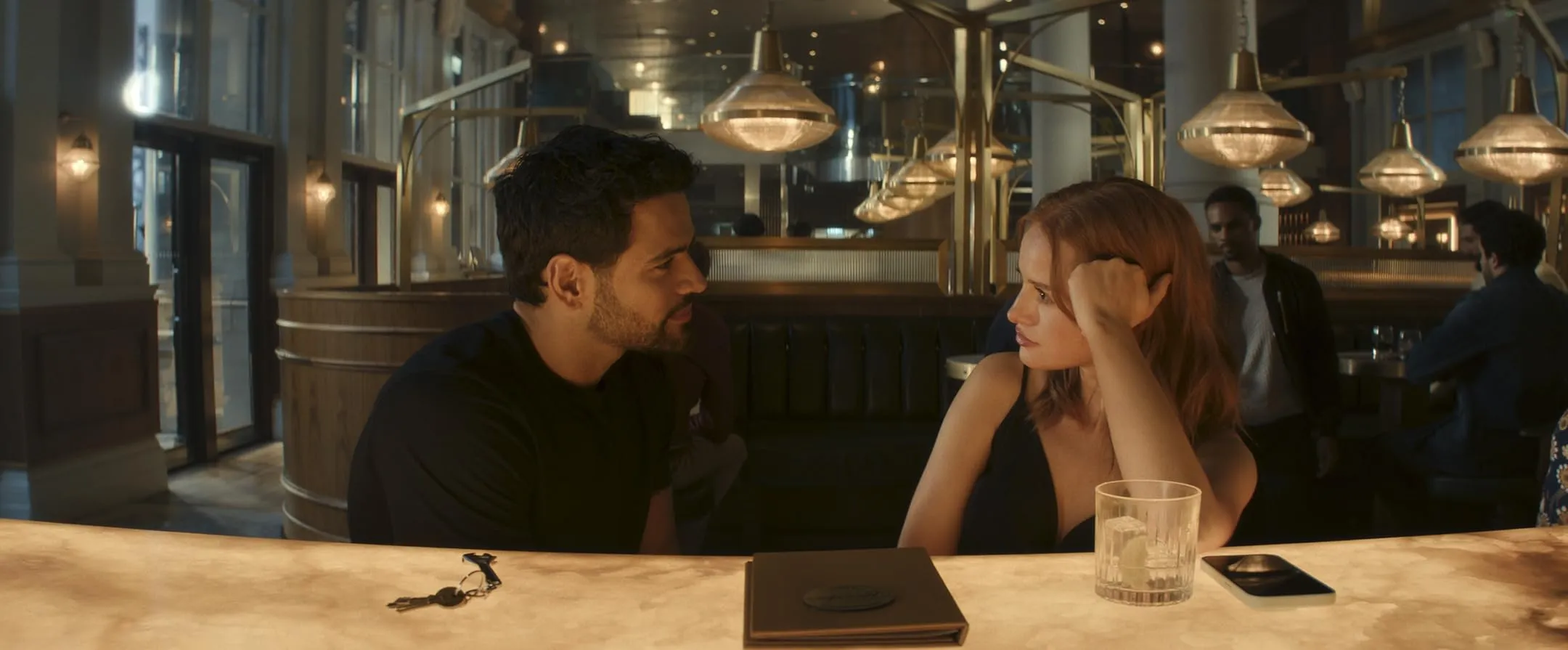
The screen ignites with a certain kinetic energy whenever Madelaine Petsch and Jacob Scipio share a scene. Their adversarial dialogue crackles, suggesting a connection that the script itself struggles to support. This palpable chemistry becomes the film’s primary asset. Yet, the characters they inhabit are rendered with a frustrating lack of authenticity.
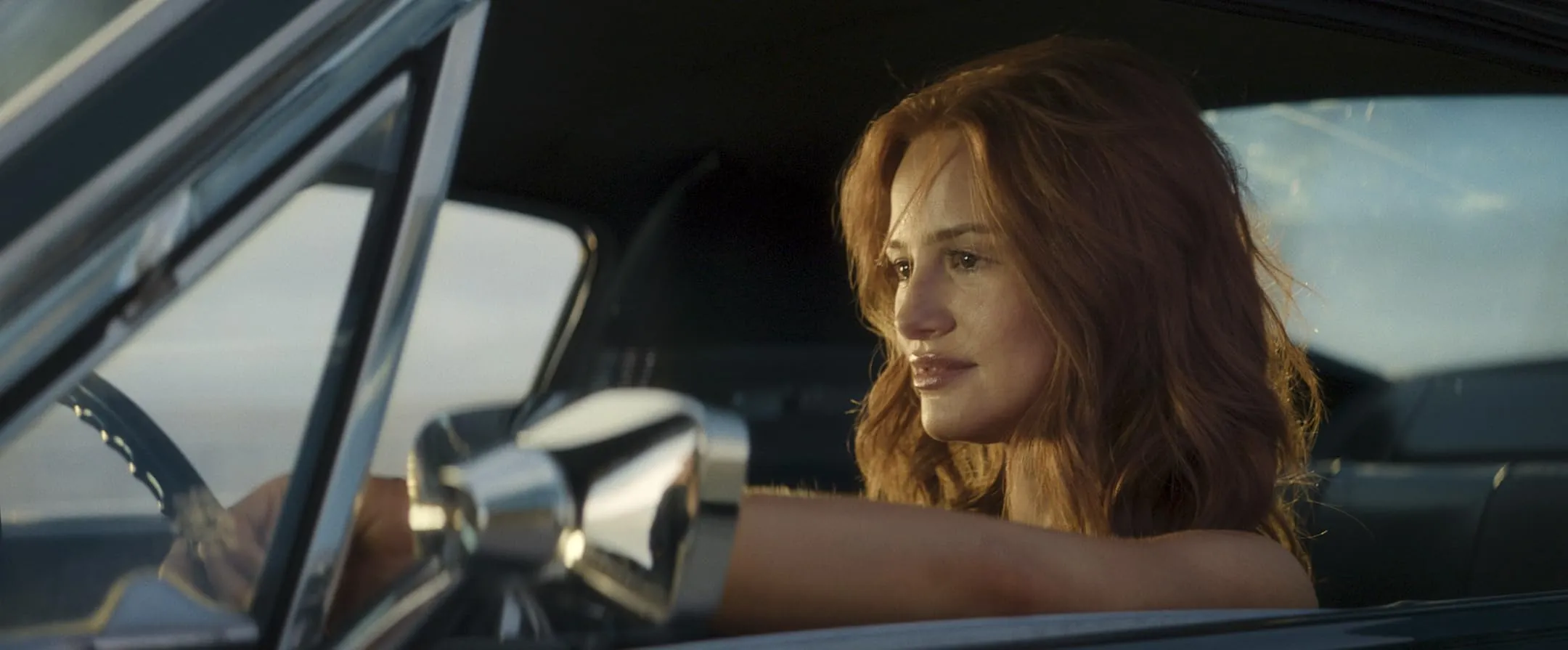
Charlie is meant to be a hands-on mechanic, a “grease monkey” defined by her craft. The film, however, presents her with pristine styling and flawless makeup, even in the middle of a repair. This choice reflects a wider trend in global mainstream cinema, where the gritty reality of a character’s profession is often sacrificed for aesthetic appeal, losing a vital layer of verisimilitude.
Beau’s character is an even more discordant assembly of traits. He is a ruthless corporate closer, yet also a sensitive, blue-collar car nut. This “shark with a heart of gold” archetype is not inherently flawed, but the film fails to explore his internal contradictions. His online persona actively encourages Charlie to fight against the very corporate entity he represents.
This is not a simple deception; it is an act of profound bad faith that makes his eventual turn toward sincerity feel unearned and hollow. His behavior borders on gaslighting, and the script seems uninterested in the troubling implications of his actions, making it nearly impossible to root for a romantic resolution.
The Supporting Chassis and Visual Polish
The film’s most believable moments are found within the warm, cluttered walls of O’Malley’s garage. The easy camaraderie between Charlie and her friends, Kam and Izzy, feels genuine. Their raunchy banter and unwavering support provide flashes of life and humour that the central romance often lacks. This depiction of female solidarity is a distinct strength.
In many cinematic traditions, particularly in South Asian film where the “sakhi” or trusted female friend is a vital narrative pillar, these relationships are woven into the core of the protagonist’s journey. Here, however, Kam and Izzy feel disconnected from the main plot, functioning as a lively but ultimately superficial support system.
The film’s antagonist, Mr. Miller, is rendered in such broad, cartoonish strokes of evil that he lowers the stakes. What should be a resonant economic conflict becomes a simplistic fairytale, draining the corporate threat of any real-world menace. Visually, the film is competently directed, creating a clear symbolic contrast between the two garages. O’Malley’s is rustic and lived-in, representing heritage and community, while the Miller Boys’ shop is a monument to sterile, corporate uniformity.
A Script in Need of a Tune-Up
The narrative follows its predictable path with the mechanical precision of an assembly line. Key plot points, like Charlie’s television appearance or the moment Beau discovers her identity, are treated as dramatic revelations, yet any seasoned viewer will have anticipated them far in advance. The central premise itself feels particularly thin in a contemporary context.
The script offers little justification for two tech-savvy people remaining anonymous for so long online, a conceit that feels more like a relic of a bygone digital era than a believable modern scenario. The film touches upon potent themes: the struggle against gentrification, female empowerment in a male-dominated field, and the soul of small business. These are ideas with deep resonance globally, forming the basis for powerful social dramas from Indian parallel cinema to European independent film.
Here, these themes are just decorative elements. The struggle is reduced to a simple backdrop for the romance, without a meaningful exploration of a community’s potential loss. This thematic hollowness is made more acute by the film’s status as a corporate streaming product, complete with jarringly obvious product placement. It is a vehicle with a polished exterior, but its sputtering engine of a script, full of inconsistent characters and unexplored ideas, fails to move the heart.
Full Credits
Director: Lacey Uhlemeyer
Writers: Lacey Uhlemeyer, Roo Berry, Erin Falconer
Producers and Executive Producers: Matt Luber, Lena Roklin, Matt Williams, Madelaine Petsch
Cast: Madelaine Petsch, Jacob Scipio, Madison Bailey, Katy O’Brian, Inanna Sarkis, Matteo Lane, Jim Gaffigan, Rob Rausch, Naomi J. Ogawa, Julee Cerda
Director of Photography (Cinematographer): Hamish Doyne-Ditmas
Editors: Bruce Green
Composer: Rob Lord
The Review
Maintenance Required
Maintenance Required is a visually clean film that runs on the fumes of its lead actors' chemistry. While Madelaine Petsch and Jacob Scipio generate a palpable spark, their connection is stranded by a script full of inconsistent characters and predictable plot mechanics. The movie gestures toward compelling themes of community versus corporation but ultimately delivers a hollow, formulaic experience. It is a polished vehicle with a sputtering engine, offering a smooth ride that leads absolutely nowhere new or emotionally resonant.
PROS
- Strong on-screen chemistry between the lead actors, Madelaine Petsch and Jacob Scipio.
- The supportive friendship among the female characters in the garage feels genuine and lively.
- A clean, competent visual presentation with a clear aesthetic distinction between the rival businesses.
CONS
- A highly predictable and formulaic script that follows the romantic comedy blueprint without deviation.
- Inconsistent and unbelievable character motivations, particularly for the male lead.
- Underdeveloped supporting characters and a one-dimensional, cartoonish villain.
- Superficial exploration of its own themes, resulting in a hollow narrative.