



























The bedrock of the domestic thriller is the arrival of a stranger who unsettles a carefully arranged home. The Intruder, a four-part French psychological thriller, works that design with assurance. The story introduces Paula (Mélanie Doutey), a mother of three preparing to return to a prestigious position at a maison de couture after the birth of her youngest, Orso.
She and her husband, Jérôme (Éric Caravaca), bring in an au pair to stabilize family life. Tess (Lucie Fagedet) enters with polished charm and immediate appeal. Paula feels a sharp jolt of unease almost at once. Small domestic disruptions accumulate, and the narrative sharpens around Paula’s isolation as she faces the widely admired Tess. This conflict produces a slow current of anxiety inside an affluent Bordeaux household, using the thriller’s structure to examine contemporary questions about motherhood and the heavy mental workload that confronts working women.
The Weight of Motherhood and the Class Divide
The series roots suspense in social observation, a strategy common to international cinema that fuses genre and realism. The screenwriter draws on themes of postpartum depression, the mental load carried by mothers, and the compression of career and family life. Within a thriller frame, the episodes trace Paula’s exhaustion, her shaken confidence after maternity leave, and the private grief that follows her mother’s death. The depiction of returning to work while feeling ineffective at home carries wide relevance and lands with clear emotional logic.

The narrative engages the “evil nanny” template, a familiar image in cinema from The Hand on the Cradle onward, and updates it. Tess’s presence functions as a catalyst that feeds on Paula’s wavering self-belief and the guilt that often accompanies delegated childcare. Through measured acts of manipulation, Tess induces doubt about Paula’s judgment and capability. Minor acts of sabotage become instruments of psychological pressure.
Class and power relations give the story further traction. The large, architecturally notable house in Bordeaux signals the bourgeois life shared by Paula and Jérôme. Hints of chaos in Tess’s background mark her arrival as a move across social thresholds. Tension grows from unequal roles and the quiet force of subordination within an employer-employee relationship. Tess’s goal centers on inhabiting the idealized family space she observes. The character gains complexity, and the conflict acquires cultural weight.
Structuring Suspense and Shifting Focus
Across four episodes, the structure divides into two clear movements that shape tempo and tension. Part One (Episodes 1 and 2) confines the action to interior spaces and an intimate duel. The mood tightens. Paranoia rises through modest incidents such as misplaced objects. The episode pair builds heat through a persistent game between the leads.
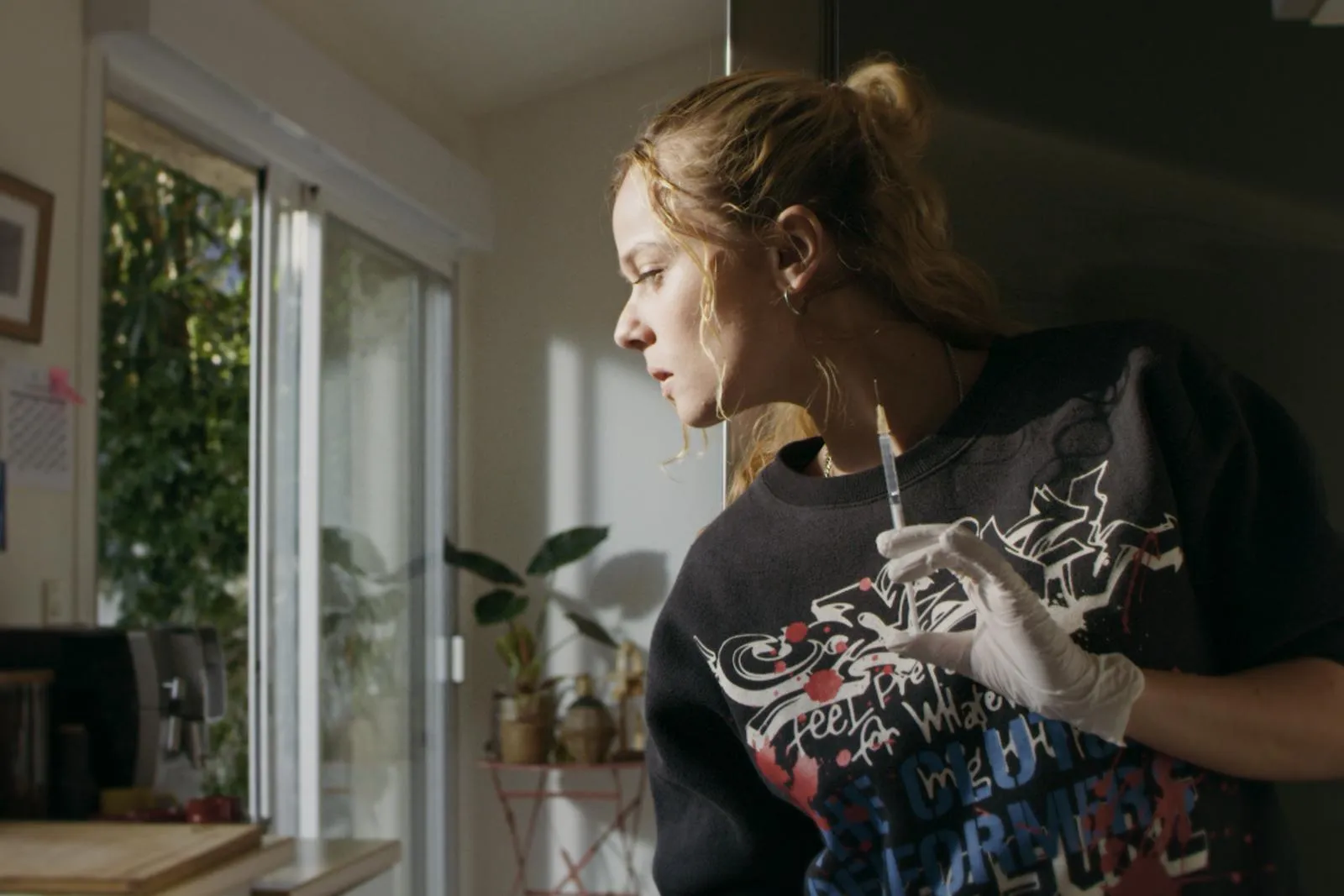
Part Two (Episodes 3 and 4) expands the frame. The plot moves into an external search and a police-thriller mode after a murder accusation. Paula leaves the house and fights for her family and reputation, which sets up a pursuit of truth. Flashbacks supply information about Tess’s past and motives.
Allowing the antagonist a defined point of view raises the level of storytelling and draws the moral ground into ambiguity. The opening tempo feels careful, then locks into an addictive rhythm. Audience awareness of Tess’s double game, a straightforward form of dramatic irony, sustains pressure. The late pivot adds scope and clarity to the conflict, while early suffocation gives way to a wider design.
The Cinematic Language of Anxiety
Director Shirley Monsarrat shapes genre elements with precision and threads unease into the design of the home. The house reads as a mental arena and a field of conflict. Architectural details, including the spiral staircase and tucked-away corners, intensify the sensation of hiding and being watched. Lighting plays a key role. Interiors frequently sit in shadow or persistent twilight, which underscores Paula’s distress and a feeling of being kept from knowledge. Asymmetrical framing and long takes translate face-to-face standoffs into visual terms.

Owlle’s score, drawn from the electro sphere, experiments in ways that sharpen anxiety. Sound design folds in everyday textures, such as the ticking clock and the sweep of a shower curtain, to thicken the sense of intrusion and domestic horror.
Music and sound keep the paranoid mood active. The series leans into established genre grammar in the early chapters, using nightmare sequences to register Paula’s state of mind. References to late-20th-century thrillers, including Misery, appear as respectful signals, while direction maintains freshness and avoids imitation.
A Duel of Fragility and Fixity
The production draws its power from two central performances. Mélanie Doutey anchors Paula with lived-in realism, tracing a line from fragility to resolve. Exhaustion, lost confidence, and the later surge to protect her family arrive with clarity and relatability.
Lucie Fagedet shapes Tess with calculated Hitchcockian blondness and a chilling, steady gaze. She moves between a benign surface and a latent threat with exact control. The work unsettles without leaning on melodrama, and it grants depth to a machiavellian figure.
The closing passages, which bring Tess’s instability and complexity into full view, carry a severe chill. The series functions as a duel between two sharply contrasted approaches to performance, and that friction propels the story. The ensemble supports this charge. Éric Caravaca’s portrayal of a husband who initially dismisses Paula’s fears heightens her isolation and tightens the core conflict.
The Intruder is a French television mini-series, a thriller created by Nathalie Abdelnour. The four-episode series premiered in France on France 2 on March 5 and March 12, 2025. It is a co-production of Tetra Media Fiction, Beaubourg audiovisuel, and France Télévisions. The story follows Paula, a mother who hires a seemingly perfect au pair named Tess after the birth of her third child, only to grow increasingly paranoid as incidents multiply, leading her to believe Tess intends to harm her family. The series is available to watch in its entirety on the French streaming platform France.tv.
Full Credits
Director: Shirley Monsarrat
Writers: Nathalie Abdelnour, Nathalie Saugeon
Producers and Executive Producers: Léa Gabrié
Cast: Mélanie Doutey, Lucie Fagedet, Éric Caravaca, Léonie Simaga, Clément Sibony, Mariama Gueye, Alain Doutey, Anne Loiret
Director of Photography (Cinematographer): Paul Morin
Composer: Owlle
The Review
The Intruder
The Intruder is an effective, thematically rich thriller that revitalizes the familiar "evil nanny" trope. Its true strength lies in using cinematic tension to explore the genuine anxieties of modern motherhood and career pressure. The visual language and sound design create a deeply unsettling, paranoid mood in the first half. While the transition to a police procedural in the latter episodes costs some of the original, suffocating atmosphere, the complexity granted to the antagonist, Tess, elevates the entire production. It stands as a sharp, well-acted piece of French genre cinema with significant cultural commentary.
PROS
- Deep exploration of the mental load and postpartum anxiety, giving the thriller real-world weight.
- Exceptional central performances by Mélanie Doutey and Lucie Fagedet, driving the intensity of the duel.
- Highly effective visual and sound design, creating an oppressive, paranoid mood within the home.
- Sophisticated two-part narrative structure that moves from intimate domestic threat to wider investigation.
- Nuanced portrayal of the antagonist (Tess), avoiding simple villainy to explore her complex motivations.
CONS
- The deliberate shift from pure psychological thriller to a police procedural weakens the original, suffocating tension.
- The visual darkness and underlighting of the home, while atmospheric, is occasionally excessive.