
















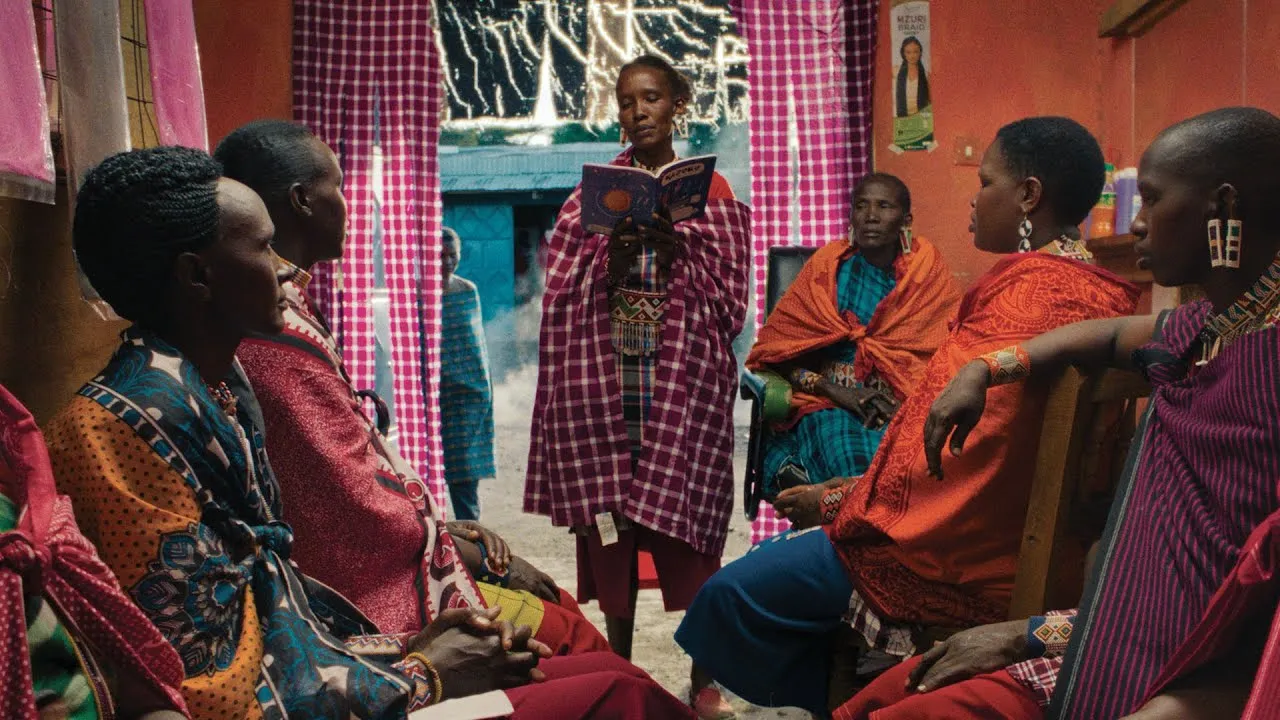

Vincho Nchogu’s One Woman One Bra arrives with the charge of discovery, an energetic feature debut rooted in the Kenyan village of Sayit. The film studies the arithmetic of worth assigned by institutions and asks what remains of a person once a registry decides who counts. Star (Sarah Karei) stands at the center of this question. She is unmarried and orphaned, her lack of kin making her transparent to a bureaucratic order.
While the village celebrates the issuance of new land deeds, she faces the immediate prospect of losing her home. That threat becomes a summons. She begins a search for a forgotten bloodline and enters a peculiar, darkly comic arrangement with a Western charitable organization. Nchogu shapes a political argument with swift motion and a precise feel for tone, letting cultural critique sit alongside human lightness without discord.
The Absurdity of Assistance
The story reads as a meditation on alienation and the heavy cost of being unrooted in a place that prizes roots. The land deed requirement turns Star into an unwelcome ghost on familiar ground. Her search for a saving identity leads to a glossy book cover, Nomads of the World, where her childhood image has been preserved, traded, and displayed. The photograph exposes a marketable narrative that others package for their own uses. A hand tattoo glimpsed beside her fixes a sign of the past, a promised path that keeps receding as she reaches for it.
Her bid for funding bends into sharp comedy about the machinery of international aid. The proposed “One Woman One Bra” campaign embodies a patronizing script that mistakes packaging for care. The need for financial autonomy receives a costume made for quick applause.
The scene distills the film’s political claim with cold clarity. Assistance often arrives shaped by the giver’s comfort, not the receiver’s need. Star agrees because survival leaves little room for pride, and that choice strains her ties with the women of Sayit. What follows is a deeper solitude. The film regards this with patience, letting humor and pain share the same frame.
The Tenacious Heart of the Outsider
Sarah Karei anchors the film with poise and persistence. Her performance carries acute desperation, a steady politeness, and a sly sense of humor that slips through like sun between clouds. Star’s will moves against ancient social rules and modern paperwork with equal force.
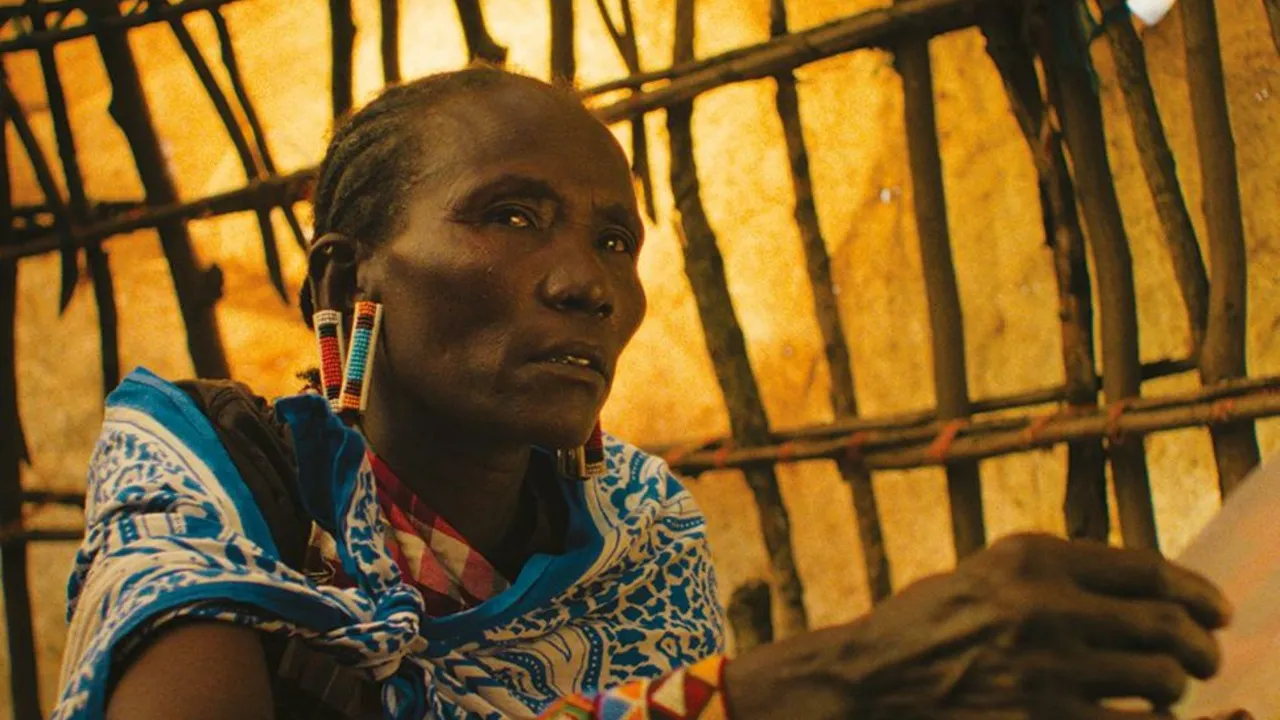
The image track reinforces her isolation. Blue, yellow, and purple wraps distinguish her from the community’s pinks and reds, a quiet separation that persists even inside a crowd. She stands apart while standing among.
The comedy leans dry and observational. The local gift shop owner who charges villagers to view Star’s photograph delivers the sharpest laugh and the coldest truth, turning identity and poverty into spectacle with a price of admission.
The ensemble, drawn largely from a traveling theater, sometimes sounds unvarnished or blunt. That texture often reads as lived-in presence rather than polish. Star keeps a flicker alive through all of it, a resilient humor that refuses to vanish. The narrative can feel chopped or episodic as it moves from one obstacle to the next, yet the through line holds. Her insistence on being seen keeps the film in motion.
Visual Truths and Structural Fissures
Nchogu directs with confidence and care, a steady hand for difficult material that impresses in a first feature. Muhammad Atta Ahmed’s cinematography stands out as a major achievement. The images carry a clean, professional sheen and honor the Kenyan countryside without romantic gloss.

Vivid shawls worn by the women form strong blocks of color across the land, a living palette that never feels ornamental. The score mirrors this attention to presence. Voices of Masai singers give the sound a grounded power that lingers.
Some choices leave faint cracks in the structure. The brisk runtime trims the air around scenes, and impact sometimes lands before feeling can gather. The pace can resemble an outline of events that asks viewers to supply what time might have revealed.
Minor audio elements invite refinement. Even with those fissures, One Woman One Bra gathers a rare strength. It announces courage and identity with clarity and marks Nchogu as an essential filmmaker to observe.
One Woman One Bra is the feature debut of Kenyan filmmaker Vincho Nchogu, telling the story of Star, a 38-year-old orphan in Sayit Village who faces the risk of losing her home and land when new title deeds are issued based on kinship, forcing her on a quest to prove her connection to the community. The film premiered at the Venice Biennale Cinema 2025 as part of the Biennale College Cinema strand and was also selected to compete for the Sutherland First Feature Award at the BFI London Film Festival 2025. As the film is currently circulating the international film festival circuit, a general public release date or viewing platform is not yet available.
Full Credits
Director: Vincho Nchogu
Writers: Vincho Nchogu
Producers and Executive Producers: Josh Olaoluwa
Cast: Sarah Karei, Norng’aruani Kipuker, Amos Leuka, Irungu Mutu, Boniface Saitabau, Davina Leonard
Director of Photography (Cinematographer): Muhammad Atta Ahmed
Editors: Shannon C. Griffin
Composer: Henrique Eisenmann
The Review
One Woman One Bra
Vincho Nchogu’s debut is a vital, energetic examination of rootlessness and identity. Sarah Karei delivers a marvelous performance as Star, whose battle for her home becomes a pointed, darkly humorous critique of institutional ignorance. The film is visually arresting, though its rapid pace sometimes sacrifices scene development. It succeeds as both a political statement and a moving human drama. This is a significant work from a promising new director.
PROS
- Powerful and biting thematic critique of Western aid and institutional "white saviorism."
- Sarah Karei's tenacious, emotionally grounded, and humorous lead performance.
- Striking cinematography by Muhammad Atta Ahmed; visually arresting use of color and scenery.
- Effective balance of political commentary, pathos, and droll, observational comedy.
- Strong debut direction by Vincho Nchogu, handling complex themes with confidence.
CONS
- The brisk 78-minute runtime causes the narrative to feel choppy or episodic.
- Some of the supporting performances from the non-professional cast can be unvarnished or blunt.
- Minor elements, like some audiowork, could use technical refinement.
- The short length sometimes prevents pivotal scenes from fully landing their dramatic impact.