




![Kingdom Hearts Collection [I-III] Review](https://gazettely.com/wp-content/uploads/2026/10/Kingdom-Hearts-Collection-I-III-1-360x180.webp "Kingdom Hearts Collection [I-III] Review: KHII Holds Steady as Newer Entries Fluctuate 33")




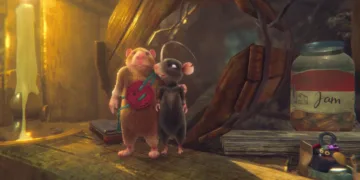

A ladybug alights on a mossy stone in the opening moments of Apple TV+’s The Sisters Grimm, its wings catching muted autumn light before it takes flight into a dusky forest. This delicate image bookends the season, a small promise of enchantment that the series strives to fulfill across its brief six episodes. Based on Michael Buckley’s book series, this animated adaptation follows Sabrina and Daphne Grimm, orphaned sisters whose parents vanished a year prior, leaving behind only a cryptic red handprint on their abandoned car’s dashboard.
After cycling through six foster homes, the girls arrive in Ferryport Landing to meet their supposedly deceased grandmother Relda. The town harbors a secret: it shelters fairy tale characters, dubbed “Everafters,” and the sisters are descendants of the Brothers Grimm themselves. When a giant abducts Relda shortly after their arrival, Sabrina and Daphne must navigate this strange new world to rescue her.
Season 1 adapts “The Fairy-tale Detectives,” the first book in Buckley’s series, positioning itself as an entry point to serialized fantasy for children too young for Harry Potter’s darker corridors. Voiced by Ariel Winter and Leah Newman, the Grimm sisters anchor a show that aspires to capture the cozy nostalgia of elementary school reading.
Autumnal Aesthetics and Methodical Magic
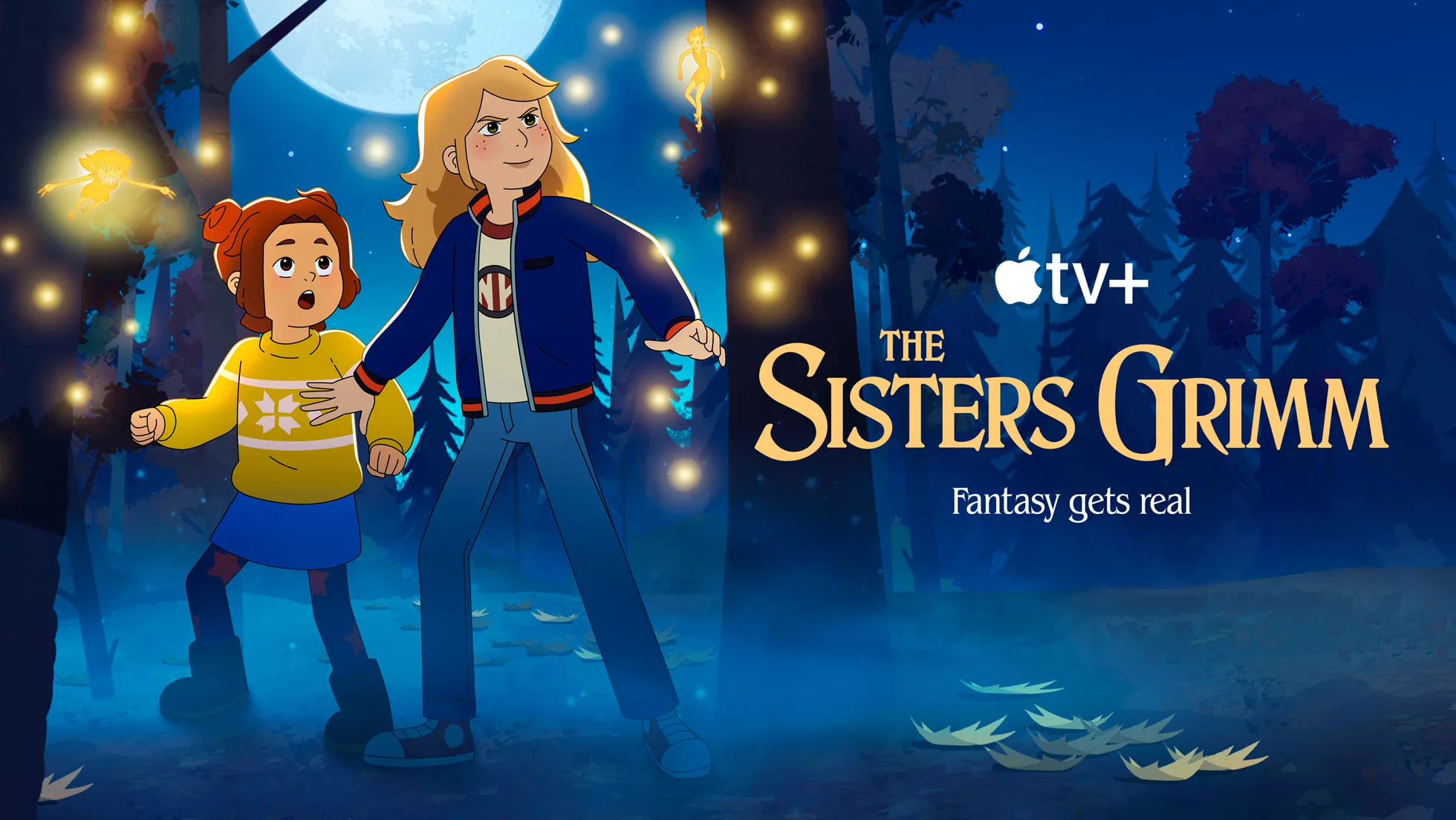
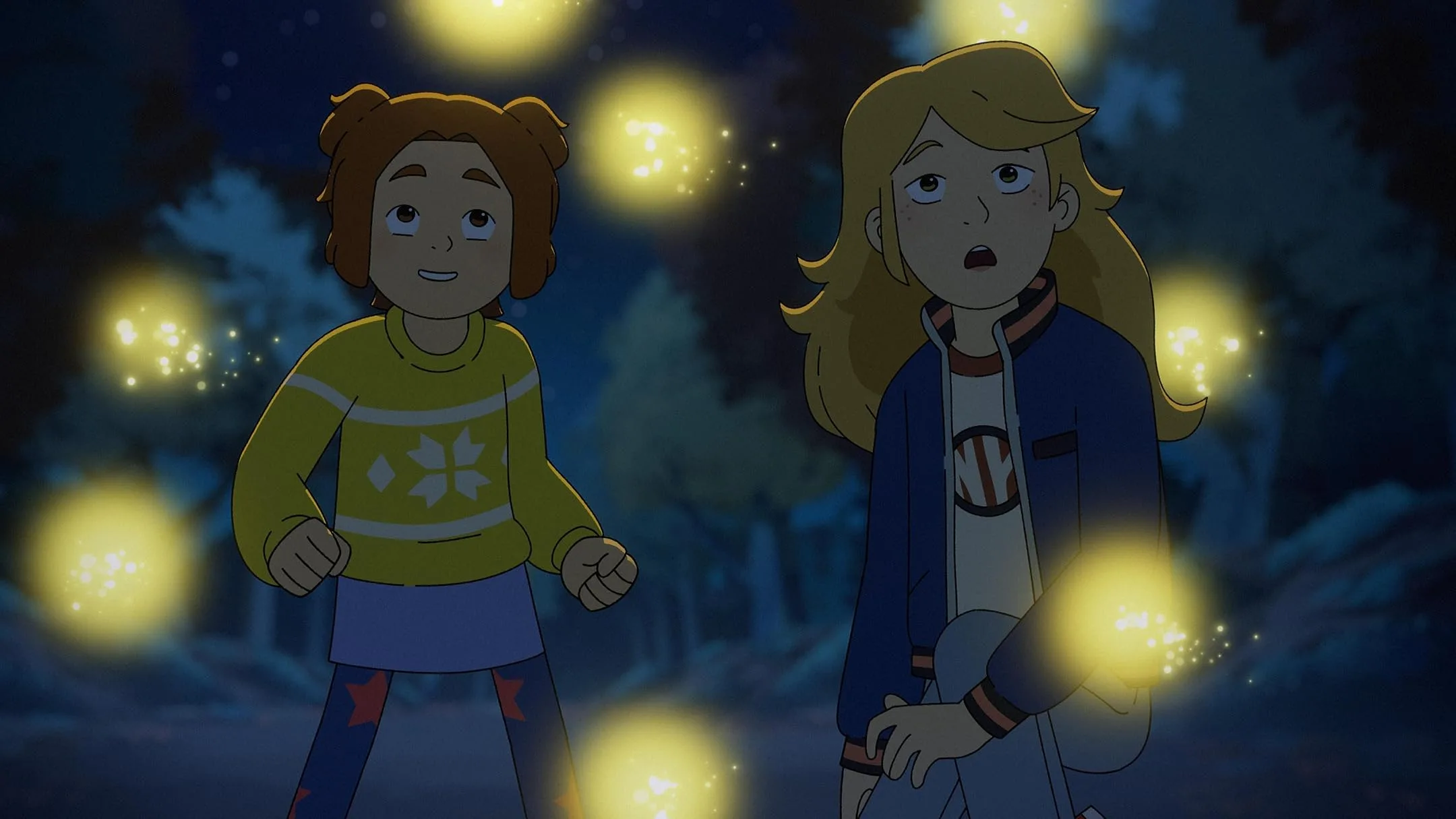
The animation possesses a whimsical quality tinged with dusk, an aesthetic choice that separates it from the hyperkinetic energy dominating contemporary children’s programming. Titmouse, the studio behind Apple TV+’s Harriet the Spy and Frog & Toad, delivers competent work here, though the production never rises above average technical execution.
What distinguishes the visual approach is its deliberate restraint. The color palette stays muted, washed out in ways that evoke fading storybook illustrations. Those opening forest sequences demonstrate real care, their illustrative backgrounds suggesting the page-worn charm of books passed down through generations.
The musical score leans into mystery and mysticism, enhancing the atmosphere without overwhelming it. The pacing recalls an earlier era of children’s television, specifically the defunct PBS Kids GO programming block that once housed WordGirl, Wild Kratts, and Cyberchase. Those shows understood that young viewers could handle sophisticated adventures without constant sensory bombardment. The Sisters Grimm shares that philosophy, maintaining a consistent ambiance of gentle intrigue that respects its audience’s attention span.
Stilted Dialogue and Surface Connections
Sabrina Grimm carries trauma across her 11-year-old shoulders. Angsty, apprehensive, stubborn, she serves as both sister and caregiver to seven-year-old Daphne, a dynamic that should generate the series’ emotional core. Their bond functions as advertised: loving, healthy, mutually supportive. Daphne speaks her mind plainly, wanting everyone to get along, her innocence counterbalancing Sabrina’s guarded cynicism.
Yet the execution falters. The dialogue suffers from an awkward directness that plagues multiple characters, particularly Sabrina and Relda. They speak like children reading from cue cards, stating thoughts in overly explicit terms that drain scenes of natural rhythm. The script feels poorly adapted from page to screen, unable to distinguish between prose narration and spoken conversation. This stiffness undermines moments requiring emotional nuance. Sabrina’s arc, centered on accepting her Grimm heritage and her responsibility for Daphne, relies too heavily on characters announcing their feelings rather than embodying them.
The opening sequences compound these issues with a jarring condemnation of the foster care system, depicting the sisters’ hardships with tone-deaf bluntness before asking viewers to immediately trust and like Relda. This whiplash never fully resolves.
Puck provides relief from this woodenness. The trickster fairy prince from A Midsummer Night’s Dream, voiced by Billy Harris, brings genuine energy through his petty, clingy personality. The writing here demonstrates self-awareness, acknowledging the hyperbole of his behavior in ways that make his underlying affection for Sabrina feel earned rather than cloying.
Mayor Prince Charming, performed by Abubakar Salim, similarly benefits from layers that accumulate through action rather than declaration. The supporting cast fills their roles adequately, while the core voice acting remains strong throughout. The character development proceeds steadily for the target demographic, yet rarely moves beyond surface exploration.
Rushed Rescue and Untapped Mystery
The season dedicates itself to a single mission: rescuing Relda from her giant captor. For the first several episodes, the sisters stumble through this task, spinning wheels that don’t gain traction until around episode four. Six episodes of 22 minutes each creates a format too cramped for the story’s ambitions, particularly as the second half introduces intriguing complications about Ferryport Landing’s citizens. The series rushes when it should linger, acting like a hare when tortoise patience would serve it better.
This speaks to a broader frustration with streaming-era storytelling for animated family programming. The serialized structure deserves praise (unusual for this age group, offering an excellent introduction to complex narrative for budding fantasy fans), yet the execution can’t escape platform constraints. The show might have thrived as a Cartoon Network series 15 years ago, given space to breathe across traditional episode counts.
The thematic ambitions suffer similar truncation. The series asks interesting questions about identity: who are you outside the major conflict that defines your story? The Everafters face this existentially, their iconic narratives complete. Sabrina faces a parallel question about accepting her lineage and its responsibilities. Yet every exploration remains surface-level, bluntly addressed through dialogue that tells rather than shows.
What genuinely intrigues is the mystery of the parents’ disappearance, that red handprint hovering over the entire season. The prospect of a multi-season mystery for younger viewers feels fresh and promising. The world-building demonstrates real solidity; the town’s secrets engage viewers across age ranges. This first season exists primarily as setup, establishing a status quo for future installments. The show contains tremendous potential for growth if granted more episodes, with space for the world to deepen and characters to evolve beyond their initial sketches.
The Sisters Grimm functions as solid entertainment for its intended demographic, a diversion families can watch together. It lacks the artistry of shows like The Owl House or Avatar, and doesn’t match the folkloric depth of Curses!. What it offers is rarer: appropriate viewing for genuinely young children that doesn’t insult intelligence. The series plants seeds for something that could grow into appointment viewing for families. Whether those seeds find fertile ground remains uncertain. For now, this is a capable beginning, a ladybug taking tentative flight.
The Sisters Grimm is an animated fantasy adventure series developed by Amy Higgins and Erica Rothschild, based on the New York Times bestselling book series by Michael Buckley. The show follows orphaned sisters Sabrina and Daphne Grimm, who discover they are descendants of the Brothers Grimm and must navigate the mysterious town of Ferryport Landing, where fairy-tale characters, known as Everafters, live. They confront heroes and villains alike while attempting to solve the mystery of their missing parents. The series premiered globally on Friday, October 3, 2025, and is available to stream exclusively on Apple TV+.
Full Credits
Director: Sage Cotugno, Katie Aldworth, Hilary Florido, Nathanael H Jones, Liza Singer
Writers: Amy Higgins, Erica Rothschild, Michael Buckley, Todd Casey, Bryan Caselli
Producers and Executive Producers: Amy Higgins, Michael Buckley, Elliot Blake, Philip Alberstat, Steven Amato, Theresa Park, Chris Prynoski, Shannon Prynoski, Ben Kalina, Antonio Canobbio
Cast: Ariel Winter, Leah Newman, Laraine Newman, Abubakar Salim, Billy Harris, Harry Trevaldwyn
Composer: Leo Birenberg
The Review
The Sisters Grimm
The Sisters Grimm offers a beautifully realized world and a genuinely affecting bond between its heroines. Its unique, autumnal aesthetic and the thoughtful concept of its "Everafters" create a memorable atmosphere. This charm is consistently undercut by a compressed narrative that rushes through its plot and a script that lacks subtlety. The result is a season that serves as a compelling proof of concept for a richer story yet to be told, feeling more like a hurried prologue than a satisfying chapter.
PROS
- Evocative, autumnal storybook visuals and restrained animation style.
- Solid voice performances (Sabrina/Daphne, Puck, Mayor Prince Charming).
- Engaging serialized mystery (parents' disappearance / red handprint) with room to grow.
- A mature-but-gentle tone appropriate for younger viewers—respects attention span.
- Score and atmosphere enhance the sense of cozy mystery.
CONS
- Stilted, overly explicit dialogue that weakens emotional beats.
- Six 22-minute episodes feel too short — pacing is rushed and uneven.
- Themes remain surface-level; character arcs are often told, not shown.
- Tonal whiplash in early foster-care depiction.
- Production is competent but rarely exceptional.