












The arrival of a fourth season for a beloved, heavily serialized fantasy series often forces a fundamental reckoning. When a single narrative organ is excised or replaced, the organism of the story reacts with measurable disturbance. For The Witcher, which draws on Andrzej Sapkowski’s expansive source material, that disturbance becomes existential because the lead actor changes midstream. This casting shift operates as a structural fulcrum. It alters the implicit agreement between character and audience and sets the emotional frequency for every subsequent episode.
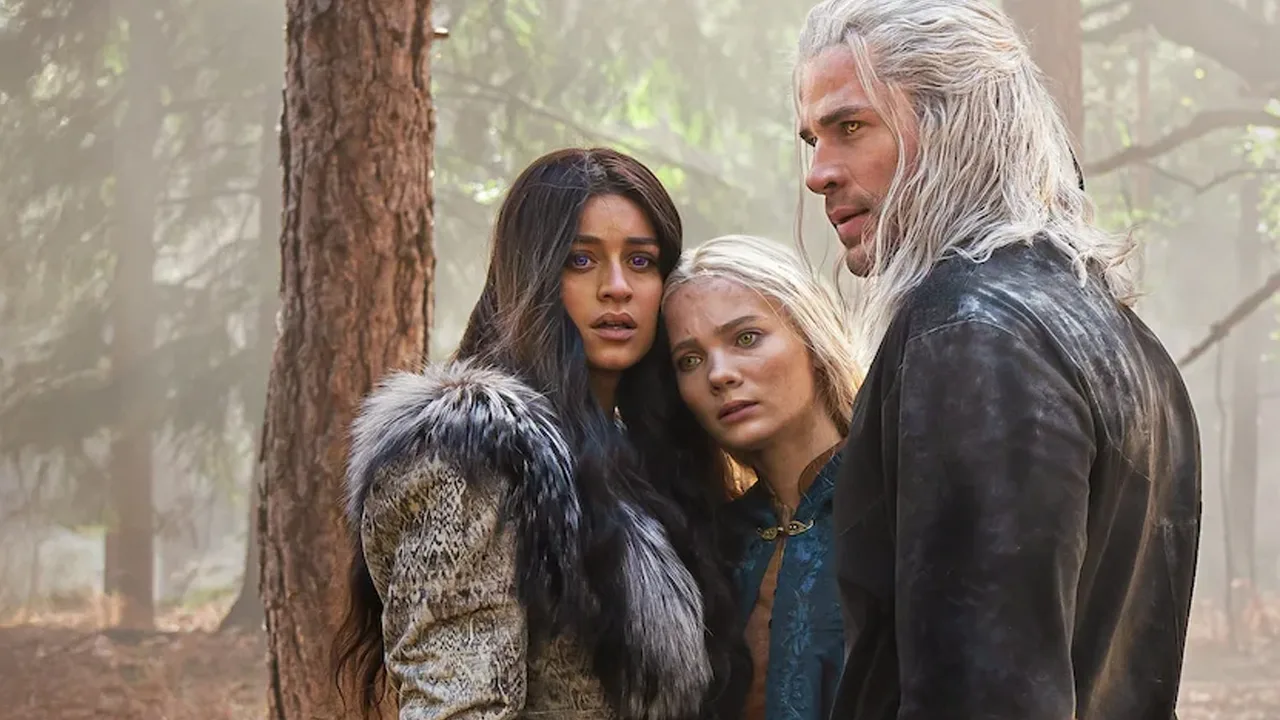
Season 4 opens with the central trio, Geralt, Ciri, and Yennefer, reduced to isolation and urgency. Geralt arrives severely wounded, adrift and separated from his adoptive family. Yennefer must assemble a united force of sorceresses to meet escalating political and magical terrorism.
Ciri abandons the trappings of royalty and moves into violent necessity on the margins. The series answers its own internal instability through formal simplification. It divides the season into three distinct, parallel odysseys across a continent scarred by war. That structural decision supplies a firm frame while the franchise’s most familiar emblem, its protagonist, is remade.
The Post-Hero and the ‘Hansa’ Cohort: A Study in Existential Shifting
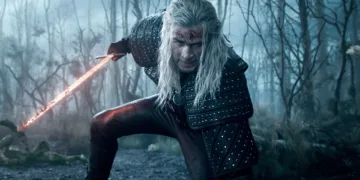
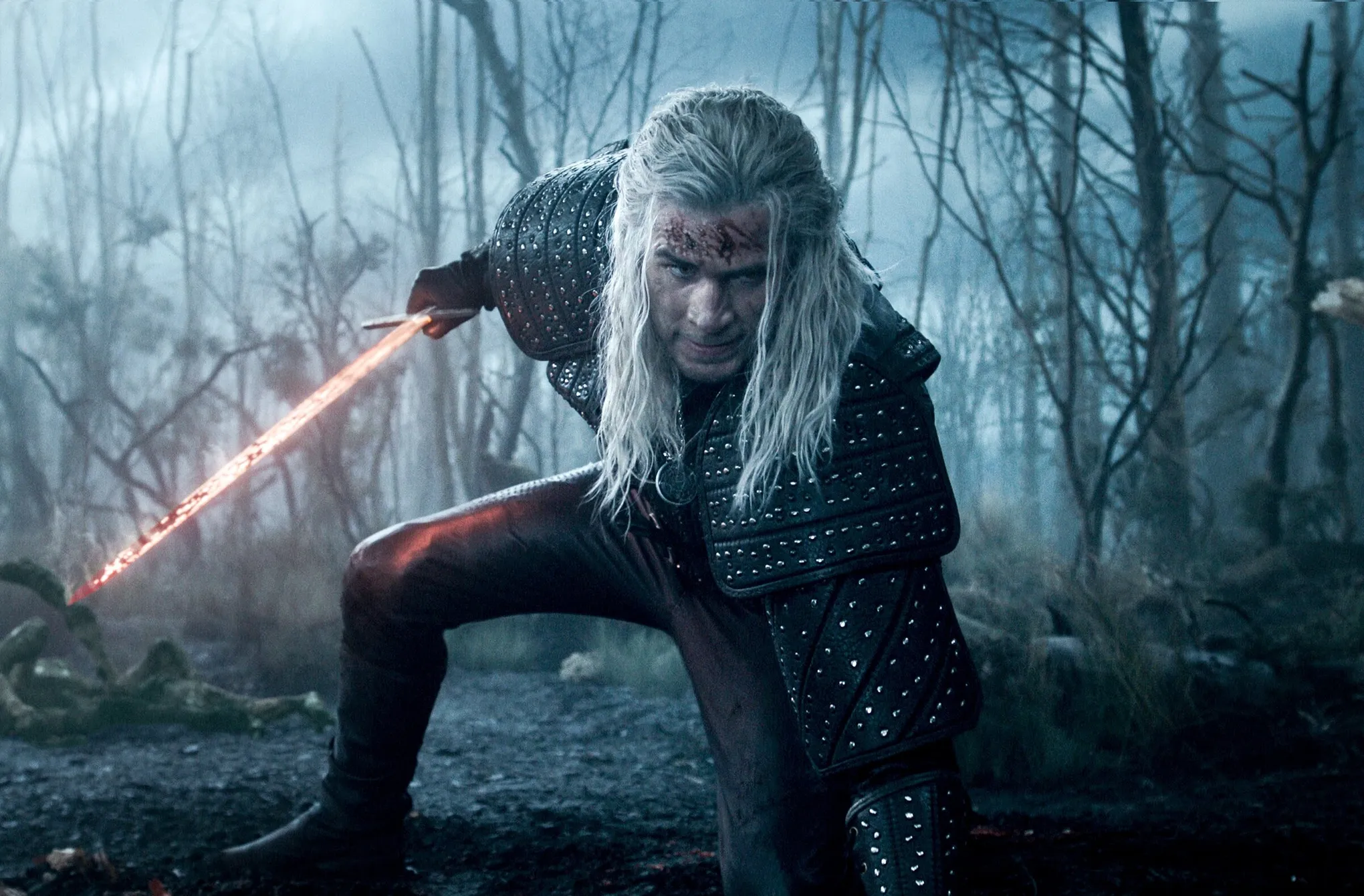
The recasting of Geralt of Rivia, with Liam Hemsworth stepping into the role, becomes the season’s defining metanarrative event. Audiences who formed an association with Henry Cavill’s granite composure and rumbling vocal register meet Hemsworth’s interpretation under a strict comparative light. The voice, when Hemsworth opts for natural speech rather than the prior gravel, sometimes reads as an echo rather than an origin. The corporeal element of the performance remains solid. Hemsworth handles brutal, intricate fight choreography with convincing physical authority; his Geralt moves with the mechanical ease of someone trained to unmake threats.
Writers handle the substitution by embedding it within the story. Geralt begins in a state of injury, emotional exposure, and physical depletion. That narrative circumstance creates space for a softer Geralt, a figure with thinner plates against sentiment and memory. The character registers the cost of prolonged solitude, and the arc directs him toward an acceptance of companionship. Framing the change this way provides a dramaturgical rationale for a new face. The altered performer signals an altered phase of the witcher’s life, a phase in which duties press heavier than biting sarcasm.
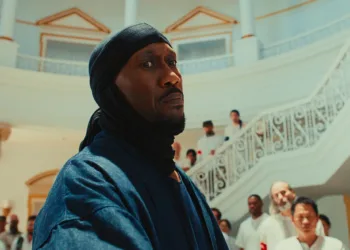
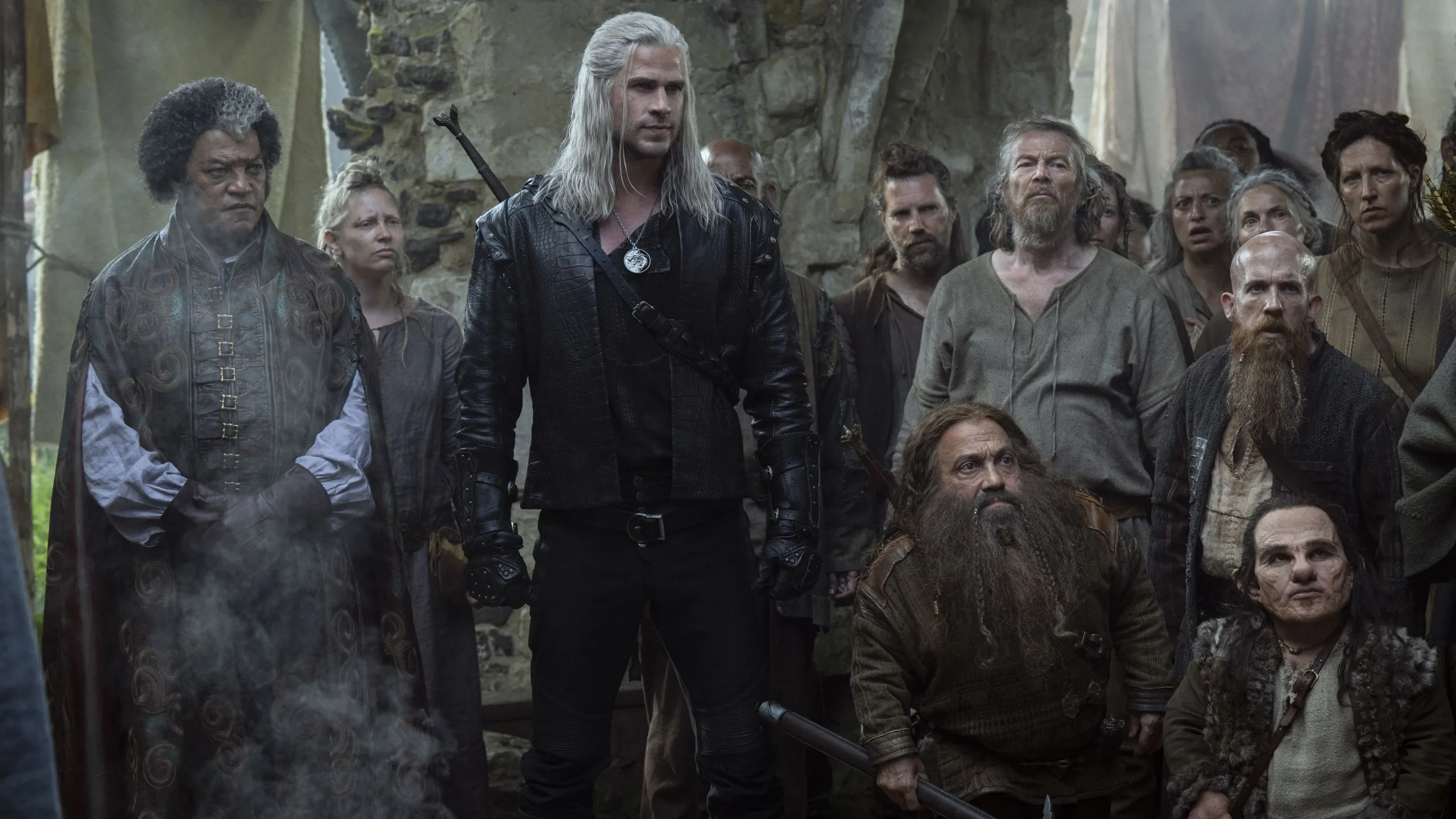
The emotional turn proceeds through the emergence of the Hansa, Geralt’s accidental band of travelers. This company works as a corrective to the solitary hunter archetype; communal obligations compel him to direct his agency outward. Through new companions he redraws an emotional map. Laurence Fishburne’s Regis, the vampiric herbalist, functions as a philosophical interlocutor and moral barometer.
Danny Woodburn’s Zoltan supplies coarse, grounding camaraderie. Together these presences shift Geralt from a hermit of principle into a reluctant steward within a chain of shared responsibilities. Dramatic irony thickens the path: Geralt advances toward Nilfgaard while Ciri occupies other reaches of the map, underscoring his growing dependence on allies. This relocation of authority renders the protagonist fallible in ways that feel jolting at first and then narratively coherent, creating a bridge toward the season’s later movements.
Tripartite Quests: Sorceress Calculus and the New Mythology of Rage
The threefold structure operates as more than an editorial convenience. It stages a comparative study of power and survival across a fracturing continent. Yennefer and Ciri present distinct theories of response.
Yennefer’s sequence adopts a form of Aretuzan realpolitik. Her priorities shift from private entanglement to institutional construction. She pursues the scattered sorceresses, assembling a power bloc to oppose Vilgefortz and Nilfgaard’s magical sway. This line of action examines leadership as applied organizational strategy under pressure.
Yennefer becomes a strategist of resistance, arranging alliances and distributing resources with an almost military precision. That orientation produces a season highlight in the mid-season engagement at Montecalvo, a set piece that visualizes what coordinated magical force can enact. This passage succeeds as high-stakes political fantasy grounded in tactical clarity.
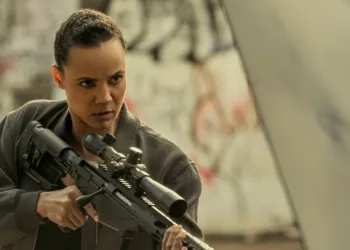
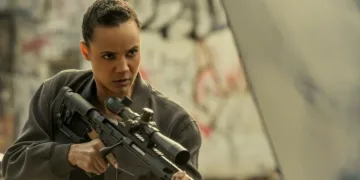
Ciri’s story embraces nihilistic experimentation. With the Rats, a band of street thieves, she attempts radical reinvention. Adopting the name Falka, she probes the outer limits of moral and bodily endurance. Her path conducts experiments in chaos; she measures identity through acts that rupture social anchors. Freya Allan encapsulates Ciri’s volatility, rendering a heroine tempered by trauma into an agent of escalating ferocity. The arc permits messier rhythms because the character herself resists tidy formulation.
The arrival of Sharlto Copley’s Leo Bonhart amplifies the danger. Bonhart’s professionalism as a hunter of witchers makes him a cold metric of consequence. He operates without ideology, guided instead by lethal efficiency. His presence converts Ciri’s self-inflicted anarchy into stakes with adult gravity. The juxtaposition of Yennefer’s systemic planning and Ciri’s corrosive freedom establishes the season’s primary thematic pressure.
Aesthetic Incoherence and the Terminal Structure
The season reveals an uneven visual temperament. Action remains a core asset, especially in the swordplay and creature sequences that have long defined the show. At moments the photography and staging attain epic breadth, most visibly in the Montecalvo confrontation where resources cohere into spectacle. Elsewhere the image register falls away into rushed frames or computer-generated moments that approach the uncanny valley, producing a disjunction between tactile set pieces and less convincing effects. The result registers as logistical strain in the production apparatus, a strain that occasionally leaks into the viewer’s immersion.
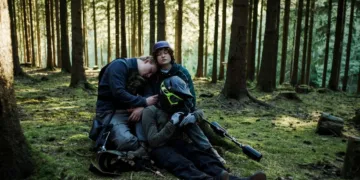
The tripartite clarity also exposes a pre-finale suspension. Season 4 trims the convolution of earlier episodes and serves in many respects as narrative housekeeping. Threads are realigned and placements established, yet central conflicts remain largely unresolved. Episodes dedicated to character work, including the campfire sequence, accumulate empathy without delivering decisive closure. The season functions with the logic of a preparatory block, orienting players and lines for a concluding campaign, rather than delivering a self-contained seasonal arc.
This orientation offers a diagnosis of current high-budget television practices. The season functions as a structural scaffold intended to support a final act. Its emphasis is on scale and set-up: the world’s peril grows beyond the concerns of a single hunter, and the text embraces multi-protagonist dynamics. That choice brings advantages. The story reads more straightforwardly, and political stakes are clearer. The cost appears in the finale’s tonal arrest; the closing episode feels like a pause that signals forthcoming resolution rather than a stop that satisfies the present investment. The production secures narrative steadiness by deferring closure.
The season operates as a realignment mechanism. It addresses the central casting change through narrative devices and deploys an expanded ensemble to cover the hero’s newfound fragility. The move toward parallel threads streamlines narrative flow and renders the political geometry more legible. New figures add depth and the altered Geralt acquires a humanizing vulnerability. The result is a season that manufactures stability by staging transitions, setting the board for the conclusive conflict to come.
The Witcher Season 4, based on the novel Baptism of Fire, premiered on Netflix on October 30, 2025, with all eight episodes released for immediate binge-watching. This season sees Liam Hemsworth take over the iconic role of Geralt of Rivia, alongside returning stars Anya Chalotra (Yennefer) and Freya Allan (Ciri). Following the Continent-altering events of the Season 3 finale, Geralt, Yennefer, and Ciri find themselves separated by war, each encountering new allies and enemies as they fight to survive and reunite. Notable new cast additions include Laurence Fishburne as Regis, Sharlto Copley as Leo Bonhart, and James Purefoy as Stefan Skellen.
Full Credits
Title: The Witcher Season 4
Distributor: Netflix
Release date: October 30, 2025 (Season 4)
Rating: TV-MA
Running time: Varies per episode; total runtime is approximately 427 minutes (around 48-60 minutes per episode).
Director: Stephen Surjik, Charlotte Brändström, Edward Bazalgette, Loni Peristere, Louise Hooper, Bola Ogun, Alex Garcia Lopez, Gandja Monteiro, Sarah O’Gorman, Sergio Mimica-Gezzan (Directors vary by episode block).
Writers: Lauren Schmidt Hissrich, Haily Hall, Clare Higgins, Javier Grillo-Marxuach, Jenny Klein, Tania Lotia, Matthew D’Ambrosio (Writers vary by episode, based on the books by Andrzej Sapkowski).
Producers and Executive Producers: Lauren Schmidt Hissrich, Tomek Bagiński, Jason F. Brown, Sean Daniel, Mike Ostrowski, Matt O’Toole, Jani Thiltges (Key producers and executive producers).
Cast: Liam Hemsworth, Anya Chalotra, Freya Allan, Joey Batey, Eamon Farren, Mimî M Khayisa, Anna Shaffer, Royce Pierreson, Graham McTavish, Cassie Clare, Hugh Skinner, Bart Edwards, Meng’er Zhang, Danny Woodburn, Laurence Fishburne, James Purefoy, Sharlto Copley.
Director of Photography (Cinematographer): Jean-Philippe Gossart, Gavin Struthers, Giles Nuttgens, David Luther (Varies by episode block).
Editors: Llinos Daniel, Jean-Daniel Fernandez-Quesada, Scott Hill, Adam Mason, Joe Sawyer, Nick Arthurs (Varies by episode).
Composer: Joseph Trapanese, Max Davidoff-Grey.
The Review
The Witcher Season 4
Season 4 is a necessary act of narrative triage that sacrifices full resolution for structural clarity. It smartly uses the recasting trauma to deepen Geralt’s vulnerability and elevates the ensemble, especially Yennefer and Ciri's arcs, creating a compelling, focused setup for the final conclusion. However, the visual quality is inconsistent, and the season ultimately feels like a sublimated prologue.
PROS
- Narrative clarity is significantly improved over Season 3.
- Liam Hemsworth’s physical presence and action choreography.
- The addition of Regis (Laurence Fishburne) is superb.
- Yennefer’s focused, politically compelling leadership arc.
- Freya Allan’s ruthless, breakout performance as Ciri/Falka.
CONS
- Visually inconsistent effects and set pieces.
- The initial gestalt rupture caused by the recasting.
- Season functions predominantly as a setup for the finale.
- Geralt’s new vocal style lacks the established character weight.
- Some chapters feel like narrative padding or filler content.